Choosing the right recorder can make a bigger difference to your podcast sound than almost any other gear upgrade. If you want cleaner dialogue, better control, and a setup that can grow with your show, external mic support is a must.
This roundup focuses on podcast recorders with external microphone input for solo creators, remote interviews, field recording, and small studio teams.
Best 10 Podcast Recorders with External Microphone Input Picks for 2026
Multi-Mic Podcast Hub
Zoom PodTrak P4 Podcast Recorder

- Four XLR mic inputs with phantom power
- 4 headphone outputs with independent volume
- Mix-minus support for phone and remote interviews
Best For: Multi-host podcasts and remote interview setups
Portable Field Recorder
Zoom H4 Essential Handheld Recorder

- Two XLR/TRS inputs for external mics or gear
- Built-in stereo mics for quick recordings
- USB-C plus SD card recording for flexible capture
Best For: Portable interviews, podcasts, and video audio
Wireless All-in-One Kit
Nomono Sound Capsule Portable Podcast Kit

- 4 wireless premium microphones for up to 4 people
- Works offline with 64GB internal storage
- AI processing and cloud access for editing
Best For: Portable podcast teams wanting a no-fuss wireless workflow
Compact XLR Adapter Recorder
Zoom H1 XLR 2-Channel Recorder

- Two XLR/TRS combo inputs for external sources
- 32-bit / 96kHz recording with waveform display
- 3.5mm input and headphone output for flexibility
Best For: Small podcast setups and mobile recording
Plug-and-Play USB Podcast Mic
ZealSound K66 USB Mic with Monitoring

- Cardioid condenser capsule for focused vocal pickup
- Noise reduction mode helps reduce common room sounds
- Zero-latency monitoring plus gain, echo, and mute controls
Best For: Creators who want simple podcast recording with monitoring and broad device support
Portable XLR Recorder
Zoom H5 Handheld Recorder with XLR Inputs
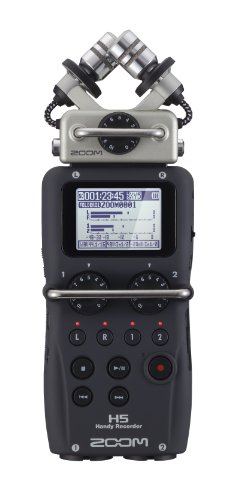
- Two XLR/TRS combo inputs for external mics and line sources
- Selectable phantom power and -20dB pad add flexibility
- Four-track recording with detachable X/Y capsule
Best For: Portable podcast and field recording with external microphone support
32-Bit Float Multitrack Recorder
Zoom R4 MultiTrak Recorder Bundle
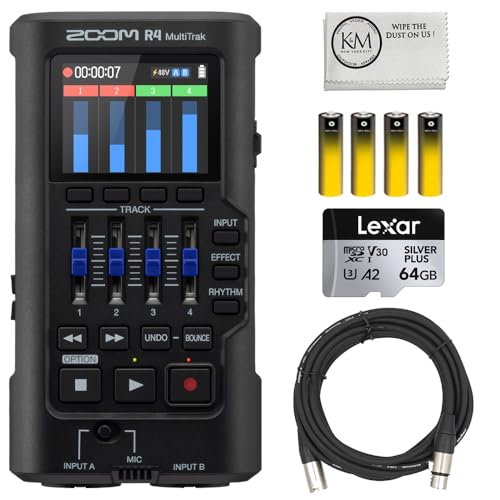
- Two XLR/combo inputs for external microphones
- 32-bit float recording helps protect against clipping
- Four tracks plus bounce track and USB interface mode
Best For: Compact multitrack podcasting with external mics and headroom safety
Portable Stereo Starter
Zoom H1 Essential for Creators

- Clear stereo capture for podcasts and interviews
- USB-C mic mode for calls, livestreams, and desktop recording
- 32-bit float helps reduce clipping risks
Best For: Creators who want simple portable podcast recording with cleaner voice audio
Flexible XLR Option
Zoom H4n Pro Portable Recorder

- Two XLR/TRS combo inputs plus 1/8" mic in
- Built-in X/Y mics for fast standalone recording
- USB interface mode for PC/Mac workflows
Best For: Podcasters who want external mic inputs and portable multitrack flexibility
Field-Ready Dual XLR

- Dual locking XLR inputs for external microphones
- 32-bit float recording handles sudden peaks and quiet speech
- Ultra-low-noise preamps suit uncontrolled environments
Best For: Users who need a compact, external-mic recorder for professional field work
Multi-Mic Podcast Hub – Zoom PodTrak P4 Podcast Recorder
If you want podcast recorders with external microphone input and a simple workflow for interviews, the Zoom PodTrak P4 is built for exactly that. It gives you four XLR mic inputs, phone and USB connectivity for remote guests, and enough monitoring control to keep a small podcast running smoothly.
Best For: Podcasters who need a compact recorder for multi-host shows, call-in interviews, and remote guests.
Pros:
- 4 XLR microphone inputs with phantom power for multi-person recording
- 4 headphone outputs with individual volume control for monitoring each speaker
- Automatic mix-minus plus TRRS and USB support for phone and remote interviews
- Programable sound pads and multi-track recording for added production control
Cons:
- Runs on 2 AA batteries for up to 3.5 hours, so longer sessions need power planning
- No built-in rechargeable battery listed in the supplied specs
- Designed around podcasting, so it is less specialized for broader field-recording use
The PodTrak P4 is a strong pick if your priority is straightforward external mic input with podcast-friendly features already built in. It combines the essentials for interviews, monitoring, and remote participation in one portable unit.
Portable Field Recorder – Zoom H4 Essential Handheld Recorder
The Zoom H4 Essential is a practical choice for podcast recorders with external microphone input when you want a handheld unit that can also handle music, interviews, and video audio. It pairs built-in stereo mics with two XLR/TRS inputs, so you can plug in external mics or gear without a complicated setup.
Best For: Creators who want a portable recorder for interviews, podcasts, and on-the-go audio capture.
Pros:
- Two XLR/TRS inputs for external microphones or instruments
- Built-in stereo microphones for quick capture without extra gear
- USB-C connection for recording or streaming to a phone, tablet, or computer
- Saves recordings to SD card while connected, giving you a backup option
Cons:
- Uses 2 AA batteries, which may require extras for longer sessions
- Digital recording time is listed at 10 hours, so it is not the longest-runtime option
- Its handheld form factor may be less convenient for fixed studio installations
Overall, the H4 Essential balances portability and input flexibility well for creators who need external mic support without moving up to a larger desktop recorder. Its guided menu approach may also make it easier to use during fast-moving sessions.
Wireless All-in-One Kit – Nomono Sound Capsule Portable Podcast Kit
If you want podcast recorders with external microphone input to feel effortless, the Nomono Sound Capsule takes a very different approach: it uses four wireless premium microphones and handles recording without phones, laptops, or mixers. That makes it a convenient all-in-one option for creators who want professional-level audio with minimal setup.
Best For: Teams and creators who want a fully portable wireless podcast kit with built-in cloud workflow.
Pros:
- 4 wireless microphones support up to 4 participants
- Works offline and online with no phones, laptops, wires, or mixers needed
- 64GB internal storage and up to 10 hours of recording time
- Includes AI-powered audio processing and 27 months of Nomono Cloud
Cons:
- More expensive and specialized than a basic recorder with wired mic inputs
- Requires learning its software and cloud workflow if you want the full feature set
- Uses proprietary wireless microphones rather than standard XLR/TRS inputs
The Sound Capsule is best viewed as a premium podcast kit rather than a traditional recorder, but it delivers a streamlined experience for wireless multi-person shows. If you value portability and built-in post-production help, it stands out clearly.
Compact XLR Adapter Recorder – Zoom H1 XLR 2-Channel Recorder
For podcast recorders with external microphone input in a very compact format, the Zoom H1 XLR is designed to keep setup simple while still giving you proper input flexibility. Its two XLR/TRS combo inputs, plus 3.5mm stereo input and headphone output, make it useful for interviews, small podcast sessions, and mobile recording.
Best For: Podcasters and filmmakers who want a small recorder with XLR/TRS inputs and easy level monitoring.
Pros:
- Two XLR/TRS combo inputs for microphones and other sources
- 32-bit / 96kHz recording for detailed audio capture
- OLED waveform display helps monitor levels at a glance
- 3.5mm stereo input and headphone output add extra flexibility
Cons:
- Only a 2-channel recorder, so it is not built for larger multi-host setups
- Runs on 2 AA batteries, which may be a consideration for long sessions
- More compact feature set than the larger multi-input podcast recorders
The H1 XLR is a strong choice when you need external mic input in a small recorder and do not want extra complexity. It is especially appealing for users who value portability, waveform monitoring, and straightforward connection options.
Plug-and-Play USB Podcast Mic – ZealSound K66 USB Mic with Monitoring
If you want podcast recorders with external microphone input-style flexibility in a USB mic package, the ZealSound K66 is built for straightforward voice capture with practical controls. Its cardioid condenser capsule, noise reduction mode, and zero-latency monitoring make it a strong pick for podcasters who want clear, usable audio without a complicated setup.
Best For: Solo creators, streamers, and podcasters who want a plug-and-play mic with monitoring and easy device switching.
Pros:
- Cardioid condenser design focuses on voice and helps reduce background noise.
- Noise Reduction Mode can cut keyboard clicks, fan noise, and room hum.
- Built-in 3.5mm headphone jack supports real-time, zero-latency monitoring.
- Includes gain, monitoring volume, echo, and mute controls for quick adjustments.
Cons:
- As a USB mic, it is less expandable than a recorder with true XLR inputs.
- Best performance depends on using the right mode for your recording space.
Overall, the K66 is a practical choice if you want clean podcast audio with simple controls and broad compatibility. It is especially appealing for creators who record across PC, Mac, mobile devices, and consoles and want monitoring built in.
Portable XLR Recorder – Zoom H5 Handheld Recorder with XLR Inputs
The Zoom H5 fits well in a roundup of podcast recorders with external microphone input because it combines portable recording with two XLR/TRS combo inputs and selectable phantom power. That makes it a solid step up for interview-style podcasting, field recording, or any setup that needs external mics and backup-friendly four-track recording.
Best For: Podcasters, filmmakers, and musicians who need portable recording with real mic input flexibility.
Pros:
- Two XLR/TRS combo inputs support external microphones and line-level sources.
- Selectable phantom power adds compatibility with condenser mics.
- Four-track simultaneous recording gives you more control in post-production.
- Detachable X/Y capsule and shock-mounted mics help reduce handling noise.
Cons:
- Runs on AA batteries, so you will need to manage power for longer sessions.
- Records to SD/SDHC cards up to 32GB, which is more limited than some newer options.
The H5 is a versatile choice when your workflow depends on external mics and portable multitrack recording. Its built-in USB audio interface mode also makes it useful as a bridge between field recording and computer-based production.
32-Bit Float Multitrack Recorder – Zoom R4 MultiTrak Recorder Bundle
For podcasters looking at podcast recorders with external microphone input, the Zoom R4 stands out with two XLR/combo inputs, built-in microphones, and 32-bit float recording. It is designed for creators who want simple multitrack capture, easy level management, and the safety of recording format flexibility during interviews, voice work, or mobile sessions.
Best For: Podcasters and creators who want compact multitrack recording with XLR inputs and 32-bit float headroom.
Pros:
- Two XLR/combo inputs support external microphones.
- 32-bit float recording helps reduce the risk of clipping.
- Four-track plus dedicated bounce track supports layered workflows.
- Built-in mics, metering, and 3.5mm monitoring output add convenience.
Cons:
- Designed as a compact recorder, so the control surface is more minimal than larger mixers.
- Bundle value depends on whether you need the included accessories.
The R4 is a strong fit if you want a portable recorder that still handles external microphones cleanly. Its 2-in/2-out USB audio interface mode also makes it useful beyond field recording, especially for creators moving between standalone and computer workflows.
Portable Stereo Starter – Zoom H1 Essential for Creators
If you want podcast recorders with external microphone input for simple, polished capture, the Zoom H1 Essential keeps things straightforward while still giving you better sound than a phone or camera alone. Its built-in X/Y stereo mics, USB-C mic mode, and 32-bit float workflow make it a practical pick for podcasting, interviews, voiceovers, and quick content recording.
Best For: Creators who want an easy-to-use portable recorder for podcasts, interviews, and everyday content with cleaner audio.
Pros:
- Clear stereo audio for podcasts, interviews, voiceovers, and video content
- USB-C mic mode supports livestreams, remote meetings, calls, and desktop/mobile recording
- 32-bit float and clip-free audio help capture sound more safely in unpredictable moments
- Lightweight, battery-powered design is easy to carry for on-the-go recording
Cons:
- Built-in stereo mics are the main recording option described in the notes
- No dedicated XLR external mic inputs are listed
Overall, this is a strong grab-and-go recorder for creators who care about better voice capture without a complicated setup. It is especially appealing if you value portability, USB-C use, and natural stereo sound for spoken content.
Flexible XLR Option – Zoom H4n Pro Portable Recorder
Among podcast recorders with external microphone input, the Zoom H4n Pro stands out as a flexible all-around choice thanks to its two XLR/TRS combo inputs, built-in X/Y microphones, and USB audio interface mode. It is built for podcasting, audio for video, and multi-track work when you want more connection options in a compact recorder.
Best For: Podcasters and creators who need external mic inputs plus built-in microphones in one portable recorder.
Pros:
- Two XLR/TRS combo inputs plus a stereo 1/8″ mic in jack for more setup flexibility
- Built-in X/Y stereo microphones support quick standalone recording
- Four-track simultaneous recording and high-fidelity preamps suit more involved sessions
- USB audio interface mode makes it useful for PC/Mac recording workflows
Cons:
- Battery life is shorter than some simpler recorders, at up to 5.5 hours
- More features may be more than needed for very basic one-mic podcast setups
If you want one recorder that can handle both direct external mics and built-in stereo capture, the H4n Pro is an easy model to justify. It is especially useful when your podcast or video workflow may grow into multitrack recording later.
Field-Ready Dual XLR – Zoom F3 for Demanding Audio
If your priority is clean capture from external microphones, the Zoom F3 is a focused field recorder built around dual locking XLR inputs and 32-bit float recording. It is aimed at run-and-gun filmmaking and demanding recording setups where you need secure connections and reliable audio without constantly riding levels.
Best For: Filmmakers and recordists who need a rugged external-mic recorder for unpredictable environments.
Pros:
- Dual locking XLR inputs keep external mic connections secure in complex rigs
- 32-bit float recording helps handle quiet dialogue and sudden peaks without level adjustments
- Ultra-low-noise preamps support cleaner capture in uncontrolled environments
- Flexible power and USB workflows help it fit long days on set or on location
Cons:
- No built-in microphone is listed, so it is not a grab-and-go voice recorder
- More specialized for external mic setups than casual podcast use
The F3 is the most purpose-built option here for users who already rely on external microphones. For podcasting, it makes the most sense when you want a compact recorder that prioritizes connection security and clean inputs over all-in-one convenience.
How We Picked the Best Podcast Recorders with External Microphone Input
We focused on Podcast Recorders with External Microphone Input that offer a practical mix of sound quality, input flexibility, portability, and ease of use. We also prioritized models that suit real podcast workflows, including guest interviews, mobile recording, and simple multitrack capture.
Quick Comparison
As you compare options, think in terms of recording setup rather than brand alone. Some models are better for one or two microphones and quick solo sessions, while others are built for multiple hosts, remote guests, and more advanced production. Features like XLR inputs, headphone monitoring, battery power, and USB connectivity can be just as important as the recorder itself.
Key Buying Factors for Podcast Recorders with External Microphone Input
Input Type and Count
Look for enough mic inputs for your current show and any future expansion. XLR inputs are the standard for podcast microphones, while combo inputs add flexibility for certain instruments or alternative sources.
Recording Quality and File Format
Higher-resolution recording and formats like 32-bit float can help prevent distortion and make levels easier to manage. If your guests vary in volume, this feature can be especially valuable.
Monitoring and Headphone Outputs
Independent headphone monitoring helps you catch noise, clipping, and mic issues in real time. Multiple headphone outputs are useful for co-hosted podcasts and interview setups.
Portability and Power
If you record on location, battery life, size, and ruggedness matter. For studio use, USB power or desktop-friendly designs may be more convenient.
Workflow Features
Remote call inputs, onboard sound pads, built-in microphones, and app or software support can streamline production. Choose only the extras you will actually use.
Who Should Buy Which Podcast Recorders with External Microphone Input?
Solo podcasters and mobile creators should look for compact, simple units with at least one external mic input and strong battery performance. Interviewers and small teams may prefer multi-input recorders with separate monitoring. If your priority is maximum safety in gain staging, a 32-bit float recorder is worth considering. For creators who want a fast all-in-one workflow, bundled kits can reduce setup time, while more technical users may prefer a dedicated field recorder for greater control.