The best portable projector screens make it easier to turn a backyard, living room, or campsite into a comfortable viewing space. The right model balances image size, setup time, portability, stability, and screen material.
We compared 10 options ranging from compact 80-inch tripod screens to expansive 150-inch outdoor setups, including foldable screens and models with stands, carry bags, sandbags, or stake-down bases.
Best 10 Portable Projector Screens Picks for 2026
Best Foldable Screen
Mdbebbron 120-Inch Portable Screen

- Large 120-inch, 16:9 viewing area
- Lightweight foldable polyester design
- Front and rear projection support
Best For: Large home theaters and flexible wall-mounted setups
Best Lightweight Tripod
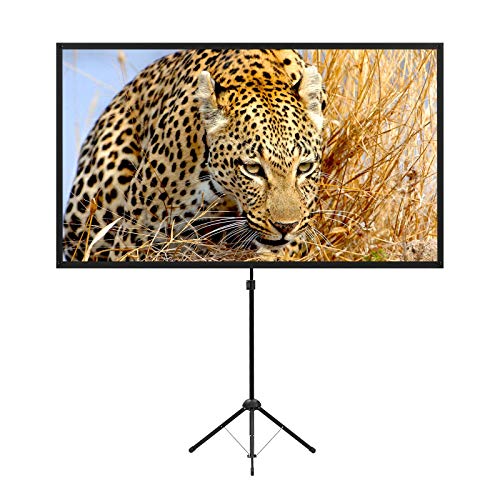
- Freestanding tripod and aluminum frame
- Two-minute setup with carrying bag
- Tensioned 16:9 surface for indoor or outdoor use
Best For: Portable family movie nights and presentations
Best Large Outdoor Setup

- 120-inch screen with front/rear projection
- Reinforced frame and windproof accessories
- Washable fabric designed for 4K HD visuals
Best For: Backyard movie nights, camping, and large outdoor gatherings
Best Compact Frame

- Lightweight 5-pound aluminum frame
- Padded carry bag for car travel
- Quick setup with anti-crease fabric
Best For: Travel, camping, and compact backyard setups
Lightweight Outdoor Pick
AODIOU 80-Inch Portable Screen

- Lightweight aluminum frame and padded carry bag
- Tool-free setup with washable polyester screen
- Includes outdoor stability accessories
Best For: Backyard movies, camping, and compact indoor setups
Bright PVC Upgrade
PARIS RHÔNE 80-Inch Projector Screen

- 1.5 gain, multi-layer PVC screen
- Height-adjustable aluminum tripod
- Includes ground nails and support rods
Best For: Bright home theater and outdoor setups with adjustable height
Washable Camping Choice
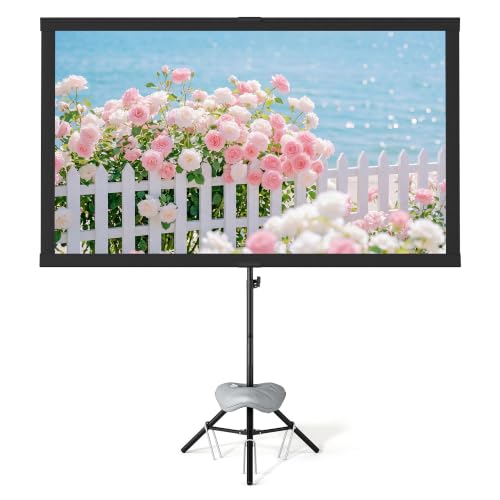
- Washable and ironable polyester surface
- Reinforced tripod with water bag and stakes
- Folds into a carry bag for travel
Best For: Camping, backyard movies, and frequent room-to-room use
Best Stake-Down Design

- Stakeable weighted base
- Steel frame with wind ropes
- 120-inch wrinkle-free display
Best For: Outdoor group viewing on stakeable ground
Best Large-Screen Option
TOWOND 150-Inch Projection Screen

- Expansive 150-inch display
- Five-minute tool-free assembly
- Front and rear projection support
Best For: Large indoor rooms and backyard audiences
Best Foldable Screen – Mdbebbron 120-Inch Portable Screen
For shoppers comparing portable projector screens, the Mdbebbron 120-inch model emphasizes a large viewing area, simple wall mounting, and easy storage. Its lightweight polyester design folds into a compact size for backpacks or suitcases and supports front or rear projection.
Best For: Home theaters, presentations, and outdoor movie setups where a large, washable screen must travel easily.
Pros:
- Large 120-inch diagonal screen with a 104-by-58-inch viewing area.
- Foldable, 1.7-pound design is convenient to carry and store.
- Supports front and rear projection with a 160-degree viewing angle.
- Can be attached with hooks, ropes, nails, brackets, or double-sided tape.
Cons:
- Wall mounting requires separate attachment hardware or a suitable surface.
- Its oversized format may be less convenient for smaller rooms.
This is a practical choice when maximum screen size and portability matter more than a freestanding frame. The anti-crease, washable fabric adds convenience for repeated indoor and outdoor use.
Best Lightweight Tripod – Excelimage 80-Inch Screen
Among portable projector screens, this Excelimage model stands out for its included tripod, compact carrying case, and quick assembly. The tensioned four-tube structure is designed to create a flat 80-inch 16:9 surface for indoor or outdoor viewing.
Best For: Buyers who want a freestanding screen for backyard movies, classrooms, living rooms, or presentations.
Pros:
- Tripod stand and aluminum tubes provide a freestanding setup.
- Four spring-tensioned tubes help maintain a flat projection surface.
- Sets up or disassembles in about two minutes.
- Includes a carrying bag and weighs 8.5 pounds.
Cons:
- At 80 inches, it offers less image area than the 120-inch options.
- The tripod and frame make it heavier than a fabric-only screen.
This screen is a balanced option for shoppers who prefer a complete stand-based system instead of wall attachments. Its 160-degree viewing angle and portable case make it suitable for shared viewing in different locations.
Best Large Outdoor Setup – ZUVMITG 120-Inch Screen
For outdoor-focused portable projector screens, the ZUVMITG 120-inch model combines a large 16:9 display with a reinforced floor-standing frame. It includes stakes, ropes, and two sandbags to help secure the screen during backyard movie nights, camping, and other outdoor gatherings.
Best For: Large outdoor screenings where a full frame and added wind-stability accessories are priorities.
Pros:
- Large 120-inch screen with a 160-degree viewing angle.
- Supports front and rear projection for flexible placement.
- Includes four stakes, two ropes, and two sandbags for outdoor stability.
- Washable milk-silk fabric is designed for 4K HD projection.
Cons:
- At 12.5 pounds, it is heavier than the fabric-only option.
- Its larger frame requires more setup and storage space.
- Windproof accessories are needed for additional outdoor stability.
This is the most substantial choice in the group for outdoor use, offering both a large image and a reinforced base. The included carry bag helps with transport, while the frame-based design is better suited to planned screenings than spontaneous, ultra-light travel.
Best Compact Frame – HOIN 80-Inch Outdoor Screen
The HOIN 80-inch model is one of the more travel-friendly portable projector screens with a freestanding frame. Its lightweight aluminum construction, padded carrying bag, and foldable anti-crease fabric make it practical for car travel, camping, backyard movies, and presentations.
Best For: Travelers who want an 80-inch freestanding screen that fits in a car trunk and sets up in minutes.
Pros:
- Lightweight 5-pound aluminum frame is easy to transport.
- Includes a soft padded carrying bag for storage and travel.
- Supports front and double-sided projection with a 160-degree viewing angle.
- Foldable polyester fabric is designed to resist curling and wrinkles.
Cons:
- Its 80-inch size provides less viewing area than the 120-inch models.
- Outdoor use may require securing the frame to the ground in wind.
This HOIN screen fits buyers who value a lighter freestanding setup and frequent transport. It offers broader placement options than a wall-only screen, though outdoor users should plan for ground support when conditions are breezy.
Lightweight Outdoor Pick – AODIOU 80-Inch Portable Screen
For shoppers comparing portable projector screens, this AODIOU model emphasizes easy transport and straightforward setup. Its 80-inch 16:9 polyester screen weighs about 5.62 pounds and packs into the included padded carrying bag.
Best For: Backyard movie nights, camping, picnics, and small indoor gatherings where portability matters.
Pros:
- Lightweight aluminum construction with a carrying bag.
- Tool-free assembly and disassembly.
- Washable, wrinkle-free polyester screen.
- Includes rope, hanging hook, and water bag for added outdoor stability.
Cons:
- The listed screen dimensions are approximately 70 by 40 inches despite the 80-inch product designation.
- Its glossy finish may be less forgiving of ambient light than a specialized ambient-light screen.
This is a practical choice when quick setup, compact storage, and low carrying weight are more important than a heavier, more rigid screen system.
Bright PVC Upgrade – PARIS RHÔNE 80-Inch Projector Screen
Among portable projector screens, the PARIS RHÔNE model stands out for its cinema-grade PVC material and 1.5 gain rating. The 80-inch screen uses a 16:9 format, offers a 160-degree viewing angle, and includes an adjustable tripod for indoor or outdoor use.
Best For: Shoppers who want a brighter PVC surface, adjustable stand height, and a more feature-rich outdoor setup.
Pros:
- 1.5 gain, multi-layer PVC construction designed for clear and bright projection.
- Adjustable aluminum tripod from 64 to 85 inches.
- Includes ground nails, support rods, and a carry bag.
- Designed for one-person setup in three steps.
Cons:
- At about 4.88 kg, it is substantially heavier than the lightweight AODIOU option.
- The supplied details list a wall-mount type even though the package includes a tripod stand.
This screen suits buyers who prioritize a brighter PVC projection surface and adjustable viewing height, while accepting extra weight for transport.
Washable Camping Choice – TWJouko 80-Inch Tripod Screen
This TWJouko model is one of the more flexible portable projector screens for repeated indoor and outdoor use. Its washable, ironable polyester surface folds into a carry bag, while the reinforced tripod, water-weight bag, and ground stakes help support outdoor placement.
Best For: Families and travelers who want a washable screen for backyard movies, camping, gaming, and room-to-room use.
Pros:
- Washable and ironable polyester surface for easier maintenance.
- Reinforced tripod with thicker steel tubes and a wider support base.
- Includes three ground stakes and a water-weight bag.
- Foldable design and carry bag support grab-and-go storage.
Cons:
- The cloth screen is best used in low-light conditions and away from direct sunlight or strong backlight.
- Fabric may need ironing after folding to remove minor creases.
Choose this option if easy cleaning and outdoor stability are priorities. Its fabric construction is convenient and forgiving for frequent use, provided you can control the surrounding light.
Best Lightweight Pick – TOWOND 100-Inch Portable Screen
For shoppers comparing portable projector screens, this 100-inch TOWOND model offers a practical balance of easy transport, flexible placement, and outdoor stability. Its wrinkle-resistant polyester screen supports both front and rear projection, while the detachable tripod and included carry bag make it suitable for movie nights at home, camping, school, or backyard use.
Best For: Buyers who want a lightweight 100-inch screen with a tripod and outdoor anchoring accessories.
Pros:
- Lightweight 7.5-pound design with an included carry bag.
- Wrinkle-free 16:9 screen supports front and rear projection.
- Includes sandbags, ground nails, and windproof ropes for outdoor setup.
- Tool-free assembly and a 160-degree viewing angle.
Cons:
- Outdoor stability depends on properly using the sandbags, ropes, and stakes.
- The manual setup requires securing the tripod and evenly attaching the screen fasteners.
This is a versatile choice among portable projector screens when portability matters as much as outdoor support. The 100-inch size is substantial without being as cumbersome as larger alternatives.
Best Stake-Down Design – STWUI 120-Inch Outdoor Screen
Among portable projector screens, the STWUI 120-inch model stands out for its stake-down base and dedicated wind-resistance system. The widened metal base, ground stakes, and windproof ropes are designed for outdoor viewing, while the elastic wrinkle-free screen supports front and rear projection for groups.
Best For: Outdoor movie viewers who prioritize a stakeable base and a larger 120-inch display.
Pros:
- Widened, thickened base includes holes for ground-stake fixation.
- Steel bracket, four ground stakes, and two windproof ropes support outdoor stability.
- 120-inch 16:9 screen has a 160-degree viewing angle.
- Tool-free modular assembly is designed to take about eight minutes.
Cons:
- The floor-mounted design requires suitable ground for staking outdoors.
- At 120 inches, it needs more setup space than smaller portable screens.
- The listed warranty is limited to 30 days.
This model is a strong fit for backyard gatherings, camping, parties, and sports viewing where a bigger image and outdoor anchoring are priorities. Its compact carry bag also helps with transport between locations.
Best Large-Screen Option – TOWOND 150-Inch Projection Screen
This 150-inch TOWOND is one of the largest portable projector screens in this roundup, giving backyard cinema and group presentations a more expansive viewing area. Its wrinkle-resistant polyester screen supports front and rear projection, and the foldable stand is designed for tool-free assembly in about five minutes.
Best For: Large households and outdoor audiences with ample setup space for a 150-inch screen.
Pros:
- Large 150-inch display with a 160-degree viewing angle.
- Supports both front and rear projection with a thick, anti-crease screen.
- Foldable stand assembles without tools in approximately five minutes.
- Includes a carry bag, ground nails, and ropes for transport and outdoor setup.
Cons:
- The 11.5-pound setup is heavier than the smaller TOWOND option.
- Indoor use requires a room wider than 140 inches, according to the supplied guidance.
- The larger frame needs considerable floor and storage space.
If your priority is maximum screen size rather than minimum packing weight, this TOWOND model offers an expansive format for movies, sports, games, and presentations. Measure the intended room or yard before buying.
How We Picked These Portable Projector Screens
We focused on practical features that matter when a screen must be transported and assembled repeatedly. Our selection includes several common sizes, including 80, 100, 120, and 150 inches, along with tripod and full-frame stand designs. We also considered advertised 16:9 formats, front and rear projection support, 4K compatibility, wrinkle resistance, washable fabrics, carry bags, and included stability accessories.
Because product specifications and included components can vary, confirm the current listing before buying. A projector screen does not create 4K resolution by itself; it provides a suitable surface for displaying the projector’s image.
Quick Comparison
| Screen size | Best suited to | Main advantage |
|---|---|---|
| 80 inches | Small yards, rooms, and camping | Usually easiest to carry and set up |
| 100 inches | General outdoor movie nights | Good balance of viewing area and portability |
| 120 inches | Larger backyards and group viewing | More immersive image without the bulk of the largest screens |
| 150 inches | Large gatherings | Maximum viewing area, but greater setup and storage demands |
Key Buying Factors for Portable Projector Screens
Size and Viewing Distance
Choose a screen that fits both the audience and the available projection distance. Larger is not always better: a 150-inch screen needs more room, a brighter projector, and a stable installation area. For smaller groups or compact spaces, an 80-inch model may deliver a sharper, more comfortable image.
Stand Stability and Outdoor Setup
Outdoor screens are vulnerable to wind. Look for frames with wide feet, stakes, guy lines, sandbags, or other anchoring hardware. A lightweight stand is convenient but may require additional weighting on uneven ground or breezy evenings.
Screen Material and Projection Direction
Check whether the fabric supports front projection, rear projection, or both. Wrinkle-resistant and washable materials are useful for screens that travel frequently. A higher advertised gain can improve brightness in some setups, but it may also affect viewing angles, so consider where guests will sit.
Portability and Setup Time
Compare the packed dimensions, total weight, frame design, and included carrying case. Tripod screens often offer the fastest setup, while larger frame systems can provide a flatter image but take longer to assemble.
Aspect Ratio and Projector Compatibility
A 16:9 screen is the natural match for most modern movies, streaming content, and home theater projectors. Make sure the screen’s usable image area matches your projector’s throw distance and brightness capabilities.
Who Should Buy Which Portable Projector Screens?
- For camping and compact spaces: Choose an 80-inch tripod or lightweight stand model that packs easily and can be secured outdoors.
- For typical backyard movie nights: A 100- or 120-inch screen offers a strong compromise between immersion, setup effort, and storage.
- For indoor-outdoor flexibility: Look for a foldable, wrinkle-resistant screen with a carry bag and front/rear projection support.
- For large groups: A 120- or 150-inch frame screen provides a bigger image, but plan for extra anchoring, assembly space, and projector brightness.
- For windy locations: Prioritize models with sandbags, stakes, guy lines, or a stake-down base rather than choosing solely by screen size.