The best energy-efficient mini refrigerators keep drinks, snacks, and everyday essentials cold without taking up much space or adding unnecessary power usage. This roundup compares 10 compact models ranging from small bedroom fridges to larger units with dedicated freezers.
We focus on useful differences such as Energy Star certification, capacity, freezer configuration, noise, door flexibility, temperature control, and placement. Use the guide below to narrow the list based on how much storage you need and where the refrigerator will live.
Best 10 Energy Efficient Mini Refrigerators Picks for 2026
Best Two-Compartment Pick

- Energy Star certified; 270 kWh annual use
- Separate 0.92-cu.-ft. top freezer
- Reversible door and adjustable glass shelves
Best For: Compact freezer-and-refrigerator storage
Best Energy-Starred Mid-Size Pick
BLACK+DECKER 3.2 Cu. Ft. Refrigerator

- Energy Star certified; 219 kWh annual use
- Two removable glass shelves
- Reversible door and leveling legs
Best For: Everyday dorm, office, and beverage storage
Best Low-Noise Value
3.2 Cu. Ft. Mini Fridge with Freezer

- 215 kWh stated annual energy use
- Compressor rated below 37 dB
- One-touch defrost and adjustable thermostat
Best For: Quiet bedrooms and office spaces
Best Compact Personal Fridge
BLACK+DECKER 1.7 Cu. Ft. Refrigerator
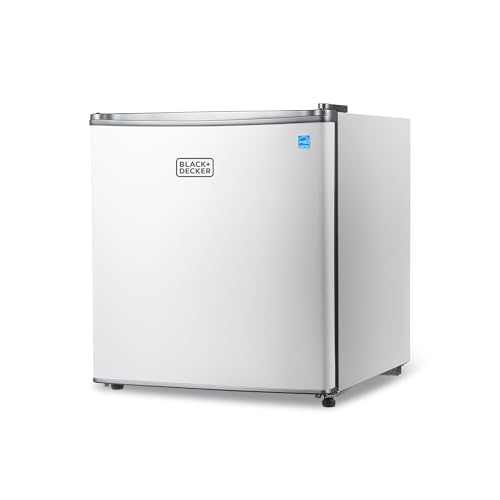
- Energy Star certified; 201 kWh annual use
- Compact 1.7-cu.-ft. capacity
- Reversible door and adjustable leveling legs
Best For: Personal storage in tight spaces
Best Overall
Upstreman 3.2 Cu.Ft. Mini Fridge with Freezer

- 3.2 cu. ft. capacity with a 0.3 cu. ft. freezer
- Energy Star certified; listed at 206 kWh annually
- Quiet 38 dB operation with flexible storage features
Best For: Dorms, bedrooms, offices, and apartments needing extra capacity
Best Retro Design
Frigidaire Coral 1.6 Cu.Ft. Retro Mini Fridge

- Compact 1.6 cu. ft. capacity with chiller compartment
- Listed at 200 kWh annual energy consumption
- Retro coral finish with built-in bottle opener
Best For: Small spaces where style and basic drink storage matter
Best Compact Energy Saver

- Energy Star certified with 207 kWh listed annual consumption
- Quiet operation rated below 42 dB
- Reversible door, chiller box, and 2-liter bottle rack
Best For: Bedrooms and compact spaces prioritizing quiet, efficient cooling
Best with Extra Features

- Uses a reported 0.55 kWh per day
- Compact reversible-door design
- Quiet operation below 38 dB
Best For: Countertops, dorms, offices, and bedrooms
Best Flexible Storage

- Includes a 0.2-cubic-foot freezer
- Uses a reported 0.66 kWh per day
- Has removable glass shelves and a reversible door
Best For: Small living spaces needing fresh and frozen storage
Best Freezer Capacity
3.2 Cu.Ft Double-Door Mini Fridge

- Offers a 0.84-cubic-foot freezer
- Uses as little as 0.5 kWh per day
- Runs at less than 40 dB
Best For: Small spaces that need substantial frozen-food storage
Best Two-Compartment Pick – Midea 3.1 Cu. Ft. Mini Fridge
The Midea 3.1-cu.-ft. refrigerator is a practical choice among energy efficient mini refrigerators when you need separate fresh-food and freezer storage. Its Energy Star certification, 270 kWh annual energy use, compact footprint, and reversible door suit dorms, offices, bedrooms, and apartments.
Best For: Shoppers who want a compact refrigerator with a dedicated top freezer and flexible placement.
Pros:
- Energy Star certified with a stated annual consumption of 270 kWh.
- Separate 0.92-cu.-ft. freezer and 2.16-cu.-ft. fresh-food compartments.
- Reversible door, LED interior light, removable glass shelves, and crisper drawer.
- Adjustable temperature ranges for both the refrigerator and freezer sections.
Cons:
- Manual defrosting requires periodic maintenance.
- At 33 inches tall and 46.3 pounds, it may be less convenient to move than smaller personal fridges.
Choose this model if organized storage matters more than the smallest possible footprint. Its freezer capacity and adjustable layout make it especially versatile for longer stays in a dorm, office, or small apartment.
Best Energy-Starred Mid-Size Pick – BLACK+DECKER 3.2 Cu. Ft. Refrigerator
The BLACK+DECKER BCRK32B stands out among energy efficient mini refrigerators with Energy Star certification and a stated 219 kWh annual energy consumption. Its 3.2-cu.-ft. capacity, chiller compartment, and compact design work well in dorms, offices, home bars, apartments, and RVs.
Best For: Users seeking a certified energy-efficient mini fridge with flexible shelving and a moderate storage capacity.
Pros:
- Energy Star certified and rated at 219 kWh per year.
- Uses R600a refrigerant and a high-efficiency compressor.
- Two removable glass shelves and door bins accommodate varied food and beverage sizes.
- Reversible door and adjustable leveling legs simplify placement.
Cons:
- Manual defrosting requires occasional attention.
- The internal chiller compartment is smaller than a dedicated freezer.
This is a balanced option for everyday chilled foods and drinks when lower stated energy use is a priority. Consider it over a larger freezer-equipped model if your storage needs are mainly fresh food and beverages.
Best Low-Noise Value – 3.2 Cu. Ft. Mini Fridge with Freezer
This 3.2-cu.-ft. gray mini fridge is a compelling option among energy efficient mini refrigerators, with stated annual energy consumption of 215 kWh and a compressor rated below 37 dB. It adds adjustable temperature control, a crisper drawer, LED lighting, and a one-touch defrost system for dorms, bedrooms, offices, or kitchens.
Best For: Light sleepers and budget-conscious users who want a quiet, energy-saving refrigerator with organized storage.
Pros:
- Stated annual energy consumption is 215 kWh.
- Compressor noise is rated below 37 dB.
- Two detachable glass shelves, a crisper drawer, LED light, and adjustable thermostat improve usability.
- One-touch defrosting and a reversible door add convenience.
Cons:
- The listed freezer capacity is only 0.2 cubic feet.
- It is not listed as Energy Star certified.
- The supplied details identify the door orientation as left, so placement should be checked carefully.
This model makes sense when quiet operation and low stated energy use matter more than substantial freezer space. Its controls and easy-defrost design are useful for bedrooms and offices where convenience is important.
Best Compact Personal Fridge – BLACK+DECKER 1.7 Cu. Ft. Refrigerator
The BLACK+DECKER BCRK17W is a small-footprint choice among energy efficient mini refrigerators, combining Energy Star certification with a stated 201 kWh annual energy consumption. Its 1.7-cu.-ft. capacity is suited to personal food and beverage storage in dorm rooms, offices, bedrooms, apartments, and RVs.
Best For: Individuals who need a compact personal refrigerator with a small chiller compartment.
Pros:
- Energy Star certified with R600a refrigerant and 201 kWh annual consumption.
- Compact 1.7-cu.-ft. design fits tighter spaces.
- Removable glass shelf and full- and half-width door bins support flexible storage.
- Reversible door and adjustable leveling legs help with placement.
Cons:
- Limited capacity is less suitable for shared or high-volume storage.
- The 0.2-cu.-ft. freezer compartment is small.
- Manual defrosting requires periodic maintenance.
Pick this model when space and personal use are the main considerations. It delivers certified efficiency and basic organization without the larger footprint of a full-size mini fridge.
Best Overall – Upstreman 3.2 Cu.Ft. Mini Fridge with Freezer
For shoppers seeking energy efficient mini refrigerators with useful freezer space, the Upstreman BR321 offers a strong balance of capacity, quiet operation, and flexible storage. Its 3.2-cubic-foot design includes a 0.3-cubic-foot freezer compartment while using a listed 206 kWh annually.
Best For: Bedrooms, dorms, offices, and apartments that need a compact refrigerator with a separate freezer.
Pros:
- Generous 3.2-cubic-foot capacity in a compact footprint.
- Energy Star certified with listed annual consumption of 206 kWh.
- Quiet 38 dB operation and five adjustable temperature levels.
- Reversible door, adjustable glass shelves, crisper drawer, and leveling feet.
Cons:
- Manual defrost requires periodic maintenance.
- The small freezer is not suitable for storing ice cream or ice cubes.
- At 33.1 inches tall, it may be too large for some countertop spaces.
Choose this model when storage capacity matters as much as energy efficiency. It is especially practical for users who want a full-height mini fridge with basic freezer space and quiet performance.
Best Retro Design – Frigidaire Coral 1.6 Cu.Ft. Retro Mini Fridge
The Frigidaire EFR176 is a compact option for shoppers comparing energy efficient mini refrigerators for small spaces. Its 1.6-cubic-foot capacity, listed 200 kWh annual consumption, and distinctive coral retro styling make it suitable for rooms where appearance matters.
Best For: Dorm rooms, offices, bedrooms, RVs, garages, or apartments needing a small, decorative refrigerator.
Pros:
- Compact 1.6-cubic-foot design with a 0.2-cubic-foot chiller compartment.
- Listed annual energy consumption of 200 kWh.
- Reversible door, removable spill-proof shelves, and adjustable leveling legs.
- Built-in side bottle opener and retro-inspired coral finish.
Cons:
- Smaller storage capacity than the other models in this roundup.
- Manual defrost requires occasional upkeep.
- The supplied specifications do not identify it as Energy Star certified.
This Frigidaire stands out when a compact footprint and retro appearance are priorities. Its storage is limited, but the reversible door and removable shelving help it adapt to tight spaces.
Best Compact Energy Saver – Midea 1.6 Cu.Ft. Mini Fridge
The Midea WHS-65LB1 is a practical pick among energy efficient mini refrigerators for bedrooms and other compact areas. It combines a 1.6-cubic-foot interior with an Energy Star certification, a high-efficiency R600A compressor, and listed annual consumption of 207 kWh.
Best For: Bedrooms, dorms, apartments, kitchens, or garages where quiet, compact cooling is the priority.
Pros:
- Energy Star certified with listed consumption of 207 kWh per year.
- Quiet operation rated below 42 dB.
- Reversible door and removable glass shelf accommodate different layouts and items.
- Includes a chiller box and 2-liter bottle rack.
Cons:
- Only 1.6 cubic feet of total capacity and one shelf.
- Manual defrost requires periodic cleaning and maintenance.
- The supplied notes specify no inverter compressor.
This model is a good fit for users who want a straightforward, certified-efficient refrigerator without taking up much floor space. Its below-42-dB operation is also useful for sleeping or studying areas.
Best with Extra Features – EUHOMY 1.7 Cu.Ft Mini Fridge
For shoppers comparing energy efficient mini refrigerators for a desk, countertop, or small room, the EUHOMY 1.7 Cu.Ft model offers compressor cooling with reported energy use of 0.55 kWh per day. Its compact footprint, reversible door, and adjustable temperature control make it easy to fit into tight spaces.
Best For: Dorm rooms, offices, bedrooms, apartments, and countertop use where quiet operation and flexible placement matter.
Pros:
- Reported low energy use of 0.55 kWh per day.
- Compact 1.7-cubic-foot design with reversible door.
- Adjustable 32°F to 50°F temperature range and removable shelf.
- Quiet operation rated below 38 dB.
Cons:
- Smaller capacity than the other refrigerators in this roundup.
- Its 0.2-cubic-foot compartment is limited for frozen storage.
The EUHOMY is a practical pick when minimizing footprint and everyday power use is more important than maximizing storage. The removable shelf also gives you some flexibility for taller items.
Best Flexible Storage – COWSAR 2.6 Cu.Ft Mini Fridge
The COWSAR 2.6 Cu.Ft mini fridge is a strong option for shoppers seeking energy efficient mini refrigerators with more usable storage. It combines a compressor cooling system, a small freezer compartment, seven temperature settings, and reported daily energy use of 0.66 kWh.
Best For: Dorms, offices, studio apartments, RVs, and other tight spaces that need separate fresh-food and freezer storage.
Pros:
- 2.6-cubic-foot capacity with a 0.2-cubic-foot freezer compartment.
- Seven adjustable temperature settings from 0°F to 32°F as supplied.
- Reported energy use of 0.66 kWh per day and 40 dB operation.
- Two removable glass shelves, reversible door, and adjustable feet.
Cons:
- Taller and heavier than the smallest compact models.
- Manual defrost requires occasional maintenance.
Choose the COWSAR if you want a balance between compact dimensions and everyday organization. Its removable shelves and dedicated freezer area make it more versatile than a basic beverage refrigerator.
Best Freezer Capacity – 3.2 Cu.Ft Double-Door Mini Fridge
For buyers who want energy efficient mini refrigerators without giving up meaningful freezer space, this 3.2 Cu.Ft double-door model provides 2.36 cubic feet of refrigerator storage and a 0.84-cubic-foot freezer. Its reported energy use is as low as 0.5 kWh per day, while operation remains below 40 dB.
Best For: Dorms, bedrooms, offices, apartments, and RVs where frozen meals, ice cream, and other freezer items need dedicated space.
Pros:
- Larger 0.84-cubic-foot freezer than the other listed models.
- 3.2-cubic-foot total capacity in a compact footprint.
- Reported daily energy consumption as low as 0.5 kWh.
- Seven-level cooling, LED interior light, and adjustable shelving.
Cons:
- At 34.2 inches tall and 45 pounds, it is less portable.
- Manual defrost requires periodic upkeep.
- Its door orientation is listed as right-opening rather than reversible.
This model is the better fit when freezer capacity is a priority. It uses a two-door layout to separate frozen and fresh foods, but its taller design requires more vertical clearance than compact countertop units.
How We Picked the Best Energy Efficient Mini Refrigerators
We selected models that balance compact size, useful storage, and lower energy consumption. Energy Star certification was given particular weight because it provides an independent efficiency benchmark, although actual operating costs also depend on room temperature, usage, ventilation, and temperature settings. We also considered capacity, freezer space, noise-related features, reversible doors, adjustable thermostats, and practical details for dorms, bedrooms, offices, and small apartments.
Because refrigerator designs vary, compare the listed specifications with your available space and intended use rather than assuming that every 3.2-cubic-foot model has the same interior layout or freezer capacity.
Quick Comparison
| Best for | Look for |
|---|---|
| Maximum cold-storage capacity | A 3.1- to 3.2-cubic-foot model with a freezer |
| Bedrooms and quiet spaces | A compact 1.6- or 1.7-cubic-foot design with low-noise operation |
| Smallest footprint | A compact refrigerator without a full freezer compartment |
| Flexible placement | A reversible door and accessible temperature control |
| Style-focused spaces | A retro finish with the capacity and efficiency features you need |
Key Buying Factors for Energy-Efficient Mini Refrigerators
Energy Use and Certification
Choose an Energy Star-certified model when possible, then check the product label for estimated annual electricity use. A slightly larger refrigerator may consume more power, so avoid paying to cool unused space. Keep several inches of clearance around the unit as recommended by the manufacturer, and do not place it beside a heat source.
Capacity and Freezer Layout
Mini refrigerators around 1.6 to 1.7 cubic feet suit drinks, snacks, and a few personal items. Models near 3.2 cubic feet provide more useful food storage, while freezer-equipped designs are better for frozen meals and ice. Dedicated freezer compartments can reduce refrigerator space, so inspect the interior layout before buying.
Noise, Controls, and Door Configuration
For a bedroom or study, prioritize low-noise operation and avoid placing the refrigerator directly beside the bed. Adjustable thermostats make it easier to maintain safe, consistent cooling. A reversible door helps when outlets, walls, or furniture limit placement options.
Fit, Ventilation, and Everyday Use
Measure the refrigerator, door swing, stairways, and elevator before ordering. Leave room for ventilation and make sure the electrical outlet is reachable without an extension cord. Interior shelves, door bins, a bottle opener, and a separate freezer may matter more than a small difference in exterior dimensions.
Who Should Buy Which Energy Efficient Mini Refrigerators?
Choose a larger Midea, BLACK+DECKER, Upstreman, COWSAR, or comparable 3.2-cubic-foot model if you need regular meal storage, cold beverages, and freezer access. A smaller BLACK+DECKER, Midea, or EUHOMY unit is a better fit for a bedroom, office, guest room, or personal workstation where floor space is limited. The Frigidaire retro model suits shoppers who want a distinctive appearance, while a reversible-door design is the safest choice for awkward corners. If energy efficiency is your top priority, start with certified models, select the smallest capacity that meets your needs, and compare annual energy-use estimates before purchasing.