The best wireless microphones make it easier to capture clear speech, vocals, interviews, and presentations without cable clutter. This roundup covers compact creator kits, smartphone lavalier systems, karaoke microphones, and multi-channel UHF setups.
Use the comparison and buying advice below to match the microphone type, range, channel capacity, and connectivity to your equipment and setting.
Best 10 Wireless Microphones Picks for 2026
Best for Creators

- Ultralight 10 g transmitters
- Up to 48 hours with charging case
- Noise cancellation and automatic limiting
Best For: Vlogs, interviews, livestreams, and mobile content
Best Dual Handheld System

- Two handheld UHF microphones
- Auto Scan with 100 frequencies per channel
- 290–328 ft line-of-sight range
Best For: Karaoke, events, DJ gigs, and public speaking
Best for PartyBox Karaoke

- Two microphones for JBL PartyBox speakers
- Up to 20 hours of playtime
- Cardioid pickup with pop and handling-noise reduction
Best For: JBL PartyBox karaoke and parties
Best for Four Performers
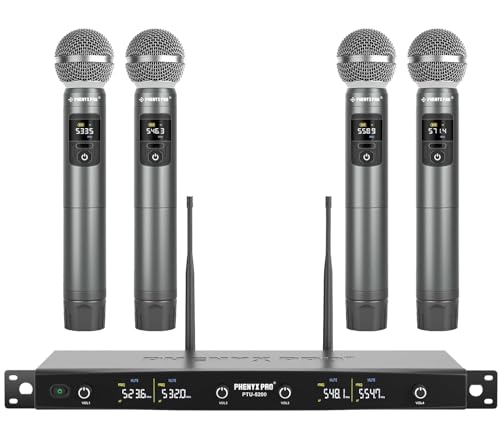
- Four-channel UHF system
- 25 adjustable frequency sets
- Four XLR outputs plus mixed 1/4-inch output
Best For: Group performances, karaoke, churches, and events
Premium Creator Pick

- Two transmitters for two-person recording
- 32-bit float backup recording
- Up to 28 hours with charging case
Best For: Creators, interviews, and podcasts
Ultra-Portable Choice

- 9-gram transmitters
- Up to 1,000-foot line-of-sight range
- Up to 30 hours with charging case
Best For: Mobile video and streaming
Karaoke System Pick
JBL Wireless Two Microphone System
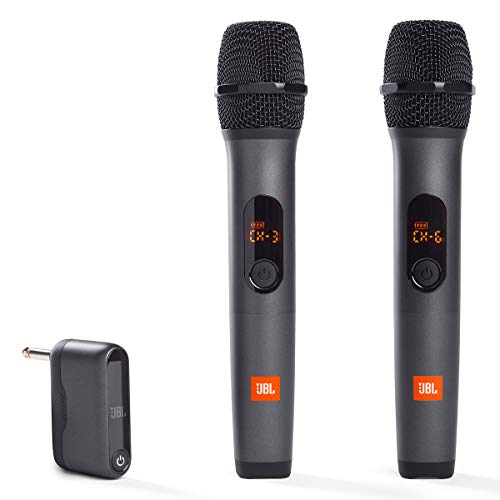
- Two handheld microphones included
- Dual-channel receiver for mixed vocals
- Plug-and-play setup for compatible PartyBox speakers
Best For: Karaoke, parties, and JBL PartyBox owners
Best Four-Mic System

- Four-channel UHF receiver
- Four cardioid handheld microphones
- Up to 260 feet of stated range
Best For: Events, karaoke, churches, and small performances
Best Budget Duo
HUACAM Dual Handheld Microphones

- Two dynamic handheld microphones
- Stated 200-foot line-of-sight range
- Supports 6.35 mm and 3.5 mm inputs
Best For: Karaoke, parties, speeches, and small events
Best for Creators – DJI Mic Mini
The DJI Mic Mini is a compact wireless microphones kit for vlogs, interviews, livestreams, and mobile content. Its two transmitters, 400-meter maximum transmission range, automatic limiting, and selectable noise cancellation make it a versatile choice for recording clear speech in changing environments.
Best For: Content creators, interviewers, and mobile filmmakers who want discreet lavalier microphones with long battery life.
Pros:
- Ultralight 10 g transmitters are discreet and comfortable on camera.
- Up to 48 hours of use with the charging case.
- Offers two noise-cancellation levels and automatic limiting to help prevent clipping.
- Includes two transmitters, a receiver, charging case, phone adapter, and camera cable.
Cons:
- Its lavalier-style design is less suited to singers or stage performers who prefer handheld microphones.
- The strongest ecosystem features are geared toward compatible DJI devices.
Choose the Mic Mini when portability, extended recording time, and creator-focused connectivity matter most. It is especially practical for two-person interviews and on-the-go production.
Best Dual Handheld System – Phenyx Pro PTU-71-2H
The Phenyx Pro PTU-71-2H is a dual handheld wireless microphones system designed for karaoke, weddings, churches, DJ work, and public speaking. Auto Scan, selectable UHF frequencies, IR synchronization, and a stated 290- to 328-foot line-of-sight range support dependable operation in larger spaces.
Best For: Performers and event hosts who need two durable handheld microphones with flexible frequency selection.
Pros:
- Auto Scan helps identify lower-interference frequencies before use.
- Two channels offer 100 selectable frequencies each, with support for multiset operation up to 16 transmitters.
- Cardioid pickup helps reject ambient noise, while the tuned EQ supports balanced vocals.
- Metal construction, mute controls, replaceable mic heads, and included AA batteries add practical durability.
Cons:
- The system uses handheld microphones rather than discreet clip-on transmitters.
- Its UHF receiver setup is less compact than a mobile creator kit.
This system is a strong fit when two speakers or singers need conventional handheld microphones and frequency flexibility. Its metal build and replaceable heads are useful for recurring event use.
Best for PartyBox Karaoke – JBL PartyBox Wireless Mic
The JBL PartyBox Wireless Mic set is a plug-and-play pair of wireless microphones made specifically for JBL PartyBox speakers. Cardioid pickup, built-in pop filtering, shock mounts, rechargeable batteries, and a 2.4GHz dongle connection make it convenient for karaoke and party performances.
Best For: JBL PartyBox owners who want a simple two-microphone karaoke setup.
Pros:
- Compatible with all JBL PartyBox speakers, from the Encore to the Ultimate.
- Cardioid pickup delivers clear vocals while reducing unwanted sound.
- Shock mounts and a built-in pop filter help minimize handling and breathing noise.
- Provides up to 20 hours of playtime, with quick charging and use while charging.
Cons:
- Designed around JBL PartyBox speakers rather than general-purpose PA systems.
- Playtime is listed as up to 12 hours when using the digital wireless dongle.
If you already use a JBL PartyBox, this is one of the simplest wireless microphones options for singing with a partner. Its dedicated compatibility and included dongle reduce setup complexity.
Best for Four Performers – Phenyx Pro PTU-5200-4H
The Phenyx Pro PTU-5200-4H is a four-channel UHF wireless microphones system for karaoke, live performances, church services, and outdoor events. Its four handheld microphones, adjustable frequency sets, separate XLR outputs, and mixed 1/4-inch output suit venues that need multiple speakers or singers.
Best For: Groups, venues, and event operators who need four handheld microphones with mixer and PA connectivity.
Pros:
- Includes four metal handheld microphones and a four-channel receiver.
- Provides 25 adjustable frequency sets and supports up to 25 units operating together.
- Cardioid capsules and enhanced circuitry are designed for stable, feedback-resistant sound.
- Offers four XLR outputs, a mixed 1/4-inch output, frequency hopping, and included rack-mount brackets.
Cons:
- The system weighs about 3 kg and is less portable than compact wireless microphone kits.
- Rack mounting requires the separately noted ANTK-FR4A BNC antenna kit.
- Its four handheld format may be more equipment than a solo performer needs.
For multi-person performances, the PTU-5200-4H provides the channel count and outputs needed to integrate with mixers, amplifiers, and PA systems. It is best suited to organized event or venue setups rather than casual mobile recording.
Premium Creator Pick – DJI Mic 3
The DJI Mic 3 is a versatile choice for creators comparing wireless microphones for vlogs, interviews, podcasts, and camera recording. Its dual transmitters, adaptive gain control, noise-cancellation options, and internal 32-bit float recording provide useful flexibility when recording in changing environments.
Best For: Content creators, interviewers, and podcasters who need two-person recording, backup audio, and broad device compatibility.
Pros:
- Two transmitters support recording two voices, with receiver capacity for up to four transmitters and four-channel output.
- Adaptive gain control, three voice tones, and two noise-cancellation levels help tailor sound to different settings.
- Dual-file 32-bit float internal recording helps protect against clipping or missed takes.
- Charging case provides up to 28 hours of filming and includes USB-C phone connectivity.
Cons:
- The feature-rich system may be more than casual users need.
- Direct DJI ecosystem connections are limited to compatible Osmo devices.
Choose the DJI Mic 3 when recording reliability and expansion options matter as much as portability. It is especially well suited to more demanding creator workflows where backup recording and multi-person audio are valuable.
Ultra-Portable Choice – Hollyland Lark M2
The Hollyland Lark M2 is a compact option for shoppers seeking wireless microphones for phones, computers, action cameras, and mobile video. Its 9-gram transmitters, plug-and-play setup, selectable noise cancellation, and included charging case make it convenient for recording on the move.
Best For: Vloggers, filmmakers, streamers, and mobile creators who prioritize a lightweight setup and long combined battery life.
Pros:
- Each transmitter weighs just 9 grams and offers a line-of-sight range of up to 1,000 feet.
- 48 kHz/24-bit audio, a 70 dB signal-to-noise ratio, and support for sound levels up to 115 dB are suited to varied recording conditions.
- Noise cancellation can be adjusted through the transmitter controls or HollyAudio app.
- Up to 30 hours of total use with the charging case and factory-paired plug-and-play operation.
Cons:
- Actual wireless range depends on line-of-sight conditions.
- Phone recording controls depend on whether the phone supports volume-button camera commands.
The Lark M2 is a practical fit when low weight, quick setup, and phone compatibility are priorities. Its charging case and adjustable noise cancellation add useful flexibility for frequent mobile recording.
Karaoke System Pick – JBL Wireless Two Microphone System
The JBL Wireless Two Microphone System is designed for straightforward vocal use rather than lavalier recording. For buyers comparing wireless microphones for karaoke, parties, and compatible JBL PartyBox speakers, it offers two handheld microphones, a dual-channel receiver, and simple plug-and-play operation.
Best For: Karaoke, parties, and two-person singing with compatible JBL PartyBox speakers.
Pros:
- Includes two microphones and a dual-channel receiver for mixing both voices through a speaker.
- Plug-and-play setup requires turning on the receiver and microphones.
- Unidirectional microphones provide a focused vocal pickup pattern.
- Microphones use replaceable AA batteries, while the receiver supports up to six hours of playback.
Cons:
- Compatibility is centered on listed JBL PartyBox models.
- It is a handheld vocal system, not a compact lavalier setup for cameras or phones.
This JBL system makes the most sense for users already invested in compatible PartyBox speakers. Its two-microphone design and simple setup are convenient for karaoke and casual performances, while its narrower compatibility limits broader recording use.
Best with Extra Features – Mini Mic Pro
For creators seeking compact wireless microphones for phones and tablets, the Mini Mic Pro emphasizes simple setup and portable recording. It includes USB-C and Lightning adapters, requires no app or Bluetooth pairing, and comes with wind protection for outdoor use.
Best For: TikTok, YouTube, interviews, voiceovers, and mobile video recording.
Pros:
- Works with iPhone, Android, tablets, laptops, and iPads using the included adapters.
- Includes two lavalier microphones, a receiver, clips, foam tips, and dead cat wind covers.
- Offers up to six hours of recording per charge and supports simultaneous device charging.
Cons:
- Designed around mobile and personal recording rather than PA or stage systems.
- The omnidirectional microphones may capture more surrounding sound than directional alternatives.
This is a practical pick when portability and plug-and-play compatibility matter most. Its included wind protection and dual-mic setup add flexibility for interviews and outdoor content.
Best Four-Mic System – Phenyx Pro PTU-5000-4H
The Phenyx Pro is a four-channel UHF option for buyers who need multiple wireless microphones for events or fixed sound setups. Its receiver provides individual volume controls, four XLR outputs, and a stated operating range of up to 260 feet.
Best For: Weddings, churches, speeches, karaoke, conferences, and small performances using an amplifier or PA system.
Pros:
- Includes four handheld microphones and a four-channel receiver.
- Fixed UHF frequencies and cardioid cartridges are designed for stable transmission and reduced unwanted noise.
- All-metal construction, individual volume controls, and a memory switch support repeat event setups.
Cons:
- Requires an amplifier, speaker, mixer, or other compatible sound system for output.
- Fixed-frequency operation is not intended for multiset use.
- The system is less suitable for mobile-phone recording than the included 6.35 mm and XLR connections suggest.
Choose this system when four simultaneous handheld channels are more useful than a compact creator microphone. The receiver’s dedicated controls and included accessories make it suited to recurring venue or event applications.
Best Budget Duo – HUACAM Dual Handheld Microphones
These HUACAM wireless microphones provide a straightforward two-mic setup for karaoke and small events. The receiver plugs into compatible 6.35 mm or 3.5 mm microphone inputs, and the system offers a stated line-of-sight range of up to 200 feet.
Best For: Home karaoke, parties, weddings, classrooms, churches, and speeches with a compatible speaker or PA system.
Pros:
- Includes two handheld dynamic microphones, a receiver, and a 3.5 mm adapter.
- Supports compatible amplifiers, karaoke machines, PA systems, speakers, and audio interfaces.
- Automatic pairing and claimed zero audio delay make setup simple for casual use.
Cons:
- Not compatible with mobile phones, computers, or tablets.
- The receiver requires a 6.35 mm or 3.5 mm microphone input; an AUX interface is not applicable.
- Two product versions may be shipped randomly.
This duo is a sensible choice for basic vocal reinforcement when you already have a compatible sound system. Verify the input connection before buying, especially if you plan to use it with consumer electronics.
How We Picked These Wireless Microphones
We selected these Wireless Microphones to represent the main buying categories: compact systems for phones and cameras, handheld options for karaoke and live events, and multi-channel kits for churches, classrooms, DJs, and larger venues. We considered microphone format, wireless technology, receiver compatibility, stated operating range, battery design, channel capacity, and intended use.
Because specifications and included accessories vary, confirm the exact package before purchasing. Pay particular attention to whether the kit includes transmitters, receivers, charging cases, cables, batteries, and the adapters needed for your device.
Quick Comparison
| Best For | Recommended Type | What to Prioritize |
|---|---|---|
| Phone video and interviews | Compact clip-on system | Correct connector, noise reduction, battery life |
| Camera content | Two-transmitter creator kit | Camera compatibility, backup recording, range |
| Karaoke and parties | Handheld dual-microphone system | Receiver compatibility, stable connection, rechargeable batteries |
| Churches, classrooms, and events | Multi-channel UHF system | Channel count, scan functions, interference control |
| Professional live sound | Metal-bodied UHF system | Durability, output options, frequency flexibility |
Key Buying Factors for Wireless Microphones
Connection and Compatibility
Start with the device receiving the audio. Smartphone systems may use USB-C or a phone-specific connector, while camera and mixer setups commonly use a 3.5mm or XLR output. A microphone that uses the wrong connector may require an adapter, and some phones may need permission or external-audio settings enabled.
Microphone Format
Lavalier transmitters are discreet and useful for presenters, interviews, and hands-free videos. Handheld microphones suit singers, hosts, and speakers who want a familiar grip and visible microphone. Compact clip-on systems are generally easier to carry, while full UHF kits can offer more control for fixed installations and live events.
Range, Interference, and Channels
Advertised range is measured under ideal conditions. Walls, people, Wi-Fi congestion, and other radio devices can reduce usable distance. For multiple performers, choose a system with enough independent channels and follow its frequency-pairing instructions. Auto-scan or frequency-selection features can be valuable in crowded venues.
Battery Life and Handling
Check runtime for both transmitters and receivers, plus charging time and charging method. A charging case is convenient for portable creator kits. For events, consider replaceable batteries or spare rechargeable cells so a low battery does not interrupt a performance.
Who Should Buy Which Wireless Microphones?
Content creators and interviewers: Choose a compact two-transmitter kit or a smartphone lavalier system with the correct phone connector. These are typically the simplest choices for filming two people.
Karaoke hosts and casual entertainers: A dual handheld system is usually the most practical option, especially when rechargeable microphones and straightforward receiver setup matter.
Churches, schools, DJs, and event organizers: Look for four-channel UHF systems when several microphones must operate together. Confirm that the receiver outputs match the venue’s mixer or amplifier.
Frequent performers: Prioritize durable housings, dependable frequency management, clear output connections, and readily available replacement batteries or accessories over the lowest initial price.