Clear speech can make or break an interview. The best wireless microphone gives you cleaner dialogue, more freedom to move, and less dependence on a built-in phone or camera mic.
This roundup compares 10 wireless options for phones, cameras, computers, and dynamic microphones, including compact lavalier kits, handheld systems, and versatile multi-device setups.
Best 10 Wireless Microphones for Interviews Picks for 2026
Best All-Around Kit
DJI Mic Mini with Charging Case

- Two 10 g transmitters for discreet interviews
- Up to 48 hours with the charging case
- Noise cancellation and automatic limiting
Best For: Two-person interviews, outdoor reporting, and extended recording
Best Handheld Interview Mic
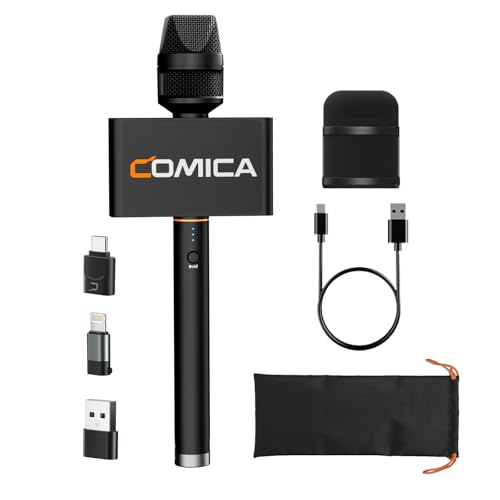
- Handheld cardioid design for focused voices
- 48 kHz/24-bit recording with one-key denoise
- Up to 15 hours of battery life
Best For: Street interviews, podcasts, and USB-C mobile recording
Best Lightweight Two-Person Setup
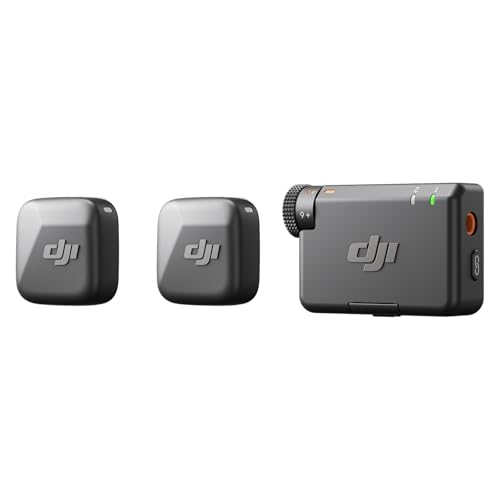
- Includes two ultralight 10 g transmitters
- Up to 400 m maximum transmission range
- Up to 10 hours per transmitter and receiver
Best For: Mobile interviews, vlogs, and compatible DJI Osmo workflows
Best for Device Flexibility
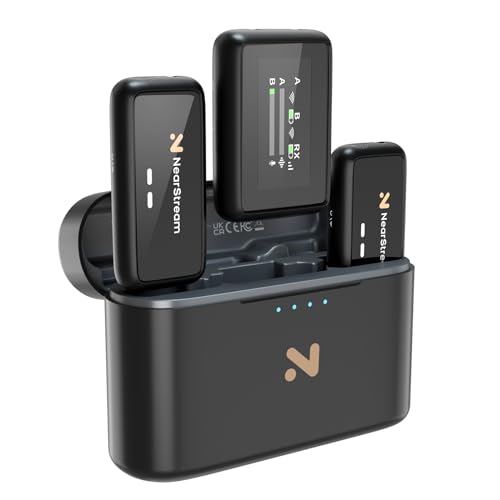
- USB-C and 3.5 mm outputs for broad compatibility
- LCD receiver enables live status monitoring
- Up to 20 hours with the charging case
Best For: Multi-device interview recording with phones, cameras, and PCs
Best XLR Upgrade

- Converts wired XLR mics to wireless
- 100-foot open-space range
- 24-bit/48kHz audio with 6–8-hour battery
Best For: Dynamic XLR interview microphones and PA-based setups
Best Two-Person Value
Ecomxia WM300 Dual Lavalier Kit

- Includes two clip-on transmitters
- Three noise-reduction modes
- Charging case with up to eight hours of use
Best For: Two-person smartphone interviews and portable video recording
Versatile Interview Pick

- Dual transmitters for two-person interviews
- Lightning, USB-C, and camera connectivity
- 65-foot range with noise reduction
Best For: Flexible phone-and-camera interview setups
Monitored Audio Choice

- Real-time headphone monitoring
- USB-C and Lightning compatibility
- DSP noise reduction with wind covers
Best For: Mobile interviews requiring audio checks
Case-Friendly Budget Pick

- Two transmitters for interview pairs
- Lightning and USB-C phone support
- Longer receiver works with most cases
Best For: Simple phone interviews with minimal setup
Best All-Around Kit – DJI Mic Mini with Charging Case
For creators comparing wireless microphones for interviews, the DJI Mic Mini kit is a versatile lavalier option with two transmitters, a receiver, and a charging case. Its 10 g transmitters stay discreet on camera, while 400 m maximum transmission, noise cancellation, and automatic limiting support dependable recording in changing environments.
Best For: Two-person interviews, outdoor reporting, livestreams, and creators who need extended battery life.
Pros:
- Two lightweight 10 g transmitters suit interviews with multiple speakers.
- Up to 48 hours of use with the charging case.
- Offers two noise-cancellation levels and automatic limiting to help prevent clipping.
- Includes camera and USB-C phone connection accessories.
Cons:
- The supplied details do not specify separate onboard recording.
- Some DJI ecosystem features require compatible Osmo devices.
This is a strong choice when portability, long runtime, and flexible two-person recording matter more than having a handheld reporter-style microphone.
Best Handheld Interview Mic – COMICA Revo S
The COMICA Revo S takes a reporter-style approach to wireless microphones for interviews. Its handheld design, 14 mm condenser capsule, and cardioid pickup pattern are suited to directing attention toward the speaker, while plug-and-play digital output simplifies recording on compatible phones, tablets, laptops, and computers.
Best For: On-camera interviews, podcasting, street reporting, and video production using USB-C devices.
Pros:
- Handheld form factor works naturally for interviewer-led conversations.
- Cardioid pattern and 14 mm condenser capsule support focused voice capture.
- 48 kHz/24-bit recording and one-key denoise provide useful audio controls.
- Three gain levels allow quick sensitivity adjustments.
Cons:
- It is a one-channel handheld system rather than a two-transmitter kit.
- Lightning devices require an OTG-compatible USB-C-to-Lightning adapter.
- Battery life is rated at up to 15 hours.
Choose the Revo S if you prefer the familiar handling of a handheld interview microphone and want straightforward digital phone connectivity without a separate cable from the microphone.
Best Lightweight Two-Person Setup – DJI Mic Mini
For shoppers seeking wireless microphones for interviews without the added charging case, this DJI Mic Mini package provides two transmitters and one receiver. The 10 g lavalier-style transmitters are discreet, and the system combines up to 400 m transmission, noise cancellation, automatic limiting, and up to 10 hours of operating time for each transmitter and receiver.
Best For: Mobile interview teams, vlogs, livestreams, and DJI Osmo users who want a compact two-speaker kit.
Pros:
- Two transmitters support interviews with two subjects.
- Lightweight 10 g transmitters are comfortable and unobtrusive.
- Up to 400 m maximum transmission range is useful for outdoor production.
- Supports DJI OsmoAudio direct connection with compatible Osmo devices.
Cons:
- Maximum operating time is listed as 10 hours for each transmitter and receiver.
- This package does not list a charging case among the included accessories.
- The supplied details identify one channel in the product specifications.
This version is a practical fit for creators who already have a charging solution or prefer a leaner kit, while still needing two discreet transmitters for interview work.
Best for Device Flexibility – NearStream AWM20T
The NearStream AWM20T is a flexible choice among wireless microphones for interviews because its receiver supports USB-C and 3.5 mm connections, with included cables for phones, cameras, and computers. A receiver LCD shows pairing, battery, mute, and volume information, while one-click noise reduction and a 200 m maximum open-area range support practical field recording.
Best For: Creators switching between smartphones, cameras, PCs, and other recording devices.
Pros:
- Analog and digital outputs support cameras, smartphones, tablets, and PCs.
- LCD receiver provides live status information for pairing, battery, mute, and volume.
- Charging case extends total use to up to 20 hours.
- Includes real-time monitoring and an option to connect an external microphone.
Cons:
- The supplied specifications list one channel.
- The 200 m transmission figure applies to open, unobstructed conditions and can be affected by interference.
- Transmitter and receiver individual runtimes are listed as 7 and 6 hours.
The AWM20T stands out when compatibility and monitoring are priorities. Its multiple output options make it easier to move between camera and mobile interview setups without changing microphones.
Best XLR Upgrade – JOYO MW-2 Wireless XLR System
For interviews using a familiar handheld or dynamic microphone, the JOYO MW-2 turns a wired XLR setup into a wireless one. Its 2.4GHz connection, 100-foot open-space range, and 24-bit/48kHz audio make it a practical choice for mobile interview rigs, PA systems, mixers, and compatible cameras.
Best For: Interviewers who already own a dynamic XLR microphone and want wireless freedom without replacing it.
Pros:
- Plug-and-play transmitter and receiver with automatic pairing.
- Supports up to four MW-2 systems and offers up to 100 feet of range in open spaces.
- 24-bit/48kHz audio and 6–8 hours of battery life.
Cons:
- Designed for the cleanest performance with dynamic microphones; some condensers may produce noise.
- Requires careful pairing and muting before power changes to avoid loud pops.
- 2.4GHz Wi-Fi and nearby LED equipment may contribute to interference.
The MW-2 is a strong fit when your interview workflow is built around XLR microphones and a mixer or PA. Test any condenser microphone in your specific environment before relying on it for an important recording.
Best Two-Person Value – Ecomxia WM300 Dual Lavalier Kit
The Ecomxia WM300 is a convenient option for interviews recorded on compatible iPhones, iPads, and Android devices. It includes two clip-on transmitters, a receiver, and a charging case, allowing an interviewer and guest to record together without sharing one microphone.
Best For: Smartphone interview videos with two speakers, especially when portability and a charging case matter.
Pros:
- Two wireless lavalier microphones support two-person recordings.
- Three noise-reduction modes provide recording flexibility in noisier environments.
- Charging case, up to eight hours of use, and a stated 70-foot range.
Cons:
- The listed connector is Lightning, so compatibility should be checked carefully for the specific Android or iPad setup.
- Omnidirectional microphones can pick up surrounding sound.
- Plastic construction may be less rugged than a professional metal-bodied system.
For casual interviews, vlogs, and online video, the WM300 offers a useful two-mic package in a compact format. Confirm the connector and device compatibility before ordering, particularly if you plan to switch between Apple and Android devices.
Best Plug-and-Play Choice – Mini Mic Pro Wireless Lavalier
The Mini Mic Pro is aimed at creators who want a simple wireless microphone for interviews on phones, tablets, or laptops. With USB-C and Lightning adapters, included wind protection, and a compact lavalier design, it is suited to quick recordings indoors or outside.
Best For: Mobile interview creators who need broad device compatibility and fast, app-free setup.
Pros:
- Includes USB-C and Lightning adapters for compatible Apple and Android devices.
- Plug-and-play operation requires no app or Bluetooth pairing.
- Includes foam and dead-cat wind protection plus up to six hours of battery life.
Cons:
- The listed system has one channel, making it less suited to separately recording two speakers.
- Noise reduction and wind protection cannot eliminate every outdoor or background sound.
- Battery runtime is shorter than some dual-lavalier alternatives.
The Mini Mic Pro is a practical pick for fast, lightweight interview production. Its adapter selection makes it flexible across devices, while the included wind covers add useful protection for outdoor conversations.
Versatile Interview Pick – 3-in-1 Wireless Lavalier Mic
For shoppers comparing wireless microphones for interviews, the PQRQP GT16 stands out for its broad device support and dual-transmitter setup. Its 3-in-1 receiver works with Lightning, USB-C, and camera connections, while active noise reduction, a 65-foot transmission range, and up to seven hours of runtime support mobile interview recording.
Best For: Interviewers and creators who need one microphone kit for phones, cameras, livestreams, and outdoor recording.
Pros:
- Includes two wireless transmitters for dual-person recording.
- Supports iPhone, Android, cameras, and other compatible devices through its multi-connector receiver.
- Offers active noise reduction, omnidirectional pickup, and up to 65 feet of wireless range.
- Receiver can charge while operating.
Cons:
- The 3.5mm receiver connection is not suitable for laptop audio input.
- Some Android and USB-C devices may require OTG to be enabled manually.
The GT16 is a flexible choice when interview setups vary between phones and cameras. Confirm your device connection before buying, particularly if you plan to record directly into a laptop.
Monitored Audio Choice – Wireless Mini Mic 2-Pack
The wedaniya WM189 is a compact option among wireless microphones for interviews, with USB-C and Lightning receivers for quick phone, tablet, or laptop connections. Its DSP noise reduction, wind protection, and receiver-based real-time monitoring make it useful when you want to check captured audio while recording.
Best For: Mobile interviewers and content creators who value monitoring, quick pairing, and a lightweight two-microphone kit.
Pros:
- Includes two transmitters for recording interviews with two speakers.
- Supports USB-C and Lightning devices with no app or Bluetooth pairing required.
- Provides real-time headphone monitoring and Standard, Reverb, and Mute modes.
- Includes deadcat and high-density sponge wind covers.
Cons:
- Advertised recording time is up to six hours.
- The receiver is designed around USB-C and Lightning connections rather than a camera connector.
Choose the WM189 if monitoring your interview audio matters as much as portability. Its included wind covers and selectable modes add practical control for outdoor shoots and livestream-style interviews.
Case-Friendly Budget Pick – Wireless Mini Lavalier Mic
The MAYBESTA WM356-1 offers a straightforward setup for wireless microphones for interviews, pairing two clip-on transmitters with Lightning and USB-C receivers. Its extended receiver interface is designed to work with most phone cases, while omnidirectional pickup, wind protection, and a noise reduction chip target clearer voice recording.
Best For: Phone-based interviewers and creators who want plug-and-play recording without removing a phone case.
Pros:
- Includes two lavalier microphones for two-person interviews.
- Compatible with Android, iPhone, iPad, laptops, and tablets through Lightning and USB-C connections.
- Longer receiver interface is intended to accommodate most phone cases.
- Offers automatic connection, mute, noise reduction, and plug-and-play operation.
Cons:
- The listed warranty information includes a 120-day refund policy and 18-month free replacement, so buyers should review the current terms.
- Supplied notes do not specify an exact wireless range or battery runtime.
The WM356-1 is a practical fit for casual interviews and social video when convenient phone compatibility is the priority. Its case-friendly receiver can reduce setup friction, but consider another model if you need a stated range or runtime.
How We Picked These Wireless Microphones for Interviews
We focused on practical interview needs: intelligible speech, dependable wireless performance, device compatibility, portability, battery convenience, and setup simplicity. The selection includes systems for solo creators, two-person interviews, mobile journalism, classroom recording, and productions that use handheld or XLR microphones.
Because specifications and included accessories vary, check the exact package before buying. Some products include two transmitters for interviews with two speakers, while others are designed around a single handheld microphone or a plug-on XLR transmitter.
Quick Comparison
- Best overall flexibility: DJI Mic Mini kits offer a compact transmitter-and-receiver workflow for mobile and camera recording.
- Best for handheld interviews: COMICA Revo S is designed around a handheld microphone format for reporter-style use.
- Best for lavalier recording: NearStream, Ecomxia, PQRQP, Mini Mic Pro, and MAYBESTA provide clip-on options for discreet speech capture.
- Best for dynamic microphones: JOYO’s plug-on XLR system suits users who already own a compatible wired microphone.
- Best for broad device compatibility: Look for kits listing the phone connector, camera connection, and computer support you actually need.
Key Buying Factors for Wireless Microphones for Interviews
Compatibility and Connectors
Start with your recording device. USB-C and Lightning phone kits are not automatically interchangeable, and camera users may need a 3.5mm output or another suitable connection. If you switch between devices, choose a kit that includes the necessary adapters or a receiver designed for multiple platforms.
One or Two Speakers
For interviews with two people, select a two-transmitter kit or confirm that additional transmitters are supported. A single-transmitter system can work well for solo videos or one-at-a-time interviews but may require extra equipment for a second speaker.
Mic Style and Sound Control
Lavalier microphones keep hands free and can be unobtrusive, while handheld systems suit street interviews and visible microphone presentation. Look for useful noise-reduction features, but remember that placement, wind protection, and the recording environment often matter just as much.
Range, Battery, and Monitoring
Consider the distance between speaker and receiver, expected recording length, and whether the kit includes a charging case. Headphone monitoring, onboard recording, gain control, and backup recording can be valuable for higher-stakes interviews.
Who Should Buy Which Wireless Microphones for Interviews?
Mobile creators should prioritize a lightweight phone-compatible lavalier kit with a charging case. Two-person interviewers should choose a package with two transmitters. Reporters and street creators may prefer a handheld system that is easy to aim and present on camera. Camera operators should verify receiver outputs and camera compatibility before purchase. Musicians, presenters, and existing mic owners may get the most value from a plug-on XLR system such as the JOYO option.
Before ordering, confirm connector type, transmitter count, included cables, operating range, battery claims, and return support. The right choice is the one that matches your recording workflow without adding adapters or setup steps you will not use.