Choosing the right monitor can make the difference between a confident performance and constant second-guessing onstage. The best powered stage monitors deliver clear vocals, enough volume for your venue, and placement that works with your setup.
This roundup focuses on practical options for rehearsal spaces, clubs, worship stages, and portable rigs, with an eye toward power, driver size, and feedback control.
Best 10 Powered Stage Monitors Picks for 2026
Dual Powered 10-inch Wedge Monitors

- Pair of powered 10-inch wedge monitors
- XLR combo, 1/4-inch, Speakon, and aux inputs
- 3-band EQ with gain and volume control
Best For: Matched wired monitor pair for rehearsal rooms and small live setups
Feedback-Controlled Stage Monitor

- 250-watt powered monitor speaker
- Integrated feedback filter and limiter
- 12-inch woofer with multiple wired inputs
Best For: Live vocals and stage use where feedback control matters
High-Power 10-inch Active Wedge

- 500-watt max output powered wedge
- 10-inch 2-way monitor for stage and studio
- XLR and 3.5 mm aux input support
Best For: Higher-output monitoring for PA, live sound, and studio setups
Compact Bluetooth Monitor

- Ultra-compact 50-watt powered monitor
- Bluetooth and USB playback support
- 3-channel mixer with 3-band EQ
Best For: Small rooms, home recording, and keyboard or vocal monitoring
Road-Ready Passive Floor Monitor
Peavey PV 12M 2-Way Floor Monitor
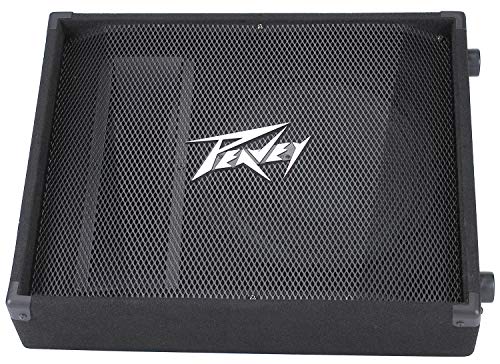
- 500 W program / 1,000 W peak handling
- 12-inch woofer with titanium compression driver
- 30°/45° angles and pole-mount support
Best For: Bands needing a durable passive monitor for clear vocals
Powered Party-to-Stage Monitor
Monoprice Stage Right SRD212 12-Inch Powered Speaker

- Up to 1200 watts with five DSP presets
- Bluetooth streaming and combo XLR/TRS/RCA inputs
- Angled sides let it work as a stage monitor
Best For: DJs and performers wanting a flexible powered speaker-monitor
Classic 12-Inch Stage Monitor
Yamaha BR12M 2-Way Floor Monitor

- 300 W program / 600 W peak handling
- 12-inch woofer with 1-inch compression driver
- 97 dB sensitivity and pole-socket versatility
Best For: Users needing a reliable passive stage monitor with simple setup
Budget Powered Stage Monitor
Behringer EUROLIVE F1320D 12" Active Monitor

- 300-watt active 2-way monitor
- 12-inch woofer with feedback filter
- Class-D amp with integrated limiter
Best For: Bands and small live setups needing a dependable wedge monitor
Heavy-Duty Powered Stage Monitor
Rockville RSM15A 15" Floor Wedge

- 1400W peak output with 15-inch woofer
- Combo XLR and 1/4-inch TRS inputs
- Tilt-back wedge with 3-band EQ
Best For: Loud stage setups, DJs, and performers needing a high-output wedge
Compact Powered Stage Monitor
Gemini AS-2108P 8" Portable Speaker

- 300 watts in an 11-pound cabinet
- 8-inch woofer with onboard EQ
- Wired XLR, RCA, AUX, and 1/4-inch inputs
Best For: Small venues and rehearsal spaces needing a lightweight monitor
Dual Powered 10-inch Wedge Monitors – Seismic Audio SA-10MT-PW Pair
If you need powered stage monitors for a small PA, rehearsal space, or studio setup, this Seismic Audio pair gives you two 10-inch wedge monitors with active amplification and flexible wired inputs. The built-in 3-band EQ, gain control, and switchable 110V/220V power make them straightforward to integrate into a practical live sound rig.
Best For: Bands, DJs, or rehearsal spaces wanting a matched pair of powered wedge monitors with wired connectivity.
Pros:
- Pair of powered 2-way 10-inch floor/stage monitors
- XLR combo inputs plus 3.5 mm, 1/4-inch, and Speakon connections
- 3-band EQ and gain/volume control for basic tuning
- Metal grill and carpeted covering for stage use
Cons:
- Heavy at 70 pounds for the pair
- No wireless connectivity
- Bulky footprint compared with compact monitors
Overall, this is a solid choice if you want a simple powered stage monitor pair with broad wired input support and hands-on controls rather than advanced features.
Feedback-Controlled Stage Monitor – Behringer EUROLIVE F1220D
For powered stage monitors that prioritize control and portability, the Behringer EUROLIVE F1220D brings a 12-inch woofer, 250-watt output, and an integrated feedback filter. It is a good fit for live performers who want a powered monitor speaker system with wired connectivity and built-in speaker protection.
Best For: Vocalists and live performers who want a powerful 12-inch powered monitor with feedback control.
Pros:
- 250-watt powered monitor speaker system
- Integrated feedback filter and limiter for control and protection
- 12-inch woofer with 3-inch tweeter for wide bandwidth
- Wired inputs include XLR, 1/4-inch, RCA, and Speakon
Cons:
- Mono output only
- Tabletop mount design instead of a dedicated wedge-only format
- Heavier than ultra-compact monitors at 23.6 pounds
If your priority is a dependable powered stage monitor with simple wired integration and feedback management, the F1220D is built for exactly that kind of job.
High-Power 10-inch Active Wedge – Seismic Audio FL-10MP-PW
Seismic Audio FL-10MP-PW Premium Powered 2-Way 10-Inch Active Floor/Stage Monitor with Titanium Horn
Check Price On AmazonThe Seismic Audio FL-10MP-PW is aimed at buyers who want powered stage monitors with more output headroom from a compact 10-inch wedge design. With a 500-watt maximum output, XLR input, and 3.5 mm aux compatibility, it fits live sound, PA, and studio monitoring needs where simple wired operation is enough.
Best For: Players and presenters who want a powered 10-inch monitor with higher output and straightforward wired connectivity.
Pros:
- 500-watt maximum output for stronger stage volume
- 10-inch powered 2-way floor/stage monitor design
- XLR plus 3.5 mm aux connectivity
- Suitable for PA, live sound, stage, and studio use
Cons:
- No wireless features
- Heavier than some compact monitors at 36.3 pounds
- Single monitor, not a matched pair
As a higher-output powered stage monitor, this model makes sense when you want a familiar wedge format with enough power to handle louder monitoring duties.
Compact Bluetooth Monitor – Behringer B105D
When you want powered stage monitors in a small, flexible format, the Behringer B105D is built for vocal and keyboard monitoring, home recording, and other multi-purpose uses. Its 50-watt output, 5-inch speaker, Bluetooth support, and ultra-compact size make it a convenient choice for lower-volume monitoring needs.
Best For: Home studios, keyboard players, and compact monitoring setups that need wireless playback and small size.
Pros:
- Ultra-compact 50-watt powered monitor
- Bluetooth and USB playback support
- 3-channel mixer with 3-band EQ
- Lightweight form factor for easy placement
Cons:
- Only 50 watts, so it is not suited to larger stage volume
- 5-inch driver limits low-end and overall output versus bigger monitors
- Best for smaller applications rather than full PA duty
If your priority is a compact powered monitor with modern playback options, the B105D is one of the easiest models here to place on a desk or small stand.
Road-Ready Passive Floor Monitor – Peavey PV 12M 2-Way Floor Monitor
If you’re shopping for powered stage monitors, the Peavey PV 12M is a rugged floor monitor built for vocal clarity and dependable stage use. Its 12-inch Sheffield Pro woofer, titanium compression driver, and Sound Guard IV tweeter protection make it a straightforward option for live performances where projection matters more than bells and whistles.
Best For: Bands and performers who want a durable 12-inch floor monitor with strong vocal cut and simple, stage-focused performance.
Pros:
- 500 W program / 1,000 W peak power handling for solid stage volume
- 12-inch Sheffield Pro woofer and 14XT titanium compression driver for clear mids and highs
- 30- or 45-degree floor angles plus pole-mount capability for flexible placement
- Heavy-duty grille, steel handle, and carpet covering for road use
Cons:
- Passive design requires an external amplifier
- Mono floor monitor with no built-in playback or streaming features
- Heavier than some compact monitor options at 41 pounds
The PV 12M keeps the focus on reliable monitoring rather than extra features, which is exactly what many stage setups need. If you already have amplification and want a rugged, vocal-forward monitor, it offers a practical, proven layout.
Powered Party-to-Stage Monitor – Monoprice Stage Right SRD212 12-Inch Powered Speaker
For shoppers comparing powered stage monitors, the Monoprice Stage Right SRD212 stands out as a versatile 12-inch powered speaker that can also work as a stage wedge. It pairs up to 1200 watts of power with five DSP presets, Bluetooth streaming, and combo XLR/TRS and RCA inputs, making it a flexible choice for live sound and smaller event setups.
Best For: Performers, DJs, and event hosts who want an affordable powered monitor that can also double as a portable main speaker.
Pros:
- Up to 1200 watts of power for small to large live performances
- Five DSP presets controlled by a single knob for quick setup
- Bluetooth streaming plus XLR/TRS and RCA connectivity for flexible use
- Angled sides and side handle support stage monitor placement
Cons:
- At 35 lbs., it is portable but still larger than ultra-compact wedges
- Wall-mount language in the specs may make it less wedge-specific than dedicated monitors
- Best suited to general live sound rather than highly specialized monitor applications
The SRD212 is a practical pick if you want one powered speaker that can cover multiple roles. Its mix of power, simple DSP, and broad connectivity makes it especially useful when flexibility matters more than a purely monitor-only design.
Classic 12-Inch Stage Monitor – Yamaha BR12M 2-Way Floor Monitor
If you need powered stage monitors in a traditional passive format, the Yamaha BR12M is built for straightforward stage reinforcement. It uses a 12-inch woofer, 1-inch compression driver, and a 90 x 40 horn to deliver punchy lows and crisp highs for monitoring, public address, and general live sound.
Best For: Players and sound teams looking for a reliable passive floor monitor with a classic Yamaha stage-monitor design.
Pros:
- 300 W program / 600 W peak handling for dependable stage use
- 12-inch woofer and 1-inch compression driver with 90 x 40 horn
- 97 dB sensitivity supports efficient output with the right amplifier
- Built-in pole socket and sturdy handles add placement and transport convenience
Cons:
- Passive design requires external amplification
- No wireless, Bluetooth, or onboard DSP features
- Single-channel setup is more basic than powered multi-input alternatives
The BR12M is a no-frills monitor that focuses on the essentials: usable output, simple construction, and stage-ready durability. For users who already have an amp and want a proven floor monitor, it remains an easy model to understand and deploy.
Budget Powered Stage Monitor – Behringer EUROLIVE F1320D 12" Active Monitor
If you need a powered stage monitor for live or playback use, the Behringer EUROLIVE F1320D gives you a simple 2-way wedge with 300 watts of power and a 12-inch woofer. It’s built for practical stage control, with a feedback filter, integrated limiter, and onboard sound processing to help keep the mix stable.
Best For: Bands, rehearsal rooms, and small live setups that want an affordable powered monitor with built-in protection and basic tone control.
Pros:
- 300-watt active 2-way design for live and playback applications
- Adjustable feedback filter and integrated limiter for system control
- 12-inch woofer with 1-inch compression driver for wide bandwidth coverage
- Class-D amp keeps the cabinet relatively light for its size
Cons:
- Wired-only connectivity may limit placement flexibility
- Large 33.1-pound cabinet is less convenient for frequent transport
- No built-in battery or wireless streaming features
This is a straightforward powered stage monitor for users who want dependable output and simple protection features more than extra extras. It makes the most sense when you want a monitor that can handle everyday gig duties without overcomplicating setup.
Heavy-Duty Powered Stage Monitor – Rockville RSM15A 15" Floor Wedge
The Rockville RSM15A is a powered stage monitor built for louder gigs, with 1400W peak output, a 15-inch woofer, and a 1.75-inch titanium diaphragm driver. Its tilt-back wedge design, mic/line inputs, and onboard EQ make it a useful choice when you need a monitor that can also handle live sound tasks.
Best For: DJs, bands, and stage performers who want a high-output powered monitor with flexible wired inputs and more aggressive bass capacity.
Pros:
- 1400W peak / 350W RMS output for high-volume stage use
- 15-inch woofer and titanium driver for strong lows and clear highs
- Combo XLR and 1/4-inch TRS inputs support mixers, mics, and instruments
- 3-band EQ plus adjustable feedback filter for shaping the monitor mix
Cons:
- 61.2-pound cabinet is heavy to move around regularly
- No wireless connectivity built in
- Wired floor monitor format is less compact than smaller portable options
For players who need more output and a bigger low-end presence, this Rockville monitor is the most forceful option in the group. It is best suited to situations where stage volume and input flexibility matter more than portability.
Compact Powered Stage Monitor – Gemini AS-2108P 8" Portable Speaker
The Gemini AS-2108P is a compact powered stage monitor option with 300 watts of output, an 8-inch woofer, and a lightweight 11-pound cabinet. It’s aimed at smaller gigs and practice spaces, with wired inputs, onboard EQ, and a road-ready ABS enclosure that makes setup easy.
Best For: Small venues, rehearsal spaces, and mobile users who want a lightweight powered monitor with simple wired connections.
Pros:
- 300-watt output in an 11-pound portable cabinet
- 8-inch woofer and piezo HF driver for clear, compact sound
- Multiple wired inputs including XLR, 1/4-inch, RCA, and AUX
- Onboard EQ and dual-channel gain for quick tone adjustment
Cons:
- 8-inch driver is less suited to deep bass-heavy monitoring
- No Bluetooth, so wireless playback is not an option
- Smaller format may not cover larger stages as effectively
This Gemini model is a practical pick when portability and quick wired setup matter most. It works best as a compact powered stage monitor for smaller rooms where you want usable output without a heavy cabinet.
How We Picked These Powered Stage Monitors
We focused on models that make sense for real-world stage use: strong output, monitor-friendly cabinet designs, useful EQ or feedback features, and sizes that match common applications. We also looked at portability, connectivity, and whether the monitor is better suited for vocals, full-band monitoring, or compact setups.
Quick Comparison
In general, 5-inch and 8-inch models are best when space is tight and monitoring needs are modest. 10-inch options are a solid middle ground for vocals and small bands. 12-inch and 15-inch Powered Stage Monitors usually provide more low-end and higher stage volume, which helps in louder bands or larger rooms.
Key Buying Factors for Powered Stage Monitors
Speaker Size and Coverage
Driver size affects both volume and low-frequency response. Smaller monitors can sound focused and clear, while larger cabinets often move more air and hold up better when the stage gets loud.
Power and Headroom
Look for enough output to stay clean at performance volume. Headroom matters because a monitor that sounds fine at rehearsal may distort once the full band starts playing.
Feedback Control and EQ
Built-in feedback filters, contour switches, and basic EQ can be very helpful. These features let you shape the mix and reduce squeals without relying entirely on the console.
Inputs, Connectivity, and Flexibility
Check whether you need XLR, 1/4-inch, or mixed inputs. Some Powered Stage Monitors also offer Bluetooth or extra playback features, but those are more useful for practice and small events than for strict stage monitoring.
Portability and Placement
Wedge angle, cabinet weight, and handle design all matter if you move gear often. For tighter stages, a compact enclosure can be easier to position without blocking sightlines.
Who Should Buy Which Powered Stage Monitors?
If you need simple vocal monitoring for rehearsals or small rooms, a compact 8-inch or 10-inch model is usually the easiest fit. If you play louder music or want more full-range monitoring, a 12-inch powered unit is often the best balance of size and output. For bigger stages or more demanding low-end needs, 15-inch monitors can provide extra authority, but they are not always necessary for vocal-only use.
For most buyers, the right choice comes down to matching the monitor to the stage volume, the size of the band, and how much clarity you need at your feet. A well-chosen powered monitor should feel straightforward, dependable, and easy to dial in night after night.