The best acoustic panels can reduce reflections, tame echo, and make conversations, music, and recordings sound clearer. The right option depends on your room size, décor, installation needs, and whether you prioritize coverage or appearance.
We compared wood slat panels, fabric-wrapped fiberglass, decorative tiles, and acoustic foam to help you choose an effective solution for studios, offices, entertainment spaces, and everyday rooms.
Best 10 Acoustic Panels Picks for 2026
Best Decorative Coverage
NeatiEase Teak Wood Slat Panels

- Covers about 33 sq. ft. with four large panels
- Warm teak slat design for walls or ceilings
- Can be cut and mounted vertically or horizontally
Best For: Decor-focused rooms needing broad acoustic coverage
Best for Large Room Kits
AudioSilk Natural Acoustic Panels

- Four large panels for broad room coverage
- NRC rated up to 0.91
- Removable installation option for rented spaces
Best For: Project studios and rehearsal rooms
Best Thick Fiberglass Option

- 2-inch panels target stronger sound absorption
- Includes templates and nails for mounting
- Linen polyester wrap with fiberglass core
Best For: Recording rooms and echo-prone spaces
Best Walnut Accent

- Warm walnut fluted design for feature walls
- DIY-friendly wall and ceiling mounting
- Low-TVOC MDF and polyester fiber construction
Best For: Stylish home offices, living rooms, and studios
Studio-Ready Foam

- 24 panels cover 24 square feet
- 2-inch flame-retardant polyurethane foam
- Pyramid texture supports echo absorption and diffusion
Best For: Targeted treatment in studios, gaming rooms, and podcast spaces
Decorative Wall Upgrade

- Four panels cover about 31.14 square feet
- Oak slats pair with black acoustic felt
- Trim-friendly grid supports custom layouts
Best For: Stylish feature walls and media or living spaces
Maximum Coverage
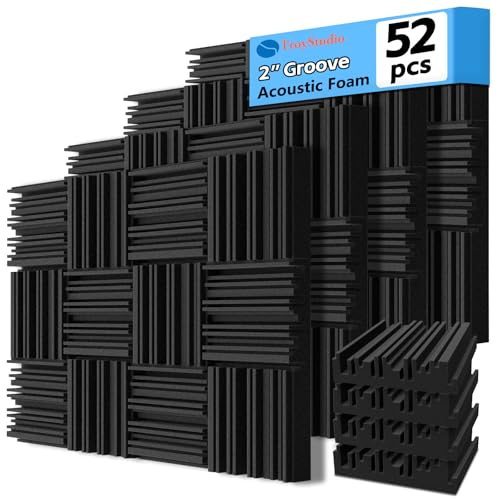
- 52 panels cover 52 square feet
- NRC 0.8 and 2-inch high-density foam
- Grooved tiles can be cut for flexible installation
Best For: Larger studios, streaming rooms, and broad wall or ceiling treatment
Budget Echo Control

- 54 lightweight 12-by-12-inch foam tiles
- Wedge surface helps reduce echoes
- Adhesive pads included for quick mounting
Best For: Broad, budget-conscious room coverage
Decorative Fiber Treatment
Light Turquoise Hexagon Panels

- 12 beveled high-density polyester panels
- Decorative hexagon design in light turquoise
- Up to 0.95 NRC rating stated
Best For: Stylish treatment for offices and creative spaces
Thick Studio Absorption

- 50 polyurethane foam wedge panels
- 2-inch thickness for substantial treatment
- 7,200 square inches of listed coverage
Best For: Studios and rooms needing thicker foam absorption
Best Decorative Coverage – NeatiEase Teak Wood Slat Panels
For shoppers seeking acoustic panels that also make a strong design statement, the NeatiEase teak wood slat panels combine a contemporary appearance with sound-absorbing construction. The four-panel set covers about 33 square feet and can be installed vertically or horizontally on walls or ceilings.
Best For: Living rooms, bedrooms, offices, studios, and other interiors where decorative wood styling and echo reduction are both priorities.
Pros:
- Modern teak finish adds warm, contemporary visual appeal.
- Four 96-by-12.6-inch panels cover about 33 square feet.
- Can be cut to different shapes and installed vertically or horizontally.
- Uses MDF and high-density polyester fiber with low TVOC levels.
Cons:
- The set is relatively heavy at about 19.96 kg.
- No warranty is listed in the supplied product details.
- Installation hardware or adhesive may need to be sourced separately.
This is a practical choice when acoustic treatment needs to blend into a finished interior rather than look purely functional. Its broad panel format also makes it useful for covering a larger feature wall or ceiling area.
Best for Large Room Kits – AudioSilk Natural Acoustic Panels
This large ROOM KIT is a strong option for shoppers comparing acoustic panels for project studios, rehearsal spaces, or other rooms with noticeable echo. Each of the four natural-finish panels measures about 45.7 by 22.8 inches and uses high-density recycled PET rated up to NRC 0.91.
Best For: Project studios, recording or rehearsal spaces, rented rooms, and buyers who want large panels with removable installation options.
Pros:
- Large 45.7-by-22.8-inch panels provide substantial coverage.
- High-density material is rated up to NRC 0.91.
- Made from post-consumer recycled PET without a harsh chemical smell.
- Can be installed with removable sticky strips or permanently with contact adhesive.
Cons:
- Sticky strips are sold separately.
- The thin 0.4-inch profile may not suit buyers seeking thicker treatment.
- The four-panel kit weighs about 10.56 pounds.
AudioSilk stands out for combining broad coverage with a clean, modern appearance and flexible installation. The included treatment advice is useful for buyers who want guidance on measuring room performance and panel placement.
Best Thick Fiberglass Option – Linen 2-Inch Acoustic Panels
For buyers prioritizing thickness and sound absorption, these linen-wrapped fiberglass acoustic panels offer a 2-inch profile rather than the thinner construction found in many fiber panels. The four-piece set includes templates and nails for stable wall or ceiling mounting.
Best For: Recording rooms, home theaters, gaming rooms, meeting spaces, and other areas where reducing reverberation, noise, and echo is the main goal.
Pros:
- Two-inch thickness is designed for stronger sound absorption than standard 1-inch poly fiber panels.
- High-density white fiberglass core is wrapped in 100% polyester fabric.
- Includes metal templates and nails for wall or ceiling installation.
- Removable design supports later repositioning.
Cons:
- The four panels are smaller than the large ROOM KIT panels at 23.6 by 11.8 inches each.
- Fiberglass construction may be less visually minimal than thin PET panels.
- The set weighs about 13.47 pounds.
This set is best suited to buyers who value panel depth and targeted treatment over maximum wall coverage. Its supplied mounting components make it a practical option for more secure installation in dedicated listening or recording spaces.
Best Walnut Accent – Art3d Fluted Wood Slat Panels
These Art3d fluted acoustic panels suit shoppers who want sound treatment with a natural walnut accent. The two-panel set measures 47.2 by 23.6 inches per panel and is designed for wall or ceiling installation in homes, offices, studios, and similar spaces.
Best For: Feature walls, home offices, living rooms, and studios where a warm wood texture and straightforward DIY installation are desired.
Pros:
- Walnut fluted design adds natural texture and visual warmth.
- Panels can be mounted on walls or ceilings with basic tools.
- MDF and high-density polyester fiber construction uses low-TVOC materials.
- Manufacturer warranty covers quality-related issues.
Cons:
- The two-panel pack offers less coverage than the four-panel options.
- Supplied details list coverage inconsistently as about 15.5 and 23.3 square feet.
- The manufacturer suggests ordering a sample pack before committing to a finish.
Art3d is a good fit when appearance matters as much as acoustic function. Consider the stated coverage carefully and order a sample first if matching the walnut finish to existing décor is important.
Studio-Ready Foam – Pyramid Acoustic Panels
These 2-inch pyramid acoustic panels are a practical choice for reducing echo and reverberation in smaller recording, gaming, podcasting, or home theater spaces. The 24-panel set covers 24 square feet and uses lightweight, flame-retardant polyurethane foam for straightforward wall or ceiling installation.
Best For: Home studios, podcast rooms, gaming setups, vocal booths, offices, and home theaters needing echo control.
Pros:
- 24 panels provide 24 square feet of coverage.
- Pyramid geometry increases surface area for sound absorption and diffusion.
- 2-inch, 25 kg/m³ foam is lightweight and flame-retardant certified.
- Can be installed with construction adhesive or nano double-sided tape.
Cons:
- Adhesive or mounting tape is not included.
- Designed for sound absorption, not full soundproofing or blocking outside noise.
- The foam appearance may be less decorative than wood slat panels.
Choose this set when affordable, flexible echo treatment matters more than a finished architectural look. Its coverage is suitable for targeted treatment, but larger rooms may require multiple packs.
Decorative Wall Upgrade – Oak Slat Acoustic Panels
These oak acoustic panels combine a contemporary slat-wall appearance with black acoustic felt and layered MDF construction. The four-panel set covers approximately 31.14 square feet, making it useful for accent walls, media areas, offices, and other spaces where visual finish matters alongside echo reduction.
Best For: Decorative feature walls, media rooms, living rooms, home offices, studios, and commercial interiors.
Pros:
- Oak slats and black felt create a refined architectural finish.
- Four large panels provide approximately 31.14 square feet of coverage.
- Felt-and-MDF construction helps absorb sound and reduce reverberation.
- A 0.5-inch grid allows trimming for edges, corners, and custom layouts.
Cons:
- At approximately 0.9 inches thick, these panels are less substantial than 2-inch foam options.
- The four-panel kit may not cover a full wall without additional sets.
- Wood-style wall panels may require more planning and effort to install than lightweight foam tiles.
This is the strongest fit for buyers who want acoustic treatment that doubles as wall decor. Select additional packs if you are planning a larger feature wall or broader room coverage.
Maximum Coverage – TroyStudio Groove Foam Panels
For buyers treating a larger area, this 52-piece set of 2-inch groove acoustic panels provides 52 square feet of coverage. The high-density polyurethane foam uses a periodic groove structure and is rated at NRC 0.8, making it a versatile option for reducing reverb, echo, standing waves, and reflected sound.
Best For: Recording studios, streaming rooms, home theaters, gaming rooms, vocal booths, offices, and larger acoustic treatment projects.
Pros:
- 52 panels cover a generous 52 square feet.
- 2-inch open-cell foam is rated NRC 0.8 with an average absorption coefficient of 0.77.
- Groove styling adds visual texture while helping absorb reflections.
- Panels are easy to cut and can be installed with spray adhesive, tape, or small screws.
Cons:
- Mounting supplies are sold separately.
- The flexible foam tile design may not provide the finished look of wood slat panels.
- It treats sound reflections rather than fully soundproofing a room.
This set stands out when coverage and stated absorption performance are priorities. Its flexible installation options suit larger or irregular treatment areas, while the 52-panel quantity can reduce the need to combine smaller packs.
Budget Echo Control – 54-Pack Acoustic Foam Panels
These acoustic panels offer broad, budget-friendly coverage for reducing echoes and reverberation in rooms where clearer audio matters. The 54 lightweight, 12-by-12-inch polyurethane foam tiles use a wedge-cut surface and include adhesive pads for tool-free installation on suitable walls or ceilings.
Best For: Home studios, offices, gaming rooms, and other spaces needing substantial foam coverage.
Pros:
- 54 panels provide ample coverage for larger treatment layouts.
- Wedge-cut surfaces help dampen echoes and reverberation.
- Included adhesive pads support quick, drilling-free installation.
- Panels can be arranged in multiple configurations.
Cons:
- Adhesive pads are intended for clean, dry, smooth surfaces only.
- The 1-inch thickness may provide less absorption than thicker foam options.
- Black foam has a utilitarian rather than decorative appearance.
This is a practical pick when quantity and simple installation are priorities. For dependable long-term mounting, use a more secure method if your wall is dusty, uneven, damp, or peeling.
Decorative Fiber Treatment – Light Turquoise Hexagon Panels
These decorative acoustic panels combine sound treatment with a geometric wall design. The 12 high-density polyester hexagons are 0.4 inches thick, offer coverage of 1,497.6 square inches, and are rated up to NRC 0.95 according to the supplied product information.
Best For: Home offices, bedrooms, podcast spaces, conference rooms, and rooms where appearance matters.
Pros:
- Beveled hexagon design creates a more decorative alternative to traditional foam.
- High-density polyester construction is described as odorless and formaldehyde-free.
- Panels are easy to cut and arrange creatively.
- Made with material equivalent to four recycled water bottles per panel.
Cons:
- No adhesive is included.
- Installation requires construction adhesive or strong double-sided tape.
- The 12-pack offers less item count than larger foam-panel packages.
Choose this set when you want acoustic panels that contribute to the room’s visual style as well as its sound quality. Plan your mounting method separately, since the package does not include adhesive.
Thick Studio Absorption – 50-Pack 2-Inch Wedge Foam
These 2-inch acoustic panels are designed to absorb sound and manage reverberation rather than block sound transmission. The 50 polyurethane foam wedges are suited to studios, recording booths, theaters, offices, and game rooms, with a listed coverage of 7,200 square inches.
Best For: Recording studios, control rooms, vocal booths, and other spaces requiring thicker foam treatment.
Pros:
- 2-inch thickness offers a substantial foam treatment format.
- 50 panels provide extensive listed coverage.
- Wedge design helps reduce echoes, flutter, and standing waves.
- Foam is described as resilient, low-odor, and able to recover after compression.
Cons:
- Adhesive is not included.
- Installation requires separately purchased mounting supplies.
- Foam treatment manages reverberation but is not the same as soundproofing.
This is the strongest fit of the three for buyers prioritizing thicker foam and generous coverage. Budget for adhesive separately and set expectations correctly: these panels improve room acoustics rather than fully block outside noise.
How We Picked the Best Acoustic Panels
We evaluated these Acoustic Panels by construction, thickness, coverage, installation flexibility, visual design, and likely use case. We included decorative wood options for living spaces, fabric and fiberglass panels for more refined sound treatment, and foam products for studios or larger rooms where broad coverage matters.
Acoustic treatment is not the same as soundproofing. Panels primarily absorb reflected sound inside a room; they generally will not block traffic, loud neighbors, or sound traveling through walls. We also considered whether each format can be combined with additional panels to improve coverage over time.
Quick Comparison
| Panel type | Best for | Main advantage | Potential limitation |
|---|---|---|---|
| Wood slat | Living rooms and offices | Decorative appearance with sound absorption | Usually costs more per covered area |
| Fabric or fiberglass | Studios, offices, and media rooms | Effective broadband absorption | Requires careful placement and mounting |
| Acoustic foam | Recording and podcast spaces | Lightweight, flexible, and widely available | Less polished visually; coverage varies by thickness |
| Decorative tile | Accent walls and small treatment areas | Easy way to add visual interest | May provide less absorption than thicker panels |
Key Buying Factors for Acoustic Panels
Coverage and Placement
Measure the wall area before buying. A few panels can improve a small reflection point, but larger rooms typically need several treatment zones. Prioritize first-reflection points on side walls, the ceiling above a listening position, and the wall behind speakers or microphones. Leave some untreated surfaces to avoid making the room sound unnaturally dead.
Thickness and Material
Thicker panels generally absorb lower frequencies more effectively than thin decorative tiles. Fiberglass and other dense broadband materials are useful when you want balanced absorption, while foam is convenient for reducing mid- and high-frequency reflections. Check the listed dimensions and thickness rather than judging performance by appearance alone.
Installation and Safety
Confirm whether mounting hardware is included and choose an attachment method suitable for your wall. Heavier wood or fiberglass panels may need stronger anchors than lightweight foam. In recording or sleeping areas, review the product’s fire-safety information and keep panels away from heat sources.
Appearance and Maintenance
Wood slats and fabric-covered panels blend more easily with finished interiors, while foam offers a practical studio look. Consider color, dusting, edge finish, and whether panels can be rearranged if your room layout changes.
Who Should Buy Which Acoustic Panels?
- For stylish living spaces: Choose wood slat panels when appearance is as important as echo control.
- For home theaters and offices: Fabric-wrapped or fiberglass panels offer a balanced combination of performance and a finished look.
- For podcasts, music, and voice recording: Use thicker foam or broadband panels around microphones and first-reflection areas, then add coverage as needed.
- For large walls on a budget: Multi-pack foam panels can cover more area, but plan the layout carefully and verify thickness.
- For small decorative upgrades: Patterned or hexagonal panels work well as accents, though they may not replace broader room treatment.
For the best result, combine suitable panel thickness with strategic placement. Treat the reflections that affect your listening or recording position first, then expand coverage based on how the room sounds.