Wireless video receivers with HDMI make it easier to send a source such as a laptop, camera, streaming device, or media player to a distant display without running a long HDMI cable. The best option depends on more than advertised range: resolution support, latency, connection stability, receiver count, and setup requirements all matter.
This roundup compares 10 wireless HDMI transmitter-and-receiver kits, including multi-display systems, USB-C-compatible models, loop-out designs, and units that decode 4K sources while outputting 1080p video. Use the guide below to narrow the choices by your room layout, equipment, and performance priorities.
Best 10 Wireless Video Receivers with Hdmi Picks for 2026
Best Compact Pick
Plug-and-Play 4K Wireless HDMI Kit
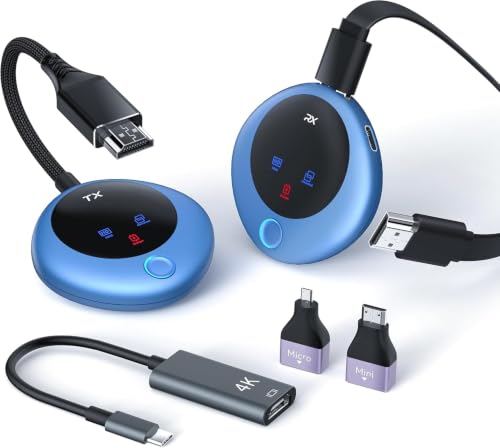
- 4K decoding with 1080p/60Hz output
- Up to 98 feet with dual-band transmission
- Includes USB-C, Micro HDMI, and Mini HDMI adapters
Best For: Portable presentations, home theater, and everyday screen mirroring
Best for Production Monitoring
Wireless HDMI System with 7-Inch Monitor
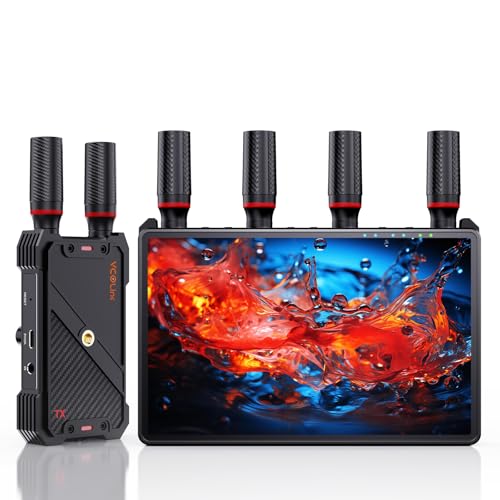
- Built-in 7-inch HD monitoring screen
- One transmitter can support up to five receivers
- HDMI loop out and less than 0.05-second stated latency
Best For: Filming, live production, and on-set collaboration
Best Multi-Screen Value
Four-Receiver Wireless HDMI Kit

- Includes four pre-paired receivers
- Supports up to six receivers total
- Designed for simultaneous 1080p/60fps output to multiple TVs
Best For: Multi-TV presentations, classrooms, and shared entertainment setups
Best Professional Extender
Long-Range Wireless HDMI System

- 1080p/60Hz transmission with 0.05-second stated latency
- Up to 1,300 feet in open-field line of sight
- Loop out, dual HDMI output, and IR support
Best For: Camera monitoring, live events, and extended HDMI connections
Best Long-Range Pick

- 1080p/60Hz output with 4K decoding
- 2.4GHz/5.8GHz dual-band transmission
- Portable design with Micro and Mini HDMI adapters
Best For: Presentations, classrooms, events, and outdoor movie setups
Best USB-C Option
Lemorele 1080p Wireless HDMI Kit

- 1080p/60Hz output with 30ms latency
- USB-C DP Alt Mode compatibility
- Up to 60W PD pass-through charging
Best For: Compatible USB-C laptops, tablets, and smartphones
Best for Multi-Display Setups

- Up to 1080p/60Hz transmission
- Transmitter loop-out and IR remote support
- Supports up to four receivers
Best For: Long-range AV distribution across conference rooms, churches, and venues
Best with Extra Features

- 328ft/100m stated wireless range
- 4K decoding with 1080p@60Hz output
- Supports extended and duplicate display modes
Best For: Presentations, classrooms, home theaters, and outdoor movie setups
Multi-Transmitter Choice

- 400ft/120m stated transmission range
- Supports up to 12 transmitters per receiver
- LED display and dual-band connectivity
Best For: Offices, events, classrooms, and multi-source installations
Cooling Design Pick

- 360ft/110m open-space range claim
- Near-zero latency for live content
- Cooling design and LED status display
Best For: Live presentations, monitoring, events, and home theater use
Best Compact Pick – Plug-and-Play 4K Wireless HDMI Kit
If you want wireless video receivers with HDMI for everyday presentations, streaming, or home theater use, this compact COTOWE kit emphasizes quick setup and convenient device compatibility. It decodes 4K content, outputs at 1080p/60Hz, and does not require Wi-Fi, Bluetooth, or an app.
Best For: Portable presentations, home entertainment, teaching, and basic camera-to-display connections.
Pros:
- Plug-and-play setup with no Wi-Fi, Bluetooth, or app required.
- Supports 4K decoding with 1080p output at 60Hz.
- Dual-band 2.4GHz/5GHz transmission reaches up to 98 feet under suitable conditions.
- Includes USB-C, Micro HDMI, and Mini HDMI adapters plus an LED status display.
Cons:
- Output is limited to 1080p even though the system supports 4K decoding.
- Phone and tablet compatibility depends on USB-C video-output support and listed device limitations.
- The included warranty is 3 months.
With its small size, low stated latency, and included adapters, this is a practical choice when portability and straightforward setup matter more than advanced multi-receiver features.
Best for Production Monitoring – Wireless HDMI System with 7-Inch Monitor
For production crews comparing wireless video receivers with HDMI, this system combines a built-in 7-inch monitor with HDMI output, making it useful for camera work, live streaming, and on-set collaboration. It supports 1080p/60Hz transmission and can distribute one source to as many as five receivers.
Best For: Filming, live production, studio monitoring, and multi-person video review.
Pros:
- Built-in 7-inch HD screen provides monitoring without an extra display.
- Supports up to five receivers from one transmitter.
- Offers a stated range of up to 1,312 feet line of sight with less than 0.05-second latency.
- Includes HDMI loop out, IR remote control, headphone monitoring, and flexible power options.
Cons:
- An HDMI cable for connecting an external monitor is not included.
- Long-range performance is specified for line-of-sight use and may vary with obstacles.
- Smartphone and tablet use requires a Type-C-to-HDMI cable.
This is the most production-focused option in the group, especially if the built-in monitor, loop out, and expandable receiver setup can replace several pieces of monitoring equipment.
Best Multi-Screen Value – Four-Receiver Wireless HDMI Kit
If your setup needs wireless video receivers with HDMI for several televisions, this YUYUNLOMN kit is designed around multi-screen distribution. One transmitter is paired with four receivers out of the box, supports up to six receivers overall, and outputs decoded content at 1080p/60fps.
Best For: Sending presentations, video, audio, or games to multiple TVs in a home, classroom, or business environment.
Pros:
- Includes four pre-paired receivers and supports up to six total receivers.
- Streams the same source to multiple TVs without Wi-Fi or Bluetooth.
- Uses 2.4GHz/5GHz transmission with a stated range up to 165 feet.
- Includes USB-C, Micro HDMI, and Mini HDMI adapters for broader source compatibility.
Cons:
- When all four receivers are connected, the stated range may decrease to about 50 feet.
- Walls and other obstacles can reduce transmission performance.
- Apple TV output must be adjusted to 1080p/60Hz for use with the kit.
This kit makes the most sense when simultaneous displays are the priority. Its included receiver count reduces the need to buy extra units immediately, though multi-room placement should account for the reduced range with several receivers active.
Best Professional Extender – Long-Range Wireless HDMI System
For buyers seeking wireless video receivers with HDMI for camera, laptop, or set-top-box connections, this Vrriis system focuses on long-distance 1080p transmission and flexible monitoring. It adds transmitter loop out, dual HDMI output on the receiver, IR support, and several power options for mobile production use.
Best For: DSLR monitoring, sports and live-event viewing, projector connections, and extended HDMI links.
Pros:
- Transmits 1080p/60Hz video with a stated 0.05-second latency.
- Offers up to 1,300 feet of open-field line-of-sight range.
- Transmitter loop out and dual HDMI receiver outputs support flexible monitoring.
- Supports NP-F batteries, USB-C power, adapters, and portable rechargeable power sources.
Cons:
- Walls, metal, brick, and glass can significantly reduce range or cause signal loss.
- Batteries are not included.
- Adding more receivers can reduce the available transmission distance.
Its loop-out connection, IR control, and power flexibility make this a capable choice for mobile video workflows. Treat the advertised range as an open-field figure and plan conservatively for indoor installations.
Best Long-Range Pick – 328ft Wireless HDMI Extender
If you need wireless video receivers with HDMI for presentations, classrooms, or home entertainment, this plug-and-play extender offers 1080p/60Hz output and a claimed range of up to 328 feet outdoors. It supports 4K decoding, but output is limited to 1080p.
Best For: Presenters, teachers, churches, event setups, and backyard movie nights that need a portable wireless HDMI connection.
Pros:
- Supports 1080p/60Hz output with 4K decoding.
- Uses 2.4GHz and 5.8GHz bands for improved signal stability.
- Works with laptops, cameras, set-top boxes, projectors, monitors, and more.
- Compact 0.3-pound design includes Micro HDMI and Mini HDMI adapters.
Cons:
- Both the transmitter and receiver require power.
- Walls and obstacles can reduce range and transmission speed.
- It does not provide 4K output.
This is a flexible choice when portability and broad source compatibility matter. Its practical range will depend on the environment, so plan for shorter distances indoors or through walls.
Best USB-C Option – Lemorele 1080p Wireless HDMI Kit
For wireless video receivers with HDMI that connect directly to modern USB-C devices, the Lemorele kit provides 1080p/60Hz video, 30ms latency, and plug-and-play casting. It is especially convenient for compatible laptops, tablets, and smartphones, though the source must support USB-C DP Alt Mode.
Best For: USB-C laptops, tablets, and compatible phones used for office meetings, classroom presentations, and home cinema.
Pros:
- Delivers 1080p/60Hz video with synchronized audio.
- Supports up to 164 feet in open space using 2.4GHz and 5.8GHz bands.
- Transmitter supports up to 60W PD pass-through charging.
- Includes a compact transmitter, HDMI receiver, cables, and a one-year warranty.
Cons:
- Charging-only USB-C ports are not compatible.
- Walls, metal, and wireless interference can reduce range.
- The receiver requires a 5V/2A power supply.
This kit is a strong fit for users who want to mirror a compatible USB-C device without installing drivers or configuring Wi-Fi. Confirm DP Alt Mode support before buying, particularly for smartphones and tablets.
Best for Multi-Display Setups – 820ft Wireless HDMI Extender
This wireless HDMI receiver kit is designed for long-distance 1080p distribution, with a claimed open-field range of up to 820 feet. It also adds transmitter-side loop-out, IR remote support, and expansion for up to four receivers, making it useful for larger AV installations.
Best For: Conference rooms, churches, offices, and entertainment setups that need long-range transmission or multiple receiving displays.
Pros:
- Supports up to 1080p/60Hz transmission.
- Offers loop-out for monitoring the source on a local display.
- IR support allows remote control of the HDMI source from the receiver location.
- Can support one transmitter with up to four receivers.
Cons:
- The 820-foot range applies to an open field without interference.
- Walls, glass, and other obstructions can significantly reduce coverage.
- Adding receivers shortens the stated transmission distance.
Choose this model when installation flexibility matters more than the smallest form factor. Its loop-out and multi-receiver support provide capabilities that simpler point-to-point wireless HDMI kits may not offer.
Best with Extra Features – 328ft Wireless HDMI Extender
This wireless video receiver with HDMI is a practical choice for sending audio and video from a laptop, camera, set-top box, or similar source to a TV, projector, or monitor without a traditional HDMI cable. It supports 4K decoding with 1080p output at 60Hz, and its dual-band design is intended to help maintain a stable connection.
Best For: Presentations, classrooms, home theaters, churches, outdoor movie setups, and users who need a portable 100-meter wireless HDMI link.
Pros:
- Up to 328 feet/100 meters of wireless transmission in open conditions
- Supports duplicate and extended display modes
- Plug-and-play setup without Wi-Fi, apps, or Bluetooth
- Includes Micro HDMI and Mini HDMI adapters for added device compatibility
Cons:
- Both the transmitter and receiver need to be connected to power
- Walls and other obstacles can reduce range and transmission speed
- Output is limited to 1080p at 60Hz despite 4K decoding support
This model stands out for its long stated range, broad source compatibility, and lightweight design. It is a sensible fit when you want a cleaner installation for presentations or entertainment, provided you can power both units and have a mostly open signal path.
Multi-Transmitter Choice – 400ft Wireless HDMI Kit
For buyers comparing wireless video receivers with HDMI, this kit emphasizes range, device expansion, and status visibility. It provides 4K decoding with 1080p output at 60Hz, uses 5.8GHz and 2.4GHz bands, and is designed to connect quickly without Wi-Fi, apps, or complicated settings.
Best For: Offices, event teams, classrooms, home theaters, and setups that may need one receiver to work with multiple transmitters.
Pros:
- Up to 400 feet/120 meters of stated transmission range
- One receiver can support up to 12 transmitters
- Up to five sets can operate in the same environment
- LED display provides convenient status monitoring
Cons:
- 1080p at 60Hz is the listed output resolution
- Range and stability can vary with walls and other obstacles
- Its expanded multi-transmitter features may be unnecessary for simple point-to-point use
The main reason to choose this model is flexibility: its longer stated range and multi-transmitter support suit shared displays and changing presentation sources. It also includes 24-month replacement support, which may be useful for business deployments.
Cooling Design Pick – 360ft Wireless HDMI Streamer
This wireless video receiver with HDMI combines 4K decoding, 1080p output at 60Hz, and near-zero-latency transmission for presentations, monitoring, and entertainment. Its cooling design is intended to help limit heat buildup, while the 2.4GHz and 5.8GHz connection supports wireless operation across larger rooms and open areas.
Best For: Live presentations, classrooms, church services, events, home theaters, warehouses, bars, and backyard viewing areas.
Pros:
- Up to 360 feet/110 meters in open spaces and up to 165 feet/50 meters indoors, as stated
- Cooling design helps reduce overheating and potential signal loss
- Near-zero latency is suited to live sports, presentations, and video monitoring
- Supports up to eight transmitters per receiver and three simultaneous sets
Cons:
- Walls can reduce the listed range and transmission speed
- Maximum listed output is 1080p at 60Hz
- Both transmitter and receiver require suitable power connections
This is a well-rounded option for users who value stable operation during longer sessions and responsive video timing. The cooling design, LED display, and multi-transmitter capability add practical value, while the included Micro HDMI and Mini HDMI adapters broaden compatibility.
How We Picked the Best Wireless Video Receivers with Hdmi
We focused on wireless HDMI kits that clearly identify their supported input and output resolutions, advertised transmission range, connection bands, and setup features. The selection includes options for single-screen home use, multiple receivers, professional or presentation setups, and USB-C devices. We also considered practical details such as loop-out support, infrared remote control, LED status displays, plug-and-play operation, and claimed latency.
Wireless range figures are typically measured in open conditions. Walls, wireless congestion, metal objects, and nearby routers can reduce real-world performance, so treat the stated distance as a comparison point rather than a guarantee.
Quick Comparison
- Best for multiple displays: Choose a kit that supports several receivers, such as 1-to-5 or 1-to-6 configurations.
- Best for long cable replacement: Look for models advertising roughly 100 meters or more, while planning for line-of-sight placement.
- Best for USB-C laptops: A USB-C transmitter with DisplayPort Alt Mode compatibility can avoid a separate HDMI adapter.
- Best for source monitoring: Loop-out lets you keep a local display connected while transmitting to another screen.
- Best for higher-resolution sources: 4K decoding can accept some 4K signals, but confirm the actual output resolution before buying.
Key Buying Factors for Wireless Video Receivers with Hdmi
Resolution and Refresh Rate
Check both the transmitter’s input capability and the receiver’s output specification. Several kits in this roundup decode 4K but output 1080p, which is suitable for Full HD televisions, projectors, and monitors but not native 4K viewing. If smooth motion matters for presentations or video, verify whether 1080p at 60Hz is supported.
Range, Latency, and Reliability
Longer advertised range is useful in large homes, classrooms, offices, and event spaces, but stable performance is more important than the headline number. Low-latency designs are preferable for live camera feeds, gaming, and interactive presentations. For the best chance of a reliable link, keep the transmitter and receiver clear of obstructions and minimize competing 2.4GHz or 5GHz traffic.
Compatibility and Connections
Confirm that the source provides HDMI or compatible USB-C DisplayPort Alt Mode output. Check the display’s HDMI input, required power adapters, HDCP support, and audio behavior. A loop-out port is valuable when the original source must remain connected to a nearby television or monitor.
Multi-Receiver and Control Features
Multi-receiver systems can send one source to several displays, but verify whether extra receivers are included and whether all screens must use the same resolution. IR support may help control a hidden source, while LED indicators simplify installation and troubleshooting.
Who Should Buy Which Wireless Video Receivers with Hdmi?
Home theater users should prioritize stable 1080p output, straightforward pairing, and enough range to cross the room or nearby rooms. Businesses, schools, and event operators may benefit from multi-receiver kits and loop-out functionality for distributing one presentation to several screens. Content creators and camera operators should favor low-latency systems with dependable line-of-sight performance. Laptop users should consider the USB-C model if their computer supports DisplayPort Alt Mode. Finally, buyers replacing a very long HDMI cable should compare the claimed 100- to 250-meter range models carefully, while allowing extra budget for realistic placement, interference, and power requirements.