Music rooms need more than loudness control. Foot pedals, drum hardware, piano casters, and speaker vibrations can transmit noise through floors while also damaging hard surfaces.
These 10 soundproofing mats for music rooms cover interlocking felt floor systems, piano and drum rugs, and acoustic wall panels. Use the guide below to choose the right combination for your instrument, room, and noise-control goals.
Best 10 Soundproofing Mats for Music Rooms Picks for 2026
Best Floor Coverage
TroyStudio Interlocking Felt Mats

- Thick, high-density polyester felt
- Interlocking, non-slip floor design
- Cuttable panels with included tape
Best For: Drums, pianos, speakers, and hardwood floors
Best Wall Coverage

- 54 lightweight wedge-cut panels
- Suitable for walls or ceilings
- Adhesive pads included
Best For: Broad echo control in studios and practice rooms
Best Flame-Resistant Option

- High-density wedge acoustic foam
- Includes 60 adhesive tape pieces
- Flame-resistant, self-extinguishing design
Best For: Small studios, podcast rooms, and home theaters
Piano Floor Protection

- Reduces keyboard and pedal noise
- Non-slip, washable construction
- 160 x 70 cm piano-focused size
Best For: Upright piano setups needing localized cushioning and floor protection
Studio Setup Pick

- Absorbs sound and reduces echo
- Interlocking, anti-slip design
- Cuttable for custom layouts
Best For: Drums, pianos, and multipurpose home studios
Expandable Coverage

- Covers up to 17 square feet
- Dampens shock, reverb, and echo
- Expandable interlocking puzzle design
Best For: Modular studio coverage beneath drums, pianos, and other equipment
Studio Coverage Pick
20-Piece Interlocking Drum Rug
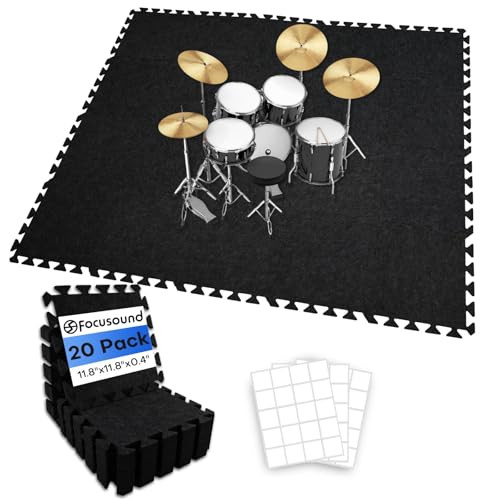
- 0.4-inch polyester felt panels
- Configurable coverage up to 17 sq. ft.
- Designed for sound absorption and vibration reduction
Best For: Custom music-studio areas for drums or pianos
Flexible Layout Choice

- Up to 20.5 sq. ft. of stated coverage
- Interlocking panels store neatly
- Includes removable double-sided tape
Best For: Broad, rearrangeable instrument practice areas
Compact Studio Pick

- 0.35-inch polyester-felt panels
- Designed to manage echo and vibration
- Interlocks for quick setup and removal
Best For: Compact instrument or speaker areas in music rooms
Best Floor Coverage – TroyStudio Interlocking Felt Mats
For music rooms that need floor-level sound treatment, these soundproofing mats for music rooms combine thick polyester felt with an interlocking design. The 16-piece set is suited to placing beneath instruments, speakers, or other equipment where vibration dampening and floor protection matter.
Best For: Drums, pianos, speakers, hardwood floors, and compact studio areas needing customizable floor coverage.
Pros:
- 0.4-inch-thick, high-density felt is designed to absorb sound energy and dampen vibration.
- Interlocking panels create a flat, slip-resistant surface.
- Panels can be cut with a knife and include removable double-sided tape.
- Odorless, non-toxic, stain-resistant, and easy to clean.
Cons:
- The 11-by-11-inch panels may require multiple sets for larger rooms.
- Designed primarily for floor treatment rather than wall-mounted acoustic control.
With an NRC of 0.87 listed by the manufacturer, this is a practical choice for reducing floor reflections and equipment vibration. Its modular format works well when you want coverage that can be trimmed or rearranged.
Best Wall Coverage – 54-Pack Acoustic Foam Panels
These 12-by-12-inch foam panels are a straightforward option for treating wall or ceiling reflections in a music room. As soundproofing mats for music rooms, they are better understood as sound-absorbing panels that help reduce echo and reverberation rather than as structural sound blockers.
Best For: Recording spaces, practice rooms, home theaters, and other rooms requiring broad wall coverage.
Pros:
- The 54-panel pack provides substantial coverage for larger treatment areas.
- Wedge-cut surfaces can be arranged in different configurations.
- Lightweight panels include adhesive pads for tool-free installation.
- High-density polyurethane foam is designed for long-lasting use.
Cons:
- Adhesive pads require clean, dry, smooth surfaces.
- Uneven, damp, dusty, or peeling walls may need a more secure mounting method.
- At 1 inch thick, the panels offer less material depth than thicker acoustic treatments.
The large pack size makes this a useful choice when consistent wall treatment is the priority. Plan the mounting surface carefully, particularly in rental rooms or on walls with fragile finishes.
Best for Shared Spaces – Interlocking Vibration Floor Mats
These 20 interlocking felt mats are designed for music rooms where instrument movement, floor vibration, and reflected sound are concerns. Their puzzle-style layout makes them useful soundproofing mats for music rooms in apartments, shared studios, and multipurpose spaces.
Best For: Drum kits, pianos, treadmills, subwoofers, and practice areas over hard flooring.
Pros:
- High-density 0.4-inch felt is intended to absorb impacts and dampen vibration.
- Interlocking construction helps keep instruments and chairs from shifting.
- Panels can be trimmed with a utility knife and stored flat.
- Includes 50 removable double-sided strips for added hold on hard floors.
Cons:
- Coverage depends on the relatively small 11-by-11-inch panel size.
- Floor mats reduce vibration and room echo but are not a substitute for structural sound isolation.
This set stands out for flexible placement and easy storage. It is a sensible option when you need to quiet equipment contact with the floor without committing to permanent installation.
Best Flame-Resistant Option – 1-Inch Wedge Foam Panels
For wall-based acoustic treatment, this 12-pack uses 1-inch wedge polyurethane foam to reduce echoes, reverb, and flutter effects. These soundproofing mats for music rooms are a fit for smaller recording, podcasting, gaming, and home-theater setups where straightforward installation is important.
Best For: Small studios, podcast rooms, gaming rooms, offices, and home theaters needing targeted wall treatment.
Pros:
- Wedge-shaped foam is designed to improve sound clarity and reduce reflections.
- Includes 60 pieces of double-sided adhesive tape for mounting.
- Panels can be cut and arranged in different color or layout schemes.
- Built-in flame-resistant properties are designed to self-extinguish within one minute when exposed to fire.
Cons:
- The 12-pack covers less area than larger panel bundles.
- Vacuum-sealed panels may require 24 to 48 hours to recover their full shape.
- Foam absorbs sound but does not provide structural sound blocking.
This option is most appealing when safety features, flexible placement, and simple adhesive installation are higher priorities than maximum coverage. Allow the panels time to expand before judging their final appearance.
Piano Floor Protection – Soundproof Rug for Piano
For shoppers comparing soundproofing mats for music rooms, this piano rug is a focused option for reducing keyboard percussion, pedal noise, and vibration beneath an upright piano. Its 160 x 70 cm rectangular design, plush surface, and non-slip backing suit indoor piano setups where floor protection and easier maintenance matter.
Best For: Upright piano owners who want a dedicated, washable mat with cushioning and floor grip.
Pros:
- Designed to reduce sound from keyboard percussion and pedal operation.
- Non-slip backing helps keep the rug securely in place.
- Machine washable, moisture-resistant, and wear-resistant construction.
- Formaldehyde-free materials and a soft dense-plush surface.
Cons:
- The 160 x 70 cm size is tailored to a piano rather than broad room coverage.
- Its notes emphasize localized piano dampening, not whole-room acoustic treatment.
This is a practical choice when your main goal is to stabilize and soften the area beneath a piano. For larger music rooms or multiple instruments, its compact footprint may require additional mats.
Studio Setup Pick – Interlocking Drum Mat
This 16-piece interlocking mat set is a flexible choice among soundproofing mats for music rooms, especially for drum kits and other instruments that create vibration and echo. The high-density acoustic material is intended to absorb sound, while the puzzle-style layout can be cut to fit a particular studio or practice area.
Best For: Drum kits, pianos, and compact studios that need customizable, anti-slip floor coverage.
Pros:
- High-density material helps absorb sound and reduce indoor reverb and echo.
- Interlocking pieces fit together without warping and help maintain floor stability.
- Can be cut with a regular knife to match the available space.
- Non-toxic, odorless, and non-fading material is suitable for homes and studios.
Cons:
- The supplied details do not state the set’s total assembled coverage area.
- Cutting pieces offers flexibility but may make future rearrangement less convenient.
Choose this set when adaptability is more important than a single-piece rug. Its intended uses extend beyond music rooms, making it useful for a home studio that also serves as a gym or multipurpose space.
Expandable Coverage – 20-Piece Felt Acoustic Mats
For larger or adjustable music-room layouts, these 20-piece soundproofing mats for music rooms provide puzzle-style coverage with high-density felt cushioning. The set covers up to 17 square feet, protects hard floors from scratches and impact, and can be expanded by combining additional sets.
Best For: Music studios with drums or pianos that need modular coverage and vibration dampening.
Pros:
- Twenty interlocking 11.8-inch pieces provide up to 17 square feet of coverage.
- High-density felt helps absorb shock and reduce reverb and echo.
- Easy to assemble, disassemble, and extend with additional sets.
- Includes 48 pieces of removable double-sided tape for extra slip resistance.
Cons:
- Coverage is limited to 17 square feet per set.
- Additional sets may be needed for a full-size room or larger instrument area.
- The gray felt design may be less plush than a conventional area rug.
This set stands out for buyers who want a configurable floor treatment rather than a fixed rug. It is particularly practical for protecting hardwood floors beneath instruments while adding cushioning and reducing reflected sound.
Studio Coverage Pick – 20-Piece Interlocking Drum Rug
For shoppers comparing soundproofing mats for music rooms, this 20-piece set provides a configurable felt surface for drums, pianos, and other instruments. Its 0.4-inch polyester-felt panels are designed to reduce echo, reverberation, and floor-transmitted vibration while helping instruments stay in place.
Best For: Music studios needing up to 17 square feet of customizable coverage.
Pros:
- Interlocking panels create a flat, seamless surface.
- High-density felt helps absorb sound and reduce instrument vibration.
- Non-slip design and included double-sided tape support added stability.
- Suitable for drums, pianos, hardwood floors, gyms, and playrooms.
Cons:
- The set covers a maximum of about 17 square feet.
- At 0.4 inches thick, it may not replace a dedicated heavy-duty isolation platform.
This is a practical option when you want flexible coverage and a thicker panel than many basic felt mats. The interlocking format also makes it easier to arrange around a specific instrument or practice area.
Flexible Layout Choice – 24-Piece Felt Floor Mat Set
These soundproofing mats for music rooms use lightweight interlocking felt panels that can be arranged to fit different instrument areas. The 0.3-inch pads cushion hard floors, help reduce reverb and echo, and isolate vibration from drums or pianos.
Best For: Musicians who want the largest stated coverage area and easy storage between sessions.
Pros:
- Twenty-four panels can cover up to approximately 20.5 square feet.
- Puzzle-style connections create a smooth, wrinkle-free surface when assembled correctly.
- Panels detach and stack neatly when not in use.
- Removable double-sided tape is included for extra non-slip support.
Cons:
- The 0.3-inch thickness is thinner than the other listed options.
- The felt is not water resistant and is intended for indoor use.
Choose this set if coverage and rearrangement matter more than maximum thickness. Its larger panel count makes it useful for creating a broader practice zone without committing to a fixed rug shape.
Compact Studio Pick – 16-Piece Acoustic Felt Mat
For a compact setup, this 16-piece acoustic mat set offers 0.35-inch polyester-felt panels for drums, pianos, speakers, and other studio equipment. The dense fabric is intended to reduce echo and reverberation, manage vibration, and protect hard flooring from stands and pedals.
Best For: Smaller music rooms or focused areas around a drum kit, piano, or speaker setup.
Pros:
- Interlocking panels assemble and disassemble in minutes.
- Dense felt helps support stands and spurs while cushioning the floor.
- Odorless, non-toxic, colorfast, and formaldehyde-free according to the supplied specifications.
- Suitable for music studios, hardwood floors, offices, gyms, and playrooms.
Cons:
- The 16-piece set provides less coverage than the 24-piece option.
- It is not water resistant and is designed for indoor use.
This set balances moderate thickness with a compact footprint and easy setup. It is a sensible choice when you need a dedicated mat beneath an instrument rather than broad room-wide floor coverage.
How We Picked These Soundproofing Mats for Music Rooms
We focused on products suited to common home music-room problems: impact vibration, equipment movement, floor protection, and reflected sound. The selection includes interlocking floor mats in several pack sizes, dedicated piano and drum rugs, and acoustic foam panels for walls. We also considered thickness, non-slip construction, coverage, setup flexibility, and whether a product is better for reducing vibration or absorbing airborne reflections.
One important distinction: floor mats generally isolate equipment and soften impact noise, while wall panels help control echo. Neither category fully blocks bass or prevents sound from traveling through a building on its own.
Quick Comparison
| Best For | Recommended Type | What to Look For |
|---|---|---|
| Piano protection | Piano rug or interlocking floor mats | Non-slip backing, adequate width, dense padding |
| Drum kits | Large interlocking drum mat | Stable edges, vibration damping, modular coverage |
| General studio use | High-density felt floor mats | Easy trimming, reconfiguration, and floor coverage |
| Reducing room echo | Acoustic foam wall panels | Wall coverage, appropriate placement, flame-retardant material |
Key Buying Factors for Soundproofing Mats for Music Rooms
Coverage and Layout
Measure the instrument footprint plus the space needed for benches, pedals, stands, and movement. Small interlocking tiles are convenient for irregular layouts, while larger rugs can be faster to install under a piano or drum set. Check the dimensions of each tile and calculate total coverage rather than relying only on the pack count.
Thickness and Density
Thicker, denser mats usually provide better cushioning and vibration control, but they may raise equipment slightly or create a transition at doorways. For heavy instruments, prioritize firm support and stable seams over soft padding alone.
Grip and Floor Safety
Non-slip surfaces help keep pedals, stands, and drum hardware in position. Confirm that the mat is compatible with your flooring, especially finished wood, vinyl, or carpet. Test a small area first if you are concerned about trapped moisture, dye transfer, or residue.
Absorption Versus Isolation
Foam panels are useful for reducing reflections and improving recording clarity, but they are not a substitute for a dense floor mat or structural isolation. For downstairs neighbors or adjacent rooms, combine floor treatment with sensible speaker placement, lower playback levels, and—when necessary—professional building isolation.
Who Should Buy Which Soundproofing Mats for Music Rooms?
Choose piano-specific rugs if you want a simple, finished-looking layer beneath an upright or digital piano. Choose interlocking mats if your setup changes often, you need coverage around a drum kit, or you want to expand the protected area later. Larger packs are more practical for full instrument zones, while smaller packs work well for pedals, stands, or compact practice corners. Add acoustic wall panels if the main issue is harsh echo rather than floor vibration.
For the best overall result, match the mat to the instrument’s footprint, leave enough clearance around moving parts, and treat the room’s walls separately when recording or practicing at higher volume.