Portable wireless video receivers make it easier to send HDMI video to a TV, monitor, projector, or multiple displays without running long cables. The right system can simplify presentations, home entertainment, camera monitoring, and temporary installations.
This roundup compares 10 receiver kits and transmitter systems by range, resolution, receiver capacity, connectivity, latency, and setup flexibility, so you can choose a practical match for your equipment.
Best 10 Portable Wireless Video Receivers Picks for 2026
Multi-Screen Streaming Pick

- Four receivers for multi-TV streaming
- Up to 165 feet in open areas
- Plug-and-play dual-band operation
Best For: Multi-display presentations, classrooms, and home entertainment
Silent Production Pick

- Fanless 2W operation
- 40ms low-latency monitoring
- 300m claimed transmission range
Best For: Quiet camera shoots, live production, and location monitoring
On-Set Monitoring Pick
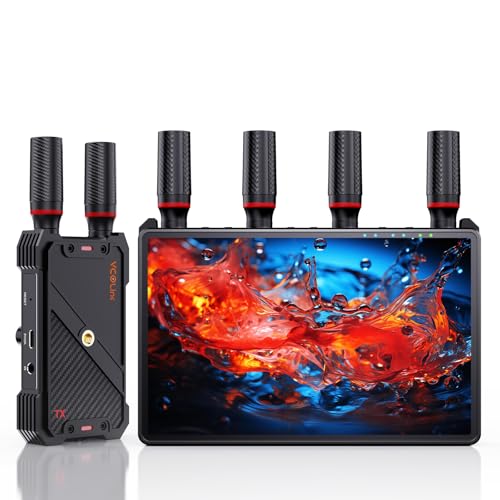
- Built-in 7-inch receiver monitor
- Supports up to five receivers
- HDMI loop-out and IR remote
Best For: Film crews, studios, and collaborative live production
Everyday Long-Range Pick
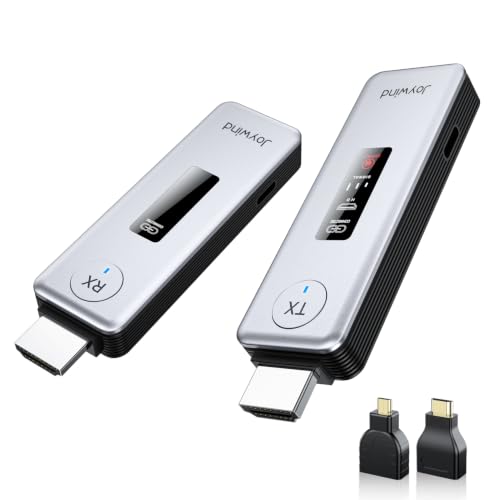
- 360-foot claimed transmission range
- 4K decoding with 1080p output
- LED status display and plug-and-play setup
Best For: Home, classroom, and office HDMI extension
Best USB-C Pick
Lemorele USB-C Wireless HDMI Kit

- 1080p at 60Hz with about 30ms latency
- Up to 164 feet in open space
- Supports up to 60W transmitter pass-through charging
Best For: Compatible USB-C devices used for presentations, teaching, and home viewing
Best Lightweight HDMI Kit
Taiquinix 50M Wireless HDMI Extender

- Pre-paired, driver-free plug-and-play setup
- 4K decoding with 1080p/60Hz output
- Mirroring and extending modes included
Best For: Portable HDMI presentations, entertainment, and teaching setups
Best Long-Range Setup
Vrriis WL082 Wireless HDMI System

- Claimed 1,300-foot open-field transmission range
- Loop-out and dual HDMI output for monitoring
- IR support and multiple power options
Best For: Camera, projector, multi-screen, and professional monitoring setups
Best Plug-and-Play Pick

- 1080p/60Hz output with 4K decoding
- Up to 328 feet outdoors
- Lightweight, app-free setup
Best For: Presenters, teachers, and home-theater users
Best Heavy-Duty Pick

- Includes two receivers
- Supports up to six screens as specified
- Dual-band connection with heat control
Best For: Presentations, events, and multi-TV setups
Best for 4K and Flexible Power

- 4K/30Hz and 1080p/60Hz support
- 3.5mm audio output
- USB-C, power-bank, or NP-F power options
Best For: Mobile presentations and camera workflows
Multi-Screen Streaming Pick – Portable HDMI Pro G7R
For shoppers comparing portable wireless video receivers, this HDMI Pro kit stands out for sending one source to multiple displays. It includes four receivers, supports up to six recommended screens when using two mobile devices, and offers plug-and-play dual-band connectivity without Wi-Fi or apps.
Best For: Presentations, classrooms, churches, conference rooms, restaurants, and home setups that need simultaneous viewing on multiple screens.
Pros:
- Includes four receivers for multi-TV streaming and supports up to 165 feet in open areas.
- Pre-paired transmitter and receivers set up without drivers, apps, or Wi-Fi.
- Supports 1080p-class 60Hz streaming with stated 0.1-second latency.
- Includes a USB-C-to-HDMI adapter for compatible newer laptops and devices.
Cons:
- Range can drop to about 50 feet through walls and may be reduced by thick obstacles.
- Each transmitter and receiver requires a USB 5V/1A power source.
- The recommended six-screen configuration includes mobile mirroring rather than six HDMI receivers.
This is a practical choice when multi-display coverage matters more than a compact one-to-one camera link. Its included receivers and simple setup make it especially useful for shared viewing in business and entertainment spaces.
Silent Production Pick – SYNCO XVision Wireless HD
Among portable wireless video receivers for production work, the SYNCO XVision focuses on quiet operation, low power use, and responsive monitoring. Its compact 119g body, foldable antenna, and NP-F or USB-C power options suit mobile camera rigs and location shoots.
Best For: Weddings, interviews, live music, drone work, follow shots, and multi-camera productions where silent monitoring is important.
Pros:
- Fanless 2W design minimizes operating noise and reduces power consumption.
- Provides stated 40ms latency for responsive real-time monitoring.
- Transmits 1080p at 60fps up to 300 meters in claimed conditions, including through some walls.
- Supports monitoring at 1–9 endpoints and includes transmitter loop-out for an external monitor.
Cons:
- The NP-F battery is not included.
- The system is a 1TX+1RX kit, so additional monitoring hardware may be needed for larger teams.
- Its stated transmission performance can vary with site conditions and interference.
The XVision is a strong fit for creators who prioritize quiet, portable monitoring over a multi-TV home setup. Its low-latency link, flexible power, and compact design are particularly useful on professional shoots.
On-Set Monitoring Pick – 7-Inch Wireless HDMI System
This wireless HDMI system adds a built-in 7-inch monitor to the receiver, making it one of the more self-contained portable wireless video receivers for filming and live production. It can also output to an external display and expand from one transmitter to as many as five receivers.
Best For: Film crews, studios, live events, and camera operators who need private monitoring plus shared client or director displays.
Pros:
- Built-in 7-inch screen provides monitoring without requiring a separate display.
- Supports 1080p at 60Hz with stated latency below 0.05 seconds and a 1,312-foot line-of-sight range.
- One transmitter can broadcast to up to five receivers for collaborative monitoring.
- Offers HDMI loop-out, IR remote control, headphone monitoring, and NP-F, power-bank, or USB-C power options.
Cons:
- External HDMI cables are not included.
- A Type-C-to-HDMI cable is required for smartphone or tablet compatibility.
- Long-range performance is specified for line-of-sight use and may vary with obstacles.
The built-in screen is the key advantage here: it reduces the amount of equipment needed on set while preserving external HDMI output. Choose it when collaboration and immediate camera monitoring are more important than the smallest possible receiver.
Everyday Long-Range Pick – Joywind 110M Wireless HDMI
For everyday buyers seeking portable wireless video receivers, this Joywind kit combines simple plug-and-play operation with a stated 360-foot transmission range. It accepts 4K input for decoding and outputs 1080p at 60Hz, making it suitable for laptops, cameras, TV boxes, projectors, and monitors.
Best For: Home entertainment, classroom teaching, business presentations, and general HDMI extension between common devices.
Pros:
- Requires no app, Wi-Fi, Bluetooth, or driver for setup.
- Uses 2.4GHz and 5.8GHz dual-band transmission with a stated 360-foot range.
- Supports 4K decoding and 1080p at 60Hz output, including duplicate and extended display modes.
- Includes Mini HDMI and Micro HDMI adapters plus a USB-C power cable.
Cons:
- Actual range and speed can decrease through walls or around obstacles.
- The output is 1080p even though the system supports 4K decoding.
- Included accessories may not cover every device or installation arrangement.
This is a straightforward option for users who want wireless HDMI without network configuration. Its LED display and included adapters make troubleshooting and device connection easier for mixed home, office, and classroom setups.
Best USB-C Pick – Lemorele USB-C Wireless HDMI Kit
The Lemorele is a compact choice among portable wireless video receivers for USB-C laptops, tablets, and compatible phones. It supports 1080p at 60Hz, low-latency transmission, and up to 164 feet in open space, while requiring no drivers or Wi-Fi setup. Check that your source supports USB-C DP Alt Mode before buying.
Best For: Business presentations, classroom use, and home entertainment from compatible USB-C devices.
Pros:
- Plug-and-play setup with no drivers, software, or network configuration.
- 1080p at 60Hz with approximately 30ms latency for smoother video and audio.
- Supports up to 60W PD pass-through charging on the transmitter.
- Compact TX/RX design with a stated 164-foot open-space range.
Cons:
- Only works with USB-C ports that support DP Alt Mode; charging-only ports are incompatible.
- The receiver requires a 5V/2A power supply.
- Walls, metal obstacles, and wireless interference can reduce range.
Choose this model if your equipment is primarily USB-C and you want a small, straightforward presentation or streaming kit. Its compatibility requirement is the main detail to verify before purchase.
Best Lightweight HDMI Kit – Taiquinix 50M Wireless HDMI Extender
This Taiquinix kit is a practical option if you want portable wireless video receivers for HDMI-based sources such as PCs, TV boxes, and game consoles. The pre-paired transmitter and receiver provide plug-and-play operation, support 4K decoding with 1080p/60Hz output, and offer mirroring or extending modes.
Best For: Portable presentations, home entertainment, teaching, and HDMI sources that need flexible screen modes.
Pros:
- Pre-paired setup requires no drivers, apps, or network connection.
- Supports up to 165 feet outdoors and up to 100 feet indoors under stated conditions.
- Offers both screen mirroring and screen extending modes.
- Lightweight 47-gram design includes charging cables and mini/micro HDMI adapters.
Cons:
- Advertised 4K decoding produces 1080p/60Hz output rather than 4K output.
- Walls, floors, ceilings, and other obstacles can reduce transmission distance.
- Both units require 5V/2A power.
This is a strong general-purpose pick for users who value simple setup and flexible display modes. It is especially convenient for travel, though expectations should be set around its 1080p output.
Best Long-Range Setup – Vrriis WL082 Wireless HDMI System
The Vrriis WL082 stands out among portable wireless video receivers for multi-screen and production-oriented setups. It transmits 1080p/60Hz video with claimed 0.05-second latency, adds transmitter loop-out and receiver dual HDMI output, and supports IR control plus several power options.
Best For: DSLR, camera, projector, monitoring, sports, and other setups needing long-range transmission or multiple displays.
Pros:
- Claims up to 1,300 feet of open-field transmission with dual-band wireless operation.
- 1080p/60Hz video and approximately 0.05-second latency suit real-time viewing.
- Transmitter loop-out and receiver dual HDMI outputs support local and multiple-screen monitoring.
- Can use USB-C, adapters, portable power banks, or NP-F batteries sold separately.
Cons:
- Walls, glass, metal, and other obstructions can significantly reduce range.
- NP-F batteries are not included.
- Adding more receivers can reduce transmission distance.
This system is better suited to advanced monitoring and multi-display workflows than casual living-room streaming. Its output features and flexible power options are useful, but the headline range depends on a clear, interference-free environment.
Best Plug-and-Play Pick – 100m Wireless HDMI Extender
This compact wireless HDMI transmitter and receiver is a practical choice among portable wireless video receivers for presentations, classrooms, home theaters, and outdoor viewing. It supports 1080p output at 60Hz, requires no Wi-Fi, app, or Bluetooth, and uses a dual-band connection for flexible placement.
Best For: Presenters, teachers, home-theater users, and travelers who want a simple point-to-point HDMI connection.
Pros:
- Plug-and-play setup without Wi-Fi, apps, or Bluetooth.
- Supports 1080p/60Hz output and 4K decoding.
- Transmission reaches up to 165 feet indoors or 328 feet outdoors in open conditions.
- Lightweight 0.3-pound design includes Micro HDMI and Mini HDMI adapters.
Cons:
- Both the transmitter and receiver need a power supply.
- Walls and other obstacles can reduce range and transmission speed.
Choose this model when portability and straightforward setup matter more than advanced multi-screen features. Its compatibility with laptops, cameras, projectors, monitors, and other HDMI sources makes it a versatile everyday extender.
Best Heavy-Duty Pick – Wireless HDMI PRO Kit
For buyers comparing portable wireless video receivers for several displays, this Wireless HDMI PRO kit stands out with one transmitter and two receivers included. It supports streaming to multiple TVs or monitors, uses dual-band 2.4GHz/5.8GHz connectivity, and adds heat-control technology for extended use.
Best For: Meetings, classrooms, churches, restaurants, events, and home setups that need the same content on multiple screens.
Pros:
- Includes one transmitter and two receivers for multi-screen output.
- Supports up to 165 feet in open conditions and up to 50 feet through walls.
- Pre-paired, plug-and-play operation with no app, driver, or Wi-Fi required.
- Includes a USB-C to HDMI adapter for compatible newer laptops.
Cons:
- Performance through thick walls or large obstacles may be limited.
- The transmitter and receivers require USB 5V/1A power.
- Mobile mirroring requires the TUTUPlay app.
This is the stronger fit when your priority is distributing one source across multiple screens. Its portable design and cooling feature are useful for events and longer presentations, while the included USB-C adapter broadens laptop compatibility.
Best for 4K and Flexible Power – BovBox WL097PRO 4K HDMI Kit
This BovBox kit is a capable option among portable wireless video receivers when 4K support, audio flexibility, and mobile power options are important. It offers 4K at 30Hz, 1080p at 60Hz, a 3.5mm audio interface, and a carrying case for presentations or mobile production setups.
Best For: Users who need 4K video, external speaker connectivity, or battery-based operation for presentations and camera workflows.
Pros:
- Supports 4K/30Hz and 1080p/60Hz wireless video.
- Provides a 3.5mm audio interface for a compatible soundbar or speaker.
- Can use USB-C, a power bank, or NP-F batteries for power; NP-F batteries are not included.
- Supports one transmitter with up to four receivers and includes a carrying case.
Cons:
- Adding receivers can shorten the wireless transmission distance.
- NP-F batteries must be purchased separately.
- Its listed 820-foot range may depend on open, unobstructed conditions.
Consider this model if you need more than basic screen mirroring. The audio output, multiple power choices, 4K capability, and included case make it well suited to portable presentations and camera-based setups, provided you plan around power and range limitations.
How We Picked the Best Portable Wireless Video Receivers
We focused on the features that most affect everyday usability: supported input and output resolutions, realistic transmission range, wireless-band options, latency, receiver count, loop-out support, power requirements, and compatibility with common HDMI sources. We also considered portable design and plug-and-play setup, since these systems are often moved between rooms, venues, offices, or production locations.
Advertised range should be treated as an ideal-condition maximum. Walls, metal structures, neighboring wireless networks, and the placement of the transmitter and receiver can reduce performance. A clear line of sight usually delivers the most reliable connection.
Quick Comparison
| What to compare | Best fit |
|---|---|
| One transmitter and one receiver | Single-TV, monitor, projector, or camera setups |
| Multiple receivers | Sending one source to several displays |
| Loop-out HDMI | Viewing locally while transmitting elsewhere |
| USB-C with DP Alt Mode | Laptops, tablets, and compatible mobile devices |
| 1080p output | Most presentations, streaming, and surveillance displays |
| Long-range transmission | Large rooms, classrooms, venues, and detached viewing areas |
Key Buying Factors for Portable Wireless Video Receivers
Resolution and Source Compatibility
Check both the input and output specifications. Some systems accept a 4K signal but transmit or decode it at 1080p. That can be perfectly adequate for a Full HD TV or projector, but it is not the same as native wireless 4K. Confirm that your source uses a compatible HDMI format and refresh rate.
Range, Stability, and Latency
Choose based on the distance and obstacles in your actual room, not only the maximum advertised range. Low latency matters for gaming, live camera monitoring, and interactive presentations; for movies or slides, a small delay is usually less noticeable. Dual-band 2.4GHz/5GHz designs may offer more flexibility around interference.
Receiver Count and Distribution Features
A one-to-one kit is generally simpler and more affordable. If you need the same source on several TVs, select a model designed for multiple receivers. Loop-out is useful when the source display must remain active while another screen receives the wireless signal.
Power, Controls, and Portability
Review how each unit is powered and whether adapters, USB cables, remote controls, or mounting hardware are included. Compact plug-and-play systems are easier to move, but larger kits may provide better cooling, additional outputs, or more robust controls.
Who Should Buy Which Portable Wireless Video Receivers?
- For a basic home or office link: Choose a compact one-transmitter, one-receiver kit with 1080p support.
- For multi-TV viewing: Pick a system supporting two, four, or more receivers, and verify whether extra receivers are included or sold separately.
- For presentations and classrooms: Prioritize stable range, simple pairing, loop-out, and reliable 1080p output.
- For laptops and USB-C devices: Select a USB-C model only if the device supports DisplayPort Alt Mode; charging-only USB-C ports will not carry video.
- For gaming or live monitoring: Look for the lowest stated latency, direct line of sight, and the highest refresh rate your source and display require.
- For occasional travel or temporary setups: Favor lightweight plug-and-play hardware with flexible USB power and clearly labeled transmitters and receivers.