Church musicians need gear that starts fast, stays reliable, and keeps worship services running without technical distractions. The right MIDI interface makes it easier to control soft synths, keys, playback, click tracks, and stage rigs from one setup.
Below, we’ve rounded up 10 strong options for different church workflows, from compact USB host models to larger multi-port interfaces with audio I/O.
Best 10 Midi Interfaces for Church Musicians Picks for 2026
Compact 3x3 MIDI Router
CME U6MIDI Pro 3-in-3-out MIDI Interface

- 3-in-3-out standalone MIDI routing
- USB-C plug-and-play across major OS
- Supports split, merge, filter, and MPE
Best For: Small church keyboard rigs and simple MIDI routing
High-Capacity MIDI Hub
iConnectivity mioXL MIDI Interface Bundle

- 8 DIN in and 12 DIN out
- 10 USB-MIDI host ports plus Ethernet RTP-MIDI
- Connects Macs, PCs, iOS, and more
Best For: Large church productions with many MIDI devices
USB Host MIDI Bridge
CME H2MIDI Pro Compact USB Host MIDI Interface

- Standalone USB host to 5-pin DIN bridge
- USB-C computer mode with 2-in/2-out virtual MIDI
- Routing, filtering, mapping, and presets
Best For: Hybrid church setups with USB controllers and DIN hardware
Mid-Sized MIDI Rack Interface
iConnectivity mioXM 4-in x 4-out MIDI Interface

- 4-in/4-out DIN with 4 USB host ports
- Ethernet RTP-MIDI with 12 virtual network ports
- Stores and recalls up to four presets
Best For: Church setups that need flexible routing and quick preset changes
Modern USB MIDI Interface for Compact Church Setups

- Bidirectional MIDI I/O in a compact USB-C interface
- Dual XLR combo inputs with balanced TRS outputs
- 192 kHz/24-bit recording with ADM direct monitoring
Best For: Church musicians who need a compact audio and MIDI interface for small rigs
Reliable 2x2 MIDI Interface for Small Worship Rigs

- 2 in x 2 out interface with MIDI I/O
- Two Onyx preamps and 48V phantom power
- Bus-powered with zero-latency direct monitoring
Best For: Portable worship setups that need simple audio and MIDI recording
Best 4x4 MIDI Interface for Multi-Input Church Recording

- 4x4 USB audio/MIDI interface with one MIDI I/O
- Four MIDAS-designed mic preamps with phantom power
- 24-bit/192 kHz resolution in a metal chassis
Best For: Church teams that need more inputs and outputs for recording
Compact Recording Hub
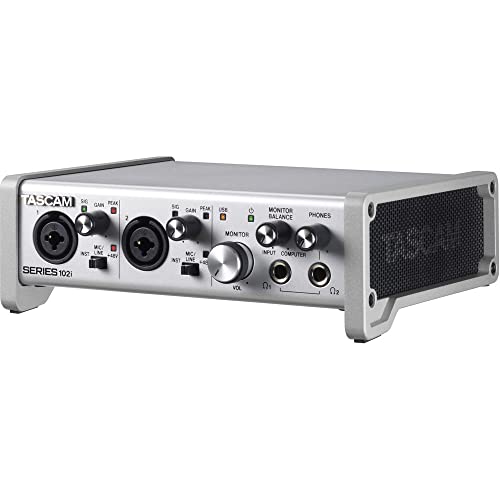
- MIDI support with USB audio interface
- 10 total inputs with optical expansion
- Dual headphone outputs for monitoring
Best For: church teams that need MIDI plus expandable recording flexibility
Premium Control Center

- MIDI interface with USB, ADAT, S/PDIF, and AES67
- Touchscreen workflow with four mixers
- High-end conversion and dual headphone outs
Best For: high-end church production spaces needing premium routing and MIDI
Portable MIDI Audio Interface

- MIDI I/O with compact USB-C design
- 32-bit/192 kHz support and DSP monitoring
- Rugged metal housing with 2 combo inputs
Best For: small worship teams and keyboard players who want a simple rugged interface
Compact 3×3 MIDI Router – CME U6MIDI Pro 3-in-3-out MIDI Interface
If you need one of the more flexible midi interfaces for church musicians, the CME U6MIDI Pro is a strong fit for compact worship rigs and computer-based setups. It works as a plug-and-play USB-C interface or as a standalone 3-in-3-out MIDI router, so you can handle keyboards, digital pianos, and other MIDI gear without extra complexity.
Best For: Church musicians who want a small, low-latency interface with routing and filtering for keyboards and MIDI hardware.
Pros:
- 3-in-3-out standalone MIDI interface with split, thru, merge, and filter functions.
- Supports all major OS, including macOS, iOS, Windows, Android, Linux, and Chrome OS.
- Handles notes, controllers, clock, sysex, MIDI timecode, and MPE with close to zero latency.
- Includes free software tools for routing, filtering, and mapping on Mac/Windows.
Cons:
- Provides only 3 DIN inputs and 3 DIN outputs, so larger rigs may outgrow it quickly.
- Advanced configuration depends on the companion software.
For smaller worship setups, this model stands out for simplicity, broad compatibility, and reliable MIDI transmission. It is a practical choice when you want clean keyboard routing without moving up to a larger rack-style interface.
High-Capacity MIDI Hub – iConnectivity mioXL MIDI Interface Bundle
iConnectivity mioXL MIDI Interface with 4x MIDI Cable Male to Male Cable 10' Bundle
Check Price On AmazonFor churches running multiple keyboards, controllers, and computers, the mioXL is one of the most capable midi interfaces for church musicians who need a central hub. Its 8-in/12-out DIN layout, 10 USB-MIDI host ports, and Ethernet RTP-MIDI networking make it easier to connect a lot of gear through a single system.
Best For: Larger worship teams that need many DIN, USB, and network MIDI connections in one place.
Pros:
- 8 DIN inputs and 12 DIN outputs for bigger stage and rack setups.
- 10 USB-MIDI host ports for multiple class-compliant MIDI peripherals.
- Ethernet RTP-MIDI support with 22 virtual network ports for flexible routing.
- Works with Mac, PC, iOS, and other mobile devices via a single cable.
Cons:
- More interface than many small churches need.
- Bundle includes cables, but the core product is still aimed at complex systems.
This is a serious option when your worship environment has outgrown a simple interface. If you need plenty of ports and network-based MIDI management, the mioXL is built for that job.
USB Host MIDI Bridge – CME H2MIDI Pro Compact USB Host MIDI Interface
The CME H2MIDI Pro is a smart pick if you want midi interfaces for church musicians that can bridge modern USB controllers to traditional 5-pin DIN gear. It works without a computer in standalone USB host mode, while also offering USB-C computer connectivity for hybrid setups.
Best For: Musicians who need to connect USB MIDI devices to legacy DIN hardware in hybrid or computer-free setups.
Pros:
- Standalone USB host mode connects class-compliant USB MIDI devices to 5-pin DIN hardware.
- Expandable USB host side supports up to 8 USB MIDI devices through a hub.
- USB-C computer mode provides 2-in/2-out virtual MIDI ports.
- Supports routing, filtering, mapping, and splitting with presets in the companion software.
Cons:
- Only 1-in/1-out DIN hardware connection, so it is not built for large DIN-based rigs.
- Best features rely on using the free configuration tool.
This model is especially useful when a church wants to mix newer USB gear with older MIDI hardware. Its tiny size and flexible operating modes make it easy to fit into a crowded worship setup.
Mid-Sized MIDI Rack Interface – iConnectivity mioXM 4-in x 4-out MIDI Interface
The mioXM is a versatile choice among midi interfaces for church musicians who need several ports in a manageable rack-style unit. With 4-in/4-out DIN, 4 USB-MIDI host ports, and Ethernet RTP-MIDI support, it can tie together keyboards, computers, and mobile devices in a single system.
Best For: Church teams that want a mid-sized MIDI interface with presets and network connectivity.
Pros:
- 4 DIN inputs and 4 DIN outputs provide a balanced port count for moderate setups.
- Includes 4 USB-MIDI host ports for class-compliant devices.
- Ethernet RTP-MIDI networking adds 12 virtual network ports.
- Up to four user-definable presets can be stored and recalled from the control panel.
Cons:
- Mac and Windows configuration software is required for saving routing and filtering presets.
- iOS support is listed via CCK, so mobile use may need extra accessories.
For churches that need more than a small interface but not the scale of a full MIDI hub, the mioXM hits a useful middle ground. The preset control panel is especially handy when you need to switch between service configurations quickly.
Modern USB MIDI Interface for Compact Church Setups – ESI Amber i2
If you need midi interfaces for church musicians that also cover everyday audio capture, the ESI Amber i2 is a practical two-channel option. It combines dual XLR combo inputs, 192 kHz/24-bit recording and playback, and bidirectional MIDI I/O in a USB-C powered unit, which suits smaller worship rigs, rehearsal spaces, and mobile setups.
Best For: Church musicians who want a compact interface for vocals, keys, guitar, and MIDI gear in a simple USB-C package.
Pros:
- Bidirectional MIDI I/O for connecting keyboards and other MIDI devices.
- Dual XLR combo inputs plus two balanced 1/4-inch TRS outputs.
- 192 kHz/24-bit recording and playback for high-resolution audio.
- ADM direct monitoring lets you blend input and DAW signals on the hardware.
Cons:
- Only 2 channels, so it is not ideal for larger multi-input church setups.
- Best suited to streamlined rigs rather than more complex stage routing.
This is a solid choice if your church setup needs a modern interface that handles MIDI and audio without adding complexity. The USB-C power, operating-system compatibility, and included 2-year warranty make it easy to integrate into a dependable worship workflow.
Reliable 2×2 MIDI Interface for Small Worship Rigs – Mackie Onyx Producer 2X2
Mackie Audio Interface, Onyx Producer 2X2 USB Audio Interface with MIDI (Onyx Producer 2-2)
Check Price On AmazonFor midi interfaces for church musicians who want a straightforward, bus-powered recording tool, the Mackie Onyx Producer 2X2 is built around simplicity and portability. It offers 2 in x 2 out 24-bit/192 kHz recording, MIDI I/O, and zero-latency direct monitoring, making it a good fit for small worship teams and rehearsal capture.
Best For: Musicians and worship leaders who need a portable interface for keys, vocals, and MIDI gear with easy monitoring.
Pros:
- 2 in x 2 out design with MIDI I/O for basic church production needs.
- Two Onyx mic preamps with 48V phantom power for condenser microphones.
- Zero-latency direct monitoring and dedicated monitor/headphone outputs.
- Bus-powered USB 2.0 operation makes it easy to travel with.
Cons:
- Only two channels, so it is limited for larger ensembles.
- Windows support is listed, but the supported-software details are centered on iOS and macOS.
Overall, this is a clean, no-frills option for church musicians who value portability and dependable basics. The rugged build and included software bundle add value, while the MIDI I/O keeps it useful for keyboard-driven worship setups.
Best 4×4 MIDI Interface for Multi-Input Church Recording – Behringer UMC404HD
Among midi interfaces for church musicians, the Behringer U-PHORIA UMC404HD stands out when you need more inputs and outputs for a fuller setup. Its 4×4 USB audio/MIDI design, MIDAS mic preamps, and 24-bit/192 kHz resolution make it better suited to multi-mic worship recording, keys, and other instrument sources.
Best For: Church musicians and audio teams who need a 4×4 interface for multi-source recording and MIDI connectivity.
Pros:
- 4×4 USB audio/MIDI interface with one MIDI I/O for broader routing.
- Four MIDAS-designed mic preamps with +48V phantom power.
- 24-bit/192 kHz resolution for professional-quality recording.
- Impact-resistant metal chassis built for frequent use.
Cons:
- Bulkier than smaller 2×2 interfaces, so it is less portable.
- Windows compatibility is the primary operating-system detail provided.
If your church setup needs more room to grow, this interface offers a practical step up from basic stereo units. The extra I/O, MIDI support, and durable construction make it a useful choice for recording services, rehearsals, or ensemble demos.
Compact Recording Hub – Tascam SERIES 102i
For church musicians looking for midi interfaces for church musicians that can also handle recording, the Tascam SERIES 102i brings MIDI support plus 10-input USB audio in one practical desktop unit. It’s a strong fit when you want reliable connectivity for keys, playback, and captures without adding a lot of complexity.
Best For: Small to mid-size church setups that need MIDI plus flexible recording inputs and monitoring.
Pros:
- Built-in MIDI support alongside USB audio connectivity
- Two Ultra-HDDA mic preamps with low-noise, natural-sounding performance
- Optical S/MUX expansion adds up to 8 more channels for a 10-input total
- Dual headphone outputs and 2 analog outputs help with monitoring
Cons:
- More interface than needed if you only want basic MIDI I/O
- Limited to 2 analog outputs for main routing
- Built-in effects may be unnecessary for simple live-use setups
The SERIES 102i makes sense if your church setup needs more than a simple MIDI box and you want room to grow. Its combination of MIDI, expansion, and monitoring features gives it practical flexibility for music teams that also record.
Premium Control Center – Neumann MT 48
If you’re comparing midi interfaces for church musicians and want a premium centerpiece, the Neumann MT 48 stands out for its touchscreen workflow, MIDI interface, and broad digital connectivity. It’s aimed at teams that value top-tier conversion, flexible routing, and serious monitoring options.
Best For: High-end church studios and production rooms that need premium audio, MIDI, and network-ready expansion.
Pros:
- Includes MIDI interface plus USB, ADAT, S/PDIF, and AES67 connectivity
- High dynamic range AD conversion for detailed capture
- Four independent mixers with integrated talkback
- Two premium headphone outputs and four line/monitor outputs
Cons:
- Likely more interface than a simple church keyboard rig requires
- Only 2 mic/line preamps and 2 line/instrument inputs
- Premium feature set may be excessive for basic MIDI use
The MT 48 is best when your church needs a flagship interface that can anchor both MIDI and complex audio workflows. For straightforward setups, it may be more unit than you need, but for demanding production environments it offers a very deep toolset.
Portable MIDI Audio Interface – Yamaha URX22C
The Yamaha URX22C is a straightforward choice for midi interfaces for church musicians who want a compact, durable unit with modern USB-C connectivity. With 2-in/2-out audio, MIDI I/O, and built-in DSP monitoring, it suits smaller keyboard and playback setups that need dependable day-to-day operation.
Best For: Keyboard players and small worship teams that want a rugged, simple USB-C interface with MIDI.
Pros:
- Includes MIDI I/O with 2-in/2-out USB-C audio
- 32-bit/192 kHz support for high-resolution recording
- Two combo inputs with D-PRE preamps and +48 V phantom power
- Latency-free DSP monitoring with reverb, channel strip, and amp tools
Cons:
- Only 2 analog inputs, so it’s not built for larger stage rigs
- Two main outputs may be limiting for more complex routing
- Best suited to small setups rather than multi-source church production
If you need a compact interface that handles both audio and MIDI without a steep learning curve, the URX22C is an easy fit. It’s especially appealing for musicians who want rugged hardware, low-latency monitoring, and cross-platform support in a small package.
How We Picked the Best Midi Interfaces for Church Musicians
We focused on practical features that matter in live worship environments: stable MIDI timing, enough ports for common church setups, easy computer or host-device compatibility, and dependable build quality. We also gave extra weight to interfaces that can handle both rehearsal and Sunday service use without adding complexity.
Quick Comparison
For smaller teams, compact USB and 2×2 interfaces can be a smart fit. For multi-keyboard rigs, larger multi-port units are better because they reduce cable clutter and make routing simpler. If you also record sermons, tracks, or vocals, an audio interface with MIDI may offer better value than a MIDI-only unit.
Key Buying Factors for Midi Interfaces for Church Musicians
Port Count and Routing
Count how many keyboards, modules, controllers, or playback devices you need to connect now, then add room for growth. Church setups often expand over time, and an interface with extra DIN ports can prevent an upgrade later.
USB Host Vs. Computer-Connected Use
Some Midi Interfaces for Church Musicians connect directly to a keyboard or tablet through USB host support, while others are designed mainly for a computer or DAW. Choose the type that matches your service workflow so you do not need workarounds on Sunday morning.
Audio I/O and Expansion
If your team records services, runs backing tracks, or monitors click and cue audio, a combined audio/MIDI interface may be more efficient. Look for enough line inputs, outputs, and expansion options to support your current sound plan.
Latency, Stability, and Power
Low latency matters when a worship leader is playing live parts or triggering instruments in time with a band. Bus-powered portability is useful for smaller rigs, but dedicated power and robust drivers can be preferable for larger, always-on systems.
Who Should Buy Which Midi Interfaces for Church Musicians?
If you need a simple, portable solution for one keyboard or controller, a compact interface is usually enough. If your church runs multiple keyboards, playback systems, and stage modules, step up to a higher-port model with flexible routing. If you want one device for both recording and live worship, consider an audio interface with MIDI so you can simplify your rack and reduce extra hardware.
For most churches, the best choice balances reliability, enough connections, and easy setup more than raw specs. Prioritize the interface that fits your service workflow today while leaving room for the next season of ministry.