The best laser projectors with lens shift make large-screen viewing easier to install without sacrificing brightness, contrast, or 4K detail. Lens shift lets you move the image vertically or horizontally while keeping the projector aligned with the screen, reducing the need for digital correction.
We selected 10 laser models spanning dedicated home theater, bright living-room viewing, smart projection, and ultra-short-throw setups. Use the buying guide below to compare installation flexibility, image quality, connectivity, and overall fit before choosing.
Best 10 Laser Projectors with Lens Shift Picks for 2026
Bright-venue powerhouse

- Native 4K UHD with 6,000 ANSI lumens
- Motorized vertical and horizontal lens shift
- 20,000-hour laser source with HDR10
Best For: Large venues, presentations, and digital signage
Reference home cinema choice

- Native 4K SXRD panel with X1 Ultimate processing
- 2,500-lumen laser source rated for 20,000 hours
- Stores lens settings for up to five screen formats
Best For: Dedicated home theaters and multi-format viewing
Smart triple-laser entertainer
Nebula X1S 4K Triple Laser Projector

- Up to 6,000 ANSI lumens with 4K triple-laser output
- 1.67x optical zoom and AI Spatial Adaptation
- Google TV, Netflix, Dolby Vision, and 40W audio
Best For: Flexible smart home cinema and bright-room viewing
Compact HDR theater pick
Optoma UHZ36 4K UHD Laser Projector
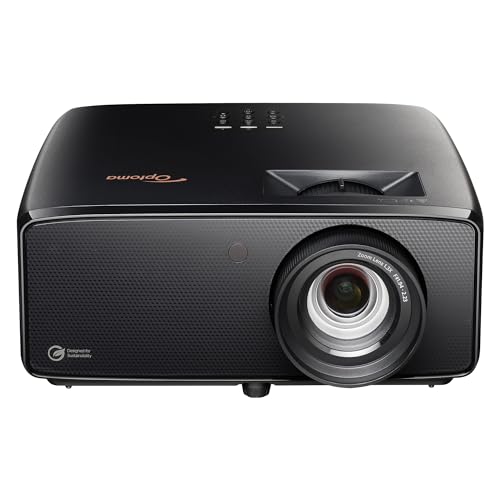
- 4K UHD with HDR and Filmmaker Mode
- 3,500 lumens and up to 30,000-hour laser life
- Compact 10.4-pound tabletop or ceiling-mount design
Best For: Home theater and gaming setups with fixed placement
Best Overall
JMGO N3 Ultimate 4K Triple Laser Projector
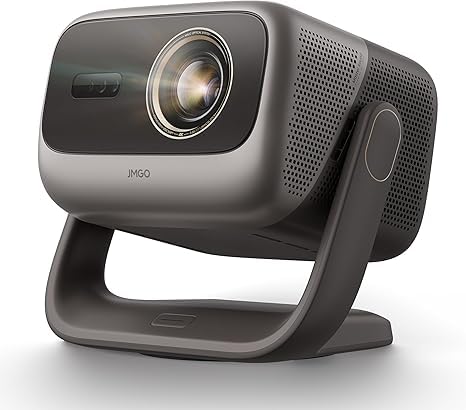
- Four-way lens shift and motorized gimbal ease difficult placement
- 5,800 ISO lumens with 4K, Dolby Vision, and 300-inch projection
- 240Hz gaming support with 1ms input lag and HDMI VRR
Best For: Flexible large-screen home theaters and gaming
Best for Large Installations
ViewSonic LS901-4K Laser Projector

- 5,500 ANSI lumens suit large rooms and expansive screens
- 1.7x optical zoom and multiple alignment tools simplify setup
- 240Hz refresh and 4.2ms lag support gaming and sports
Best For: Ceiling-mounted theaters and golf simulation spaces
Best for Movie Enthusiasts
Valerion VisionMaster Max 4K Laser Projector

- ±105% vertical optical lens shift with lossless optical zoom
- Dolby Vision, IMAX Enhanced, HDR10+, 3D, and Filmmaker Mode
- Anti-RBE design, 4ms response, and 240Hz gaming support
Best For: Cinema-focused rooms and sensitive viewers
Best Immersive UST Theater
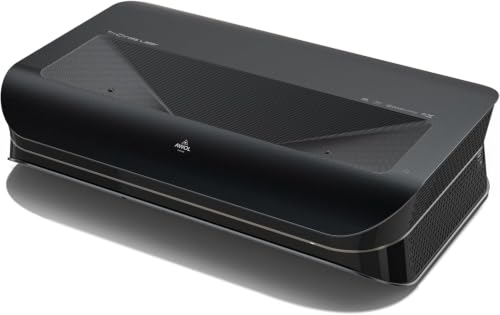
- Triple-laser 4K with Dolby Vision, HDR10+, and 3D
- Built-in center-channel speaker for clearer dialogue
- Fixed UST optics require careful placement
Best For: Dedicated home theaters wanting a large, immersive UST image
Best Installation Flexibility

- Manual horizontal and vertical lens shift
- 2,500 lumens from a 3-chip 3LCD laser engine
- 120Hz gaming with ALLM and under-20ms input lag
Best For: Flexible home theater and gaming installations
Best Gaming Performance

- RGB triple laser with 3,200 ISO lumens
- Optical zoom and flexible lens shift
- 240Hz, 1ms response, VRR, and ALLM
Best For: Gamers wanting flexible placement and built-in streaming
Bright-venue powerhouse – LG ProBeam BU60RG
PROBEAM BU60RG 6000 LUMENS 4K UHD LASER PROJECTOR, VERT/HOR LENS SHIFT, 1.6X ZOOM, WEBOS-SIGNAGE 6.0
Check Price On AmazonIf you need laser projectors with lens shift for a bright conference room, lecture theater, or signage installation, the LG ProBeam BU60RG is built around high output and flexible setup. Its 6,000 ANSI-lumen rating, native 4K UHD resolution, motorized vertical and horizontal lens shift, and 1.6x zoom make image placement easier without moving the projector.
Best For: Large venues, business presentations, digital signage, and installations where placement flexibility matters.
Pros:
- Native 3840 × 2160 resolution for detailed 4K content
- 6,000 ANSI lumens helps it handle bright rooms and large screens
- Motorized lens shift, zoom, and focus simplify setup
- Laser light source is rated for 20,000 hours and supports HDR10
Cons:
- Its 39-pound chassis is less convenient for frequent transport
- Its business-focused feature set may be more than casual home viewers need
Choose the BU60RG when brightness, installation control, and long operating life are more important than a compact home-theater design. Crestron and Control4 compatibility also makes it a practical fit for managed AV environments.
Reference home cinema choice – Sony VPL-XW6000ES
Sony VPL-XW6000ES 4K HDR Laser Home Theater Projector with Native 4K SXRD Panel, Black
Check Price On AmazonThe Sony VPL-XW6000ES is a premium option among laser projectors with lens shift, combining a native 4K SXRD panel with Sony’s X1 Ultimate processing and a long-life laser source. Its lens focus, zoom, and shift settings can be stored for up to five screen formats, making it especially useful in a dedicated theater with multiple viewing setups.
Best For: Dedicated home theaters seeking native 4K detail, wide color, and repeatable screen-position settings.
Pros:
- Native 3840 × 2160 SXRD resolution
- Up to 2,500 lumens from a laser source rated for 20,000 hours
- Wide Dynamic Range Optics and TRILUMINOS PRO support rich color reproduction
- Picture Position Memory stores settings for up to five screen formats
Cons:
- Its stationary, ceiling-mount-oriented design is not portable
- It has lower brightness than the brightest business-class models here
- Supplied information lists a one-year warranty
This is the strongest fit when cinematic image quality and installation precision take priority. Picture Position Memory is particularly valuable for households that switch between different aspect ratios or screen formats.
Smart triple-laser entertainer – Nebula X1S 4K Triple Laser Projector
The Nebula X1S brings a flexible smart-TV experience to the category of laser projectors with lens shift. Its 4K triple-laser engine delivers up to 6,000 ANSI lumens in Peak Output Mode, while a 1.67x optical zoom, AI Spatial Adaptation, and Spatial Recall help adjust the picture for different rooms and surfaces.
Best For: Bright living rooms, flexible home cinema setups, and viewers who want built-in streaming and sound.
Pros:
- 4K triple-laser engine with up to 6,000 ANSI lumens in Peak Output Mode
- 106% Rec. 2020 color claim, ISF certification, and Dolby Vision support
- 1.67x optical zoom preserves image quality while changing size
- Google TV, official Netflix support, and built-in 40W Dolby Audio
Cons:
- The 6,000-lumen figure applies to Peak Output Mode, not Vivid Mode
- AI adaptation and the latest features may require firmware updating
- Supplied notes describe spatial adaptation rather than conventional mechanical lens-shift controls
The X1S is a compelling all-in-one choice for buyers who value brightness, streaming convenience, automatic placement help, and integrated audio. It is less focused on traditional installation controls than the LG or Sony models.
Compact HDR theater pick – Optoma UHZ36 4K UHD Laser Projector
The Optoma UHZ36 is a compact 4K UHD laser projector for home theaters, gaming, and large-screen movie nights. While the supplied specifications do not list lens-shift controls, its tabletop-or-ceiling mounting options, 3,500-lumen brightness, HDR support, and Filmmaker Mode make it worth considering alongside laser projectors with lens shift.
Best For: Home theater and gaming setups that prioritize compact size, HDR, and long laser life.
Pros:
- 4K UHD resolution with HDR and Filmmaker Mode
- 3,500 lumens supports bright, detailed viewing
- Laser light source is rated for up to 30,000 hours
- Supports 4K Blu-ray players, PS5, Xbox Series X, Apple TV 4K, and Roku 4K
Cons:
- Supplied notes do not specify lens-shift functionality
- It offers fewer listed smart features than the Nebula X1S
- Its one-year limited projector warranty may be less generous than some alternatives
The UHZ36 makes the most sense when you want a relatively light 4K laser projector with strong gaming and HDR compatibility. Confirm placement requirements carefully if lens shift is essential to your installation.
Best Overall – JMGO N3 Ultimate 4K Triple Laser Projector
If you need laser projectors with lens shift for a challenging room layout, the JMGO N3 Ultimate offers unusually broad physical image adjustment. Its four-way lens shift, optical zoom, and motorized gimbal let you reposition the picture without relying on digital cropping, while 5,800 ISO lumens support large-screen viewing in brighter rooms.
Best For: Large home theaters, flexible installations, daytime viewing, and gamers who want high refresh rates.
Pros:
- Four-way lens shift with H ±53% and V ±130% adjustment
- 5,800 ISO lumens, 4K resolution, Dolby Vision, and a 300-inch maximum image
- Up to 240Hz refresh rate with 1ms input lag and HDMI VRR
- Google TV, native Netflix, Chromecast, and built-in speakers
Cons:
- Its extensive feature set may be more than a basic movie setup requires
- Large-screen performance and placement flexibility come at a premium feature level
The N3 Ultimate is the strongest all-around choice here when lens-shift range matters as much as brightness and image quality. Its physical adjustment options are particularly useful when the projector cannot be mounted directly in front of the screen.
Best for Large Installations – ViewSonic LS901-4K Laser Projector
The ViewSonic LS901-4K is a practical pick among laser projectors with lens shift for dedicated theaters, expansive family rooms, and simulation spaces. It combines 5,500 ANSI lumens with a 1.7x optical zoom, horizontal and vertical keystone correction, and installation-oriented features for aligning a large 4K image.
Best For: Ceiling-mounted home theaters, large rooms, sports viewing, and golf simulation setups.
Pros:
- Bright 5,500 ANSI-lumen output for large-screen viewing
- 1.7x optical zoom, four-corner adjustment, and horizontal/vertical keystone support
- 240Hz refresh rate and 4.2ms input lag for fast-paced content
- Supports HDR/HLG, 21:9 viewing, 360-degree projection, and ceiling mounting
Cons:
- Its supplied features emphasize installation rather than built-in streaming
- Best suited to a more permanent setup than a portable viewing space
The LS901-4K stands out for buyers prioritizing brightness, mounting flexibility, and optical zoom. It is a sensible choice when the projector needs to fill a large screen or support a specialized space such as a golf simulator.
Best for Movie Enthusiasts – Valerion VisionMaster Max 4K Laser Projector
For viewers who want laser projectors with lens shift and a cinema-focused feature set, the Valerion VisionMaster Max pairs ±105% vertical optical lens shift with lossless optical zoom. Its triple-laser system, black-level processing, anti-RBE technology, and extensive HDR support make it especially suited to immersive movie viewing.
Best For: Dedicated movie rooms, sensitive viewers who notice rainbow effects, and premium streaming or gaming setups.
Pros:
- ±105% vertical optical lens shift and 0.9–1.5:1 optical zoom
- Triple-laser color, 110% Rec.2020 coverage, and up to 50,000:1 dynamic range
- Supports Dolby Vision, IMAX Enhanced, HDR10+, Filmmaker Mode, and 3D
- Anti-RBE technology, 4ms response at 240Hz, and built-in Google TV
Cons:
- 3,500 ISO lumens is lower than the brighter alternatives in this roundup
- The lens shift is vertical rather than the JMGO’s four-way adjustment
The VisionMaster Max is the most cinema-oriented option in this group. Choose it when black-level performance, color support, comfortable viewing, and premium format compatibility matter more than maximum brightness.
Best Immersive UST Theater – AWOL VISION LTV-3000 Pro
The AWOL VISION LTV-3000 Pro is a premium ultra-short-throw option for shoppers seeking laser projectors with lens shift alternatives for a large-screen home theater. Its triple-laser 4K platform supports Dolby Vision, HDR10+, and 3D, while the built-in center-channel speaker helps simplify dialogue-focused audio setups. Note that this model uses a fixed 0.25:1 throw ratio rather than lens shift, so careful placement—or AWOL’s optional motorized Slider—matters.
Best For: Dedicated home theaters wanting a bright, highly immersive 4K UST setup with integrated dialogue audio.
Pros:
- Triple-laser 4K projection supports Dolby Vision, HDR10+, and 3D.
- Built-in center-channel speaker maps dialogue directly to the screen.
- Wide color coverage reaches 107% BT.2020 and 147% DCI-P3.
- Supports PJ Link IP control for compatible home-automation systems.
Cons:
- Fixed throw ratio provides less placement flexibility than a projector with lens shift.
- Works best in darker rooms unless paired with a suitable ALR screen.
- 3D viewing requires active-shutter glasses and compatible source content.
This is a strong choice when cinematic color, HDR, 3D, and UST convenience take priority. However, buyers specifically comparing laser projectors with lens shift should account for its fixed optics and plan the cabinet or Slider placement carefully.
Best Installation Flexibility – Epson Home Cinema LS5000
The Epson Home Cinema LS5000 is a compelling pick among laser projectors with lens shift for buyers who need flexible ceiling or room installation. Its manual lens shift offers ±21% horizontal and ±59% vertical adjustment, while 2,500 lumens of color and white brightness, 4K display technology, and HDR support target both home cinema and gaming use.
Best For: Home theaters and gaming rooms where placement flexibility, brightness, and responsive 120Hz performance are priorities.
Pros:
- Manual lens shift provides ±21% horizontal and ±59% vertical adjustment.
- 3-chip 3LCD system delivers 2,500 lumens of color and white brightness.
- Supports 4K display technology, HDR10, HLG, and automatic HDR scene correction.
- 120Hz refresh rate, ALLM, and under-20ms input lag suit gaming.
Cons:
- Manual rather than motorized lens shift requires physical adjustment.
- Its larger installation range may call for more planning than a compact portable model.
- Bluetooth audio is described as two-channel streaming rather than a full surround solution.
The LS5000 stands out for practical installation control without giving up high brightness or gaming features. It is the most directly aligned option here for shoppers who specifically want laser projection with genuine lens-shift flexibility.
Best Gaming Performance – XGIMI HORIZON 20
The XGIMI HORIZON 20 combines RGB triple-laser output with optical zoom and flexible lens shift, making it one of the most adaptable laser projectors with lens shift for mixed-use rooms. It adds 3,200 ISO lumens, a 100,000:1 contrast ratio, Google TV, built-in Harman Kardon speakers, and unusually gaming-focused specifications including 240Hz operation and 1ms response.
Best For: Gamers and streaming households wanting a flexible, all-in-one 4K projector with strong built-in entertainment features.
Pros:
- RGB triple-laser engine produces 3,200 ISO lumens and a 100,000:1 contrast ratio.
- Optical zoom and lens shift improve placement flexibility without relying solely on digital correction.
- Gaming features include 240Hz, 1ms response, VRR, and ALLM.
- Includes Google TV, licensed Netflix, and Harman Kardon speakers.
Cons:
- Portable floor-mount design may be less suited to permanent, concealed installations.
- Its maximum rated image size and throw range require appropriate room dimensions for the setup.
- Built-in speakers may not replace a dedicated surround-sound system for serious home theaters.
For buyers who want lens-shift flexibility alongside modern gaming performance, the HORIZON 20 is especially versatile. Its integrated streaming platform and speakers also reduce the number of extra components needed for casual movie nights.
How We Picked the Best Laser Projectors with Lens Shift
We focused on laser projectors that combine long-life light sources with features that matter in real installations, including optical lens shift, zoom flexibility, 4K resolution or 4K-enhancement technology, HDR support, brightness, and home theater connectivity. We also considered smart-TV platforms, gaming suitability, 3D support, installation range, and whether each model is better suited to a dedicated theater or a multipurpose room.
Brightness claims are not always measured using the same standard, so compare specifications cautiously. Screen size, ambient light, picture mode, and screen gain can substantially change perceived performance.
Quick Comparison
- Best for premium home cinema: Choose a model with strong native or high-quality 4K imaging, refined contrast, accurate color, and extensive installation controls.
- Best for bright rooms: Prioritize higher measured brightness, HDR tone mapping, and a screen designed to reject or manage ambient light.
- Best for flexible placement: Look for both vertical and horizontal optical lens shift, a broad optical zoom, and generous throw-distance adjustment.
- Best for streaming convenience: Built-in Google TV or another mature smart platform can reduce the need for an external streaming device.
- Best for large-screen simplicity: Ultra-short-throw models can sit close to the wall, but they require a properly aligned UST screen and a stable installation surface.
Key Buying Factors for Laser Projectors with Lens Shift
Lens Shift Versus Keystone Correction
Optical lens shift moves the lens or image path without reshaping the picture, preserving resolution and geometry. Keystone correction is useful for quick setup but digitally alters the image and can reduce fine detail. For a permanent ceiling, shelf, or rear-wall installation, prioritize genuine optical shift and confirm its vertical and horizontal ranges.
Brightness, Contrast, and Room Conditions
More lumens help in rooms with lamps or daylight, but brightness alone does not determine picture quality. Dark dedicated rooms benefit from better black levels and contrast, while living rooms may need a brighter projector and an ambient-light-rejecting screen. HDR performance also depends on tone mapping and the projector’s ability to control highlights.
Throw Distance and Optical Zoom
Check the projector’s throw ratio against your room dimensions before buying. A wide optical zoom gives more placement freedom, while a fixed or narrow range may force a specific mounting location. Confirm the image size at the exact distance from the lens to the screen.
Connectivity and Everyday Use
Look for sufficient HDMI inputs, eARC or optical audio options, gaming features such as low input lag, and compatibility with your receiver or soundbar. Smart features are convenient, but an external streamer may offer faster updates and broader app support.
Who Should Buy Which Laser Projectors with Lens Shift?
Dedicated movie enthusiasts should favor the models with the strongest contrast, color controls, HDR handling, and installation flexibility. Families and multipurpose-room users should prioritize brightness, fast setup, built-in streaming, and reliable autofocus or geometric adjustment. Gamers should verify input lag, refresh-rate support, and HDMI capabilities rather than relying on resolution alone.
Choose an ultra-short-throw projector when the projector must sit close to the wall and you are prepared to use a rigid, precisely installed UST screen. For a conventional ceiling or rear-shelf setup, a standard-throw model with generous optical zoom and lens shift is usually easier to fine-tune. Finally, reserve part of the budget for a suitable screen, mounting hardware, blackout treatment, and audio—these accessories can affect the final experience as much as the projector itself.