The best compact DJ mixers make it easier to practice, perform, record, or manage small audio setups without sacrificing essential control. This roundup includes DJ controllers, traditional mixers, and hybrid audio consoles for different workflows.
Before choosing, consider your software, channel needs, connectivity, effects, portability, and whether you need DJ-specific controls or general-purpose audio mixing.
Best 10 Compact Dj Mixers Picks for 2026
Best Beginner DJ Controller

- Smart Fader assists with volume, BPM, and bass matching
- USB-C bus-powered design weighs 2.7 pounds
- Works with rekordbox, djay, and Serato DJ Lite
Best For: First-time DJs seeking a lightweight, easy-to-use controller
Best Analog Compact Mixer

- Six-channel analog mixer with D-PRE preamps
- Three-band EQ, high-pass filters, and compressors
- Rugged metal chassis with XLR outputs
Best For: Analog recording, lectures, and small performances
Best Feature-Rich Beginner Controller
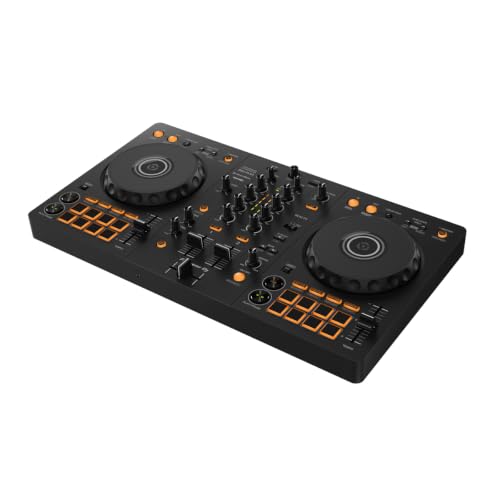
- Two-channel controller with 16 performance pads
- Smart Fader supports easier genre blending
- USB and Bluetooth connectivity with a built-in sound card
Best For: Beginners who want streaming and performance features
Best Compact Mixer for Podcasting

- Four channels with XLR inputs and 48V phantom power
- 99 DSP effects with three-band EQ on each channel
- USB recording and Bluetooth 5.0 streaming
Best For: Podcasting, live streaming, and home recording
Portable Learning Pick
Hercules DJControl Inpulse 200 MK3
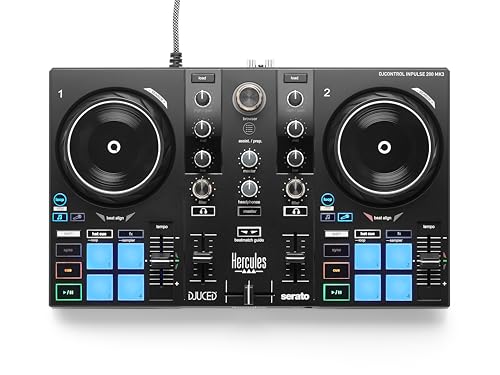
- Lightweight two-deck controller for travel
- Includes Serato Lite and DJ Academy tutorials
- Beatmatch LEDs help guide transitions
Best For: Beginners practicing at home, streaming, or playing small events
Simple Analog Utility

- Five channels in a 1.4-pound design
- RCA inputs and outputs for playback or recording
- Phantom power and two-band EQ included
Best For: Small analog audio setups with microphones and stereo sources
Party-Ready Controller
Numark Party Mix II DJ Controller
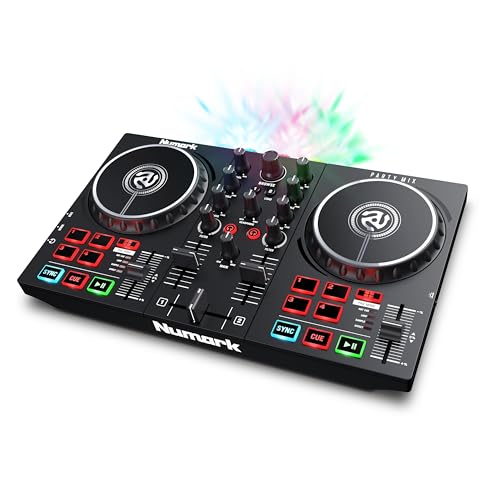
- Two decks with built-in LED light show
- Serato Lite and USB plug-and-play setup
- Performance pads, jog wheels, and filter controls
Best For: Beginners hosting parties or practicing energetic home mixes
Feature-Rich Analog Mixer
6-Channel Bluetooth Audio Mixer

- Four XLR inputs with selectable 48V phantom power
- Bluetooth, USB playback, and recording support
- Three-band EQ plus 16 DSP effects
Best For: Karaoke, streaming, recording, and small live setups
Portable Controller Pick

- Ultra-compact two-channel controller
- Serato DJ Lite and built-in sound card included
- Touch-sensitive jog wheels with RGB lighting
Best For: Mobile beginners and software-based DJ practice
All-Around Value Mixer
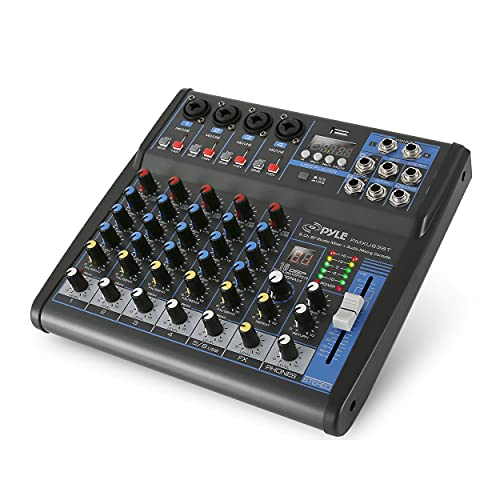
- Bluetooth, USB, flash reader, and MP3 playback
- XLR and 1/4-inch inputs with 48V phantom power
- Steel chassis with three-band EQ and DSP effects
Best For: Bands, karaoke, studios, and small venues
Best Beginner DJ Controller – Pioneer DJ DDJ-FLX2
The Pioneer DJ DDJ-FLX2 is a lightweight, USB-C-powered option for beginners comparing compact DJ mixers and controllers. Its Smart Fader can automatically match volume, BPM, and bass, while support for rekordbox, djay, and Serato DJ Lite helps you start mixing with compatible music apps.
Best For: First-time DJs who want a portable controller with guided mixing features and flexible playback options.
Pros:
- Smart Fader simplifies beatmatching across genres.
- Runs from USB-C bus power supplied by a phone, tablet, or computer.
- Supports headphones, external speakers, and compatible streaming apps.
- Includes a USB cable and access to an included DJ course.
Cons:
- It is a two-channel controller rather than a larger multi-channel mixer.
- Its feature set is primarily aimed at beginners.
Choose the DDJ-FLX2 if portability and an easy learning curve matter more than extensive performance controls. The 3.5 mm output and USB-C operation make it particularly convenient for casual setups and mobile practice.
Best Analog Compact Mixer – Yamaha MG06
The Yamaha MG06 is a straightforward six-channel analog choice for shoppers comparing compact DJ mixers for recording, lectures, or performances. It combines D-PRE preamps, three-band EQ, high-pass filters, and one-knob compressors in a rugged metal chassis.
Best For: Users who need dependable analog mixing with microphone inputs, EQ, compression, and XLR outputs.
Pros:
- Provides six channels in a compact two-pound chassis.
- D-PRE preamps are designed for natural bass and smooth highs.
- Three-band EQ and high-pass filters help shape and clean the mix.
- One-knob compressors offer simple control over common sources.
Cons:
- There is no USB connectivity.
- It requires corded electric power.
- Its analog design lacks app or streaming controls.
The MG06 is a practical fit when physical inputs and reliable analog controls are the priority. It is less suitable for computer-based workflows that require built-in USB audio connectivity.
Best Feature-Rich Beginner Controller – Pioneer DJ DDJ-FLX4
The Pioneer DJ DDJ-FLX4 is a compact two-channel controller for beginners who want more room to develop their skills. It adds 16 performance pads, Smart Fader, streaming support, a built-in sound card, and compatibility with computers and mobile devices.
Best For: New DJs who want an approachable controller with performance pads, streaming features, and a path beyond basic mixing.
Pros:
- 16 pads support Hot Cues, Pad FX, Beat Jump, and Sampler functions.
- Smart Fader helps adjust volume, bass, and BPM while blending.
- Supports rekordbox, djay, and Serato DJ Pro.
- Includes a mic input for livestreaming or MC use from one device.
Cons:
- It remains a two-channel, two-deck controller.
- Advanced users may eventually want more channels or controls.
- Its listed weight is 2.8 kg, making it less lightweight than the DDJ-FLX2.
The DDJ-FLX4 is a stronger long-term beginner pick than a minimal controller if you expect to use pads, streaming, or microphone features. Its familiar layout balances accessibility with useful tools for continued practice.
Best Compact Mixer for Podcasting – 4-Channel Podcast Audio Mixer
This four-channel podcast audio mixer is a flexible alternative for shoppers comparing compact DJ mixers for recording, streaming, and home studios. It includes two XLR microphone inputs, 48V phantom power, three-band EQ, 99 DSP effects, USB recording, and Bluetooth 5.0 streaming.
Best For: Podcasters, streamers, and home-recording users who need microphone support, effects, and computer or mobile connectivity.
Pros:
- 48V phantom power supports condenser microphones.
- PAD and 80 Hz high-pass filter help manage loud sources and low-frequency rumble.
- Each channel provides three-band EQ control.
- Includes 99 DSP effects plus USB recording and Bluetooth streaming.
Cons:
- Its four-channel layout is aimed more at podcasting and recording than traditional DJ control.
- Bluetooth streaming is specified within a 15-foot range.
- It requires corded electric power.
Consider this mixer when vocal processing and recording connectivity are more important than DJ decks or performance pads. Its compact dimensions and broad input features make it well suited to small streaming and home-studio setups.
Portable Learning Pick – Hercules DJControl Inpulse 200 MK3
If you want compact DJ mixers with controller-style features, the Hercules DJControl Inpulse 200 MK3 is a travel-friendly option for learning the basics. Its two-deck layout, included Serato Lite software, DJ Academy tutorials, Beatmatch Guide LEDs, and USB setup are designed to help beginners start mixing quickly.
Best For: Beginners who want a portable controller for home practice, streaming, or small events.
Pros:
- Lightweight 2.2-pound design fits easily into a backpack.
- Includes Serato Lite and step-by-step DJ Academy tutorials.
- Beatmatch Guide LEDs and Intelligent Music Assistant support smoother transitions.
- Supports streaming services including Spotify, Apple Music, SoundCloud GO+, TIDAL, and others.
Cons:
- Its two-channel layout is aimed at entry-level mixing.
- At 15.6 inches wide, it may be larger than some ultra-compact setups.
The Inpulse 200 MK3 stands out when portability and guided learning matter most. It is a practical compact DJ controller for building skills without assembling a larger setup.
Simple Analog Utility – Mackie Mix5 Compact Mixer
Among compact DJ mixers, the Mackie Mix5 is a straightforward analog choice for combining microphones, stereo sources, and playback equipment. It provides five channels, low-noise performance, basic two-band EQ, RCA connectivity, and main left/right outputs in a 1.4-pound chassis.
Best For: Small audio setups needing simple source mixing, microphone input, or playback and recording connections.
Pros:
- Five-channel layout includes one mic/line input and two stereo 1/4-inch line inputs.
- Dedicated stereo RCA inputs and outputs support playback or recording.
- Two-band EQ offers basic, precise tone shaping.
- Phantom power supports studio condenser microphones.
Cons:
- It is an analog mixer rather than a USB DJ controller with software controls.
- Its feature set is focused on essential mixing rather than performance effects.
The Mix5 makes sense when you need a compact, corded mixer for a few audio sources and do not need decks, jog wheels, or software integration. Its simple layout keeps everyday signal routing easy to manage.
Party-Ready Controller – Numark Party Mix II DJ Controller
For compact DJ mixers built around hands-on performance, the Numark Party Mix II combines two DJ decks with a built-in audio interface and synchronized LED lighting. Serato DJ Lite, touch-sensitive jog wheels, performance pads, filter knobs, and pitch sliders give beginners a simple way to control mixes from a Mac or Windows computer.
Best For: Beginners who want an entertaining two-deck setup for parties, casual performances, and home mixing.
Pros:
- Compact 1.76-pound controller includes integrated DJ mixing controls.
- Built-in LED light show syncs with the DJ mix.
- Performance pads provide Effect, Cue, Loop, and Sampler functions.
- Includes headphone and 1/8-inch main outputs for monitoring and speakers.
Cons:
- Its two-channel design is intended for beginner-level setups.
- The plastic construction may feel less substantial than larger controllers.
The Party Mix II is a strong fit when visual energy matters as much as basic mixing control. It keeps the setup compact while adding the lighting and performance features that suit casual parties.
Feature-Rich Analog Mixer – 6-Channel Bluetooth Audio Mixer
For shoppers comparing compact DJ mixers, this six-channel analog board offers flexible connections in a relatively lightweight format. It combines four XLR inputs, stereo line inputs, Bluetooth, USB playback, phantom power, onboard EQ, and DSP effects for karaoke, streaming, recording, or small live setups.
Best For: Users who need multiple microphone and instrument inputs with Bluetooth playback and built-in vocal effects.
Pros:
- Four XLR inputs support condenser microphones with selectable 48V phantom power.
- Bluetooth and USB connectivity support wireless streaming, playback, and recording.
- Three-band EQ and 16 DSP effects provide practical sound-shaping options.
- Weighs about 2.3 kg, making it manageable for mobile setups.
Cons:
- It is a traditional analog mixer rather than a software-based DJ controller.
- The supplied warranty is listed as 90 days.
- Operation may require careful setup to avoid connection or sound issues.
This is a versatile choice when input flexibility matters more than DJ-focused deck controls. Its Bluetooth, USB, phantom power, and effects make it suitable for small performances and vocal-centered applications.
Portable Controller Pick – Hercules DJControl Starlight
The Hercules DJControl Starlight is one of the most travel-friendly compact DJ mixers for beginners and mobile DJs. This two-channel USB controller includes Serato DJ Lite, a built-in sound card, touch-sensitive jog wheels, headphone cueing, speaker outputs, and rhythm-synced lighting.
Best For: Beginners and mobile DJs who want a small, software-driven controller for mixing on the move.
Pros:
- Ultra-compact design weighs about 1.1 pounds.
- Serato DJ Lite is included for software-based mixing.
- Built-in sound card supports headphone pre-listening and speaker output.
- Includes jog wheels, hot cues, loops, effects, sampler controls, and RGB lighting.
Cons:
- It has two channels, offering less input capacity than larger audio mixers.
- Audio input is listed as USB, so it is designed around computer-based DJing.
- Battery-powered operation may require attention to power availability during use.
Choose this controller when portability and essential DJ controls are the priority. Its small footprint and built-in audio features make it easier to practice, perform, and cue tracks without carrying a full-size setup.
All-Around Value Mixer – Pyle PMXU63BT 6-Channel Mixer
The Pyle PMXU63BT is a practical option among compact DJ mixers when you need traditional audio inputs alongside modern playback features. Its six-channel layout supports XLR and 1/4-inch connections, while Bluetooth, USB, an MP3 player, phantom power, three-band EQ, and DSP effects cover common live and studio tasks.
Best For: Bands, karaoke hosts, studios, and small venues needing a durable six-channel mixer with wireless playback.
Pros:
- Bluetooth, USB, flash-drive, and MP3 playback support add flexible source options.
- XLR and unbalanced 1/4-inch inputs accommodate microphones and line-level devices.
- Selectable 48V phantom power supports compatible condenser microphones.
- Steel chassis and sealed rotary controls are designed to resist dust and grime.
Cons:
- At 3.8 pounds, it is less lightweight than the Hercules controller.
- Its traditional mixer layout does not provide jog wheels or DJ deck controls.
- The product uses a corded power supply rather than being battery powered.
This model is a strong fit for users who want a straightforward mixing board with broad connectivity and sturdy construction. Its multi-voltage power supply also makes it practical for setups that may operate across different regions.
How We Picked These Compact Dj Mixers
We selected these Compact Dj Mixers and related controllers based on practical features that matter in smaller setups: physical controls, input and output options, portability, software compatibility, monitoring support, effects, and ease of use. The list spans beginner DJ controllers, compact analog mixers, podcast-oriented consoles, and Bluetooth-equipped sound boards because “compact mixer” can describe several very different workflows.
We also considered how each format fits common use cases. A DJ controller is usually the better choice for beatmatching and performance software, while a traditional mixer is more useful for combining microphones, instruments, playback devices, or multiple sources.
Quick Comparison
| Best For | Recommended Type | What to Prioritize |
|---|---|---|
| Learning to DJ | Two-channel DJ controller | Guidance features, jog wheels, performance pads, and included software |
| Portable parties | DJ controller with lighting | USB power, compact size, simple controls, and built-in effects or lights |
| Podcasting and streaming | Compact audio mixer | XLR inputs, phantom power, DSP effects, headphone monitoring, and USB connectivity |
| Home recording | Audio mixer or interface-style console | Clean preamps, reliable outputs, gain control, and computer compatibility |
| Small live setups | Multi-input mixer | Channel count, master outputs, EQ, monitoring, and durable construction |
Key Buying Factors for Compact Dj Mixers
DJ Controller or Traditional Mixer?
Choose a DJ controller if you need jog wheels, decks, cueing, looping, tempo controls, and software-based mixing. Choose a traditional mixer if you mainly need to blend microphones, instruments, speakers, phones, or playback sources. Some consoles labeled as DJ mixers are better suited to general audio than turntable or deck control.
Inputs, Outputs, and Channel Count
Count the sources you expect to connect now, then leave room for one additional source if possible. Check whether inputs are microphone, line, stereo, or combination XLR/TRS connections. Also verify the main output type, headphone monitoring, booth outputs, and whether USB carries audio to and from a computer.
Power, Portability, and Software
USB-powered controllers are convenient for laptops and mobile setups, while larger mixers may require an AC adapter. Confirm compatibility with your preferred software, operating system, and mobile device before buying. A compact footprint helps, but controls that are too small or crowded can be frustrating during a performance.
Effects and Extra Features
Built-in DSP effects, Bluetooth, USB playback, phantom power, performance pads, and lighting can add value, but only when they match your workflow. Phantom power is important for compatible condenser microphones, while Bluetooth is generally best for playback rather than latency-sensitive live performance.
Who Should Buy Which Compact Dj Mixers?
Beginners focused on learning DJ fundamentals should start with a straightforward two-channel controller and included beginner software. Mobile performers and party hosts may prefer a controller with built-in lighting and quick setup. Podcasters, streamers, and home creators should look for a mixer with XLR microphone inputs, phantom power, headphone monitoring, and USB recording support.
If you need to combine several microphones or line-level devices, prioritize channel count and flexible outputs over DJ-specific performance controls. For occasional background music and small gatherings, Bluetooth or USB playback can be convenient. Finally, musicians and more demanding home studios should favor dependable gain control, low-noise outputs, and clear computer connectivity rather than choosing solely by the number of effects.