Choosing among compact audio interfaces can feel overwhelming, especially when many models look similar on paper. The right choice depends on your inputs, recording needs, and the devices you plan to use.
This roundup focuses on practical options for home studios, creators, and musicians who want reliable sound quality in a small footprint. Below, you’ll find the best picks to help you compare features quickly and choose with confidence.
Best 10 Compact Audio Interfaces Picks for 2026
Studio-Ready Starter Pick
Focusrite Scarlett Solo 4th Gen

- 120dB dynamic range with 24-bit/192kHz conversion
- 1 XLR mic preamp plus 1 Hi-Z instrument input
- Includes major recording software and plugins
Best For: Solo songwriters and home studios needing a simple, high-quality interface
Portable Dual-Input Value

- Class-compliant USB-C with bus power and no drivers
- Two combo inputs with phantom power and direct monitoring
- 24-bit/192kHz conversion plus loopback support
Best For: Laptop creators who want a portable two-input interface with easy setup
Trusted Solo Classic
Focusrite Scarlett Solo 3rd Gen

- 24-bit/192kHz converters for clean recording
- 1 XLR mic input and 1 Hi-Z instrument input
- Includes software bundle and 3-year warranty
Best For: Solo vocal and instrument recording on a simple budget-friendly setup
Feature-Rich Compact Pick
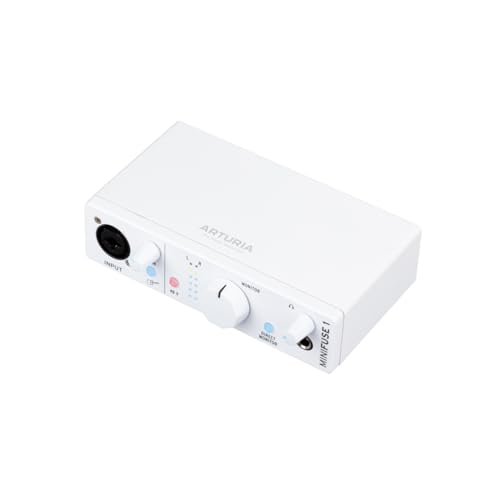
- USB audio plus 5-pin MIDI in and out
- Loopback, USB hub, and phantom power included
- Backed by a 5-year warranty
Best For: Creators who need a compact interface with MIDI and content-creation tools
Premium 2-Input Recording Upgrade
Focusrite Scarlett 2i2 4th Gen USB-C Audio Interface
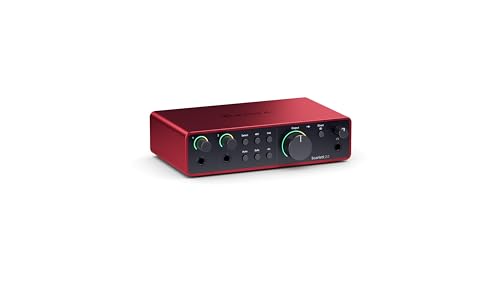
- 120dB dynamic range with 24-bit/192kHz recording
- Auto Gain and Clip Safe simplify level setting
- Includes Pro Tools Intro+, Ableton Live Lite, Cubase LE, and plugins
Best For: vocal and guitar recording in a compact home studio
Budget-Friendly Recording and Streaming Pick
M-AUDIO M-Track Duo USB Audio Interface

- Two combo XLR/line/instrument inputs with phantom power
- USB/direct monitoring switch for zero-latency monitoring
- Includes MPC Beats software for recording and streaming
Best For: podcasters, streamers, and beginners on a budget
Ultra-Compact Value Interface
Behringer UMC22 Audiophile 2x2 USB Audio Interface

- Midas-designed mic preamp for clean capture
- Direct monitoring and USB bus power for simple use
- Front combo input plus instrument input keeps setup flexible
Best For: budget-conscious solo recording and basic DAW work
Entry-Level Portable Creator Pick
M-AUDIO M-Track Solo USB Audio Interface
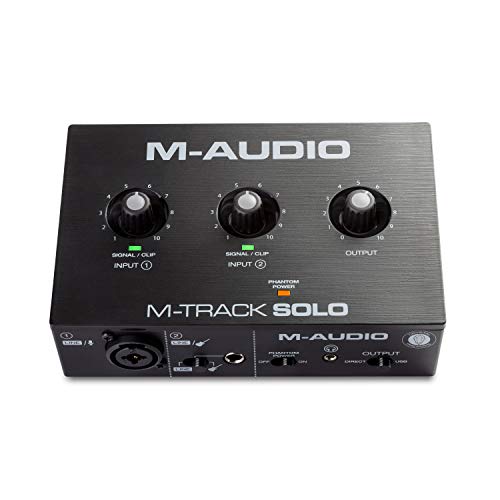
- XLR/line plus instrument input
- Zero-latency direct monitoring
- Includes MPC Beats software
Best For: Solo creators recording vocals, guitar, podcasts, or livestreams
Mobile Hybrid Creator Pick
MAONO P2 Hybrid USB Audio Interface Dual XLR

- Connects to computer and phone or iPad
- 24-bit/192kHz with dual XLR support
- Loopback and direct monitoring tools
Best For: Creators who want hybrid device support for streaming and recording
Studio-Ready Starter Pick – Focusrite Scarlett Solo 4th Gen
For compact audio interfaces, the Scarlett Solo 4th Gen is a practical pick if you want a simple mic-and-guitar setup with modern recording quality. It keeps the workflow small while offering Focusrite’s latest converters, USB-C connectivity, and an improved Air mode for adding presence to vocals and guitars.
Best For: Songwriters, solo performers, and home recordists who want a straightforward two-input interface with strong sound quality.
Pros:
- 24-bit/192kHz recording with a 120dB dynamic range
- 1 XLR mic preamp and 1 Hi-Z instrument input for simple tracking
- Improved Air mode adds extra presence to vocals and guitars
- Includes Pro Tools Intro+, Ableton Live Lite, Cubase LE, and Hitmaker Expansion
Cons:
- Only one mic input, so it is not built for multi-person recording
- Focused on basic setups rather than expanded I/O
Overall, this is one of the most sensible compact audio interfaces for creators who mainly record solo and want a trusted brand with strong included software. It balances portability, quality, and ease of use without adding unnecessary complexity.
Portable Dual-Input Value – PIYONE 2×2 USB-C Interface
If you want compact audio interfaces with a simple bus-powered setup, this PIYONE 2×2 model is built for fast plug-and-play recording. It offers two combo inputs, 24-bit/192kHz conversion, direct monitoring, and loopback support, making it a flexible fit for laptop-based sessions.
Best For: Mobile creators and Windows users who want a small two-channel interface with monitor mix and loopback features.
Pros:
- Class-compliant USB-C design with no drivers required
- Two combo inputs for mic or instrument recording
- 24-bit/192kHz fidelity with zero-latency direct monitoring
- Loopback support and a built-in 3.5mm headphone jack
Cons:
- Windows is the only listed operating system in the supplied details
- No bundled software is mentioned in the notes
This is a good choice if you value convenience and connectivity in a compact chassis. The design leans toward quick setup and portable recording rather than a deep feature set.
Trusted Solo Classic – Focusrite Scarlett Solo 3rd Gen
The Scarlett Solo 3rd Gen remains a solid option in compact audio interfaces if you want a simple, dependable way to record vocals and instruments. It pairs a mic preamp and Hi-Z input with 24-bit/192kHz converters, making it a familiar, no-fuss choice for small recording setups.
Best For: Solo musicians and podcasters who want a straightforward interface with proven Focusrite basics.
Pros:
- 24-bit/192kHz recording with high-performance converters
- 1 XLR mic input and 1 Hi-Z instrument input for basic tracking
- Air mode adds extra clarity to acoustic instruments
- Includes Pro Tools Intro+, Ableton Live Lite, Cubase LE, and Hitmaker Expansion
Cons:
- Older 3rd Gen hardware compared with the newer Scarlett Solo 4th Gen
- Limited to a simple two-channel workflow
It is still a strong pick when you want a compact interface from a well-known line and do not need expanded I/O. The included software bundle and balanced outputs help round out a clean starter recording setup.
Feature-Rich Compact Pick – Arturia MiniFuse 1
Among compact audio interfaces, the Arturia MiniFuse 1 stands out for creators who want more than basic recording inputs. It combines USB audio, MIDI connectivity, loopback, and a built-in USB hub in a small interface designed for voice, guitar, synths, and content creation.
Best For: Producers, content creators, and musicians who want a compact interface with MIDI and extra utility features.
Pros:
- Includes USB audio plus 5-pin MIDI input and output
- Loopback support for voiceovers and in-app or in-game audio
- Built-in USB type A hub adds extra connectivity
- Comes with a 5-year warranty and bundled software
Cons:
- Single-channel design may be limiting for larger recording needs
- Software bundle is broad, which may be more than some beginners need
This is a smart option if you want a small interface that can handle recording, MIDI gear, and content workflows in one box. Its long warranty and included software make it especially appealing for users who want a durable, all-around compact setup.
Premium 2-Input Recording Upgrade – Focusrite Scarlett 2i2 4th Gen USB-C Audio Interface
If you’re comparing compact audio interfaces for serious home recording, the Scarlett 2i2 4th Gen stands out for its pro-grade conversion, useful auto-leveling tools, and simple 2-in/2-out layout. It’s built for mic and guitar recording with enough polish to support vocals, instruments, and full demo production without adding complexity.
Best For: Musicians who want a compact, higher-end interface for recording vocals and guitar with modern convenience features.
Pros:
- 120dB dynamic range and 24-bit/192kHz support for high-quality recording
- Auto Gain helps set levels quickly, while Clip Safe helps prevent distortion
- Air mode can add presence and harmonic character to vocals and guitars
- Includes recording software and plugin bundle for getting started fast
Cons:
- Only 2 channels, so it’s not meant for larger multi-input sessions
- Focused on music recording rather than broader I/O expansion
The Scarlett 2i2 4th Gen is a strong pick if you want a compact interface that feels polished right out of the box. Its combination of sound quality, monitoring protection, and bundled software makes it an easy recommendation for streamlined project studios.
Budget-Friendly Recording and Streaming Pick – M-AUDIO M-Track Duo USB Audio Interface
The M-AUDIO M-Track Duo fits well among compact audio interfaces when you want a simple, portable setup for podcasting, recording, or live streaming. Its two combo inputs, direct monitoring switch, and included MPC Beats software make it a practical entry-level choice for basic two-channel work.
Best For: Beginners and creators who need an affordable portable interface for podcasting, streaming, and simple recording.
Pros:
- Two combo XLR/line/instrument inputs with phantom power
- USB/direct monitoring switch supports zero-latency monitoring
- 48kHz audio resolution for straightforward recording
- Includes MPC Beats software for production basics
Cons:
- 48kHz maximum sample rate is lower than some higher-end options
- More basic feature set than premium interfaces
For simple two-input recording tasks, the M-Track Duo keeps the workflow uncomplicated. It’s best suited to users who value portability, basic monitoring flexibility, and an easy path into recording or streaming.
Ultra-Compact Value Interface – Behringer UMC22 Audiophile 2×2 USB Audio Interface
If your shortlist of compact audio interfaces is all about keeping costs and size down, the Behringer UMC22 delivers a straightforward 2×2 setup with a Midas-designed mic preamp. It’s aimed at solo musicians who want a simple way to capture ideas, record into a DAW, and monitor directly without a lot of extra setup.
Best For: Solo musicians and budget buyers who want a no-frills interface for basic recording and monitoring.
Pros:
- Midas-designed mic preamp for improved vocal and instrument capture
- Direct monitor select helps with real-time playback while recording
- Front-panel combo input plus instrument input for flexible hookup
- USB-powered and compatible with popular DAWs like Pro Tools, Ableton, and Cubase
Cons:
- Basic feature set compared with newer interfaces
- Windows-focused in the supplied details
- Limited to a simple 2-channel workflow
The UMC22 makes sense if you want the essentials and nothing more. It’s a practical low-cost interface for getting audio into a computer quickly, especially when direct monitoring and simple connectivity matter most.
Entry-Level Portable Creator Pick – M-AUDIO M-Track Solo USB Audio Interface
If you want one of the most compact audio interfaces for simple recording, podcasting, or streaming, the M-AUDIO M-Track Solo keeps the setup straightforward. It gives you a mic input with phantom power, a separate line/instrument input, and direct monitoring, making it a practical fit for small desks and mobile rigs.
Best For: Solo creators who need an affordable, lightweight interface for vocals, guitar, podcasting, and livestreams.
Pros:
- Combo XLR/line input with phantom power plus a separate line/instrument input
- USB/direct switch supports zero-latency monitoring
- Crystal Preamp is designed for clean microphone capture
- Includes MPC Beats software for getting started quickly
Cons:
- Only two channels, so it is not built for larger recording setups
- Max sample rate is limited to 48kHz
- Monitoring options are basic compared with more advanced creator interfaces
Overall, the M-Track Solo is a simple, desk-friendly choice that covers the essentials without adding complexity. For basic home recording and streaming needs, it offers a useful mix of portability and core inputs.
Mobile Hybrid Creator Pick – MAONO P2 Hybrid USB Audio Interface Dual XLR
The MAONO P2 stands out among compact audio interfaces if you need a flexible setup for computer and mobile recording. Its dual USB ports let you connect to a PC and phone or iPad at the same time, while the dual XLR design, loopback, and direct monitoring features make it well suited to modern content workflows.
Best For: Streamers, podcasters, and musician creators who want hybrid device support and more control over recording.
Pros:
- Dual USB ports support simultaneous computer and phone or iPad use
- 24-bit/192kHz recording with dual XLR support and 56dB gain
- Loopback and streaming tools help route desktop and app audio
- Compact 15° tilt design with aluminum-alloy housing
Cons:
- Feature set is more complex than a basic plug-and-play interface
- Designed mainly for creators, so it may be more than needed for simple mic-only recording
- Works best when you want to use its software and routing features
In practice, the P2 is a strong fit if your compact audio interface needs go beyond one-device recording. It offers a lot of flexibility for creators who move between streaming, mobile capture, and home-studio work.
Smart XLR Upgrade Pick – Shure MVX2U Gen 2 XLR-to-USB-C Audio Interface
If you already own an XLR microphone, the Shure MVX2U Gen 2 is a very compact way to turn it into a USB-C recording setup. It focuses on clean, consistent audio with onboard processing, making it one of the more straightforward compact audio interfaces for desktop, tablet, or smartphone use.
Best For: Anyone with an XLR mic who wants a portable USB-C interface with built-in audio processing.
Pros:
- Converts any XLR microphone to USB-C for desktop and mobile setups
- Onboard DSP includes Auto Level, Real-Time Denoiser, and Digital Popper Stopper
- Provides up to +60 dB clean gain plus 48V phantom power
- MOTIV app support adds control over tone, EQ, compression, and limiter
Cons:
- Single-channel design limits it to one microphone input
- XLR-only input means it is not suited for guitars or line sources without extra gear
- Best value depends on already owning an XLR microphone
The MVX2U Gen 2 is ideal when your main priority is making an existing XLR mic sound polished with minimal fuss. It is a streamlined pick for creators who value portability, DSP, and easy setup over extra inputs.
How We Picked These Compact Audio Interfaces
We focused on Compact Audio Interfaces that balance sound quality, ease of use, and everyday usefulness. Priority went to models with solid preamps, dependable USB connectivity, low-latency monitoring, and a form factor that fits a desk, travel bag, or small studio setup.
We also considered input flexibility, platform compatibility, and whether the interface makes sense for vocals, guitar, podcasting, streaming, or mobile recording.
Quick Comparison: What Matters Most
In this category, the biggest differences usually come down to input count and connection type. A simple 1-in/2-out interface is ideal for solo creators, while 2-in/2-out models suit vocal-and-instrument recording or small dual-source sessions. XLR-to-USB-C models are best for users who already own a microphone and want a streamlined setup.
Some Compact Audio Interfaces also add MIDI, instrument-level switching, or mobile device support, which can be a deciding factor if you record on the go or integrate external gear.
Key Buying Factors for Compact Audio Interfaces
Inputs and Outputs
Choose the input layout that matches your workflow. One XLR input is enough for voiceovers and solo podcasting, while two inputs are better for recording vocals and guitar at the same time. If you plan to use studio monitors or headphones frequently, make sure the output section is convenient and clearly labeled.
Sound Quality and Gain
Look for clean preamps, enough gain for your microphone, and a noise floor that stays low at higher settings. For Compact Audio Interfaces, strong gain performance matters because smaller units often need to do more with less physical space.
Compatibility and Power
Check support for Mac, Windows, iPad, iPhone, or mobile workflows if you need them. USB-C is common, but compatibility matters more than the port shape. Bus-powered designs are convenient, though some setups may still benefit from stable power and cable management.
Extras That Actually Help
Useful extras include direct monitoring, MIDI I/O, loopback for streaming, and bundled software. These features can make a compact interface more versatile without adding much size.
Who Should Buy Which Compact Audio Interfaces?
Solo vocalists, podcasters, and streamers usually do best with a simple 1-input model or an XLR-to-USB-C interface. Singer-songwriters and home recordists should lean toward 2-in/2-out Compact Audio Interfaces for more flexible tracking. If you want portability plus mobile compatibility, prioritize small, bus-powered units with broad device support.
If you are building a first recording setup, choose the simplest interface that still covers your current needs. If you expect to add microphones, instruments, or MIDI gear later, it is often worth stepping up to a more flexible model now.