Low-light photography demands more than simply adding brightness. The right flash can improve exposure, freeze motion, preserve skin tones, and give you better control over the mood of a scene.
This roundup compares 10 compact flashes, wireless strobes, macro systems, and LED fill lights so you can match your camera, shooting style, and budget to the right low-light solution.
Best 10 Camera Flashes for Low Light Picks for 2026
Ultra-Light Travel Pick

- 45g body fits easily in a small camera bag
- TTL and manual output control
- Up to 700 full-power flashes with USB-C charging
Best For: Travel, street photography, and events
Pocket Strobe Power Pick
Godox AD100 Pro II 100Ws Flash
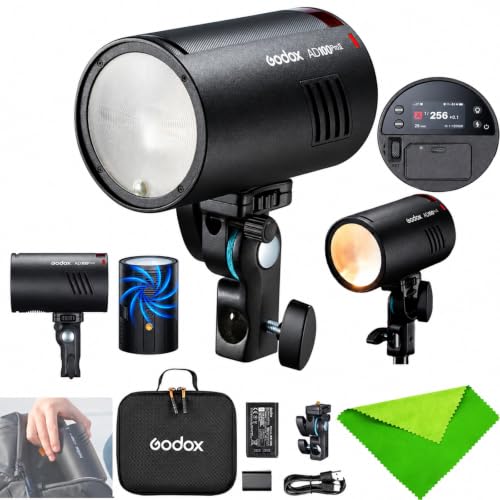
- 100Ws output with about 490 full-power flashes
- 2.4GHz wireless control and TTL support
- 28–85mm adjustable zoom and 1/8000s HSS
Best For: Portable portraits and multi-light setups
Continuous-Light Vlogging Pick
ULANZI VL-81 Bi-Color LED Light
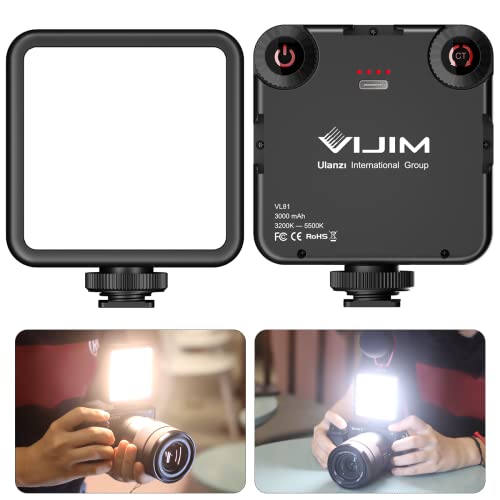
- 3200K–5600K color adjustment with CRI95
- Softbox included for gentler fill light
- Up to 480 minutes of battery life at minimum brightness
Best For: Vlogging, livestreaming, and smartphone video
Classic Rangefinder-Style Pick

- Manual power from 1/1 to 1/64
- Optical S1 and S2 slave modes
- Standard ISO hot-shoe compatibility across many systems
Best For: Film, rangefinder, and manual-flash photography
Portable LED Pick

- 5500K LED output with CRI 95+
- Five brightness levels and rechargeable battery
- Three cold shoes plus 1/4-inch mounting hole
Best For: Vloggers and close-range continuous fill lighting
Macro Lighting Pick
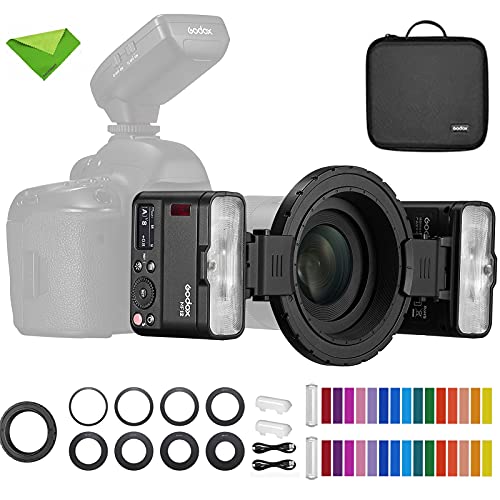
- TTL/M control for compatible camera systems
- 2.4G wireless control with multiple groups and channels
- Rotating, sliding flash units for flexible macro lighting
Best For: Close-up and macro photography
Beginner Hybrid Pick

- Manual flash plus adjustable bi-color fill light
- Four power levels and 90-degree bounce tilt
- 45g body with USB-C charging
Best For: Beginners and content creators with single-contact hot shoes
Best Versatile Pick
Godox Lux Master TTL Retro Flash

- GN25 output with TTL exposure support
- 0–90° tilt for bounce lighting
- Up to 460 full-power flashes via USB-C battery
Best For: TTL-focused photographers using multiple camera systems
Best Hybrid Light

- GN16 flash, focus assist, and video light
- Up to 550 full-power flashes per charge
- 2,500K–6,500K bi-color continuous light
Best For: Hybrid photo-video shooting and nearby low-light subjects
Best Compact Manual Option

- GN8 output with four manual power levels
- 90° tilt for indoor bounce lighting
- USB charging and added fill-light assistance
Best For: Compact setups and close-range manual flash photography
Ultra-Light Travel Pick – GODOX iT20 Mini TTL Flash
For photographers seeking camera flashes for low light without adding bulk, the GODOX iT20 is a highly portable option. It weighs just 45g, supports TTL and manual output, and includes magnetic modifiers for quick light shaping.
Best For: Travel, street photography, events, and compatible Canon users who want a compact on-camera flash.
Pros:
- Extremely light at 45g and easy to carry.
- Offers TTL automation plus 1/32-to-1/1 manual control.
- Includes a diffuser, honeycomb, and color gels.
- Provides up to 700 full-power flashes per charge with USB-C charging.
Cons:
- The listed model is specifically for Canon cameras, so verify compatibility before buying.
- A TR hot-shoe adapter is sold separately for vertical bounce flash.
The iT20 is a practical low-light companion when portability matters most. Its limited 45g design favors convenience over the greater output and advanced wireless control of a larger strobe.
Pocket Strobe Power Pick – Godox AD100 Pro II 100Ws Flash
The Godox AD100 Pro II is suited to photographers who need more power from camera flashes for low light. Its 100Ws output, adjustable 28–85mm zoom, TTL support, and 2.4GHz wireless system make it a flexible off-camera lighting tool.
Best For: Portraits, events, and multi-light setups where portable strobe power and wireless control are priorities.
Pros:
- 100Ws output with approximately 490 full-power flashes per battery.
- Supports TTL, 1/8000s high-speed sync, and front/rear curtain sync.
- Built-in 2.4GHz Godox X wireless system works with X-series triggers.
- Adjustable 28–85mm zoom helps control beam coverage.
Cons:
- It is a dedicated external strobe rather than a simple lightweight on-camera flash.
- The FT433 receiver is sold separately for 433MHz control.
Choose the AD100 Pro II when stronger, controllable illumination is more important than the smallest possible setup. Its battery capacity and wireless features make it particularly useful for deliberate lighting arrangements.
Continuous-Light Vlogging Pick – ULANZI VL-81 Bi-Color LED Light
The ULANZI VL-81 takes a continuous-light approach to camera flashes for low light, making it useful for video as well as stills. Its 81 LEDs, adjustable 3200K–5600K color temperature, CRI95 rating, and included softbox provide flexible fill lighting.
Best For: Vlogging, livestreaming, smartphone filming, product shots, and creators who prefer constant illumination over a flash burst.
Pros:
- Bi-color adjustment from 3200K to 5600K suits warm or daylight-balanced scenes.
- CRI95 output and included softbox help produce more natural, comfortable light.
- Built-in 3000mAh battery provides up to 150 minutes at maximum brightness or 480 minutes at minimum.
- Three cold-shoe mounts allow additional lights or accessories to be attached.
Cons:
- It is a continuous LED light, not a TTL or burst flash.
- Charging takes about three hours.
- It is not water resistant.
The VL-81 is a strong choice when you need to see the lighting effect while recording. It is especially practical for video workflows, though photographers wanting a brief high-output flash should consider a dedicated strobe instead.
Classic Rangefinder-Style Pick – FlashQ FM2 Manual Flash
The FlashQ FM2 is a straightforward option for photographers comparing camera flashes for low light across analog and digital systems. Its compact metal body, standard ISO hot-shoe compatibility, manual power range, and optical slave modes suit hands-on shooting.
Best For: Rangefinder-style cameras, film photography, and users who want simple manual flash control with broad hot-shoe compatibility.
Pros:
- Manual power can be adjusted from 1/1 to 1/64.
- Supports S1 and S2 optical slave modes for off-camera triggering.
- Compatible with many Fujifilm, Leica, Ricoh, Pentax, Sony, Canon, Nikon, Lumix, and Four Thirds cameras.
- Includes a color gel pack, stand, USB cable, and pouch.
Cons:
- Its 66ft guide number is more modest than that of a larger strobe.
- It uses two AA batteries.
- It lacks TTL exposure control and is limited to a 1/250 sync speed.
The FM2 favors tactile simplicity and classic styling over automation. It is a sensible pick for photographers comfortable setting exposure manually, especially when using compatible film or rangefinder cameras.
Portable LED Pick – Ulanzi VL49 Fill Light
For creators comparing camera flashes for low light, the Ulanzi VL49 is a compact continuous LED alternative rather than a traditional flash. Its adjustable brightness, natural-looking 5500K output, and rechargeable battery make it useful for portraits, vlogging, live streams, and product shots.
Best For: Vloggers, livestreamers, and photographers who want portable continuous fill light.
Pros:
- Compact, lightweight design with a rechargeable 2000mAh battery.
- Five brightness levels and up to 300 minutes of runtime at minimum brightness.
- CRI 95+ output and 5500K color temperature for natural-looking illumination.
- Three cold-shoe mounts plus a 1/4-inch screw hole support flexible setups.
Cons:
- It is a continuous LED light, not a dedicated burst-style camera flash.
- It is not water resistant.
The VL49 is a practical low-light companion when you need to see the lighting effect continuously and keep your kit small. Its modest output is best suited to close subjects and content-creation setups rather than lighting large scenes.
Macro Lighting Pick – Godox MF12-K2 Macro Flash
Among camera flashes for low light, the Godox MF12-K2 stands out for macro work and off-camera control. Its TTL/M operation, wireless 2.4G control, rechargeable battery, and adjustable positioning help illuminate small subjects from useful angles.
Best For: Macro photographers who need flexible, wireless close-up lighting.
Pros:
- Supports TTL and manual exposure control with compatible systems.
- 2.4G wireless control offers five groups and 32 channels per group.
- Rechargeable battery supports up to 500 full-power flashes with 0.01–1.7-second recycling.
- Flash units can rotate and slide around the mounting ring for customized macro lighting.
Cons:
- Its specialized macro design is less suited to general-purpose event lighting.
- Wireless operation requires compatible Godox triggers or systems.
- It is not water resistant.
The MF12-K2 is a strong choice when low-light photography involves flowers, insects, products, or other close subjects. Its positioning flexibility is the main advantage, letting you shape light more precisely than with a single forward-facing flash.
Beginner Hybrid Pick – llano FL014 Mini Flash
For shoppers seeking camera flashes for low light in a small, approachable package, the llano FL014 combines a manual flash with a bi-color continuous fill light. It fits single-contact hot shoes, tilts up to 90 degrees for bounce lighting, and charges through USB-C.
Best For: Beginners, hobbyists, and content creators using compatible single-contact hot-shoe cameras.
Pros:
- Combines manual flash and adjustable continuous fill-light modes.
- Four manual flash power levels and a GN8 rating at ISO 100.
- Bi-color fill light adjusts from 2500K warm to 7000K cool.
- Lightweight 45g body, 90-degree tilt, and up to 500 full-power flashes.
Cons:
- Manual operation only; it does not provide TTL.
- Compatible only with single-contact hot-shoe cameras, so the shoe type should be verified.
- In flash mode, only the cool fill light can be used.
The FL014 is convenient for everyday shooting when portability and simple controls matter more than advanced automation. Its limited GN8 output makes it better for nearby subjects and modest fill than for illuminating large rooms or distant scenes.
Best Versatile Pick – Godox Lux Master TTL Retro Flash
If you want camera flashes for low light that combine automatic exposure with flexible off-camera options, the Godox Lux Master is a strong all-around choice. Its GN25 output, TTL support, tilting head, and built-in battery suit portraits, events, and everyday indoor photography.
Best For: Photographers who want TTL convenience, bounce lighting, and wireless compatibility across several camera systems.
Pros:
- TTL exposure support plus stroboscopic, front-curtain, rear-curtain, and high-speed sync modes.
- 0–90-degree tilting head enables direct or bounce flash lighting.
- Built-in 2,980mAh battery provides up to 460 full-power flashes and charges via USB-C.
- Works with Canon, Nikon, Sony, Olympus, Fujifilm, Pentax, and Leica-compatible setups.
Cons:
- Not water resistant.
- Wireless pairing is designed around compatible Godox triggers such as the X3, XproII, and X2T.
The Lux Master is the most feature-rich option here for low-light shooters who value TTL automation and bounce control. Its GN25 output is useful at distance, while the rechargeable battery reduces dependence on disposable cells.
Best Hybrid Light – ULANZI F16R 3-in-1 Speedlite
The ULANZI F16R is a practical choice among camera flashes for low light because it combines a GN16 flash with focus-assist and continuous-light functions. Its rechargeable battery, diffuser, tilting head, and adjustable bi-color LED make it useful for both stills and video.
Best For: Street photographers, vloggers, and event shooters who need flash and continuous illumination in one compact unit.
Pros:
- Three functions: flash, focus-assist light, and continuous video light.
- 0.5–3-second recycle times and up to 550 full-power flashes per charge.
- 90-degree tilt supports direct or bounce lighting, and a diffuser softens the output.
- Bi-color 2,500K–6,500K LED with stepless brightness and CRI 96.
Cons:
- Uses a single-pin universal hot shoe, so compatibility should be checked carefully.
- Not compatible with Canon 1500D, 3000D, 200D Mark II, or cameras and triggers without a standard center contact.
- Not water resistant.
Choose the F16R if versatility matters more than maximum flash power. The GN16 output is suited to nearby subjects, while its continuous bi-color light adds value for video, focusing, and mixed-light scenes.
Best Compact Manual Option – ULANZI SL03 Mini Flash
For photographers seeking small camera flashes for low light, the ULANZI SL03 offers a simple manual approach with a GN8 output and four power levels. Its 90-degree tilt and fill-light function can help soften indoor shadows when a wall or ceiling is available for bounce.
Best For: Compact-camera and DSLR users who are comfortable with manual flash settings and need a lightweight close-range solution.
Pros:
- Four manual output levels: 1/1, 1/2, 1/4, and 1/8.
- 90-degree adjustable head supports bounce flash indoors.
- Updated recycling performance and added fill-light assistance for focusing.
- Compact design and USB charging cable included.
Cons:
- No TTL function; operation is manual rather than automatic.
- Single-contact hot-shoe compatibility requires careful camera checking.
- Recommended shutter speed is no faster than 1/250 second, and bounce effects are limited outdoors or in large spaces.
The SL03 is best viewed as a budget-friendly, compact manual flash rather than a fully automated speedlight. It can work well for close subjects and indoor bounce lighting, provided your camera appears on the compatibility list and supports a single-contact hot shoe.
How We Picked the Best Camera Flashes for Low Light
We focused on features that matter when available light is limited: usable output, recycle speed, TTL compatibility, portability, battery life, wireless control, color consistency, and mounting flexibility. The selection includes conventional speedlights, a compact studio-style strobe, dedicated macro units, and LED lights that provide continuous illumination.
Because these products serve different purposes, output alone does not determine the best choice. A lightweight TTL flash may be ideal for travel, while a photographer shooting portraits or groups may benefit more from a higher-powered wireless strobe. LED models are also useful for video, close-up work, and situations where you need to preview the lighting effect before recording.
Quick Comparison
Choose a compact TTL flash for general still photography and automatic exposure control. Choose the Godox AD100 Pro II when you need substantially more power and off-camera flexibility. Macro photographers should prioritize the Godox MF12 system, while retro-style models emphasize appearance and hands-on control.
The ULANZI and llano lights are better considered hybrid lighting tools than traditional flashes. Their continuous output makes them useful for video, product photography, vlogging, and close subjects, although they generally will not provide the same instantaneous power or motion-freezing ability as a dedicated flash.
Key Buying Factors for Camera Flashes for Low Light
Power and Coverage
Guide number or watt-second ratings provide a starting point, but real-world performance also depends on lens aperture, ISO, modifiers, bounce distance, and subject size. More power helps with bounced light and larger spaces, while a small flash is easier to carry and less intimidating for casual shooting.
TTL, Manual Control, and Compatibility
TTL automation can quickly produce balanced exposures as subjects or distances change. Manual control is valuable for repeatable studio setups and creative lighting. Verify the exact camera version before buying, especially for Canon, Nikon, Sony, Fujifilm, and other systems, because TTL communication and mounting may differ.
Recycle Time, Battery, and Wireless Operation
Fast recycle times help you capture action and moments without waiting. Check whether the unit uses removable batteries, an internal rechargeable cell, or a USB-C charging system. Built-in radio control or optical triggering can make off-camera lighting much easier, but confirm whether a separate transmitter is required.
Flash Versus Continuous LED Light
A flash delivers a brief, powerful burst that can freeze motion. An LED light stays on, making it easier to preview shadows and exposure, and is often more practical for video. If you primarily photograph moving people in dark environments, choose a flash; if you record video or shoot static subjects, an LED may be more versatile.
Who Should Buy Which Camera Flashes for Low Light?
- Travel and everyday photographers: Choose a compact TTL model such as the GODOX iT20 or a small ULANZI flash.
- Portrait and event photographers: Consider the Godox AD100 Pro II for greater output and off-camera lighting potential.
- Macro photographers: The Godox MF12 system is the most specialized option for controlled close-up illumination.
- Video creators and product shooters: Look at the ULANZI VL-81, VL49, or llano FL014 for continuous, adjustable fill light.
- Manual-flash enthusiasts: The FlashQ FM2 offers a straightforward approach, while the Godox Lux Master adds TTL functionality and retro styling.
Before ordering, confirm your camera mount, trigger requirements, charging method, and return policy. The best low-light setup is the one that fits your workflow and is powerful enough for your typical subject distance.