The best camera external recorders for mirrorless cameras can extend recording time, improve monitoring, and unlock higher-quality codecs than many cameras offer internally. They are useful for filmmakers, streamers, interview crews, and anyone building a more flexible video workflow.
This roundup includes dedicated monitor-recorders alongside capture hardware, audio accessories, and camera kits that may suit specific mirrorless-camera setups. Check compatibility, connections, power requirements, and supported recording formats before buying.
Best 10 Camera External Recorders for Mirrorless Cameras Picks for 2026
Best Cinematic Monitor-Recorder
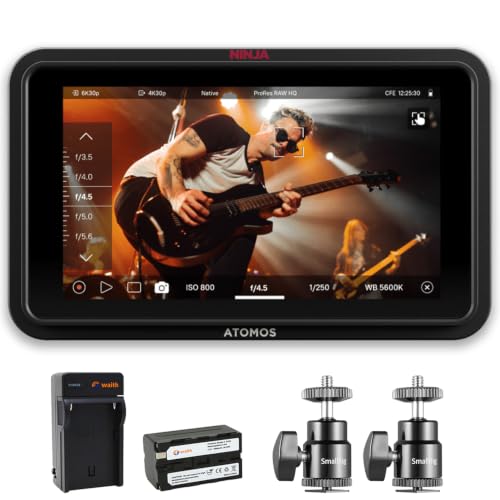
- 1500-nit HDR touchscreen with professional monitoring tools
- Records ProRes RAW, DNx, and H.265
- Includes battery, charger, cables, and hot-shoe mounts
Best For: Filmmakers wanting RAW recording and advanced on-set monitoring
Best Compact Video Interface
UltraStudio Express Recorder 3G

- HDMI and 3G-SDI input
- 10-bit video support
- Compact 100-gram pocket format
Best For: Computer-based capture, streaming, and DaVinci Resolve workflows
Best Audio Expansion
Tascam XLR2d-F Mirrorless Adapter

- Adds two XLR/TRS inputs
- Digital audio transmission via compatible accessory shoe
- Supports phantom power and microphone/line switching
Best For: Canon and Fujifilm users needing professional camera audio inputs
Best Analog Archive Recorder

- Converts AV sources to microSD
- Supports VHS, 8mm, Hi8, and MiniDV workflows
- Built-in LCD and portable clip mount
Best For: Digitizing legacy camcorder and VCR footage
Professional 8K Capture

- 8K/60P internal RAW recording
- HDMI 8K RAW output
- Cooling fan for extended recording
Best For: Professional 8K mirrorless cinema workflows
USB Machine-Vision Capture

- 4K/60fps and 1080P/230fps capture
- Manual 10X 5–50mm zoom
- UVC plug-and-play USB connectivity
Best For: Computer-connected technical and inspection video
On-Camera RAW Recording
Atomos Ninja RAW Mirrorless Kit

- Records ProRes RAW over HDMI
- 1500-nit HDR monitoring
- Camera control via USB-C
Best For: Mirrorless filmmakers needing external RAW capture
Creator Bundle Pick

- 5K/20fps and 4K/60fps recording
- Includes mic, tripod, card, and two batteries
- Wi-Fi, webcam mode, and IR night vision
Best For: Beginners making vlogs, interviews, and live broadcasts
Mirrorless Foundation

- 24.1MP APS-C sensor with DIGIC 8
- RF-S18-45mm lens included
- Micro-HDMI output for compatible accessories
Best For: Entry-level Canon users building an HDMI recording setup
Dual-View Starter Kit

- 5K front lens plus 1080P rear lens
- Includes microphone, tripod, card, and two batteries
- Webcam, HDMI, Wi-Fi, and IR night vision
Best For: Solo creators and event shooters needing two perspectives
Best Cinematic Monitor-Recorder – Ninja RAW Mirrorless Kit
For filmmakers seeking camera external recorders for mirrorless cameras, the Atomos Ninja RAW combines a bright HDR monitor, professional exposure tools, and external recording in one field-ready kit. It supports ProRes RAW, DNx, and H.265 recording to CFexpress Type B or USB-C storage, while USB-C camera control can simplify operation with compatible cameras.
Best For: Mirrorless-camera filmmakers who want HDR monitoring, RAW recording, and camera controls in a single rig.
Pros:
- 1500-nit touchscreen with waveform, vectorscope, false color, and focus peaking.
- Records ProRes RAW, DNx, and H.265 to compatible external media.
- Includes rechargeable battery, charger, locking cables, and two adjustable hot-shoe mounts.
- Offers camera control for start/stop, ISO, shutter, aperture, and white balance with compatible setups.
Cons:
- Its 3-pound package weight may be substantial for lightweight mirrorless rigs.
- Advanced recording features and required media may add cost and setup complexity.
This is the most complete option here for production-focused mirrorless users. Its strong monitoring tools and RAW workflow are especially useful when exposure control and post-production flexibility matter more than minimal size.
Best Compact Video Interface – UltraStudio Express Recorder 3G
The Blackmagic Design UltraStudio Express Recorder 3G is a compact choice among camera external recorders for mirrorless cameras when the workflow centers on computer capture, streaming, or DaVinci Resolve. It provides HDMI and 3G-SDI connectivity with 10-bit video support in a pocket-sized enclosure.
Best For: Creators routing HDMI or 3G-SDI video from a camera into a computer-based production or streaming setup.
Pros:
- Supports HDMI and 3G-SDI video input.
- Handles 10-bit video and digital audio through supported inputs.
- Compact 100-gram design is convenient for portable workflows.
- Compatible with computers, live-streaming software, and DaVinci Resolve.
Cons:
- It is an interface for computer workflows rather than a standalone camera-mounted recorder with built-in media.
- Its listed video connectivity is centered on 3G-SDI and HDMI, so users should verify format compatibility.
This recorder makes sense for a desk, mobile production cart, or streaming station. Choose it when you need to get a mirrorless camera signal into compatible software rather than record directly to an onboard card.
Best Audio Expansion – Tascam XLR2d-F Mirrorless Adapter
Tascam FUJIFILM Kit XLR Microphone Adapter for Mirrorless Cameras, Black (CA-XLR2d-F)
Check Price On AmazonAlthough it is an audio adapter rather than a video recorder, the Tascam CA-XLR2d-F is a useful companion for camera external recorders for mirrorless cameras when production sound is the priority. It adds two XLR/TRS inputs and can send digital audio directly to compatible Canon and Fujifilm cameras through the accessory shoe.
Best For: Canon and Fujifilm mirrorless users who need two professional microphone or line-level inputs on the camera.
Pros:
- Provides two XLR/TRS input terminals for flexible microphone selection.
- Includes a high-performance AD converter for direct digital audio transmission.
- HDDA preamplifier supports low-noise, wide-dynamic-range audio.
- Supports microphone/line switching and +48V phantom power.
Cons:
- It does not record video or function as a standalone video recorder.
- Compatibility is specified for Canon and Fujifilm camera systems.
- Its 331-gram weight adds to the camera setup.
For interviews, events, and small productions, improving the camera’s audio inputs can be more valuable than adding another video device. Verify accessory-shoe compatibility before buying, especially if your mirrorless camera is outside the listed manufacturers.
Best Analog Archive Recorder – PowerPlay Portable DVR
The PowerPlay DVR is a specialized option rather than a typical mirrorless-camera recorder. For buyers comparing camera external recorders for mirrorless cameras, it is best understood as an AV-to-digital capture tool for camcorders, VCRs, and legacy tape formats, recording to a microSD card instead of accepting HDMI.
Best For: Digitizing VHS, VHS-C, 8mm, Hi8, MiniDV, and Digital8 footage from analog AV sources.
Pros:
- Converts AV video to microSD cards up to 512GB Class 10.
- Supports PAL 720×576 at 50fps and NTSC 720×480 at 60fps.
- Includes a built-in 2.4-inch 640 × 480 LCD screen.
- Portable design includes a clip mount for hands-free use.
Cons:
- Uses AV input rather than HDMI or SDI for modern mirrorless cameras.
- Its listed recording resolutions are standard-definition formats.
- It is designed for archival and camcorder workflows, not RAW or high-resolution mirrorless recording.
This is a practical preservation device for legacy footage, but it is not a direct substitute for a modern HDMI monitor-recorder. Buyers should choose it only when their source equipment outputs compatible analog AV.
Professional 8K Capture – Canon EOS R5 C Cinema Kit
The Canon EOS R5 C is a professional mirrorless cinema camera to consider when researching camera external recorders for mirrorless cameras. Its HDMI 2.1 output supports 8K RAW recording to compatible external recorders, while the built-in cooling fan is designed for continuous 8K/60P capture.
Best For: Professional filmmakers who need an 8K-capable camera with HDMI RAW output and expanded control options.
Pros:
- Supports 8K/60P internal RAW or Cinema RAW Light recording.
- Provides HDMI 8K RAW output for compatible external recorders.
- Built-in cooling fan enables non-stop 8K/60P recording.
- Includes 13 assignable buttons and professional connectivity.
Cons:
- It is a camera body rather than a standalone external recorder.
- The listed item weight is 6.6 pounds, making it less suited to lightweight rigs.
- External recording depends on a compatible recorder and HDMI setup.
The R5 C is best viewed as a high-end source camera for an external recording workflow. Its 8K HDMI RAW capability and cooling system make it a strong option for demanding productions, although its professional size and setup requirements may be excessive for casual users.
USB Machine-Vision Capture – ELP High-Speed Zoom Camera
The ELP High Speed USB Zoom Camera is a compact USB camera rather than a conventional HDMI recorder. For buyers comparing camera external recorders for mirrorless cameras, it is more relevant as a computer-connected capture option, with USB 3.0, UVC plug-and-play support, and high-frame-rate video.
Best For: Computer, robotics, inspection, surveillance, and specialized capture setups that need manual zoom and high frame rates.
Pros:
- Captures up to 4K/60fps and 1080P/230fps.
- Offers a 5–50mm manual 10X zoom lens.
- Native UVC support works with Windows, Mac, Linux, Ubuntu, Android, Raspberry Pi, and Jetson Nano.
- Compact, lightweight design supports embedded and narrow installations.
Cons:
- It is a USB webcam-style camera, not a mirrorless-camera HDMI recorder.
- Manual focus and manual zoom require hands-on adjustment.
- Its stated connectivity is USB rather than HDMI.
This ELP model makes sense when the recording system is built around a computer or embedded device. It is not a direct substitute for a dedicated mirrorless-camera monitor-recorder, but its UVC compatibility, zoom range, and high-frame-rate modes suit technical applications.
On-Camera RAW Recording – Atomos Ninja RAW Mirrorless Kit
The Atomos Ninja RAW is the most direct fit for shoppers seeking camera external recorders for mirrorless cameras. This 5.2-inch HDMI monitor-recorder captures ProRes RAW, DNx, and H.265 from compatible cameras while adding a bright HDR touchscreen and professional monitoring tools.
Best For: Mirrorless-camera filmmakers who want external RAW recording, on-camera monitoring, and camera-control features in one setup.
Pros:
- Records ProRes RAW directly from compatible camera sensors.
- Supports CFexpress Type B or external USB-C storage.
- Provides a 1500-nit HDR touchscreen with waveform, vectorscope, false color, and focus peaking.
- USB-C camera control can manage start/stop, ISO, shutter, aperture, and white balance.
Cons:
- Recording features depend on compatibility with the connected camera.
- The complete kit weighs 5.59 pounds according to the supplied details.
- Storage media is not identified as included in the bundle contents.
For a mirrorless rig that needs both monitoring and external capture, the Ninja RAW is the most purpose-built choice in this group. Its included power accessories and mounting hardware support longer shoots, while camera compatibility should be confirmed before purchase.
Creator Bundle Pick – Uytya X70 5K Camcorder
For shoppers comparing camera external recorders for mirrorless cameras, the Uytya X70 is better understood as a self-contained camcorder and creator kit rather than an external recorder. It combines 5K video at 20 fps, 4K at 60 fps, a 64MP still mode, Wi-Fi, webcam support, and an included microphone for straightforward vlogging and streaming.
Best For: Beginners who want an all-in-one camcorder bundle for vlogging, interviews, travel videos, and live broadcasts.
Pros:
- Records 5K/20fps or 4K/60fps video and captures 64MP photos.
- Includes a 32GB memory card, two batteries, tripod, microphone, remote, and lens hood.
- 270° touchscreen, IR night vision, Wi-Fi control, HDMI output, and webcam support add flexibility.
Cons:
- Uses manual focus, with a recommended shooting distance beyond 0.6 meters.
- Mac compatibility may affect file recognition or playback.
- It is a standalone camcorder, not a dedicated external recorder for a mirrorless camera.
The X70 offers a generous starter package and useful creator features, but mirrorless owners seeking camera-to-recorder workflows should look for a purpose-built HDMI recorder instead. For simple standalone production, its included accessories and webcam mode make setup easy.
Mirrorless Foundation – Canon EOS R100 Kit
The Canon EOS R100 is a mirrorless camera rather than one of the camera external recorders for mirrorless cameras. It is still a useful foundation for a recording setup, offering a 24.1MP APS-C sensor, interchangeable RF mount, 4K video at up to 24 fps, and HDMI video output for compatible external-monitor or recorder workflows.
Best For: Entry-level creators who want a compact Canon mirrorless body to pair with compatible HDMI accessories.
Pros:
- 24.1MP APS-C sensor and DIGIC 8 processor support detailed photos and video.
- Includes the RF-S18-45mm F4.5-6.3 IS STM standard zoom lens.
- Dual Pixel CMOS AF offers face, eye, animal, and vehicle detection across up to 143 zones.
- Provides Micro-HDMI video output, Wi-Fi, Bluetooth, and USB connectivity.
Cons:
- 4K recording is limited to up to 24 fps.
- The supplied lens has a relatively slow f/4.5-6.3 maximum aperture range.
- The product is a camera body and lens kit, not an external recorder.
As a camera-centered option, the R100 makes sense when you need interchangeable lenses and a compact APS-C platform before adding external recording hardware. Verify the recorder’s input, cable, and compatibility requirements because this camera uses Micro-HDMI output.
Dual-View Starter Kit – 5K Dual-Lens Camcorder
Although it is not one of the camera external recorders for mirrorless cameras, this dual-lens camcorder is designed as a ready-to-use standalone recording solution. It offers 5K front-camera video, a 1080P rear camera, IR night vision, a flip touchscreen, HDMI output, Wi-Fi, and webcam functionality for creators and event recording.
Best For: Solo creators, event shooters, and streamers who want front-and-rear perspectives without adding a second camera.
Pros:
- Dual-lens design can capture a 5K front view and 1080P rear view.
- Includes a 32GB SD card, two rechargeable batteries, microphone, tripod, bag, and remote.
- Supports webcam use, HDMI playback, Wi-Fi transfers, IR night vision, and multiple recording modes.
- 270° flip touchscreen and foldable stabilizer suit solo operation and flexible framing.
Cons:
- The fixed-focus lens does not support autofocus or manual focus.
- FAT32 limits individual video files to 4GB, so long recordings are split into clips.
- It is a standalone digital camcorder rather than a mirrorless-camera external recorder.
This kit prioritizes convenience and multi-angle capture over interchangeable-lens control. Its accessories, webcam mode, and dual-lens design are practical for events and streaming, while the fixed focus and split-file limitation are important trade-offs for longer or more demanding productions.
How We Picked the Best Camera External Recorders for Mirrorless Cameras
We evaluated the selected products by looking at their role in a mirrorless workflow, connection type, recording or capture capability, monitoring features, portability, and likely use case. Dedicated HDMI monitor-recorders received the closest attention, while capture devices, audio adapters, and complete camera kits are included for shoppers comparing broader production solutions.
Compatibility is essential. Confirm that your camera provides a clean HDMI output, supports the desired resolution and frame rate, and can send audio or timecode when required. Also check whether the recorder needs a specific cable, media type, battery, or external power source.
Quick Comparison
| What you need | Best product type to consider | What to verify |
|---|---|---|
| On-camera monitoring and higher-quality recording | Dedicated HDMI monitor-recorder | RAW support, codec options, media, battery life, and HDMI format |
| Computer-based live production | USB or Thunderbolt capture interface | Operating-system support, input format, latency, and software compatibility |
| Professional audio from a camera rig | Mirrorless-camera XLR adapter | Camera compatibility, phantom power, mounting, and audio channels |
| Archiving analog footage | Standalone video recorder or capture device | RCA/S-Video connections, file format, storage, and frame-rate support |
Key Buying Factors for Camera External Recorders for Mirrorless Cameras
Inputs, Outputs, and Camera Compatibility
Most mirrorless setups use HDMI, but the connector may be full-size, mini, or micro HDMI. Look for a secure cable arrangement and verify whether the recorder accepts the camera’s exact signal. A clean output without menus is especially important for professional recording and streaming.
Resolution, Frame Rates, and Codecs
Match the recorder to your intended delivery format. Some devices prioritize 4K, high frame rates, or RAW recording, while others are designed for HD capture or legacy analog sources. Higher-quality codecs use more storage, so confirm supported SSDs, cards, or computer storage before purchasing.
Monitoring, Audio, and Power
A bright display, focus tools, exposure aids, waveform, and false color can make an external recorder more valuable than a simple capture box. For sound, check input type, level controls, headphone monitoring, and whether the camera receives embedded audio. Field users should also calculate battery runtime and allow for cable strain relief.
Portability and Workflow
Choose a compact recorder for handheld or gimbal work, and a more expandable interface for studio production. Consider mounting options, fan noise, heat management, file transfer speed, and whether the device can record while charging.
Who Should Buy Which Camera External Recorders for Mirrorless Cameras?
Filmmakers and hybrid shooters should prioritize a dedicated monitor-recorder with reliable HDMI support, useful exposure tools, and the codec or RAW workflow their camera can deliver. Streamers and educators may prefer a computer capture interface with low latency and dependable software support. Documentary and event crews should focus on long recording times, robust power options, and clear audio monitoring.
If your main goal is professional sound, an XLR adapter may improve the system more than a video recorder. Buyers digitizing tapes should choose a recorder built for analog inputs rather than a modern HDMI monitor. Finally, shoppers still building their camera system should compare the total cost of a camera kit, recorder, media, batteries, cables, and storage—not just the headline device price.