Choosing the right mixer can make a studio setup cleaner, faster, and easier to control. The best options balance channel count, sound quality, onboard effects, and connectivity without overcomplicating your workflow.
In this roundup, we focus on audio mixers for studio use that suit everything from compact home rigs to larger recording and streaming setups.
Best 10 Audio Mixers for Studio Picks for 2026
Hybrid Recording Mixer
PreSonus StudioLive AR16c with Studio One

- 18-channel analog mixer with XMAX mic preamps
- USB recording of every channel plus main mix
- Includes Capture software and Studio One Artist
Best For: studios needing analog mixing with built-in recording
Touchscreen Digital Desk
Allen & Heath CQ-12T touchscreen mixer
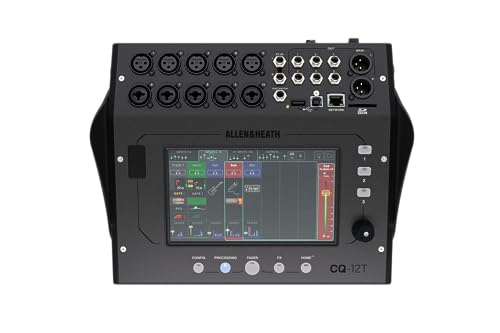
- 7-inch capacitive touchscreen with rotary control
- 16x16 USB and SD record/playback
- Bluetooth stereo input and 10 mic/line inputs
Best For: compact studios wanting touchscreen digital control
USB Recording Bundle
Mackie ProFX10v3 with accessory bundle

- 4 Onyx mic preamps with up to 60dB gain
- 24-bit/192kHz USB recording with 2x4 I/O
- Includes cables, adapters, ties, cloth, and DAW
Best For: home studios and creators wanting a bundled USB mixer
Compact Analog Workhorse
Yamaha MG06 compact 6-input mixer

- D-PRE preamps with a clean analog signal path
- 3-band EQ, high-pass filters, and one-knob compressors
- Rugged metal chassis in a compact 6-channel design
Best For: small studios needing a simple analog mixer without USB
Compact Streaming Mixer
Mackie ProFX10v3+ 10-Channel Mixer

- 10 channels with Onyx preamps on every mic input
- Bluetooth playback and USB-C recording in one desk
- 24 built-in effects with tap tempo
Best For: Streamers, podcasters, and small studios needing recording plus playback
Clean Analog Workhorse
Yamaha MG10XU 10-Channel Mixer

- D-PRE preamps for clean, transparent sound
- USB 2.0 recording and playback with computers or tablets
- SPX effects plus one-knob compressors
Best For: Home studios and simple recording setups that want easy control
Budget Bluetooth Board
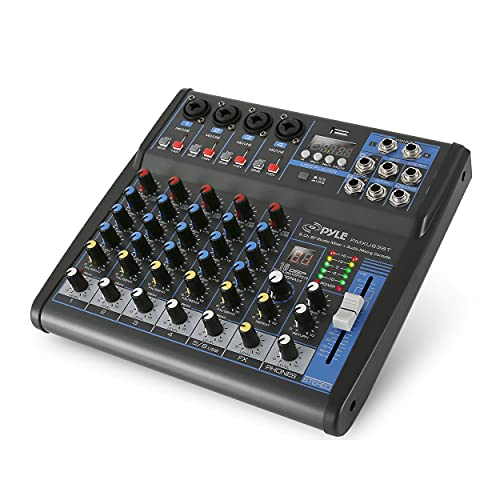
- Bluetooth streaming plus USB and MP3 playback
- 48V phantom power with 3-band EQ on all channels
- Compact steel chassis with sealed rotary controls
Best For: Budget buyers needing a compact mixer for basic studio and playback tasks
Complete Studio Bundle
Mackie ProFX12v3+ 12-Channel Mixer Bundle
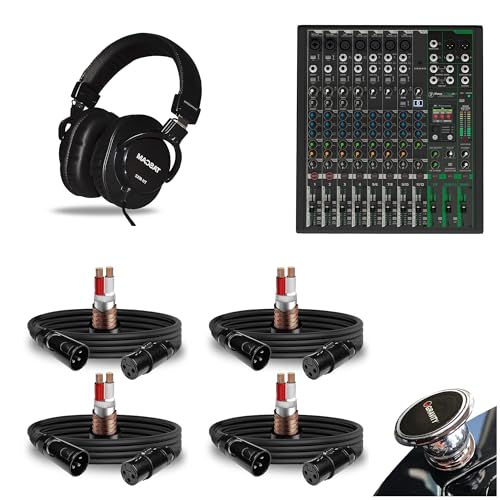
- 12-channel mixer with 7 mic preamps, Bluetooth, and USB-C interface
- Includes four XLR cables plus closed-back studio headphones
- Built-in effects support recording and monitoring workflows
Best For: Musicians, podcasters, and engineers wanting an all-in-one studio setup
Compact Live-Ready Board
8 Channel Professional Audio Mixer Console

- 8-channel mixer with XLR, 1/4", USB, and Bluetooth support
- 48V phantom power plus 3-band EQ and effects
- Slim chassis with headphone monitoring and PFL
Best For: Small studios, streamers, and compact recording setups
Feature-Packed Digital Mixer
12-Channel Bluetooth Studio Audio Mixer

- 12 channels with Bluetooth, USB MP3 playback, and 48V phantom power
- 99 DSP effects with channel and master EQ controls
- Supports microphones, instruments, and line inputs
Best For: Beginners and DJs needing a flexible mixer with built-in effects
Hybrid Recording Mixer – PreSonus StudioLive AR16c with Studio One
If you want audio mixers for studio use that can also handle live tracking, the PreSonus StudioLive AR16c is built around a full 18-channel analog layout with USB-C-connected recording, SD capture, and onboard effects. It gives you a practical all-in-one path for recording channels individually or capturing the main mix, while keeping the workflow familiar for analog users.
Best For: studios that want an analog mixer with built-in USB recording, SD capture, and bundled DAW software.
Pros:
- 18-channel analog mixer with 12 XMAX mic preamps plus two instrument inputs
- Records every channel plus the main mix over USB 2.0 and also supports SD/SDHC recording
- Includes Capture software and Studio One Artist for Mac and Windows
- Built-in stereo effects processor with 16 presets, send/return, and bypass footswitch jack
Cons:
- Only a 2×2 SD recorder for the main mix, not full multitrack SD recording
- SD card support is limited to SD and SDHC formats up to 32 GB
- Large 18-channel format may be more mixer than needed for very small setups
Overall, the AR16c is a strong fit if you want a studio mixer that combines hands-on control, multichannel USB recording, and software included in the box. It is especially appealing for users who need both analog mixing and straightforward recording tools in one unit.
Touchscreen Digital Desk – Allen & Heath CQ-12T touchscreen mixer
The Allen & Heath CQ-12T is aimed at users who want audio mixers for studio setups with a modern digital workflow. Its 7-inch capacitive touchscreen, Bluetooth input, and 16×16 USB and SD recording/playback make it a flexible option for tracking, playback, and simple control in a compact digital format.
Best For: compact studios that want touchscreen control and digital recording/playback.
Pros:
- 7-inch capacitive touchscreen with rotary control for direct operation
- 16×16 USB interface plus 16×16 SD record/playback
- Includes Bluetooth stereo input for quick wireless playback
- 10 mic/line inputs, including 5 combi inputs, in a 12-channel layout
Cons:
- Fewer total channels than larger studio mixers
- Digital workflow may not suit users who prefer a purely analog desk
- Only 3 SoftKeys are provided for custom functions
If you want a streamlined digital mixer for studio work, the CQ-12T stands out for its touchscreen interface and balanced recording features. It is a sensible pick when ease of control and built-in playback options matter more than channel count.
USB Recording Bundle – Mackie ProFX10v3 with accessory bundle
The Mackie ProFX10v3 is a practical choice among audio mixers for studio users who need a compact 10-channel desk with USB recording and a useful accessory bundle. With Onyx mic preamps, 24-bit/192kHz recording, and 2×4 USB I/O, it is designed for clean capture, monitoring flexibility, and everyday content production.
Best For: home studios, content creators, and streamers who want a compact USB mixer with extras included.
Pros:
- 4 Onyx mic preamps with up to 60dB of gain and low-noise performance
- 24-bit/192kHz USB recording for high-resolution tracking
- 2×4 USB I/O supports custom computer mixes and monitoring options
- Includes a 21-piece bundle with cables, adapters, ties, cloth, and Waveform OEM DAW
Cons:
- 10-channel layout may be limiting for larger studio sessions
- Bundle focuses on essentials rather than advanced studio routing
- Unpowered design means it does not supply speaker amplification
This model makes sense if you want a compact mixer that is ready to use right away for recording and streaming. The included accessories add value, while the USB implementation gives you enough flexibility for overdubs and monitoring.
Compact Analog Workhorse – Yamaha MG06 compact 6-input mixer
The Yamaha MG06 is the simplest option here for audio mixers for studio users who only need a small analog desk without USB features. Its six inputs, D-PRE preamps, basic EQ, high-pass filters, and one-knob compressors make it a straightforward tool for recording, lectures, and small performance setups.
Best For: small studios and basic recording setups that need a compact analog mixer.
Pros:
- Studio-grade D-PRE discrete class A preamps for clean sound
- 3-band EQ and high-pass filters help shape and clean up the mix
- One-knob compressors add quick control over vocals and instruments
- Rugged metal chassis in a very compact 6-channel format
Cons:
- No USB connectivity for direct computer recording
- Only six channels, so it is not suited to larger sessions
- Fewer advanced features than hybrid or digital studio mixers
The MG06 is best treated as a no-frills analog mixer for users who value reliability and simplicity over recording extras. If your workflow is small and you already have an interface, it can be a very efficient compact mixer.
Compact Streaming Mixer – Mackie ProFX10v3+ 10-Channel Mixer
If you want audio mixers for studio work that can also handle streaming, podcasts, and small band sessions, the Mackie ProFX10v3+ is built to do all three from one desk. It offers 10 channels, Bluetooth playback, USB-C recording, and Onyx preamps on every mic channel, so it fits a practical hybrid setup without extra gear.
Best For: Streamers, podcasters, and small studios that need an all-in-one mixer with recording and wireless playback.
Pros:
- 10-channel layout with Onyx preamps on every mic channel
- Bluetooth plus USB-C support for playback and multi-mode recording
- GigFX+ engine includes 24 effects with tap tempo
- Works with mics, instruments, phones, and computers out of the box
Cons:
- Designed as an analog mixer, so it is not a full digital console
- Best suited to compact setups rather than large studio routing needs
Overall, this is a strong pick if you want a straightforward mixer that can record and stream from the same unit. Its feature set is especially useful when flexibility matters more than complex studio control.
Clean Analog Workhorse – Yamaha MG10XU 10-Channel Mixer
For buyers comparing audio mixers for studio use, the Yamaha MG10XU stands out as a clean, practical analog option with useful built-in processing. It includes 4 microphone preamps, 3 stereo line channels, USB 2.0 compatibility for recording and playback, and SPX effects, making it a solid fit for smaller production spaces.
Best For: Home studios and simple recording setups that want transparent sound and easy control.
Pros:
- D-PRE mic preamps are described as clean, transparent, and natural
- 3-band EQ on all mono channels for quick tone shaping
- 1-knob compressors make dynamics control easy
- USB 2.0 supports recording and playback with computers and tablets
Cons:
- Only 4 microphone preamps, so larger mic-heavy setups may feel limited
- Connectivity is centered on auxiliary and USB rather than modern multi-I/O routing
This is a dependable mixer when you want straightforward operation and clean preamp performance. It is a sensible choice for studio users who value simplicity and proven analog workflow.
Budget Bluetooth Board – Pyle PMXU63BT 6-Channel Mixer
If you need audio mixers for studio entry-level recording or small live use, the Pyle PMXU63BT packs a lot into a compact 6-channel format. It adds Bluetooth streaming, USB/computer input, an MP3 player, and 48V phantom power, so it covers basic mixing tasks without a complicated setup.
Best For: Budget-conscious users who want a compact mixer with wireless streaming and basic studio features.
Pros:
- Bluetooth streaming and USB/flash reader/MP3 compatibility
- 48V phantom power for supported microphones
- 3-band EQ on all channels with LED peak level indication
- Compact steel chassis with sealed rotary controls
Cons:
- 6 channels may be restrictive for expanding studio setups
- Feature set is more basic than higher-end studio mixers
It is a practical value choice when you want a small mixer that can handle common playback and mic needs. The Pyle makes the most sense for simple rooms, casual production, and situations where affordability matters most.
Complete Studio Bundle – Mackie ProFX12v3+ 12-Channel Mixer Bundle
If you’re comparing audio mixers for studio use, this Mackie ProFX12v3+ bundle stands out for pairing a 12-channel mixer with the essentials you need to get started. It includes 7 mic preamps, Bluetooth, a 2-in/4-out USB-C audio interface, and built-in effects, making it a flexible choice for recording and monitoring setups.
Best For: Musicians, podcasters, and audio engineers who want a ready-to-use studio mixing package.
Pros:
- Includes four 6ft XLR balanced shielded cables for connecting mics securely.
- Closed-back studio mixing headphones are included for monitoring and mixing.
- Offers Bluetooth plus USB-C interface connectivity for recording workflows.
- Built-in effects add flexibility for studio sessions and live use.
Cons:
- The bundle is broad, so some buyers may already own part of the included gear.
- Best value depends on whether you need the cables and headphones.
This is a practical all-in-one option if you want one purchase to cover core studio mixing needs. The mixer itself is versatile, and the added accessories make it easier to set up right away.
Compact Live-Ready Board – 8 Channel Professional Audio Mixer Console
For buyers searching audio mixers for studio and streaming tasks, this 8-channel console offers a compact feature set with broad connectivity. It supports XLR and 1/4″ inputs, USB audio, Bluetooth playback, 48V phantom power, and onboard EQ plus reverb/delay effects.
Best For: Small studios, live streamers, and users who need flexible input options in a slim mixer.
Pros:
- Eight mic inputs support XLR and unbalanced 1/4″ connections.
- USB and Bluetooth connectivity make it easy to play or record audio.
- 3-band EQ, gain controls, and reverb/delay help shape the mix.
- Headphone output and PFL monitoring support private listening.
Cons:
- It is geared toward smaller setups rather than large channel-count studios.
- Feature set is practical, but not as extensive as higher-end digital consoles.
This mixer makes sense if you want straightforward studio control without a bulky footprint. Its combination of input flexibility, monitoring tools, and built-in effects fits everyday recording and streaming use well.
Feature-Packed Digital Mixer – 12-Channel Bluetooth Studio Audio Mixer
This 12-channel option is built for users who want audio mixers for studio recording with a lot of onboard control. It combines Bluetooth, USB MP3 playback, 48V phantom power, 99 DSP effects, and both channel and master EQ, so it can handle a wide range of input and mixing needs.
Best For: Beginners and working DJs who want an affordable, multi-input mixer with onboard effects.
Pros:
- 12 input channels support microphones, instruments, and line sources.
- Built-in Bluetooth and USB playback add convenient source options.
- 99 DSP effects plus reverb and delay expand mixing possibilities.
- 48V phantom power supports condenser microphones.
Cons:
- The notes warn that incorrect operation may lead to no sound.
- It is more feature-driven than minimal, so setup may take extra attention.
Overall, this mixer is a strong pick if you want lots of built-in features without moving to a more complex studio console. The combination of 12 channels, effects, and playback tools makes it versatile for recording and live-style use.
How We Picked These Audio Mixers for Studio Use
We looked for models that offer a practical mix of sound quality, usable channel layouts, and recording-friendly features. Priority went to mixers with solid preamps, reliable EQ, phantom power for condenser mics, USB or interface options for direct recording, and enough inputs to handle common studio tasks.
We also considered ease of use. A mixer for studio work should let you move quickly between recording, monitoring, and playback without a steep learning curve.
Quick Comparison
Compact mixers are best for simple vocal or podcast setups. Mid-size models give you more flexibility for band tracking, multiple microphones, and hardware routing. Digital and USB-equipped mixers are especially useful if you want direct computer recording, effects, or streamlined streaming integration.
Key Buying Factors for Audio Mixers for Studio
Channel Count
Choose based on how many sources you record at once. Two to six channels works for solo creators, voiceover, and small podcasts. Eight to twelve channels is usually better for multi-mic sessions, instruments, and hybrid recording setups.
Connectivity and Recording
USB audio interface support is a major advantage for modern studio work. It simplifies recording into a DAW and makes it easier to route audio to a computer for content creation, livestreaming, or demos.
Mic Preamps and Phantom Power
Clean preamps help preserve vocal detail and instrument clarity. If you use condenser microphones, make sure the mixer includes 48V phantom power.
Effects and Processing
Built-in EQ, compression, and reverb can save time and reduce the need for extra gear. These features are especially helpful for creators who want a polished sound with minimal setup.
Form Factor and Workflow
For smaller spaces, a compact mixer may be easier to place and cable. Larger control surfaces and touchscreen digital mixers can improve workflow if you often tweak routing or manage multiple sources.
Who Should Buy Which Audio Mixers for Studio?
Solo podcasters, streamers, and vocalists should look at compact USB models with simple controls. Music producers and small bands will usually benefit from more inputs, better routing, and onboard effects. If you want the most flexibility, a digital mixer with app or touchscreen control can be a strong choice. If you prefer straightforward operation, a classic analog mixer may be the better fit.
For most buyers, the best choice among Audio Mixers for Studio setups is the one that matches your channel needs today while leaving a little room to grow tomorrow.