The best acoustic panels for walls can reduce echo, improve speech clarity, and make home offices, studios, theaters, and living spaces more comfortable. The right choice depends on your room size, décor, installation surface, and whether you want sound absorption or visual impact.
This roundup compares wood slat panels, fiberglass boards, fabric-style panels, and acoustic foam in several sizes and price ranges so you can choose a practical match for your space.
Best 10 Acoustic Panels for Walls Picks for 2026
Best Wood-Slat Style

- Covers approximately 33 square feet
- Vertical or horizontal installation
- Decorative MDF and polyester construction
Best For: Warm, design-focused acoustic treatment in living spaces and offices
Best Peel-and-Stick Coverage
TONOR Thickened Acoustic Panels

- Self-adhesive peel-and-stick installation
- Dual-layer, 0.72-inch-thick polyester
- Large panels can be cut to fit
Best For: Quick echo reduction in studios, theaters, and living spaces
Best Walnut Finish

- Warm walnut fluted design
- Covers approximately 15.5 square feet
- Mounts on walls or ceilings
Best For: Smaller decorative acoustic accents in homes, offices, and studios
Best Foam for Echo Control

- 24 tiles cover 24 square feet
- Pyramid design helps absorb reflections
- Flame-retardant polyurethane foam
Best For: Echo reduction in studios, podcast rooms, theaters, and gaming spaces
Best Fiberglass Absorption

- NRC 0.95 sound absorption
- Large 47.2-by-23.6-inch panels
- Hanging hardware included
Best For: Studios, theaters, gaming rooms, and meeting spaces
Best Decorative Design

- Wood veneer for a warm appearance
- Four-pack covers about 31 square feet
- Can be cut and mounted with adhesive or screws
Best For: Decor-focused rooms, offices, and studios
Best Budget Coverage

- 50 two-inch foam panels
- Designed to reduce echoes and reverberation
- Adhesive must be purchased separately
Best For: Studios, booths, theaters, offices, and game rooms
Warm Wood Coverage
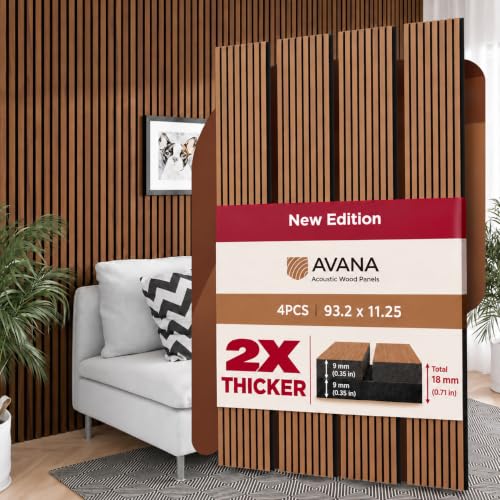
- Covers 33.04 square feet
- Rustic walnut wood-slat design
- Suitable for walls or ceilings
Best For: Large decorative wall and ceiling installations
Colorful Modular Treatment
Light Turquoise Hexagon Panels

- 12 high-density polyester panels
- NRC rating up to 0.95
- No adhesive included
Best For: Creative, targeted echo reduction
Contemporary Full-Wall Style
Rustic Walnut Wood Slat Panels

- Covers about 33 square feet
- Install vertically or horizontally
- MDF and polyester fiber construction
Best For: Broad residential or studio wall coverage
Best Wood-Slat Style – Teak Acoustic Wall Panels
For shoppers seeking acoustic panels for walls that also function as a substantial design feature, these teak wood-slat panels combine MDF slats with high-density polyester fiber backing. The four 96-by-12.6-inch panels cover approximately 33 square feet and can be installed vertically or horizontally on walls or ceilings.
Best For: Living rooms, bedrooms, offices, conference rooms, and other interiors where warm wood styling and echo reduction are both priorities.
Pros:
- Teak finish and slat design provide a contemporary decorative look.
- Panels can be mounted vertically or horizontally and cut to fit.
- Four panels cover approximately 33 square feet.
- Uses MDF and high-density polyester fiber with low TVOC levels.
Cons:
- Installation requires screws or superglue rather than a built-in peel-and-stick backing.
- The wood-slat format may be less suitable for shoppers wanting discreet, lightweight foam tiles.
This is a strong choice when acoustic treatment needs to look like a finished wall feature. Confirm the layout and mounting method before ordering, particularly for ceiling installations or custom cuts.
Best Peel-and-Stick Coverage – TONOR Thickened Acoustic Panels
These acoustic panels for walls are designed for straightforward installation, with adhesive backing that lets you peel and stick each 47.2-by-23.6-inch panel. Their dual-layer, 0.72-inch-thick polyester construction is intended to help disperse echo and noise while the stripe pattern adds a finished decorative touch.
Best For: Home studios, home theaters, bedrooms, living rooms, and other rooms where easy installation and broad panel coverage matter.
Pros:
- Self-adhesive backing avoids the need for additional tape.
- Dual-layer construction is designed to improve echo and noise absorption.
- Large panels can be cut to fit different room layouts.
- High-density polyester is described as safe to breathe and touch.
Cons:
- Adhesive installation offers less flexibility than a removable mounting system.
- The black stripe design may not suit every decor scheme.
Choose this four-pack when you want large-format wall treatment without a complicated mounting process. Measure the target wall first and plan the cuts carefully to make the most of the supplied panels.
Best Walnut Finish – Art3d Fluted Wood Slat Panels
For a smaller accent installation, these walnut Art3d acoustic panels for walls pair fluted wood slats with high-density polyester fiber. The two 47.2-by-23.6-inch panels cover approximately 15.5 square feet and can be mounted on walls or ceilings using basic tools.
Best For: Homeowners and designers creating a natural-looking acoustic accent in a living room, office, studio, or similar interior.
Pros:
- Walnut fluted slats add a warm, natural visual texture.
- Suitable for wall or ceiling mounting.
- MDF and polyester fiber construction is described as low-TVOC and eco-friendly.
- The two-panel pack works well for smaller projects or accent areas.
Cons:
- Approximately 15.5 square feet of coverage is less than the larger multi-panel options.
- Basic tools are required for installation.
- The product notes recommend ordering a sample pack to confirm the finish before a larger purchase.
This set makes sense when appearance is as important as acoustic treatment and the project does not require full-wall coverage. Order a sample first if matching the walnut finish to existing furniture or flooring is important.
Best Foam for Echo Control – 2-Inch Pyramid Acoustic Foam
This 24-pack of 2-inch pyramid acoustic foam is a practical option for acoustic panels for walls in recording and media spaces. The 12-by-12-inch polyurethane foam tiles provide 24 square feet of coverage and are designed to absorb sound waves, reduce echo, and limit reverberation—not to fully block outside noise.
Best For: Home studios, podcast rooms, gaming setups, vocal booths, recording rooms, home theaters, and music rooms.
Pros:
- Pyramid geometry increases surface area for sound diffusion and absorption.
- Two-inch foam thickness is designed for echo and reverberation control.
- Twenty-four tiles provide 24 square feet of coverage.
- Flame-retardant foam is suitable for the listed studio and media applications.
Cons:
- Construction adhesive or nano double-sided tape is needed and is not included.
- Foam is intended for sound absorption, not full soundproofing or external-noise isolation.
- The pyramid texture has a studio-oriented appearance that may not fit every room.
Consider this pack when controlling reflections is the main goal and a lightweight foam treatment is acceptable. For best results, plan tile placement around the room’s key reflection areas rather than expecting the foam to isolate the entire space.
Best Fiberglass Absorption – Large Charcoal Grey Panels
These large fiberglass acoustic panels for walls are a practical choice when you want to reduce reverberation, echoes, and unwanted noise across a broad wall area. Their listed NRC 0.95 rating and included hanging hardware make them especially suitable for rooms where clear sound and stable installation matter.
Best For: Studios, recording rooms, home theaters, gaming rooms, meeting spaces, and other rooms needing substantial sound absorption.
Pros:
- High listed NRC 0.95 sound absorption rating.
- Large 47.2-by-23.6-inch panels provide broad wall coverage.
- Includes hanging hardware for stable wall installation.
- Uses polyester fabric over a white fiberglass core with an E0 environmental rating.
Cons:
- The two-panel set weighs 24.1 pounds, so installation may require careful wall anchoring.
- Only a charcoal grey color is specified in the supplied details.
This is the strongest option here for buyers prioritizing substantial, professionally oriented absorption and ready-to-hang hardware over lightweight or decorative construction.
Best Decorative Design – TONOR Wood Wall Panels
For shoppers who want acoustic panels for walls to complement an interior rather than look purely functional, these TONOR wood wall panels combine a wood veneer finish with polyester fiber and MDF construction. The panels can be cut to size and installed with adhesive or screws, giving you flexibility for different wall layouts.
Best For: Living spaces, offices, studios, and other interiors where a warm wood appearance and customizable installation are important.
Pros:
- Combines polyester fiber, MDF, and solid wood veneer for a decorative finish and sound damping.
- Each panel measures 47.2 by 23.6 inches; the four-pack covers approximately 31 square feet.
- Can be cut for size adjustments and installed with adhesive or screws.
- Natural wood styling creates a seamless, integrated wall appearance.
Cons:
- Installation hardware and adhesive requirements vary by set and wall conditions.
- At 0.4 inches thick, these panels are thinner than the listed fiberglass and foam options.
This is the best fit when visual design is nearly as important as acoustic treatment. Its broad coverage and cut-to-fit construction make it adaptable, while the wood veneer helps it blend into finished rooms.
Best Budget Coverage – 50-Pack Acoustic Foam Wedges
This 50-pack of acoustic foam panels for walls offers flexible coverage for studios, theaters, offices, and game rooms. The 2-inch polyurethane foam is designed to absorb sound, reduce echoes, and manage reverberation, but adhesive is not included and must be sourced separately.
Best For: Recording studios, booths, control rooms, radio stations, theaters, offices, and game rooms needing flexible foam placement.
Pros:
- Includes 50 individual 12-by-12-inch foam panels.
- Two-inch high-density polyurethane foam is designed to reduce echoes and reverberation.
- Panels can be used on walls, doors, and ceilings.
- Foam is described as low-odor, non-toxic, resilient, and able to recover its shape after compression.
Cons:
- Adhesive is not included.
- Foam manages reflected sound rather than fully blocking sound transmission.
- The wedge-style black foam appearance may be less decorative than wood or fabric-covered panels.
This option makes sense for buyers who want many smaller pieces for flexible placement and economical sound control. Plan for a separate adhesive purchase and use it primarily for improving room acoustics, not true soundproofing.
Warm Wood Coverage – Rustic Walnut Slat Panels
If you want acoustic panels for walls that also function as a substantial design feature, these Avana wood slat panels offer a rustic walnut finish with broad coverage. The four-panel set covers 33.04 square feet and is designed for homes, offices, and studios.
Best For: Large wall or ceiling installations where decorative wood styling and sound absorption are both priorities.
Pros:
- Four panels provide 33.04 square feet of coverage.
- Rustic walnut veneer adds warmth and visual texture.
- MDF and high-density polyester fiber construction is designed for acoustic performance.
- Can be mounted on walls or ceilings and is promoted as easy to install.
Cons:
- The four-panel format may be more coverage than needed for small accent areas.
- A sample pack may be useful before committing to a finish.
Choose this set when you want a coordinated wood accent wall rather than small, modular sound-treatment tiles. Its long panels make it particularly suitable for broad, streamlined installations.
Colorful Modular Treatment – Light Turquoise Hexagon Panels
These acoustic panels for walls are a flexible choice for reducing echo and reverb without the look of conventional foam. The 12-pack uses beveled, light turquoise hexagons that can be arranged creatively in rooms, offices, podcast spaces, and recording areas.
Best For: Smaller, customizable sound-treatment layouts where color and easy arrangement matter.
Pros:
- High-density polyester panels are rated up to NRC 0.95.
- Hexagon shape and beveled edges create a decorative alternative to foam.
- Panels are easy to cut and suitable for multiple room types.
- Made with recycled material and described as odorless, formaldehyde-free, and flame retardant.
Cons:
- No adhesive is included.
- Each panel is only 0.4 inches thick, so the set is oriented toward targeted treatment rather than broad wall coverage.
This set stands out for shoppers who want to combine acoustic treatment with a bold visual arrangement. Plan your layout and purchase suitable construction adhesive or strong double-sided tape separately.
Contemporary Full-Wall Style – Rustic Walnut Wood Slat Panels
For buyers seeking acoustic panels for walls with a clean, architectural appearance, the NeatiEase four-piece set combines long walnut slats with sound-absorbing MDF and polyester fiber construction. The panels cover about 33 square feet and can be installed vertically or horizontally.
Best For: Residential rooms, offices, studios, and ceilings that need broad coverage with a contemporary wood finish.
Pros:
- Four 96-by-12.6-inch panels cover approximately 33 square feet.
- Can be oriented vertically or horizontally and cut to fit creative layouts.
- Designed to reduce echo, absorb sound, and improve sound quality.
- Uses MDF and high-density polyester fiber with low TVOC levels.
Cons:
- The long, rectangular format may require careful measuring and handling.
- No warranty is listed in the supplied details.
This is a strong fit for a larger, coordinated installation where the wall treatment should look like intentional interior decor. Its flexible orientation also makes it easier to adapt to different room proportions.
How We Picked These Acoustic Panels for Walls
We focused on panel types that address common residential and creative-room needs: reducing reflected sound, controlling echo, improving recording or listening conditions, and adding a finished look to blank walls. We compared the listed products by material, thickness, coverage, panel format, visual style, and likely installation requirements.
Because product specifications and room performance can vary, treat advertised “soundproof” language carefully. Most wall panels absorb reflections inside a room; they do not block substantial noise passing through walls, floors, or ceilings. Installation quality, wall placement, and total coverage often matter as much as the panel material.
Quick Comparison
| Panel type | Best for | Main advantage | Watch for |
|---|---|---|---|
| Wood slat | Living rooms, offices, media rooms | Decorative appearance with acoustic absorption | Higher cost and more involved installation |
| Fiberglass | Studios, podcasts, music rooms | Strong broadband absorption | Needs careful mounting and edge protection |
| Acoustic foam | Budget echo control | Lightweight and inexpensive | Limited sound blocking and a more utilitarian look |
| Fabric or decorative panels | Home offices and accent walls | Easy visual coordination | Verify thickness and coverage before buying |
Key Buying Factors for Acoustic Panels for Walls
Absorption Versus Soundproofing
Choose panels to control echo, reverberation, and harsh reflections—not to fully isolate a room. For noise transfer, you may need added wall mass, sealed gaps, resilient construction, or professional acoustic work.
Panel Thickness and Material
Thicker fiberglass and mineral-based panels generally provide broader absorption than very thin decorative surfaces. Foam panels can help with high-frequency reflections, while wood slat systems often combine a hard face with an absorptive backing.
Coverage and Placement
Measure the wall before ordering and calculate the actual square footage covered by every pack. Prioritize first-reflection points, the wall behind speakers or microphones, and large parallel surfaces. Spacing panels slightly away from the wall can improve low-frequency absorption when the mounting system allows it.
Appearance and Installation
Wood finishes suit finished interiors, while foam and fabric panels offer more flexible layouts. Check whether adhesive, mounting hardware, frames, or a backing system is included. Also confirm that the wall can support the panel weight and that removable installation will not damage paint.
Who Should Buy Which Acoustic Panels for Walls?
- For a polished home interior: Choose a wood slat option such as the NeatiEase, Art3d, TONOR wood, or Avana panels.
- For recording, streaming, or serious echo control: Consider the thicker fiberglass or dual-layer acoustic panels, especially when placed at reflection points.
- For the lowest-cost solution: Pyramid or square acoustic foam offers lightweight coverage for basic echo reduction.
- For a colorful accent wall: The light turquoise hexagonal panels can add visual interest while helping tame reflections.
- For larger wall coverage: Compare pack count and total square footage carefully; several smaller foam panels may cover more area than a two-panel decorative set.
Before purchasing, map your wall, estimate the coverage you need, and decide whether appearance, absorption performance, or price is the priority. A balanced installation using panels at key reflection points is usually more effective than placing every panel in one cluster.