The best camera external recorders for directors do more than capture footage: they help you monitor exposure, preserve higher-quality codecs, control compatible cameras, and record dependable production audio.
This roundup covers dedicated HDMI monitor-recorders, professional camcorders with built-in recording, and compact field recorders for productions ranging from interviews to narrative sets. Use the guide below to match the right workflow, connectivity, and recording format to your needs.
Best 10 Camera External Recorders for Directors Picks for 2026
Best All-in-One Kit
Atomos Ninja TX GO 5" Monitor-Recorder

- 6K RAW-capable recording with broad codec support
- HDR touchscreen with monitoring and camera control
- Includes batteries, charger, case, and mounts
Best For: Mobile HDMI camera productions needing a complete recording kit
Best Integrated Camcorder
Canon XA70 Professional Camcorder
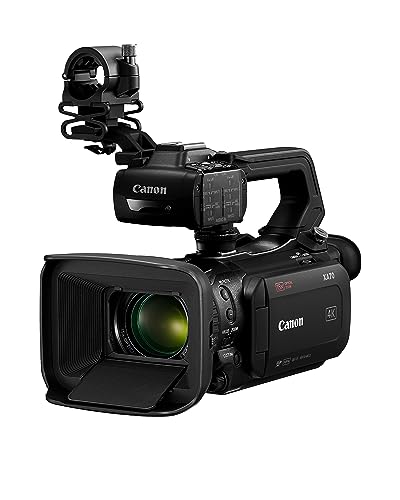
- 4K recording with a 1-inch CMOS sensor
- 15x optical zoom with image stabilization
- Dual SD slots and two XLR audio inputs
Best For: All-in-one documentary and event production
Best RAW Monitor-Recorder

- ProRes and ProRes RAW recording
- 1500-nit HDR display with pro monitoring tools
- Camera control and flexible power options
Best For: RAW-capable HDMI or USB-C mirrorless camera rigs
Best Long-Zoom Camcorder
Canon XA65 Professional Camcorder

- 4K recording with a 20x optical zoom
- 3G-SDI and mini-HDMI outputs
- Dual SD slots and two XLR audio inputs
Best For: Field and event productions needing reach and SDI
On-Set Monitoring Pick

- 5-inch Full HD touchscreen monitor and recorder
- Professional scopes and focus assist
- 3D LUTs, HDR, and HDMI connectivity
Best For: Portable on-set monitoring and recording
All-in-One Production Camera

- UHD 4K30 recording with 20x optical zoom
- Dual SD slots for relay or backup recording
- Dual XLR inputs and USB-C UVC livestreaming
Best For: Documentary, field, and livestream production
Production Audio Companion

- 32-bit float no-clip audio recording
- Dual XLR/TRS inputs plus 3.5mm input
- Built-in timecode generation and sync
Best For: External audio capture for video crews
Best Wireless Camera

- 1440p recording and 1080p streaming
- 40X hybrid zoom with 10X optical zoom
- Wi-Fi, NDI, RTMP, and app control
Best For: Remote event recording and wireless livestream production
Best Compact XLR Recorder

- 32-bit/96kHz WAV recording
- Two locking XLR/TRS combo inputs
- SDXC support up to 1TB
Best For: Portable interview, podcast, and film audio recording
Best Professional Field Recorder

- 32-bit float recording for changing levels
- Dual locking XLR/TRS inputs
- Low-noise preamps and flexible power options
Best For: Run-and-gun filmmaking and demanding location audio
Best All-in-One Kit – Atomos Ninja TX GO 5" Monitor-Recorder
For directors comparing camera external recorders for directors, the Atomos Ninja TX GO combines a bright 5-inch HDR touchscreen with HDMI capture, professional monitoring tools, and flexible recording to CFexpress or USB media. Its included batteries, charger, cables, case, and hot-shoe mounts make it especially practical for mobile productions.
Best For: Directors using HDMI mirrorless or DSLR cameras who want monitoring, recording, camera control, and production-ready accessories in one kit.
Pros:
- Supports Apple ProRes, ProRes RAW, DNx, H.265, and H.264 recording, including capture up to 6K RAW.
- Bright 5-inch HDR touchscreen with Wi-Fi 6E, NDI 6 streaming, and camera-control features.
- Complete power and mounting bundle includes two NP-F batteries, charger, carry case, and hot-shoe mounts.
Cons:
- Its recording workflow depends on compatible CFexpress or USB media.
- The 1080p display resolution is lower than the maximum supported RAW capture resolution.
This is a strong choice when a director needs more than an external recorder alone. The bundled power and rigging accessories reduce setup friction, while the broad codec support leaves room for different post-production workflows.
Best Integrated Camcorder – Canon XA70 Professional Camcorder
Although it is a complete camcorder rather than a standalone recorder, the Canon XA70 is a useful option for directors seeking camera external recorders for directors with an integrated shooting system. It combines 4K recording, a 1-inch sensor, a 15x optical zoom, dual SD slots, and professional audio connections.
Best For: Directors who prefer an all-in-one camcorder with long zoom reach, dual-card recording, and XLR audio support.
Pros:
- Records 4K UHD and Full HD in XF-AVC or MP4 formats.
- 1-inch CMOS sensor, 15x optical zoom, and optical image stabilization support versatile shooting.
- Dual SD slots enable relay or simultaneous recording, while two XLR terminals support professional audio.
Cons:
- It uses mini-HDMI output rather than the HDMI and SDI combination found on the XA65.
- It does not provide the external ProRes or ProRes RAW recording workflow of the Atomos options.
The XA70 makes the most sense when simplicity and dependable in-camera recording matter more than an external RAW workflow. Its integrated lens, stabilization, dual-card options, and audio handle create a practical production package.
Best RAW Monitor-Recorder – Atomos Ninja RAW
For directors who want a focused external recording and monitoring tool, the Atomos Ninja RAW pairs a super-bright 5-inch HDR touchscreen with ProRes and ProRes RAW capture. It adds camera control, waveform and false-color tools, and recording to CFexpress Type B or external USB-C storage.
Best For: Directors using compatible HDMI or USB-C mirrorless cameras who need RAW-capable capture and precise on-set monitoring.
Pros:
- Records ProRes, ProRes RAW, ProRes RAW HQ, ProRes LT, 422, and 422 HQ.
- 1500-nit HDR display with EL Zone false color, focus peaking, waveform, and Onion Skin tools.
- Supports camera control and can run from NP-F batteries, USB-C power banks, or a DC adapter.
Cons:
- CFexpress Type B media and some network or storage accessories may require separate purchase.
- RAW recording depends on camera compatibility and its available output.
This is the most specialized pick in the group for directors building a modular camera rig. Its monitoring tools and post-friendly codecs are well suited to productions where exposure, focus, and RAW flexibility deserve close attention.
Best Long-Zoom Camcorder – Canon XA65 Professional Camcorder
The Canon XA65 is a practical alternative to standalone camera external recorders for directors who need a self-contained 4K camcorder with professional connectivity. Its 20x optical zoom, 3G-SDI and mini-HDMI outputs, dual SD slots, and XLR audio inputs suit field, event, and documentary work.
Best For: Directors who need extended optical reach, SDI integration, and a compact camcorder workflow.
Pros:
- Records 4K UHD and Full HD in XF-AVC or MP4 formats.
- 20x optical zoom with optical and digital image stabilization supports distant subjects.
- Includes both 3G-SDI and mini-HDMI outputs, dual SD recording, and two XLR terminals.
Cons:
- Its 1/2.3-inch sensor is smaller than the XA70’s 1-inch sensor.
- It does not offer the external ProRes or ProRes RAW capture features of the Atomos recorders.
The XA65 is the better fit when connectivity and reach take priority. Its SDI output expands professional integration options, while the 20x lens and dual-card recording help directors cover live or fast-moving productions with fewer accessories.
On-Set Monitoring Pick – Video Assist 5" 3G
Blackmagic Design Video Assist 5'' 3G Portable Monitor, Recorder, Scope, and Viewfinder
Check Price On AmazonFor directors looking at camera external recorders for directors, the Blackmagic Design Video Assist combines a 5-inch Full HD touchscreen monitor, recorder, scopes, and viewfinder functions in one portable unit. Its HDMI connectivity, focus assist, professional scopes, 3D LUTs, and HDR support make it a practical tool for evaluating footage on set.
Best For: Directors and camera teams who need portable monitoring, recording, exposure tools, and focus assistance in one device.
Pros:
- 5-inch 1920 x 1080 LCD touchscreen with 2500 cd/m² brightness.
- Includes professional scopes and focus-assist features.
- Supports 3D LUTs and HDR picture-quality enhancements.
- Provides HDMI connectivity and a 2-year warranty.
Cons:
- Its listed display resolution is Full HD rather than 4K.
- The supplied notes do not specify recording formats or storage media.
- At 771 g, it adds noticeable weight to a camera setup.
This is a focused monitoring and recording accessory rather than a complete camera. Choose it when on-set image evaluation, scopes, and focus tools matter more than built-in lens or camera functionality.
All-in-One Production Camera – Canon XA60 4K Camcorder
Among camera external recorders for directors, the Canon XA60 is a complete handheld 4K camcorder rather than a standalone recorder. It captures UHD 4K30 video, offers a 20x optical zoom with 5-axis stabilization, records to dual SD cards, and provides HDMI output plus USB-C UVC livestreaming for flexible production workflows.
Best For: Documentary, journalism, livestream, interview, and field-production work requiring an integrated camera, zoom lens, storage, and professional audio inputs.
Pros:
- Records UHD 4K video at up to 30 frames per second.
- 20x optical zoom covers a 29.3–612mm equivalent range.
- Dual SD slots support relay recording or simultaneous backup.
- Dual XLR inputs, phantom power, and 4-channel LPCM recording support professional audio.
Cons:
- The supplied notes do not identify a dedicated external recording format beyond the camera’s XF-AVC and MP4 options.
- Its 1/2.3-inch CMOS sensor is smaller than many interchangeable-lens camera sensors.
- The listed camera weight is 4.9 pounds, which may be substantial for extended handheld use.
The XA60 makes the most sense when you need a ready-to-shoot camera system with long-reach zoom, stabilization, dual-card recording, and XLR audio. It is less specialized than a dedicated external recorder but covers more of the production chain.
Production Audio Companion – TASCAM FR-AV2 Field Recorder
For directors building camera external recorders for directors setups, the TASCAM FR-AV2 addresses the audio side of production. This compact field recorder combines 32-bit float recording, dual XLR/TRS combo inputs, a 3.5mm input, and internal timecode generation, helping videographers capture synchronized audio while reducing concerns about clipping.
Best For: Videographers and small production crews needing compact external audio recording, timecode support, and flexible microphone inputs.
Pros:
- 32-bit float recording with dual ADCs supports no-clip audio capture.
- Dual XLR/TRS combo inputs use Ultra HDDA preamps.
- Provides timecode input/output and internal timecode generation.
- Supports 48, 96, and 192 kHz recording rates.
Cons:
- It is an audio recorder, not a video recorder or camera monitor.
- Wireless monitoring requires the optional AK-BT2 Bluetooth adapter.
- It requires three AA batteries.
The FR-AV2 is a strong complement to a camera-based recording setup when clean, forgiving audio and timecode are priorities. Pair it with a compatible camera or external video recorder; it cannot replace a device that records or displays video.
Best Wireless Camera – NearStream VM33 Gen 3
For directors comparing camera external recorders for directors, the NearStream VM33 Gen 3 is a wireless camera designed for remote framing, livestreaming, and event recording. It combines 1440p recording, 1080p streaming, 40X hybrid zoom, and app-based control in a single-camera setup.
Best For: Directors recording or streaming sports, worship services, lectures, and events from a distance.
Pros:
- 10X optical and 4X digital zoom can frame subjects up to 100 feet away.
- Supports Wi-Fi, AP hotspot, USB-C webcam mode, Ethernet with an adapter, RTMP, RTSP, and NDI.
- Six-hour battery, multicamera app control, and 3.5mm or USB-C external microphone support.
Cons:
- Ethernet connection requires a USB-C adapter, which is not included.
- Its 1/2.8-inch sensor and webcam-style design may be less suited to cinema-focused image capture.
The VM33 Gen 3 is more of a connected production camera than a traditional standalone field recorder. Choose it when wireless control, long-range zoom, streaming protocols, and built-in audio are more important than interchangeable-lens filmmaking.
Best Compact XLR Recorder – Zoom H1 XLR
For directors evaluating camera external recorders for directors, the Zoom H1 XLR is a compact audio recorder for capturing microphones, instruments, and other sources separately from the camera. Its two XLR/TRS inputs and 32-bit/96kHz recording support make it a flexible choice for interviews, podcasts, and small film setups.
Best For: Filmmakers who need a lightweight recorder for interviews, dialogue, podcasts, or camera-independent audio capture.
Pros:
- Records WAV audio at up to 32-bit/96kHz for detailed sound and clip-free recording.
- Two locking XLR/TRS combo inputs accommodate microphones and instruments.
- OLED waveform display, 3.5mm input and headphone output, and SDXC support up to 1TB.
Cons:
- Requires two AA batteries and records audio rather than video.
- Its compact 0.96-inch display may provide less viewing space for detailed level checks.
The H1 XLR offers a straightforward way to separate production audio from camera recording. It is a practical option for directors who want two professional inputs, simple monitoring, and substantial card capacity in a small battery-powered unit.
Best Professional Field Recorder – Zoom F3
For directors seeking camera external recorders for directors, the Zoom F3 is a dedicated field audio recorder built for unpredictable production conditions. Its 32-bit float workflow, dual A/D converters, locking XLR inputs, and ultra-low-noise preamps help preserve dialogue and sudden peaks without constant level adjustments.
Best For: Run-and-gun filmmakers, professional sets, and location recordists handling variable dialogue levels or complex microphone rigs.
Pros:
- 32-bit float recording helps capture quiet dialogue and sudden peaks without stopping to adjust levels.
- Dual locking XLR/TRS inputs keep connections secure in mounted or demanding setups.
- Ultra-low-noise preamps, battery power, wireless control, and standalone or USB workflows support extended field use.
Cons:
- It is an audio-only recorder and requires separate microphones for production capture.
- Its 3.5mm headphone output and compact screen may be less convenient for elaborate monitoring setups.
The F3 is the strongest fit here for directors who prioritize dependable location audio over all-in-one camera features. Its protected XLR connections and 32-bit float recording are especially useful when levels can change quickly or the recorder must remain out of reach.
How We Picked the Best Camera External Recorders for Directors
We evaluated these picks by looking at the parts of a director’s workflow that most affect usable footage and sound: recording formats, camera compatibility, monitoring tools, timecode support, audio inputs, portability, storage, power options, and ease of operation on set. Because “external recorder” can describe both a video monitor-recorder and a dedicated audio recorder, this selection includes tools that solve different production problems rather than treating every model as interchangeable.
Priority went to products that can improve recording quality, simplify monitoring, or provide a dependable backup path. Built-in camcorders and streaming cameras are included for directors who need an integrated capture solution, while field recorders are suited to productions where clean, separately recorded dialogue matters most.
Quick Comparison
| Best For | Look For | Typical Advantage |
|---|---|---|
| External video capture | HDMI input, ProRes or RAW support, fast media | Higher-quality recording and better monitoring |
| Independent production audio | XLR inputs, 32-bit float, timecode | More forgiving levels and easier sync |
| Run-and-gun documentary work | Integrated lens, stabilization, dual-card recording | Faster setup with fewer accessories |
| Live or remote production | USB streaming, wireless connectivity, camera control | Simpler streaming and monitoring workflows |
Key Buying Factors for Camera External Recorders for Directors
Video Format and Camera Compatibility
Confirm the recorder accepts your camera’s output resolution, frame rate, color format, and connector type. HDMI monitor-recorders can offer ProRes or RAW workflows, but RAW recording requires a compatible camera and often specific cable, firmware, and license support. Check whether the camera can transmit a clean signal and whether overlays can be removed.
Monitoring Tools
Directors benefit from a bright display with tools such as waveform, vectorscope, false color, zebras, focus peaking, and LUT preview. These features are more useful than screen size alone when judging exposure and focus under changing set lighting.
Audio, Timecode, and Synchronization
For dialogue-heavy work, prioritize balanced XLR or combo inputs, headphone monitoring, adjustable gain, and reliable timecode. A 32-bit float recorder can reduce the risk of clipped takes, but it does not replace good microphone placement. Verify whether the unit can jam-sync or accept timecode from your camera and other recorders.
Media, Power, and Durability
Fast, approved media is essential for high-bitrate video. Consider battery runtime, USB-C or DC power, mounting options, weather exposure, and whether media can be changed without disrupting the setup. Dual-card recording can provide a valuable in-camera backup for documentary and event work.
Who Should Buy Which Camera External Recorders for Directors?
Choose an Atomos or Blackmagic monitor-recorder if your camera has a clean HDMI output and you want stronger monitoring, longer recording options, or an editing-friendly codec. Choose a Canon professional camcorder when speed, an integrated zoom lens, stabilization, and dependable all-in-one operation matter more than interchangeable-lens flexibility.
Choose the TASCAM or Zoom field recorders when sound is being captured separately, especially for interviews, narrative dialogue, or multi-person shoots. The compact wireless or streaming camera is better suited to presenters, remote direction, live content, and quick production setups. Before buying, map the device to your complete workflow: camera output, cables, media, power, microphones, timecode, and post-production software.