Plosive-heavy vocals can distract from an otherwise strong recording. The right pop filter helps reduce bursts of air from sounds such as “P” and “B” while keeping your microphone setup easy to use.
These 10 options cover dual-layer screens, metal-and-foam designs, windscreens, reflection filters, and isolation shields for home studios, streaming desks, and professional vocal sessions.
Best 10 Microphone Pop Filters for Vocal Recording Picks for 2026
Best Dual-Layer Choice
Aokeo Professional Microphone Pop Filter
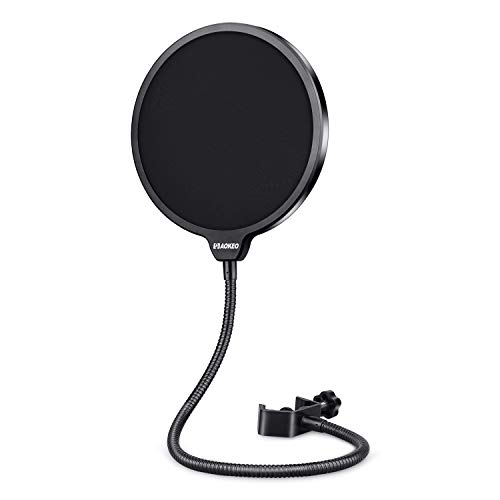
- Dual-layer screen helps contain plosive air blasts.
- 360-degree gooseneck enables precise positioning.
- Clamp fits many tubular stands and booms.
Best For: Singers, streamers, and actors needing adjustable vocal protection
Best Locking Windscreen
Shure A2WS Microphone Windscreen
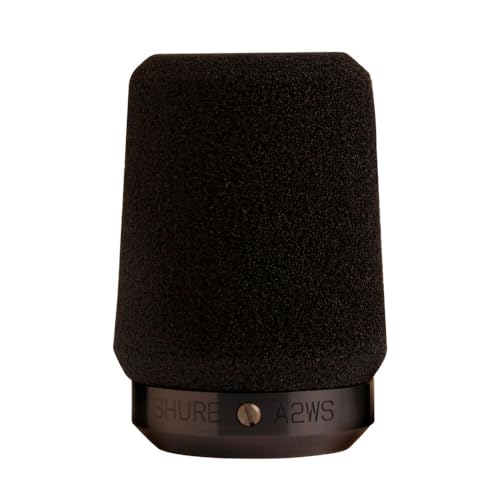
- Locking fit helps secure the windscreen.
- Reduces breath, wind noise, pops, and ticks.
- Made for Shure SM57 and 545 Series microphones.
Best For: Compatible Shure microphones used close-up or outdoors
Best Acoustic Reflection Control
Marantz Professional Sound Shield

- Five absorptive walls help reduce acoustic artifacts.
- Foldable panels shape the recording area.
- Integrated connector and adapter support varied microphones.
Best For: Vocalists recording in reflective or untreated rooms
Best Simple Studio Filter
Samson PS04 Microphone Pop Filter

- Dual-layer nylon mesh reduces P-pops.
- Flexible 8-inch gooseneck simplifies positioning.
- Universal stand adapter suits most studio microphones.
Best For: Studio vocalists wanting a compact adjustable filter
Three-Layer Mic Shield

- Three layers reduce plosives and breath noise
- Fits 45–61 mm microphones
- Not compatible with Blue Yeti
Best For: Compatible microphones used for vocals, streaming, and video
Vocalist’s Choice
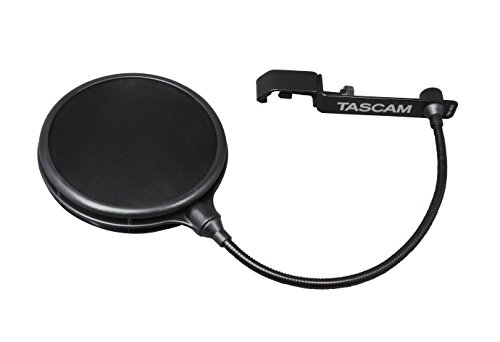
- Dual-screen design controls explosive plosives
- Adjustable goose neck for positioning
- Includes a secure mounting bracket
Best For: Active vocalists who need adjustable pop-filter placement
Flexible Studio Mount
NEEWER Professional Pop Filter

- Dual-layer screen disperses air pressure
- Adjustable gooseneck and swivel mount
- Clamp fits various tubular stands and booms
Best For: Performers needing flexible placement around a mic stand
Best Value Pop Shield
Adjustable Double-Screen Pop Filter

- Double screen reduces plosives, lisps, and hisses.
- Flexible gooseneck and swivel mount allow easy positioning.
- Fits many USB microphones and studio stands.
Best For: Affordable vocal recording setups needing basic pop protection
Best for Room Control
Studio Microphone Isolation Shield

- Absorbent interior helps reduce environmental interference.
- Foam front and vented metal back support recording.
- Includes adjustable stand and microphone adapters.
Best For: Studio and singing setups needing broader acoustic shielding
Best Compact Isolation Design

- Five-sided foam enclosure reduces noise and reflections.
- Double-layer opening helps control plosives and saliva spray.
- Lightweight design fits many stands and microphone arms.
Best For: Portable vocal recording with compatible 50–75 mm microphones
Best Dual-Layer Choice – Aokeo Professional Microphone Pop Filter
For vocalists, streamers, and actors comparing microphone pop filters for vocal recording, the Aokeo Professional Pop Filter uses two screens to help contain air blasts from plosive sounds. Its adjustable clamp and flexible gooseneck make it easy to position around many microphone stands and booms.
Best For: Singers, streamers, and actors who want adjustable plosive and sibilance control.
Pros:
- Dual-layer design disperses air pressure before it reaches the microphone.
- 360-degree gooseneck supports flexible angle and distance adjustments.
- Adjustable clamp is designed for varied tubular booms and microphone stands.
- Helps reduce plosives, hissing, and lisping sounds.
Cons:
- The clamp-and-gooseneck setup takes more space than a simple slip-on screen.
- Its compatibility depends on having a suitable tubular stand or boom for the clamp.
This is a versatile choice when you need a traditional mounted filter with fine positioning control. The dual-screen construction and included warranty support make it especially practical for regular vocal recording.
Best Locking Windscreen – Shure A2WS Microphone Windscreen
The Shure A2WS is a locking windscreen for close-up and outdoor microphone use. Among microphone pop filters for vocal recording, it is a specialized option for compatible Shure handheld microphones, helping reduce breath, wind noise, pops, and ticks.
Best For: Shure SM57 and 545 Series microphone users recording close-up vocals or live performances.
Pros:
- Locking design helps keep the windscreen in place.
- Reduces unwanted breath and wind noise.
- Helps dampen pops and ticks during close speaking or singing.
- Designed for use in close-up and outdoor applications.
Cons:
- Compatibility is limited to Shure SM57 and 545 Series microphones.
- It is a microphone windscreen rather than a universal stand-mounted pop filter.
Choose this model when secure attachment and wind protection matter more than universal fit. Its narrow compatibility makes checking your microphone model essential before purchase.
Best Acoustic Reflection Control – Marantz Professional Sound Shield
The Marantz Professional Sound Shield is a vocal reflection filter designed to reduce unwanted acoustic artifacts around the microphone. It stands apart from basic microphone pop filters for vocal recording by using multiple absorptive walls and foldable panels to shape the recording area.
Best For: Vocal recording in rooms where reflections and acoustic coloration are a concern.
Pros:
- Five absorptive walls help create cleaner, more focused recordings.
- Foldable walls allow custom shaping around the microphone.
- Studio-grade EVA acoustic foam supports sound attenuation.
- Integrated shock-mount connector includes an adapter for broad microphone compatibility.
Cons:
- At 6.6 pounds, it is substantially heavier than a basic pop screen.
- Its larger form factor may be less convenient for compact setups.
- It addresses reflections and acoustic artifacts rather than serving only as a plosive screen.
This is the more comprehensive room-control option in the group. Its adjustable absorptive enclosure can be useful for mobile recording or untreated spaces, provided your stand and workspace can support its size and weight.
Best Simple Studio Filter – Samson PS04 Microphone Pop Filter
The Samson PS04 is a straightforward stand-mounted option for microphone pop filters for vocal recording. Its dual-layer nylon mesh screen is sized to reduce P-pops, while the flexible gooseneck lets you adjust the filter position for studio vocals.
Best For: Studio users seeking a compact, adjustable filter for most microphones.
Pros:
- Dual-layer nylon mesh helps reduce P-pops.
- Flexible 8-inch gooseneck makes positioning easy.
- Universal microphone stand adapter supports most microphones in a studio setting.
- Steel construction is designed for durability.
Cons:
- The 4.75-inch screen is smaller than some larger pop filters.
- The notes specify studio use, so it may be less suited to outdoor wind protection.
The PS04 is a practical pick when you want essential plosive control without a larger acoustic shield. Its simple adapter and gooseneck make it a sensible fit for a conventional studio microphone stand.
Three-Layer Mic Shield – PEMOTech Upgraded Pop Filter
For vocalists seeking microphone pop filters for vocal recording, the PEMOTech shield uses three filtering layers—foam, metal mesh, and etamine—to reduce plosives, breath sounds, wind interference, and crackles. Its elastic-band and inner-rubber-ring design fits microphones measuring 45–61 mm in diameter.
Best For: Vocal recording, singing, YouTube videos, and streaming with compatible microphones.
Pros:
- Three-layer construction targets plosives, breath noise, and wind interference.
- Fits a wide range of 45–61 mm microphones, including the AT2020 and Rode NT-USB.
- Helps protect the microphone from saliva and is quick to install or remove.
Cons:
- Not compatible with the Blue Yeti.
- Microphone is not included.
- Compatibility depends on the microphone’s diameter.
The PEMOTech is a practical choice when you want an all-in-one, microphone-mounted shield and already use a compatible mic. Confirm the microphone diameter before buying.
Vocalist’s Choice – Tascam TM-AG1 Pop Filter
The Tascam TM-AG1 is a straightforward option among microphone pop filters for vocal recording, with a dual-screen design intended to tame explosive plosives. Its adjustable goose neck and secure mounting bracket make it easy to position in front of a microphone.
Best For: Active vocalists who want adjustable positioning and dual-screen plosive control.
Pros:
- Dual-screen design helps contain strong plosives.
- Adjustable goose neck allows flexible placement.
- Secure mounting bracket supports stable installation.
Cons:
- The supplied notes do not specify a microphone diameter range.
- Microphone is not included.
- It is not water resistant.
With its vocalist-focused design and adjustable neck, the TM-AG1 suits recording setups where repeatable placement matters. Check your stand and microphone arrangement for mounting compatibility.
Flexible Studio Mount – NEEWER Professional Pop Filter
The NEEWER Professional Microphone Pop Filter is a flexible option among microphone pop filters for vocal recording. Its dual-layer screen disperses air pressure, while the adjustable steel gooseneck and rotating clamp let you set the filter’s distance and angle around a microphone or boom.
Best For: Singers, streamers, and actors using a tubular boom or microphone stand.
Pros:
- Dual-layer design helps reduce plosives and air blasts.
- Adjustable gooseneck supports custom angle and distance settings.
- Rotating clamp with scratch-proof gripper fits various tubular mounts.
- Also targets hissing and lisping sounds associated with “S” sounds.
Cons:
- The supplied notes do not identify a specific microphone diameter range.
- Microphone is not included.
- Requires a compatible tubular boom or microphone stand for clamping.
The NEEWER stands out for setup flexibility, especially if you frequently reposition your filter. Its clamp-based mounting makes the support hardware and stand shape important compatibility checks.
Best Value Pop Shield – Adjustable Double-Screen Pop Filter
Pop Filter For Studio Microphone, Pop Shield Mic Wind Screen For Better Vocal Recordings
Check Price On AmazonFor shoppers comparing microphone pop filters for vocal recording, this model is a straightforward, low-cost option for reducing plosives, lisps, and hisses. Its double screen, flexible gooseneck, swivel mount, and adjustable clamp make it practical for home setups and studio stands.
Best For: Vocalists and home-recording users who want an affordable, adjustable pop filter for USB and studio microphones.
Pros:
- Double screen helps reduce pop sounds, lisps, and hisses.
- Flexible 13.5-inch gooseneck, 360-degree swivel mount, and adjustable clamp support precise positioning.
- Compatible with many microphones and stands, including Blue Yeti, Blue Snowball, Rode PSA1, and MXL series models.
- Secure screw helps hold the filter in place, while the 6-inch screen provides useful coverage.
Cons:
- Microphone is not included.
- It is a basic pop-shield design rather than a full acoustic isolation enclosure.
This is an economical choice when your main priority is controlling vocal plosives and protecting the microphone from saliva. The adjustable mounting hardware adds flexibility without requiring a more specialized recording accessory.
Best for Room Control – Studio Microphone Isolation Shield
Among microphone pop filters for vocal recording, this option is designed for users who want more than a simple front-mounted screen. Its absorbent interior, vented metal back, and adjustable stand help address reflections and environmental interference around the microphone.
Best For: Studio, singing, and recording setups that need an isolation shield with a height-adjustable stand.
Pros:
- Absorbent cotton interior is designed to reduce interference from audio waves and the surrounding environment.
- Acoustic foam front and vented metal back plate support vocal and instrument recording.
- Steel construction is described as rugged and scratch-resistant.
- Includes an adjustable stand, two metal thread adapters, parts kit, and user guide.
Cons:
- Microphone is not included.
- The larger shield-and-stand setup is less minimal than a standard pop filter.
- Its benefits depend on having room for the included stand and shield.
This model makes sense when recording conditions and reflections are a concern alongside plosive control. The included stand and adapters add setup flexibility, while the metal-and-foam construction is suited to a more substantial recording station.
Best Compact Isolation Design – Five-Sided Microphone Filter
This microphone isolation ball offers a more enclosed alternative for microphone pop filters for vocal recording. Its five-sided foam design targets noise and reflections from multiple directions, while the double-layered opening helps reduce plosives, wind interference, and saliva spray.
Best For: Portable vocal, live, radio, and studio recording setups using compatible XLR or USB microphones.
Pros:
- Five-sided seal design is intended to reduce noise and reflections from different directions.
- Double-layered front filters help control divergent sound, plosives, and saliva spray.
- Lightweight 120-gram construction is suited to desktops, small tripods, boom arms, and floor stands.
- Holder supports microphones with removable jackets measuring 50–75 mm in diameter.
Cons:
- Compatibility depends on the microphone’s removable-jacket diameter.
- The enclosed design may be less suitable for users seeking a simple, open pop screen.
- Microphone and stand are not listed as included components.
This is a useful pick for creators who want portable, directional acoustic coverage rather than only a flat screen in front of the mic. Check the microphone diameter before buying, since fit is more specific than with a universal clamp-style filter.
How We Picked the Best Microphone Pop Filters for Vocal Recording
We selected products across the main categories used for vocal recording: external mesh pop filters, microphone-mounted windscreens, reflection filters, and foam isolation shields. We considered the type of plosive protection, microphone compatibility, mounting flexibility, acoustic purpose, construction, and likely setup needs.
A pop filter is not a complete acoustic treatment system. External screens primarily intercept bursts of air, while reflection filters and isolation shields can also help manage nearby reflections. Product descriptions and compatibility claims should be checked carefully, especially when using unusual microphone shapes or handheld models.
Quick Comparison
| Type | Best For | Main Advantage | Watch For |
|---|---|---|---|
| Dual-layer mesh | Condenser microphones | Reliable plosive control | Requires a stand or boom arm |
| Metal mesh and foam | Flexible vocal setups | Multiple layers of protection | May slightly change high-frequency detail |
| Mounted windscreen | Handheld or dynamic microphones | Compact and portable | Must match microphone dimensions |
| Reflection filter | Untreated rooms | Helps reduce nearby reflections | Heavier and less portable |
| Isolation ball or shield | Focused close-mic recording | Surrounds more of the microphone | Can affect access and positioning |
Key Buying Factors for Microphone Pop Filters for Vocal Recording
Filter Material and Layers
Mesh screens are a dependable general-purpose choice. Two-layer designs can improve air dispersion, while foam or fabric layers provide additional wind protection. A very dense cover may reduce some high-frequency openness, so singers who need maximum detail may prefer a spaced mesh screen.
Microphone Compatibility
Check whether the product attaches to a microphone stand, boom arm, microphone body, or the microphone capsule itself. Clip-on windscreens designed for specific dynamic microphones are not interchangeable with large studio condensers. Measure the microphone diameter when the listing does not provide clear compatibility information.
Positioning and Adjustment
A flexible gooseneck or 360-degree adjustment makes it easier to place the filter between the vocalist and capsule without blocking the performer. For most close vocal work, position the screen a short distance in front of the microphone and keep the vocalist a little farther behind it.
Room Acoustics and Portability
If plosives are the only problem, a conventional pop filter is usually sufficient. If the room sounds reflective, a reflection filter or isolation shield may provide broader help, though it cannot replace wall treatment, proper microphone placement, or a controlled recording space.
Who Should Buy Which Microphone Pop Filters for Vocal Recording?
- Home vocalists: Choose a standard dual-layer or adjustable mesh screen for affordable, consistent plosive control.
- Streamers and podcasters: Look for simple mounting, easy repositioning, and a design that stays out of the camera frame.
- Handheld microphone users: Select a fitted windscreen or microphone-mounted shield rather than a stand-mounted studio filter.
- Singers recording in untreated rooms: Consider a reflection filter or larger isolation shield alongside basic acoustic improvements.
- Mobile and multi-mic setups: Favor lightweight windscreens or compact filters that can be moved between microphones.
For the cleanest result, pair the chosen filter with sensible microphone distance, controlled vocal technique, and recording levels that leave enough headroom for expressive performances.