Great food photography depends on controlled, flattering light—and the right flash can make textures, colors, and highlights look far more intentional than a built-in camera flash.
We selected 10 lighting options for different shooting styles, budgets, and spaces, including hot-shoe flashes, portable strobes, macro ring flashes, and compact LED panels.
Best 10 Camera Flashes for Food Photography Picks for 2026
Best Continuous Key Light
NEEWER NL-116AI 9-Inch LED Panel

- CRI 95+ continuous light for accurate-looking color
- 3200K–5600K temperature and 1% brightness control
- Built-in battery and included tabletop tripod
Best For: Small food setups and creators who prefer constant illumination
Best Macro Ring Flash
Godox ML150 II Macro Ring Flash

- Even lens-surrounding illumination for close-ups
- 11 manual brightness levels
- Eight rings fit 49mm–77mm lens diameters
Best For: Close-up food details, ingredients, and macro photography
Best Portable RGB Fill Light
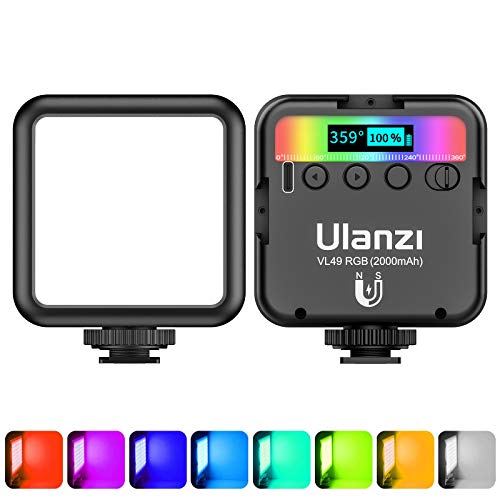
- RGB, brightness, and 2500K–9000K temperature control
- CRI 95+ output in a pocket-sized body
- Magnetic, cold-shoe, and 1/4-inch mounting options
Best For: Portable fill light, food videos, and creative still-life scenes
Best Portable Strobe

- 100Ws output and up to 360 full-power flashes
- TTL, manual, multi, and 1/8000-second HSS modes
- Compact wireless design with Bowens-mount support
Best For: Portable off-camera food photography setups
Best Manual Power

- GN33 output for larger indoor scenes
- 1/128–1/1 manual power adjustment
- S1/S2 optical wireless modes
Best For: Photographers wanting strong manual flash output for food and product setups
Best Continuous Light
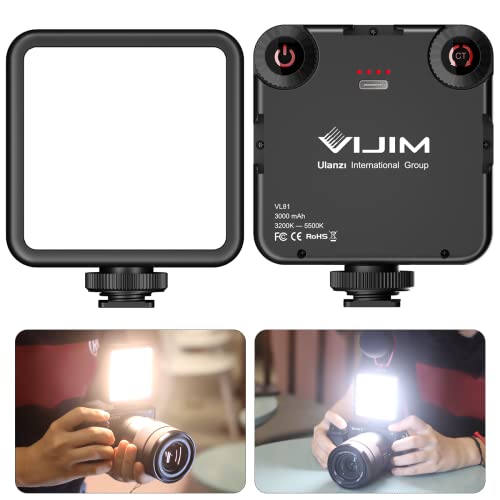
- CRI95 light with 3200K–5600K adjustment
- Softbox included for gentler illumination
- Built-in 3000mAh rechargeable battery
Best For: Food photos and videos requiring previewable, adjustable continuous light
Best Compact Flash

- Lightweight 5.3-ounce manual design
- 1/128–1/1 power range with S1/S2 modes
- Up to 650 full-power flashes per charge
Best For: Portable food photography setups using manual exposure and standard hot shoes
Best Manual Bounce Flash – Godox TT520III Universal Bounce Flash Kit
For photographers building a flexible setup around camera flashes for food photography, the Godox TT520III offers adjustable manual power, bounce positioning, and optical or radio-triggered off-camera operation. Its GN33 output and included diffuser can help shape light across plated dishes and tabletop scenes.
Best For: Manual food photography setups using standard hot-shoe cameras.
Pros:
- GN33 output with eight power levels from 1/128 to full power and 1/3-stop fine-tuning
- 330° horizontal rotation and 120° tilt support bounce lighting
- Wireless 433MHz control plus S1/S2 optical slave modes
- Includes a diffuser, mini stand, transmitter, and storage bag
Cons:
- Manual operation does not provide TTL exposure automation
- Requires four AAA batteries, which are sold separately
- Not water resistant
The TT520III is a practical choice when you want repeatable manual control and the ability to move the flash off-camera. It is especially useful for deliberate tabletop lighting, provided your workflow does not require TTL.
Best Continuous Key Light – NEEWER NL-116AI 9-Inch LED Panel
Unlike a traditional flash, this NEEWER panel provides continuous illumination, making it easy to see how highlights and shadows fall when photographing meals. As one of the more versatile camera flashes for food photography alternatives, it combines high color rendering, adjustable color temperature, and tabletop support.
Best For: Small food setups, product photography, and creators who prefer constant light.
Pros:
- CRI 95+ output with adjustable 3200K–5600K color temperature
- Brightness and color temperature can be adjusted in precise 1% steps
- Built-in 4000mAh battery runs for up to 1.5 hours
- Includes a mini tripod and cold shoe adapter
Cons:
- Maximum output is 10W, so it may be less powerful than a dedicated flash
- Battery runtime is limited to about 1.5 hours
- Carry bag is not included
The NL-116AI suits cooks, bloggers, and product photographers who want to preview lighting in real time rather than work with flash bursts. Its compact stand also makes it convenient for tabletop compositions and desk-based shooting.
Best Macro Ring Flash – Godox ML150 II Macro Ring Flash
For close-up dishes, ingredients, and texture details, the Godox ML150 II brings light around the lens for more even, shadow-controlled illumination. Its adapter set and 11 brightness levels make it a specialized option among camera flashes for food photography, particularly for macro-style compositions.
Best For: Close-up food details, ingredients, and macro photography.
Pros:
- Ring-shaped illumination helps reduce harsh shadows around close subjects
- 11 brightness levels provide manual output control
- Eight adapter rings fit lens diameters from 49mm to 77mm
- Includes a diffuser to soften the light
Cons:
- Guide number 12 is intended for close-range work rather than broad scenes
- Uses a wired connection and manual exposure control
- Requires four AA batteries
The ML150 II is best viewed as a dedicated detail-lighting tool rather than an all-purpose flash. Its lens-mounted design can be valuable when photographing garnish, textures, or tightly framed plates.
Best Portable RGB Fill Light – ULANZI VL49 RGB Video Light
The ULANZI VL49 is a pocket-sized continuous light for adding fill, color, or background atmosphere to food images and short-form content. While it is not a conventional flash, its adjustable output and broad color range make it a useful compact companion when comparing camera flashes for food photography.
Best For: Portable fill light, food videos, still-life scenes, and creative color effects.
Pros:
- Adjustable hue, brightness, and 2500K–9000K color temperature
- CRI 95+ output with illumination up to 800 lux at 0.5m
- Built-in 2000mAh battery runs up to two hours at maximum brightness
- Magnetic back, 1/4-inch screw, and three cold shoes support flexible mounting
Cons:
- Continuous output is better suited to fill and accent lighting than powerful flash illumination
- Maximum-brightness runtime is about two hours
- Not water resistant
The VL49 works well when portability and creative control matter more than flash power. It can add a small amount of directional fill to a plate or introduce controlled color for food content and still-life compositions.
Best Portable Strobe – Godox AD100Pro 100Ws Flash
For photographers seeking camera flashes for food photography, the Godox AD100Pro offers portable off-camera power with TTL, manual, and multi-flash modes. Its compact design and Bowens-mount modifier support make it practical for tabletop setups at home or on location.
Best For: Food photographers who want portable off-camera strobe power and flexible modifier options.
Pros:
- 100Ws output with up to 360 full-power flashes from its 2600mAh battery.
- Supports TTL, manual, multi-flash modes, and 1/8000-second high-speed sync.
- Compact 524-gram design with 2.4G wireless connectivity.
- Works with S2 brackets and various Bowens-mount modifiers.
Cons:
- Not water resistant.
- Full compatibility depends on a compatible wireless camera system or trigger.
The AD100Pro is a strong choice when you need a capable, battery-powered light that can move easily around a food set. Its TTL support and modifier compatibility add flexibility, while the compact form keeps tabletop lighting manageable.
Best Continuous Lighting Kit – Torjim 16-Inch Softbox Set
The Torjim kit is a continuous-lighting alternative among camera flashes for food photography. Its two softboxes, adjustable LED bulbs, and included stands provide broad, diffused illumination for tabletop scenes, recipe videos, and controlled indoor product photography.
Best For: Indoor food photography and video creators who prefer adjustable continuous light over flash.
Pros:
- Includes two 16-inch softboxes, diffusers, LED bulbs, remote, and 62-inch tripods.
- 3000-7500K adjustable color temperature supports different lighting environments.
- Softbox interiors are designed to spread light evenly and reduce shadows.
- Rotatable heads and locking aluminum tripods offer setup flexibility.
Cons:
- This is a continuous LED softbox kit, not a camera flash.
- Not water resistant.
- Reported CRI is 80, which may be less color-accurate than higher-CRI lighting.
Choose this kit when you want to see the lighting effect in real time while arranging dishes and props. It is especially convenient for indoor work, though its two-stand setup is less portable than a battery-powered flash.
Best Budget Manual Flash – NEEWER TT560 Speedlite
The NEEWER TT560 is a straightforward manual option for camera flashes for food photography. It provides GN38 output, eight power levels, bounce and swivel adjustment, and optical slave modes, making it useful for photographers comfortable setting exposure themselves.
Best For: Budget-conscious photographers who want a simple manual flash for controlled tabletop lighting.
Pros:
- GN38 output with eight manual power settings from 1/128 to full power.
- Tilts from 0 to 90 degrees and rotates from 0 to 270 degrees.
- Supports S1/S2 optical slave modes and PC sync for off-camera use.
- Uses widely available AA batteries and supports external CP-E4 power.
Cons:
- No TTL, high-speed sync, automatic exposure, or camera-menu control.
- Requires four AA batteries, which are not included.
- For Fujifilm and other compatible mirrorless cameras, it requires mechanical shutter mode.
The TT560 can be a practical entry point for food lighting when consistency matters more than automation. Its manual controls reward careful adjustment, but photographers wanting TTL or HSS should consider a more advanced flash.
Best Manual Power – PHOTOOLEX FK300 Speedlite
For camera flashes for food photography, the PHOTOOLEX FK300 is a practical manual option when you want substantial output and straightforward control. Its GN33 rating, 8-level power range, and 5600K daylight color make it suitable for illuminating dishes, tabletop scenes, and broader indoor setups.
Best For: Food photographers who need strong manual flash output, adjustable power, and optical off-camera triggering.
Pros:
- GN33 output provides useful reach for indoor food and product scenes.
- Adjustable power from 1/128 to 1/1 supports subtle fill through full-power lighting.
- S1 and S2 optical wireless modes enable simple off-camera setups.
- Includes a stand, pouch, and 12 color filters.
Cons:
- Manual exposure control requires you to set the flash output yourself.
- It is not water resistant.
- The listed package is the FK300 without a trigger.
The FK300 is the strongest-output choice here for controlled food photography setups. Its universal single-contact hot shoe and daylight-balanced output are useful, but confirm your camera supports the listed standard hot shoe and plan to meter or adjust exposure manually.
Best Continuous Light – ULANZI VL-81 LED Video Light
The ULANZI VL-81 is a flexible alternative to traditional camera flashes for food photography. Its continuous LED output lets you see the lighting effect while composing, while adjustable 3200K–5600K color temperature and an included softbox help create a softer, more controlled look for dishes and tabletop scenes.
Best For: Food creators who prefer continuous lighting for photos, video, livestreams, and smartphone shooting.
Pros:
- CRI95 illumination and adjustable warm-to-daylight color temperature support natural-looking food color.
- Included softbox helps reduce harshness and glare.
- Built-in 3000mAh battery offers up to 150 minutes at maximum brightness or 480 minutes at minimum brightness.
- Three cold shoe mounts allow multiple lights or accessories to be connected.
Cons:
- It is a constant LED light rather than a brief flash, so maximum brightness differs from a speedlight.
- Not water resistant.
- Charging takes about three hours at the stated charging rate.
Choose the VL-81 when previewing the light in real time matters more than flash-level output. Its compact design, battery operation, and broad device compatibility make it especially convenient for overhead food content, short-form video, and mobile photography.
Best Compact Flash – NEEWER Z160 SE Speedlight
Among camera flashes for food photography, the NEEWER Z160 SE stands out for compact tabletop and travel setups. It offers manual power from 1/128 to 1/1, a 6000K daylight output, and S1/S2 optical slave modes, but its single-contact design means exposure and compatibility must be checked carefully before ordering.
Best For: Photographers seeking a lightweight manual flash for small food scenes, portable studio work, and daily shooting.
Pros:
- Small 5.3-ounce design helps keep compact camera setups easy to handle.
- Manual power range from 1/128 to 1/1 supports precise lighting adjustments.
- Built-in 1200mAh battery supports up to 650 full-power flashes.
- S1 and S2 optical slave modes support basic off-camera triggering.
Cons:
- No TTL, HSS, automatic flash exposure, or camera-menu control.
- Compatibility is limited to cameras with a standard center-contact hot shoe, with several listed camera exceptions.
- Fujifilm and other compatible mirrorless cameras require mechanical shutter mode.
The Z160 SE is a convenient choice when portability is the priority and you are comfortable working manually. Its integrated battery and optical slave modes suit simple food-lighting arrangements, while the lack of TTL and HSS makes it less suitable for automated or fast-moving workflows.
How We Picked the Best Camera Flashes for Food Photography
We evaluated these lights by considering output, control, portability, power source, compatibility, and how practical each option is for tabletop food photography. We also looked for useful features such as adjustable power, bounce or diffusion support, color consistency, wireless operation, and flexible mounting.
Because food photographers do not all work the same way, this list includes both traditional flashes and continuous LED lights. A speedlight may be ideal for freezing motion or bouncing light off a wall, while an LED panel makes it easier to see shadows and reflections before pressing the shutter.
Quick Comparison
| Type | Best For | Main Advantage |
|---|---|---|
| Hot-shoe speedlight | Everyday tabletop work | Portable, versatile, and usually affordable |
| Portable strobe | Higher-output setups | More power for modifiers and larger scenes |
| LED panel | Video and visual setup | Continuous light shows shadows in real time |
| Macro ring flash | Close-up detail | Wraparound illumination for small subjects |
| Softbox kit | Home studios | Broad, softened light with a complete setup |
Key Buying Factors for Camera Flashes for Food Photography
Power and Light Control
Look for adjustable output rather than maximum power alone. Manual power settings help you balance the key light, fill light, and ambient exposure. Bounce capability and compatibility with softboxes, umbrellas, or diffusers are especially useful for reducing harsh reflections on glossy food and dishes.
Color and Consistency
A stable color temperature makes editing easier across a series of images. LEDs with high CRI ratings can be helpful when accurate food color matters, while flash units provide short bursts that can freeze steam, splashes, or moving ingredients.
Camera Compatibility and Triggering
Check the hot-shoe design and whether the unit supports your camera’s TTL system. Manual flashes can work across many cameras but require more setup. Wireless triggering is valuable when the light is positioned off-camera, and single-contact models may be less integrated with automated exposure systems.
Size, Battery Life, and Heat
For small kitchens, compact lights are easier to position around stands, reflectors, and props. Rechargeable strobes offer mobility, while AC-powered kits suit longer sessions. For video or extended continuous use, consider battery capacity and heat management.
Who Should Buy Which Camera Flashes for Food Photography?
- Beginners: Choose an affordable manual speedlight or compact LED panel to learn positioning and exposure without a large investment.
- Photographers using multiple cameras: A broadly compatible manual flash or LED light avoids being tied to one brand’s TTL system.
- Dedicated tabletop shooters: Look for a bounce flash with a diffuser, or add a softbox for larger, softer highlights.
- Close-up and macro photographers: A ring flash can provide even illumination around small dishes, garnishes, flowers, and ingredients.
- Video creators: Choose a bi-color or RGB LED light because continuous output lets you monitor the scene while recording.
- Advanced studio users: A portable strobe offers stronger output and more flexibility with modifiers, especially when photographing larger sets or working at lower ISO settings.
Before buying, confirm the light’s mount, trigger, battery, and power requirements for your camera and shooting space. The best choice is the one that gives you repeatable control over direction, softness, and exposure—not simply the unit with the highest advertised output.