The right compact refrigerator can make an office break room, staff lounge, studio, or workplace kitchenette more useful without taking up valuable floor space. The models in this roundup cover a range of capacities, layouts, noise levels, and features, from simple beverage storage to two-door designs with dedicated freezers.
Use the comparison and buying advice below to match your available space, workplace needs, and expected daily use with a practical refrigerator that is easy to maintain.
Best 10 Compact Refrigerators for Workplaces Picks for 2026
Best Office Workhorse
Midea 3.3 Cu. Ft. Compact Fridge

- 3.3 cu. ft. freezerless storage
- Energy Star certified; 260 kWh/year stated
- Reversible door and below-42 dB operation
Best For: Shared offices needing flexible fresh-food and beverage storage
Best With Freezer
Feelfunn 3.2 Cu. Ft. Two-Door Mini Fridge

- Separate 2.24 cu. ft. fridge and 0.96 cu. ft. freezer
- Quiet operation rated at 38 dB or less
- Reversible door with adjustable legs
Best For: Small workplaces needing both chilled and frozen storage
Best for Tight Spaces

- Small 1.6 cu. ft. footprint
- Energy Star certified; 207 kWh/year stated
- Reversible door and removable glass shelf
Best For: Individual offices and compact workplace areas
Best for Workplace Style
Frigidaire EFR331 Retro Compact Refrigerator

- 3.2 cu. ft. capacity with a 0.2 cu. ft. chiller
- Retro blackboard front and built-in bottle opener
- Two shelves, can dispenser, and reversible door
Best For: Stylish office break rooms and beverage-focused spaces
Best Overall
Midea 3.1 Cu. Ft. Mini Fridge with Freezer

- 3.1 cu. ft. layout includes a separate freezer
- ENERGY STAR certified and rated at 270 kWh annually
- Reversible door, LED light, shelves, and crisper drawer
Best For: Shared break rooms needing fresh and frozen storage
Best Value Capacity
Igloo 3.2 Cu. Ft. Mini Fridge with Freezer

- 3.2 cu. ft. capacity with a separate freezer compartment
- Adjustable mechanical temperature control
- Two glass shelves and two door shelves
Best For: Shared offices needing roomy chilled storage
Top Two-Door Pick
3.5 Cu. Ft. Blue Mini Refrigerator
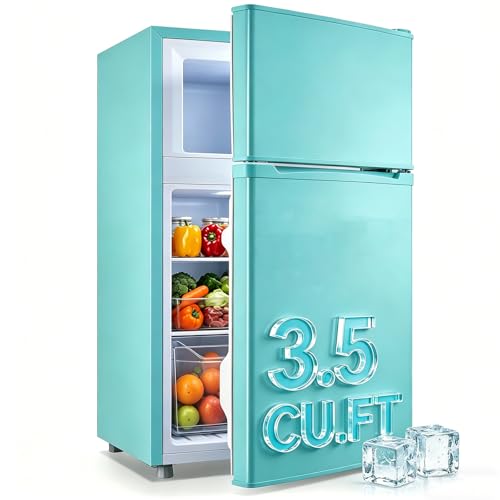
- Separate freezer and refrigerator compartments
- Seven-level adjustable thermostat
- Quiet compressor with removable shelves
Best For: Workplaces needing dedicated frozen and fresh-food storage
Energy-Efficient Choice
ICEBOX 2.5 Cu. Ft. Compact Refrigerator

- ENERGY STAR certified design
- Reversible door and adjustable legs
- Two removable shelves plus door storage
Best For: Offices prioritizing flexible placement and energy-conscious operation
Smallest Quiet Pick
COWSAR 1.6 Cu. Ft. Mini Fridge

- Slim profile fits under desks and counters
- 40dB low-noise compressor operation
- Reversible door and seven-speed thermostat
Best For: Individual workspaces with limited room and low-noise needs
Best Office Workhorse – Midea 3.3 Cu. Ft. Compact Fridge
For workplaces needing practical cold storage without a large footprint, the Midea 3.3 cu. ft. is one of the more balanced compact refrigerators for workplaces. It offers room for beverages and food, adjustable temperature control, and a reversible door for flexible placement.
Best For: Offices that want generous fresh-food storage, quiet operation, and energy-conscious performance.
Pros:
- 3.3 cu. ft. capacity in an 18.7-by-17.6-inch footprint.
- Adjustable thermostat, three shelves, a 2L bottle rack, and a can rack support organized storage.
- Energy Star certified, with stated annual energy use of 260 kWh and noise below 42 dB.
- Reversible door and interior LED lighting make it adaptable for different office layouts.
Cons:
- This is a freezerless model, so it does not provide dedicated frozen-food storage.
- Manual defrosting requires occasional maintenance.
Its combination of capacity, quiet operation, and flexible door placement makes this a sensible all-purpose office refrigerator, especially when frozen storage is not a priority.
Best With Freezer – Feelfunn 3.2 Cu. Ft. Two-Door Mini Fridge
The Feelfunn gives workplaces separate refrigerator and freezer compartments in a compact design. Among compact refrigerators for workplaces, it is a useful choice when employees need both chilled drinks and frozen items without moving up to a full-size appliance.
Best For: Small offices that need dedicated freezer space along with everyday refrigerator storage.
Pros:
- Includes a 2.24 cu. ft. refrigerator and 0.96 cu. ft. freezer.
- Three temperature levels cover stated refrigerator and freezer ranges.
- Rated at 38 dB or less, with an LED light and adjustable glass shelves.
- Reversible door and adjustable front legs help with placement and stability.
Cons:
- Stated annual energy consumption of 356 kWh is higher than the listed Midea alternatives.
- Manual defrosting is required.
- The manufacturer recommends leaving the unit upright for 6–12 hours before plugging it in after transport.
This model is appealing when freezer access matters more than minimizing energy use. Its quiet operation and separate compartments make it especially practical for small teams.
Best for Tight Spaces – Midea 1.6 Cu. Ft. Mini Fridge
When floor or counter space is limited, the Midea 1.6 cu. ft. keeps the footprint modest while still providing useful drink and snack storage. It is a straightforward option among compact refrigerators for workplaces, with an adjustable thermostat and removable glass shelf.
Best For: Individual offices, small work areas, or break rooms with limited space and modest storage needs.
Pros:
- Compact 1.6 cu. ft. design measures 18.6 inches wide, 17.7 inches deep, and 19.4 inches high.
- Energy Star certified with stated annual energy use of 207 kWh.
- Reversible door and removable glass shelf allow flexible placement and storage.
- Noise is listed below 42 dB, and a chiller box can cool drinks faster.
Cons:
- Its smaller capacity may not suit a shared workplace or larger team.
- Manual defrosting is required.
- The compact internal freezer/chiller area reduces usable fresh-food space.
This is best viewed as a personal or low-volume office refrigerator. Its efficient, quiet, space-saving design fits individual workstations better than busy communal break rooms.
Best for Workplace Style – Frigidaire EFR331 Retro Compact Refrigerator
The Frigidaire EFR331 combines practical workplace storage with a distinctive retro design. For offices that want compact refrigerators for workplaces to look less utilitarian, its blackboard front, bottle opener, can dispenser, and flush-back profile add useful character.
Best For: Break rooms, creative offices, and hospitality-style workspaces where appearance and beverage organization matter.
Pros:
- 3.2 cu. ft. capacity provides room for drinks, snacks, and bottles.
- Two glass shelves, a 2L door basket, built-in can dispenser, and chiller compartment support organization.
- Reversible door and flush-back design allow flexible placement.
- Front blackboard and built-in bottle opener add workplace-friendly convenience.
Cons:
- The freezer compartment is small at 0.2 cu. ft.
- Manual defrosting is required.
- At 20 inches wide, it is wider than the listed 1.6 cu. ft. alternative.
The EFR331 is a strong fit when a shared office refrigerator should contribute to the room’s look as well as store refreshments. Choose it for style and organization rather than substantial freezer capacity.
Best Overall – Midea 3.1 Cu. Ft. Mini Fridge with Freezer
The Midea WHD-113FB1 is a versatile pick among compact refrigerators for workplaces, combining a full refrigerator section with a separate top freezer. Its 3.1-cubic-foot capacity, adjustable temperature controls, reversible door, and interior light make it practical for shared offices, break rooms, and smaller work areas.
Best For: Workplaces that need both fresh-food storage and a usable freezer in a compact footprint.
Pros:
- 3.1-cubic-foot capacity with a 0.92-cubic-foot freezer and 2.16-cubic-foot refrigerator section
- ENERGY STAR certified with stated annual energy consumption of 270 kWh
- Reversible door, interior LED light, removable glass shelves, and crisper drawer
- Separate temperature ranges for the refrigerator and freezer compartments
Cons:
- Manual defrost system requires periodic maintenance
- At 52.2 pounds, it is less convenient to move than smaller models
Choose this Midea when workplace versatility matters more than the smallest possible size. It offers considerably more organization and freezer space than a freezerless office fridge while remaining freestanding and compact.
Best Space Saver – Upstreman 1.5 Cu. Ft. All-Refrigerator
The Upstreman CR16-Silver is a compact, freezerless option for workplaces where footprint and simple beverage storage are priorities. Measuring 17.3 by 17.9 by 19.5 inches, it fits neatly in an office, classroom, or under-counter area while providing adjustable cooling for snacks, drinks, and meal-prep items.
Best For: Individual offices and small work areas that need a lightweight refrigerator without freezer space.
Pros:
- Small 1.5-cubic-foot footprint is easy to place in space-limited workplaces
- ENERGY STAR certified with stated annual energy consumption of 245 kWh
- Seven temperature settings ranging from 32°F to 50°F
- Reversible door, removable glass shelf, beverage holder, and leveling feet
Cons:
- Freezerless design cannot store frozen foods
- Only one removable shelf limits larger-item organization
- Smaller capacity may not suit shared break rooms
This Upstreman is a sensible choice when a workplace primarily needs chilled drinks and compact snack storage. Its light 26.2-pound build and reversible door also make repositioning and placement relatively straightforward.
Best Value Capacity – Igloo 3.2 Cu. Ft. Mini Fridge with Freezer
The Igloo 3.2-cubic-foot mini fridge is a straightforward option for workplaces that want generous chilled storage and a separate freezer compartment without moving to a larger refrigerator. Its compressor cooling, adjustable mechanical thermostat, and glass shelves make it suitable for office break rooms, staff areas, and shared snack storage.
Best For: Offices seeking a roomy compact refrigerator for drinks, snacks, and occasional frozen foods.
Pros:
- 3.2-cubic-foot total capacity with 3 cubic feet of refrigerator space
- Separate 0.2-cubic-foot freezer compartment for frozen items
- Adjustable mechanical temperature control with a 32°F–50°F refrigerator range
- Two glass shelves and two door shelves support basic organization
Cons:
- Stated annual energy consumption is 304 kWh
- Freezer compartment is relatively small
- Door orientation is listed as left, offering less placement flexibility than reversible-door models
The Igloo emphasizes capacity and simple operation rather than advanced organization or energy performance. It is a practical fit when a shared workplace needs more refrigerator room than a personal mini fridge provides.
Top Two-Door Pick – 3.5 Cu. Ft. Blue Mini Refrigerator
For workplaces that need separate frozen and fresh-food storage, this 3.5-cubic-foot model is a practical choice among compact refrigerators for workplaces. Its two-door layout, adjustable thermostat, and quiet compressor suit break rooms, small offices, and shared kitchen areas.
Best For: Workplaces needing a dedicated freezer plus flexible fresh-food storage.
Pros:
- Separate 1.0-cubic-foot freezer and 2.5-cubic-foot refrigerator compartments.
- Seven-level mechanical thermostat supports temperatures from -0.4°F to 50°F.
- Two removable glass shelves and adjustable front legs improve flexibility.
- Quiet, efficient compressor operation helps maintain a calmer work environment.
Cons:
- Manual defrost requires periodic maintenance.
- Its 34.1-inch height may not suit under-counter placement.
- The 40-pound build is less convenient to move than smaller units.
This is the strongest option here for teams that want an actual freezer compartment and more overall capacity. Choose it when floor or counter space allows for its taller two-door design.
Energy-Efficient Choice – ICEBOX 2.5 Cu. Ft. Compact Refrigerator
This ENERGY STAR certified ICEBOX model is a sensible pick for compact refrigerators for workplaces where energy use and straightforward food storage matter. Its single-door design, two removable glass shelves, and reversible door make it adaptable for offices, break rooms, and home workspaces.
Best For: Offices seeking an energy-conscious refrigerator with flexible placement.
Pros:
- ENERGY STAR certified and uses R600a refrigerant.
- Two removable glass shelves provide adjustable storage space.
- Full-width door shelf accommodates cans, small containers, and 2-liter bottles.
- Reversible door and adjustable legs support different room layouts.
Cons:
- The chiller compartment is smaller than a dedicated freezer.
- Manual defrost requires occasional upkeep.
- Its listed 212 kWh annual energy consumption is higher than the larger two-door model in this selection.
With a seven-year limited manufacturer warranty and practical storage features, this refrigerator offers a balanced workplace setup. It is particularly useful when flexible door placement and certified efficiency are priorities.
Smallest Quiet Pick – COWSAR 1.6 Cu. Ft. Mini Fridge
When desk-side space is limited, the COWSAR offers a compact approach to compact refrigerators for workplaces. Its slim footprint, reversible door, seven-speed thermostat, and 40dB operation make it suitable for individual offices, small work areas, or rooms where low noise is important.
Best For: Individual workspaces needing a small, quiet refrigerator for drinks and snacks.
Pros:
- Compact 1.6-cubic-foot design fits under desks and countertops.
- Reversible door and removable tempered-glass shelf support flexible placement.
- Seven-speed mechanical temperature control is simple to adjust.
- 40dB low-vibration operation and ETL safety certification suit quiet rooms.
Cons:
- Its 1.6-cubic-foot capacity is limited for shared workplace use.
- The built-in freezer section is only 0.2 cubic feet.
- Manual defrost requires periodic attention.
This model is best treated as a personal office refrigerator rather than a break-room appliance. Its small footprint and quiet operation are compelling when convenient access matters more than high capacity.
How We Picked the Best Compact Refrigerators for Workplaces
We focused on compact refrigerators that suit shared workplace environments, including offices, studios, clinics, workshops, and staff rooms. Our selections represent several useful size categories, from approximately 1.5-cubic-foot personal fridges to larger 3.5-cubic-foot models for shared storage. We also considered energy efficiency, noise-conscious operation, adjustable temperature controls, freezer configuration, door flexibility, shelf design, and the practicality of cleaning and organizing the interior.
Because workplace needs vary, this list includes both all-refrigerator models and units with freezer or chiller compartments. Energy Star certification, where specified, is a useful indicator for shoppers trying to limit ongoing electricity use.
Quick Comparison
| Best For | Recommended Type | Why It Stands Out |
|---|---|---|
| Shared break rooms | 3.1–3.5 cu. ft. two-door or freezer-equipped model | More room for lunches, drinks, and frozen items |
| Personal offices | 1.5–1.6 cu. ft. compact refrigerator | Small footprint and straightforward storage |
| Quiet work areas | Low-noise Midea model | Less disruptive near desks or meeting rooms |
| Flexible installation | Reversible-door refrigerator | Can accommodate different room layouts |
| Simple cold storage | All-refrigerator mini fridge | Uses interior space efficiently without a freezer |
Key Buying Factors for Compact Refrigerators for Workplaces
Capacity and Interior Layout
Choose capacity based on how many people will use the refrigerator between cleanouts. A 1.5- or 1.6-cubic-foot unit works well for one person or a small private office. For shared break rooms, a model around 3 cubic feet or larger offers more practical space. Check shelf dimensions and door-bin storage, not just the advertised cubic-foot rating.
Freezer Versus Refrigerator-Only Design
A freezer compartment is useful for ice packs, frozen meals, or short-term storage, but it reduces the room available for refrigerated food. If the workplace mainly needs drinks and lunches, an all-refrigerator design may provide better usable capacity.
Noise, Energy Use, and Placement
For open offices, reception areas, and quiet rooms, prioritize models marketed for low-noise operation. Energy Star-certified options can help reduce electricity consumption over time. Leave the manufacturer-recommended ventilation clearance around the unit, and avoid placing it beside heat-producing equipment.
Door Orientation and Maintenance
A reversible door can solve placement problems in tight kitchens or corners. Adjustable thermostats make it easier to manage changing loads, while removable glass shelves and wipe-clean interiors simplify routine cleaning. In a shared setting, easy maintenance is often more valuable than decorative features.
Who Should Buy Which Compact Refrigerators for Workplaces?
Choose a small 1.5- or 1.6-cubic-foot refrigerator for a private office, workstation area, or low-volume staff space. Select a 3.1- to 3.5-cubic-foot model when several employees need regular access or when frozen storage matters. A low-noise, Energy Star-certified option is the strongest fit for offices where the refrigerator will operate near desks. For flexible room layouts, choose a reversible-door model, and for beverage-heavy storage, consider an all-refrigerator design with minimal freezer intrusion.