The right stand keeps a microphone stable, correctly positioned, and protected from accidental bumps. For studio overheads, vocal performance, instruments, and podcasting, a heavy-duty design can make setup more dependable.
We compare 10 heavy-duty microphone stands across boom reach, height adjustment, base stability, portability, and value to help you choose a stand that fits your equipment and workspace.
Best 10 Heavy Duty Microphone Stands Picks for 2026
Maximum-Reach Pick
LyxPro SMT-1 Overhead Boom Stand

- 93-inch maximum height and 76-inch boom reach
- Adjustable counterweight and legs
- Folds for storage and transport
Best For: Overhead studio and instrument setups
Everyday Value Pick
On-Stage MS7701B Euro Boom Stand

- 30-inch adjustable boom reach
- Steel tripod with rubber feet
- Folds flat for transport
Best For: Vocal, instrument, podcast, and rehearsal use
Professional Reliability Pick
K&M 21075 Telescoping Boom Stand
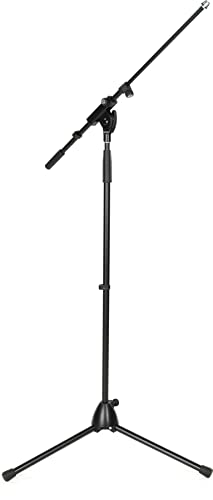
- German-made zinc tripod construction
- 16.7-to-28.5-inch telescoping boom
- Five-year repair-or-replacement warranty
Best For: Stage, rehearsal, and frequent musician use
Mobile Studio Pick
Ultimate Support MC-125 Boom Stand

- 38.3-pound weighted base with locking wheels
- Adjustable counterweight and boom length
- Field-serviceable construction
Best For: Stable, movable studio microphone positioning
Professional Stability

- Stable zinc die-cast tripod base
- 35–63-inch height range
- Folding legs and telescoping boom
Best For: Studio, broadcast, podcast, and stage setups
Maximum Reach
AxcessAbles 8-Foot Overhead Boom

- Boom extends to 98 inches
- Lead-weighted double-braced tripod
- 15-pound capacity with counterweight
Best For: Overhead mics, drum kits, choirs, pianos, and film sets
Flexible Everyday Setup

- 6–99-inch height adjustment
- Steel tripod with telescoping boom
- Includes 3/8-inch and 5/8-inch adapters
Best For: Portable live and studio microphone setups
Low-Profile Versatility
CAHAYA Heavy-Duty Tripod Boom Stand

- Low-profile base supports stable positioning
- 37–90.5-inch height range
- Includes two clips and cable holders
Best For: Flexible performance, speech, karaoke, and broadcast setups
Portable Two-Pack Value
InnoGear Heavy-Duty Boom Stands

- Includes two steel tripod stands
- Adjusts from 28.1 to 89.8 inches
- Carrying bag and multiple adapters included
Best For: Bands, events, podcasts, and dual-microphone setups
Classic Concert Support
Pyle PMKS56 Heavy-Duty Mic Stand

- 51.2–78.75-inch clutch height adjustment
- 29.5-inch telescoping boom
- Works with or without the boom
Best For: Studio and concert performers wanting a conventional tripod stand
Maximum-Reach Pick – LyxPro SMT-1 Overhead Boom Stand
For demanding studio setups, the LyxPro SMT-1 is one of the most versatile heavy duty microphone stands in this roundup. Its extra-tall height range, extended boom, adjustable legs, and counterweight support overhead placement for vocals and instruments.
Best For: Overhead studio recording, drum, piano, guitar, group, and vocal setups that need substantial reach.
Pros:
- Adjusts from 59 to 93 inches with a 45-to-76-inch telescoping boom.
- Adjustable counterweight helps balance small and large diaphragm microphones.
- Foldable design, retractable parts, and integrated cable clips support storage and transport.
- Metal construction and adjustable legs provide a sturdy platform.
Cons:
- At 15 pounds, it is considerably heavier than compact tripod stands.
- Its large overhead design may be more stand than a basic vocal setup requires.
The SMT-1 is the practical choice when reach and positioning flexibility matter more than minimal packed size. Its counterweight and tall profile make it particularly suitable for permanent or semi-permanent studio use.
Everyday Value Pick – On-Stage MS7701B Euro Boom Stand
The On-Stage MS7701B is a straightforward option for shoppers seeking heavy duty microphone stands with useful adjustment and easy portability. Its steel construction, tripod base, non-slip feet, and removable 30-inch boom suit common stage, studio, podcast, and rehearsal applications.
Best For: General-purpose vocal and instrument microphone positioning across studios, stages, podcasts, and travel setups.
Pros:
- Steel-built stand with non-slip rubber feet for stable support.
- Removable boom arm offers 30 inches of reach and adjustable angle positioning.
- Folds flat for storage and transport.
- Weighs 5.3 pounds for a practical balance of stability and portability.
Cons:
- Its 61.5-inch maximum height is lower than the tall overhead models here.
- The shorter boom reach is less suited to wide overhead placements.
With its familiar tripod format and flexible Euro-style boom, the MS7701B is a sensible all-around stand. It offers useful positioning without the bulk of a specialized studio boom.
Professional Reliability Pick – K&M 21075 Telescoping Boom Stand
The German-made K&M 21075 is a dependable choice among heavy duty microphone stands for musicians who want durable construction and uncomplicated adjustment. Its zinc die-cast tripod base, folding legs, telescoping boom, and five-year repair-or-replacement warranty support regular stage and practice use.
Best For: Performers who need a durable, portable stand for stage work, rehearsals, or karaoke.
Pros:
- Height adjusts from 39.7 to 67.7 inches.
- Telescoping boom extends from 16.7 to 28.5 inches.
- Zinc die-cast base and rubber feet provide a solid foundation.
- Folding legs simplify setup, breakdown, and transport.
Cons:
- Its boom is shorter than the extended studio models in this roundup.
- The listed 3/8- and 5/8-inch thread compatibility may require checking against your microphone accessories.
The 21075 emphasizes proven, serviceable construction rather than extreme reach. It is a strong fit for musicians who value a compact folding design and a manufacturer warranty for frequent use.
Mobile Studio Pick – Ultimate Support MC-125 Boom Stand
The Ultimate Support MC-125 takes a different approach to heavy duty microphone stands, pairing a 38.3-pound weighted base with rollerblade-style wheels. That low-center-of-gravity design is intended for stable studio positioning while still allowing the stand to move across the floor.
Best For: Studio users who need a highly stable boom stand that can be repositioned without lifting.
Pros:
- Heavy cast base and locking wheels support stability and mobility.
- Adjustable counterweight helps fine-tune boom balance.
- Height and boom length adjust for customized positioning.
- Field-serviceable design allows components to be serviced or replaced.
Cons:
- At 38.3 pounds, it is the heaviest option in this selection.
- Its wheeled base is less convenient for compact storage or frequent travel.
- The 61-inch maximum height is not intended for very tall overhead placement.
The MC-125 is best viewed as a studio workhorse rather than a portable gig stand. Its weighted, wheeled base and adjustable counterweight make it compelling when stability and easy floor movement take priority.
Professional Stability – K&M 21090.500.55 Boom Stand
The K&M 21090.500.55 is a dependable choice among heavy duty microphone stands for studio recording, broadcasting, podcasting, and live performance. Its telescoping boom, folding tripod, and broad height range support precise microphone placement while remaining practical to transport.
Best For: Studio, broadcast, podcast, and stage users who want German-engineered stability and adjustable positioning.
Pros:
- Zinc die-cast tripod base and rubber feet provide secure footing.
- Height adjusts from 35 to 63 inches, with a two-piece telescoping boom.
- Folding legs make storage and transport easier.
- Includes a 5-year repair-or-replacement warranty and 10-year replacement-part availability.
Cons:
- At 6.8 pounds, it is less lightweight than compact stands.
- Its 63-inch maximum height may not suit every overhead application.
This stand emphasizes dependable construction and controlled positioning rather than minimum weight. It is a strong fit for buyers who want a durable tripod stand that can move between studio and stage work.
Maximum Reach – AxcessAbles 8-Foot Overhead Boom
The AxcessAbles Heavy Duty Overhead Mic Boom Stand is built for demanding placements where ordinary heavy duty microphone stands may lack reach. Its telescoping boom extends to 8 feet 2 inches, making it suitable for drum kits, choirs, pianos, film sets, and overhead or shotgun microphone work.
Best For: Overhead recording, film sets, drum kits, choirs, pianos, and other long-reach microphone applications.
Pros:
- Extra-long boom adjusts from 53 to 98 inches.
- Lead-weighted, double-braced tripod helps maintain a low center of gravity.
- All-metal construction uses no plastic parts.
- Includes a movable 2.5-pound counterweight and supports up to 15 pounds.
Cons:
- The extended boom may require careful balancing for heavier microphones.
- Additional sandbags may still be useful for demanding placements.
- Its large reach is more specialized than a standard short boom stand.
Choose this model when reach and load management matter more than compact portability. The weighted base, counterweight, and metal joints are designed to support serious overhead setups.
Flexible Everyday Setup – Gator Frameworks GFW-MIC-2020
The Gator Frameworks GFW-MIC-2020 combines a steel tripod, telescoping boom, and soft-grip twist clutch in a versatile package. For buyers comparing heavy duty microphone stands for live performances or studio recording, its wide height range and included thread adapters make it easy to configure for different microphones and setups.
Best For: Performers and recording users who need a portable, adjustable stand with broad microphone compatibility.
Pros:
- Height adjusts from 6 to 99 inches.
- Telescoping boom provides flexible microphone positioning.
- Collapsible tripod base supports easier transport.
- Includes both 3/8-inch and 5/8-inch adapters for US and Euro mic clips.
Cons:
- Its 2.27-kilogram weight may offer less heft than larger weighted stands.
- It has a 3-year warranty, shorter than the coverage listed for the K&M model.
- The very broad adjustment range may require careful setup for maximum stability.
This is a practical all-purpose option for users who value adjustment and compatibility. Its steel construction and folding base suit regular transport between rehearsals, performances, and recording sessions.
Low-Profile Versatility – CAHAYA Heavy-Duty Tripod Boom Stand
For shoppers comparing heavy duty microphone stands, the CAHAYA stands out with a low-profile flat base designed to improve floor contact and reduce unwanted movement. Its adjustable boom and tall height range make it suitable for seated or standing use, while the removable boom lets you switch between boom and straight-stand configurations.
Best For: Performers, speakers, karaoke singers, and home users who want one adaptable stand for different setups.
Pros:
- Low-profile base provides a larger contact area and lets you step directly on it.
- Height adjusts from 37 to 90.5 inches, with an 18.7- to 32.7-inch, 360-degree rotating boom.
- Includes two adjustable mic clips, cable holders, and a 3/8- to 5/8-inch adapter.
- Removable boom supports both boom and straight-stand use.
Cons:
- At 2.17 kg, it may be less convenient to carry than lighter stands.
- The broad feature set may be more than needed for a simple fixed-position setup.
Choose this CAHAYA model if stability-focused base design and configuration flexibility matter most. Its accessories and wide height range also make it a practical all-purpose option for performances, meetings, and broadcasts.
Portable Two-Pack Value – InnoGear Heavy-Duty Boom Stands
This InnoGear two-pack is a strong choice for buyers seeking heavy duty microphone stands for multiple performers or rooms. Thickened steel poles, a 4-pound tripod design, and adjustable boom positioning provide a sturdy platform, while the included carrying bag makes transport and storage easier.
Best For: Bands, podcast setups, event teams, or anyone needing two portable stands with broad microphone compatibility.
Pros:
- Two stands are included in the set.
- Height adjusts from 28.1 to 89.8 inches for seated or standing users.
- Detachable boom extends from 16 to 30 inches and rotates horizontally and vertically.
- Includes two mic clip styles, adapters, cable clips, and a carrying bag.
Cons:
- The stated maximum weight recommendation is 4 pounds per stand.
- A two-pack may be unnecessary if you only need one microphone position.
InnoGear’s main advantage is its combination of quantity, portability, and adjustment range. It is especially compelling when you need matching stands for simultaneous use and want to pack them into the supplied 19.5-by-8.3-inch bag.
Classic Concert Support – Pyle PMKS56 Heavy-Duty Mic Stand
The Pyle PMKS56 offers a straightforward option among heavy duty microphone stands, pairing enlarged tubing with a steel-alloy tripod base. Its clutch-controlled height adjustment and telescoping boom are designed for quick positioning in studio or concert environments.
Best For: Musicians and performers who want a conventional tripod stand with a long, adjustable boom.
Pros:
- Height adjusts from 51.2 to 78.75 inches with a clutch.
- 29.5-inch telescoping boom provides flexible microphone positioning.
- Can be used with or without the boom.
- Compact design and 5/8-inch adapter support convenient transport and standard compatibility.
Cons:
- Its height range is narrower than some competing models.
- Only one stand is included.
- The supplied details do not mention a carrying bag or extra mic clips.
The PMKS56 is a sensible pick for users who prefer a familiar, no-frills stage stand. Its clutch and telescoping boom provide useful adjustment without adding the extra accessories or configurations found on some newer multi-use models.
How We Picked the Best Heavy Duty Microphone Stands
We focused on stands suited to demanding studio, rehearsal, performance, and content-creation use. Our comparison considers construction, adjustment range, boom length, base design, portability, included adapters, and the type of microphone placement each model supports. A good stand should hold its position without excessive sagging, remain stable during normal use, and offer controls that are practical to adjust.
Because “heavy duty” can describe several different designs, this list includes traditional tripod boom stands, weighted-base models, floor stands, overhead stands, and multipacks. That gives shoppers options for both individual microphones and multi-microphone setups.
Quick Comparison
- Best for overhead placement: Choose a long-reach model such as the LyxPro or AxcessAbles when the microphone must clear a desk, drum kit, or instrument.
- Best for general stage and studio use: On-Stage, K&M, Ultimate Support, and Gator Frameworks offer versatile boom configurations.
- Best for floor-level positioning: The K&M floor stand is designed for applications where a low, compact footprint is useful.
- Best for multiple microphones: The InnoGear two-pack can be practical for podcasts, rehearsals, or basic recording setups.
- Best for budget-conscious buyers: CAHAYA and Pyle provide adjustable boom functionality at an accessible price point.
Key Buying Factors for Heavy-Duty Microphone Stands
Base Stability and Footprint
A tripod base is easy to fold and transport, while a weighted round base can occupy less floor area and resist tipping. Check the stand’s footprint against your room, pedalboard, drum hardware, or desk.
Height and Boom Reach
Confirm that the stand reaches the position you need without forcing the boom to extend too far. Tall overhead stands suit drums and room microphones, while shorter models may work better beside a seated performer.
Adjustment Hardware
Look for secure clutch mechanisms, strong boom joints, and smooth telescoping sections. A soft-grip clutch can make frequent repositioning easier, but the hardware should still tighten firmly enough to prevent drift.
Thread Compatibility and Microphone Weight
Microphone clips and shock mounts may use different thread sizes, so included 3/8-inch and 5/8-inch adapters can be valuable. Also account for the microphone, cable, shock mount, and any pop filter when judging load stability.
Portability and Storage
Foldable legs and removable boom sections help with transport. For a permanent studio, prioritize reach and rigidity; for gigs or rehearsal rooms, weight and setup speed may matter more.
Who Should Buy Which Heavy Duty Microphone Stands?
Choose a long-boom overhead stand for drums, room microphones, or microphones positioned above a desk. Select a conventional tripod boom stand for vocals, guitar, live performance, and flexible studio work. A weighted-base stand is a strong choice when floor space is limited or when you want a cleaner footprint. Buyers outfitting two positions at once should consider the InnoGear set, while occasional users may prefer the lower-cost CAHAYA or Pyle options. Before ordering, measure the required height and reach, verify thread compatibility, and make sure the stand’s base will fit safely in your intended setup.