Apartment noise and echo are easier to manage when you choose acoustic treatment that fits your walls, ceiling, décor, and lease restrictions. This roundup compares 10 options, from decorative wood slats and felt tiles to foam wedges and hanging ceiling panels.
Use the guide below to match panel type, coverage, thickness, and installation method to your room and sound-control goals.
Best 10 Acoustic Panels for Apartments Picks for 2026
Warm Wood Statement Wall

- Teak-look slat design
- Covers about 33 sq. ft.
- Vertical or horizontal installation
Best For: Decorative apartment feature walls with broad coverage
Flexible Coverage Choice

- Sets from 2 to 10 panels
- Cuttable for custom sizing
- Adhesive or screw mounting
Best For: Custom-sized apartment wood accent walls
Small-Space DIY Option

- Twelve 12-inch tiles
- Peel-and-stick installation
- Customizable striped design
Best For: Targeted treatment in bedrooms, offices, or studios
High-Coverage Foam Pick
2-Inch Pyramid Acoustic Foam Panels

- 24 panels cover 24 square feet
- Thick foam targets echo and reverberation
- Flame-retardant, lightweight construction
Best For: Home studios and apartment media rooms needing broad sound absorption
Easy-Install Budget Pick
Focusound 50-Pack Wedge Foam Panels

- Fifty panels support broad spot treatment
- Includes 300 pieces of double-sided adhesive
- Wedge grooves target echo and reverb
Best For: Apartment offices and recording setups needing many inexpensive panels
Peel-and-Stick Brick Panels
High-Density Acoustic Wall Tiles

- Self-adhesive backing simplifies installation
- Twenty panels cover about 20 square feet
- Decorative brick design adds visual interest
Best For: Apartment walls, doors, and home studios needing easy coverage
Budget Foam Treatment
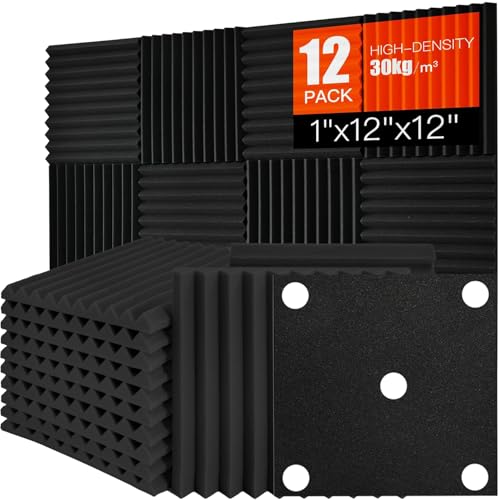
- Lightweight foam helps control echo and reflections
- Includes installation tape and covers 12 square feet
- Works for apartments, offices, gaming, and streaming
Best For: Targeted acoustic treatment in compact apartment spaces
Warm Wood Statement Wall – Teak Slat Panels
For shoppers comparing acoustic panels for apartments, these teak-finish wood slat panels combine decorative coverage with sound absorption. The four-piece set covers about 33 square feet and can be mounted vertically or horizontally, although the long 96-inch format may require careful measuring in smaller rooms.
Best For: Apartment living rooms, bedrooms, or feature walls where a warm wood look and broad coverage matter.
Pros:
- Teak wood-slat design adds a contemporary decorative finish.
- Four panels cover approximately 33 square feet.
- Can be installed vertically, horizontally, on walls, or on ceilings.
- MDF and high-density polyester fiber construction uses low-TVOC materials.
Cons:
- The 96-inch-long panels may be difficult to handle in compact apartments.
- Installation requires screws or superglue rather than a supplied tool-free mounting system.
- No warranty is listed in the supplied details.
This is a strong choice when visual impact and larger-area treatment are priorities. Plan the installation route and wall layout first, especially if elevator, hallway, or ceiling access is limited.
Tool-Free Modern Pick – Arcadian Vortex Panels
These polyester acoustic panels are a practical option for apartments because the six-piece set includes transparent adhesive squares for tool-free installation. Their grooved, wood-texture appearance is designed to connect visually across adjoining panels while helping reduce echo.
Best For: Renters or apartment dwellers who want a clean feature wall without drilling or using special tools.
Pros:
- Peel-and-stick installation includes 30 transparent double-sided adhesive squares.
- Groove pattern helps trap and diffuse sound.
- Lightweight polyester construction is designed to retain its shape.
- Panels can be arranged in different configurations.
Cons:
- The six-piece set covers about 23.25 square feet, so larger rooms may need multiple packs.
- Adhesive mounting may be less suitable for some wall surfaces.
- No manufacturer warranty is listed.
With its tool-free mounting approach and square format, this set is among the easier acoustic panels for apartments to position and rearrange. Confirm the wall surface and desired coverage before applying the adhesive.
Flexible Coverage Choice – TONOR Wood Panels
TONOR’s wood wall panels suit apartment buyers who want a natural, integrated look with selectable coverage sizes. Each panel measures 47.2 by 23.6 inches, and the sets can be ordered in configurations from two to ten pieces, with adhesive or screw installation options.
Best For: Apartment owners or long-term renters planning a tailored wood-accent wall with adjustable coverage.
Pros:
- Combines polyester fiber, MDF, and solid wood veneer for a finished decorative appearance.
- Multiple set sizes provide approximately 15.5 to 77.5 square feet of coverage.
- Panels can be cut for custom sizing.
- Supports adhesive or screw mounting, with screws included for listed sets.
Cons:
- Screw installation may not suit renters or walls where drilling is restricted.
- Cutting panels adds work and requires careful measuring.
- The supplied notes do not specify a warranty.
This is a versatile pick for rooms that need more precise coverage planning than a fixed pack provides. Its medium-sized panels are easier to position than extra-long slats, while the choice of set sizes helps match the wall to your budget.
Small-Space DIY Option – Black Self-Adhesive Tiles
These 12-inch black tiles offer a compact, renter-friendly approach to acoustic panels for apartments. The self-adhesive backing supports quick installation on walls or ceilings, while the angled-line pattern lets you create a customized decorative arrangement in a bedroom, office, or studio.
Best For: Small rooms and DIY accent areas where easy placement and a graphic black finish are more important than full-wall coverage.
Pros:
- Self-adhesive backing enables tool-free peel-and-stick installation.
- Individual 12-by-12-inch tiles are easy to arrange into custom patterns.
- Decorative angled-line design adds visual interest.
- Suitable for walls or ceilings in studios, bedrooms, and home offices.
Cons:
- The 12-pack covers only 12 square feet, limiting treatment area.
- Black tiles may not coordinate with every apartment interior.
- Adhesive installation may be difficult to reposition once applied.
This set makes sense for targeted echo reduction or a small decorative treatment rather than broad sound control. Use the modular format to focus panels around a desk, listening area, or other specific source of unwanted reflections.
High-Coverage Foam Pick – 2-Inch Pyramid Acoustic Foam Panels
For apartments that need targeted echo control, these 2-inch pyramid foam panels provide 24 square feet of coverage in a lightweight package. They are designed to absorb sound and reduce reverberation rather than block noise from neighboring units, making them a practical option among acoustic panels for apartments with a home studio, gaming area, or theater setup.
Best For: Home studios, podcast rooms, gaming setups, offices, and home theaters needing broad echo control.
Pros:
- 24 panels provide 24 square feet of coverage.
- Two-inch, 25 kg/m³ foam is designed for sound absorption and echo reduction.
- Pyramid surfaces increase surface area for sound diffusion and absorption.
- Flame-retardant foam and lightweight installation support apartment-friendly setup.
Cons:
- Adhesive or nano double-sided tape is not included.
- Designed for acoustic treatment, not full soundproofing or exterior noise isolation.
This is a strong choice when coverage and thicker foam matter more than decorative styling. Plan the wall layout and choose a removable installation method carefully if you are renting.
Decor-Friendly Felt Pick – TroyStudio Thickened Felt Acoustic Panels
These felt tiles are a good fit for apartment dwellers who want acoustic treatment with a cleaner decorative appearance. Their polyester-fiber construction is intended to absorb reverberation, echoes, and standing waves while offering flexible mounting options that can help limit wall damage during removal.
Best For: Apartments, living rooms, bedrooms, home offices, music rooms, and studios where appearance and acoustic performance both matter.
Pros:
- High-density polyester fiber has a listed NRC of 0.97.
- Felt construction retains its color and provides a more decor-oriented look than traditional foam.
- Panels are easy to cut and can be mounted with adhesive, double-sided tape, or small screws.
- Non-toxic, odorless, formaldehyde-free, and Class B1 flame retardant.
Cons:
- The six-panel pack covers 8 square feet, less than the larger foam packs.
- At 0.5 inches thick, the panels may offer less physical depth than thicker acoustic foam.
Choose these when you want apartment-friendly sound absorption without a studio-foam aesthetic. The smaller coverage area makes measuring first especially important for larger walls.
Easy-Install Budget Pick – Focusound 50-Pack Wedge Foam Panels
Focusound’s 50-panel pack is suited to apartment workspaces and recording areas where you want to treat multiple wall sections economically. The one-inch wedge panels target echoes, reverb, waves, and flutter echoes, and the included adhesive makes installation more convenient than many comparable acoustic panels for apartments.
Best For: Home offices, recording studios, vocal booths, control rooms, and computer or server rooms requiring broad spot treatment.
Pros:
- Fifty 12-by-12-inch panels support flexible placement across a room.
- Triangular grooves are designed to absorb unwanted echoes and reverberation.
- Includes 300 pieces of double-sided adhesive tape for installation.
- Foam is described as fire resistant, breathable, and non-toxic for everyday use.
Cons:
- One-inch thickness provides less material depth than thicker acoustic panels.
- The product treats room acoustics but is not presented as full structural soundproofing.
This pack offers strong quantity and installation convenience for renters treating several reflection points. Use it for room sound control rather than expecting it to stop noise traveling through apartment walls.
Ceiling Cloud Panels – TroyStudio Hanging Fiberglass Tiles
For apartments where wall space is limited, these TroyStudio panels offer a ceiling-mounted approach to acoustic treatment. Their coated fiberglass construction is designed to absorb sound from both sides when suspended, helping reduce echo and reverberation without taking up wall area.
Best For: Apartment home theaters, music rooms, podcast spaces, and studios that can accommodate ceiling-mounted panels.
Pros:
- Suspended installation enables sound absorption on both sides while saving wall space.
- Thick 1.2-inch fiberglass panels are designed to reduce reverb, echo, and ambient noise.
- Hanging hardware is included, and the panels are lightweight, paintable, and flame retardant.
Cons:
- Ceiling installation may be less practical for renters or apartments with limited permission to modify fixtures.
- Installation calls for protective gear and ventilation, particularly for odor-sensitive users.
- Wall mounting requires construction adhesive, which is sold separately.
This four-piece set is a strong choice when overhead treatment makes more sense than covering the walls. Confirm that your apartment allows ceiling hardware installation before buying.
Peel-and-Stick Brick Panels – High-Density Acoustic Wall Tiles
These self-adhesive acoustic panels are a convenient option for apartments where a straightforward wall treatment is preferred. The 20-piece polyester set covers about 20 square feet and uses peel-and-stick backing for installation on walls, doors, windows, or ceilings.
Best For: Apartment renters or home-studio users seeking broad, easy-to-install coverage with a decorative brick pattern.
Pros:
- Self-adhesive backing eliminates the need for separate tape or spray adhesive.
- Twenty 11.8-inch panels cover approximately 20 square feet.
- High-density polyester construction is described as odorless, non-toxic, and eco-friendly.
- 3D brick styling combines acoustic treatment with a decorative wall look.
Cons:
- The 0.36-inch thickness provides a slimmer profile than thicker acoustic panels.
- Adhesive installation may not be suitable for every rental wall or surface.
- Coverage is limited to about 20 square feet, so larger rooms may need additional packs.
This set is especially practical when installation speed and visual appeal matter. Measure the intended area first, and consider the condition of the wall before committing to the adhesive backing.
Budget Foam Treatment – 1-Inch Wedge Acoustic Panels
For apartments, bedrooms, and shared living spaces, this 12-pack of wedge-shaped foam panels provides a lightweight way to manage echo and reflections. Each 12-by-12-inch panel is 1 inch thick, with the set covering 12 square feet for focused treatment around desks, recording areas, or media setups.
Best For: Apartment offices, gaming rooms, podcast corners, bedrooms, and compact recording or streaming spaces.
Pros:
- Wedge-shaped polyurethane foam helps reduce reflections and reverberation.
- Suitable for apartments, shared living spaces, home offices, media rooms, and streaming setups.
- Lightweight panels can be installed on walls, doors, or ceilings using included nano double-sided tape or construction adhesive.
- Includes a two-year manufacturer warranty.
Cons:
- The 12-pack covers only 12 square feet, making it better for targeted treatment than full-room coverage.
- Panels are vacuum packed and require 24–48 hours to fully expand.
- Adhesive installation may be unsuitable for some rental surfaces.
This is a flexible, space-conscious choice for improving sound clarity in a specific apartment area rather than soundproofing an entire room. Plan panel placement around the main source of echo or the listening position.
How We Picked the Best Acoustic Panels for Apartments
We evaluated these Acoustic Panels for Apartments based on sound-absorption materials, panel thickness, surface coverage, installation approach, appearance, and likely usefulness in bedrooms, offices, media rooms, and shared living spaces. We also considered whether each format suits renters, homeowners, or spaces where permanent wall changes are undesirable.
Acoustic panels absorb reflected sound and reduce echo; they generally do not stop bass, block voices through walls, or provide true soundproofing. Expectations should match the product type and the room’s acoustic problems.
Quick Comparison
| Panel type | Best for | Main advantage | Potential limitation |
|---|---|---|---|
| Wood slat panels | Living rooms and feature walls | Decorative appearance with sound absorption | Usually more involved to install |
| Felt tiles | Home offices and bedrooms | Neat, customizable layouts | Less effective for very low frequencies |
| Acoustic foam | Studios, gaming rooms, and offices | Lightweight and widely available | Foam styling may not suit every room |
| Fiberglass ceiling panels | Rooms with strong overhead reflections | Uses ceiling area efficiently | Requires secure hanging hardware |
| Self-adhesive panels | Simple temporary installation | Fast application with minimal tools | Adhesive may affect paint or fail on textured surfaces |
Key Buying Factors for Acoustic Panels for Apartments
Room Coverage and Placement
Measure the wall or ceiling area before ordering. A few strategically placed panels at first-reflection points can improve clarity, while larger rooms may need broader coverage. Prioritize the wall behind a desk, television, speakers, or bed, then address opposing hard surfaces that create flutter echo.
Thickness and Material
Thicker panels and porous materials typically absorb a wider range of mid and high frequencies. Thin decorative tiles can reduce harsh reflections but may have limited impact on lower sounds. For speech, calls, and television audio, midrange absorption is often the most noticeable improvement.
Installation and Rental Safety
Check whether panels use adhesive, removable mounting strips, clips, or a suspended system. Test any adhesive on an inconspicuous area, especially on painted drywall. Renters should favor reversible mounting methods and keep the product’s weight and fire-safety information in mind.
Appearance and Maintenance
Wood slats and felt designs can blend with home décor, while foam wedges and pyramids have a more studio-oriented look. Consider dusting, vacuuming, edge durability, and whether the color will remain suitable if furniture changes.
Who Should Buy Which Acoustic Panels for Apartments?
Choose Wood Slat Panels for Style-First Spaces
Wood panels are a strong choice for living rooms, dining areas, and offices where acoustic treatment must look like part of the décor. They are best for buyers willing to plan a more permanent installation.
Choose Felt or Decorative Tiles for Flexible Layouts
Felt and decorative wall tiles suit renters, workspaces, and bedrooms where you want a less industrial appearance. They can often be arranged in patterns and expanded later.
Choose Foam Wedges or Pyramids for Focused Acoustic Control
Foam panels make sense for recording, streaming, gaming, and video-call rooms where echo reduction matters more than a furniture-style finish. Use enough coverage and place panels around reflection points rather than clustering everything in one area.
Choose Ceiling Panels for Overhead Reflections
Hanging ceiling tiles are useful when walls are already crowded, highly reflective, or unsuitable for adhesive. Confirm ceiling clearance and use secure hardware appropriate for the panel weight.