Sending one video source to multiple screens requires more than a basic splitter when distance, signal quality, and system stability matter. The right video distribution amplifier can duplicate a feed cleanly for displays, cameras, monitors, or recording equipment.
These 10 options cover modern HDMI and SDI installations as well as legacy composite, BNC, and antenna systems, making it easier to match the amplifier to your equipment and output requirements.
Best 10 Video Distribution Amplifier Picks for 2026
Compact Analog Splitter
Speco VIDDIST 1-in/4-out BNC Amplifier

- One BNC input and four outputs
- Compact plastic enclosure
- Simple analog video distribution
Best For: Basic BNC surveillance and video setups
Next-Gen HDMI Distribution
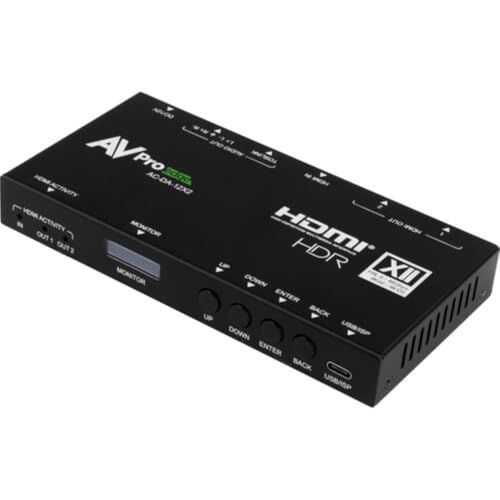
- One HDMI input to two outputs
- Supports up to 8K60 video
- 48 Gb/s bandwidth with EDID management
Best For: High-bandwidth HDMI 2.1 display systems
Analog CCTV Workhorse
AuviPal 4-Port BNC Video Splitter
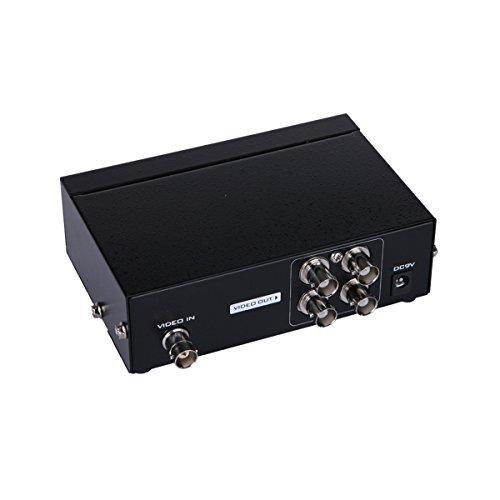
- One input and four BNC outputs
- Supports up to 1080p60 analog video
- Metal housing with adapter and manual
Best For: CVBS CCTV and analog monitoring systems
Long-Run SDI Distribution
AVMATRIX SD1141 1x4 SDI Splitter

- Supports SD, HD, and 3G-SDI
- Reclocks all four outputs
- Long-distance transmission specifications
Best For: Broadcast and production SDI installations
Best Powered RCA Pick
4-Way Composite A/V Distribution Amplifier

- One RCA input feeds four outputs
- Powered amplification for longer connections
- Compact metal housing with color-coded ports
Best For: Analog composite multi-display and audio setups
Best Antenna Distribution Option

- Distributes one line to up to eight devices
- Lists +4 dB boost per output
- Supports OTA antenna and standard cable signals
Best For: Multi-room TV antenna or cable distribution
Best Simple RCA Splitter
MT-VIKI 4-Way Composite A/V Splitter
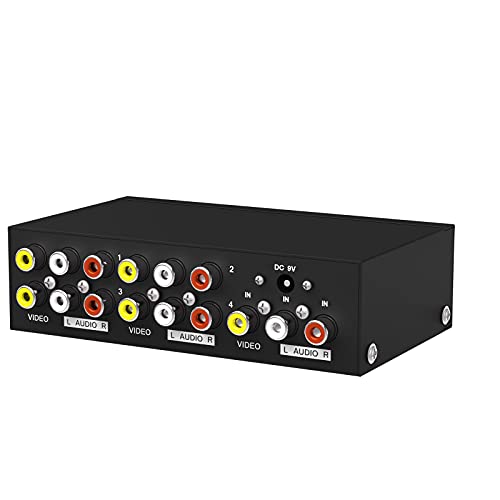
- Mirrors one RCA A/V input to four outputs
- Plug-and-play with no software
- Works with RCA-equipped TVs and DVRs
Best For: Simple analog composite distribution
Simple 8-Way Distribution
RCA 1-in-8 AV Splitter Amplifier

- Splits one RCA AV input to eight outputs
- Includes 9V 500mA U.S. plug adapter
- Designed for multi-screen analog monitoring
Best For: Basic home, retail, and commercial RCA monitoring setups
Compact Active Duplication

- Mirrors one 3-RCA source to eight outputs
- Powered design for longer-distance connections
- Metal housing with anti-skid feet
Best For: Multi-monitor analog AV distribution and rack-adjacent installations
Installer-Friendly 8-Way Splitter
DTECH Powered RCA AV Distributor

- Splits one composite AV source to eight outputs
- Active amplification supports longer connections
- Color-coded jacks and LED simplify setup
Best For: RCA-based TV, projector, gaming, capture, and home-theater systems
Compact Analog Splitter – Speco VIDDIST 1-in/4-out BNC Amplifier
Speco VIDDIST 1 in/4 Out Video Distribution Amplifier 1 Input to 4 Output Video Bnc Splitter
Check Price On AmazonThe Speco VIDDIST is a straightforward video distribution amplifier for sending one analog BNC video feed to four outputs. Its compact plastic housing and simple 1-in/4-out design suit basic surveillance or video distribution setups where BNC connectivity is required.
Best For: Basic analog BNC systems needing four distributed outputs in a compact enclosure.
Pros:
- Splits one BNC input to four BNC outputs.
- Compact footprint measuring approximately 4.5 inches wide, 1 inch high, and 3.5 inches deep.
- Simple, purpose-built distribution amplifier design.
Cons:
- Plastic construction may be less rugged than a metal enclosure.
- Supplied notes do not specify supported resolution or signal formats.
The VIDDIST is a practical choice when your installation uses BNC video and needs a basic four-way distribution point without extra signal-management features.
Next-Gen HDMI Distribution – 1×2 HDMI 2.1b 8K Amplifier
This 1×2 HDMI 2.1b distribution amplifier is designed for modern digital video systems that need one HDMI source routed to two displays. With up to 8K60 support, 48 Gb/s bandwidth, EDID management, and multichannel digital audio support, it targets high-bandwidth home theater and professional AV installations.
Best For: HDMI 2.1 systems distributing a high-resolution source to two displays.
Pros:
- Supports resolutions up to 8K at 60 Hz.
- Provides 48 Gb/s video bandwidth.
- Includes extended EDID management and multichannel digital audio support.
- Includes a 12V power supply, terminal block, and mounting brackets.
Cons:
- Limited to two HDMI outputs.
- Requires a 12V DC power supply.
Choose this model when HDMI 2.1 bandwidth and high-resolution output matter more than having a larger number of display connections.
Analog CCTV Workhorse – AuviPal 4-Port BNC Video Splitter
The AuviPal 4-port BNC splitter is a video distribution amplifier for analog monitoring systems. It accepts one BNC video input and sends the signal to four outputs, with support for up to 1080p at 60Hz and compatibility with PAL, NTSC, and SECAM formats.
Best For: Analog CCTV, television studio, and monitoring installations using CVBS video.
Pros:
- Distributes one input to four BNC-compatible devices.
- Supports resolutions up to 1080p at 60Hz.
- Works with PAL, NTSC, and SECAM analog formats.
- Includes a metal housing, US power adapter, manual, and one-year warranty.
Cons:
- Not compatible with SDI or digital signals.
- Connected cameras must be set to CVBS mode for compatible output.
For a conventional analog security system, the AuviPal offers useful format compatibility and a durable metal enclosure, provided your equipment does not use SDI or digital video.
Long-Run SDI Distribution – AVMATRIX SD1141 1×4 SDI Splitter
The AVMATRIX SD1141 is a professional video distribution amplifier for routing one SDI input to four outputs. It automatically detects HD, SD, and 3G-SDI signals, reclocks every output, and is designed for long cable runs up to 400 meters for SD, 200 meters for HD, and 120 meters for 3G-SDI.
Best For: Broadcast, production, and installed AV systems requiring four SDI outputs and extended transmission distances.
Pros:
- Supports SD, HD, and 3G-SDI signal detection.
- Provides four outputs with signal reclocking.
- Specified transmission distances reach 400m for SD, 200m for HD, and 120m for 3G-SDI.
- Includes detachable wall-mounting brackets and a three-year warranty.
Cons:
- Uses SDI connectors rather than BNC analog or HDMI connections.
- Requires a 17V DC input.
The SD1141 is the strongest fit for SDI workflows where signal integrity over long runs is important. Its reclocking and format detection add practical value for production and broadcast distribution.
Best Powered RCA Pick – 4-Way Composite A/V Distribution Amplifier
If you need a video distribution amplifier for duplicating one analog composite source across several displays, the DTECH FJ104-US provides one RCA input and four RCA outputs. Its powered design includes signal amplification for clearer picture and audio over longer connections.
Best For: Multi-monitor setups, gaming consoles, projectors, powered speakers, and dubbing projects using composite RCA connections.
Pros:
- Splits one three-RCA audio/video signal to four outputs.
- Powered amplifier is designed to support clearer images and reliable audio over longer runs.
- Metal housing, anti-skid feet, LED indicator, and color-coded jacks support practical installation.
- Compact design and included AC 9V adapter simplify placement and setup.
Cons:
- Works with analog RCA composite connections rather than newer digital video formats.
- Requires an AC power connection.
Choose this model when your setup centers on legacy composite video and you want one source mirrored to four displays or audio systems. Its powered construction makes it a more suitable choice for distribution than a basic passive splitter.
Best Antenna Distribution Option – 8-Port TV Signal Amplifier
For distributing an over-the-air antenna or cable signal to multiple televisions, this 8-port video distribution amplifier provides eight outputs with a listed +4 dB boost per port. It is designed to help limit signal loss, snow, and digital pixelation when serving several locations.
Best For: Homes or installations that need to connect up to eight TVs or devices to one standard antenna or cable line.
Pros:
- Supports distribution to up to eight devices.
- Provides a listed +4 dB boost per port to help compensate for split-related signal loss.
- Compatible with standard and digital cable services and OTA antenna reception.
- Small form factor supports installation in confined spaces.
Cons:
- Not compatible with amplified antennas or systems using a pre-amplifier.
- Not intended for satellite TV.
- Power supply is for indoor use, and connection cables are sold separately.
This is the most appropriate pick when the source is an antenna or standard cable line rather than an RCA device. Confirm that your system does not already use an amplifier or preamp before installation.
Best Simple RCA Splitter – MT-VIKI 4-Way Composite A/V Splitter
The MT-VIKI 104AV is a straightforward video distribution amplifier-style solution for mirroring one composite RCA audio/video source to four outputs. Its plug-and-play design requires no software and works with devices that use RCA inputs.
Best For: Basic DVR, TV, and other RCA-connected setups that need the same audio and video signal sent to four destinations.
Pros:
- Duplicates one audio/video input across four output sets.
- Plug-and-play operation requires no software.
- Compatible with devices using RCA inputs, including TVs and DVRs.
Cons:
- May be susceptible to noise near routers, televisions, power supplies, or other transmitters.
- Ground-loop issues can introduce noise.
- Designed for composite RCA connections, not modern digital video inputs.
This model suits uncomplicated legacy AV distribution where ease of use matters more than advanced controls. Plan the placement carefully and check for grounding issues if you notice noise after connecting the system.
Simple 8-Way Distribution – RCA 1-in-8 AV Splitter Amplifier
If you need a straightforward video distribution amplifier for sharing one analog RCA source across several displays, this RCA splitter provides one audio/video input and up to eight outputs. It is suited to multi-screen monitoring with compatible composite AV equipment.
Best For: Home, retail, or commercial setups that need one RCA source distributed to up to eight screens or audio/video systems.
Pros:
- Converts one set of RCA audio and video input into up to eight output sets
- Designed for multi-screen monitoring in stores, supermarkets, audio shops, and homes
- Includes a U.S. standard plug adapter with 9V 500mA output
- Provides eight output ports in a dedicated splitter enclosure
Cons:
- Works with analog RCA connections rather than modern digital video formats
- Does not support remote sensing
This is a practical choice when your installation centers on composite RCA equipment and you want a simple 1-in/8-out arrangement. Confirm that your source and displays use compatible RCA connections before buying.
Compact Active Duplication – MT-VIKI 8-Way RCA AV Splitter
The MT-VIKI is an active video distribution amplifier for duplicating one composite RCA audio/video source to eight outputs. Its powered design is intended to help maintain clear video and audio over longer connections, while the compact metal housing fits behind a monitor or in a rack.
Best For: Installations that need one RCA source mirrored to eight monitors or audio/video destinations.
Pros:
- Duplicates one 3-RCA input to eight audio/video outputs
- Active signal booster design supports longer-distance connections
- Durable metal case with anti-skid feet and heat dissipation
- Includes a DC 9V power adapter and requires no extra software
Cons:
- Mirrors one source to eight outputs; it is not an 8-to-1 switcher
- Limited to analog RCA composite audio and video connections
Choose this model when consistent one-source mirroring is more important than switching between multiple inputs. Its powered, compact construction makes it convenient for monitor banks and rack-adjacent installations.
Installer-Friendly 8-Way Splitter – DTECH Powered RCA AV Distributor
For composite setups requiring one source across multiple displays or speakers, the DTECH video distribution amplifier splits one RCA audio/video signal into eight outputs. It adds an active amplifier, color-coded jacks, and an LED indicator to simplify installation and monitoring.
Best For: TV, projector, receiver, gaming, capture, and home-theater installations using analog RCA connections.
Pros:
- Distributes one composite audio/video input to eight outputs
- Amplified design supports clearer video and reliable audio over longer distances
- Color-coded RCA jacks and LED indicator make connections easier to verify
- Metal housing, anti-skid feet, and included DC 9V adapter suit permanent setups
Cons:
- Designed for RCA composite signals, not HDMI or other digital formats
- Requires external power for active distribution
The DTECH stands out for setup convenience among these analog splitters. Its connection indicators and broad compatibility notes make it a sensible option when several types of RCA-equipped AV hardware will be connected.
How We Picked the Best Video Distribution Amplifiers
We organized this roundup around the connections and workloads buyers are most likely to encounter: HDMI for newer home entertainment and commercial displays, SDI for professional video, BNC for surveillance, composite RCA for legacy equipment, and coaxial antenna distribution. We also considered output count, powered operation, compatibility, and whether the design suits short desktop connections or a larger fixed installation.
A distribution amplifier is most useful when it preserves a source signal across several outputs. However, every system has limits. The source, cables, display resolutions, signal format, and cable length must all be compatible with the selected unit.
Quick Comparison
- HDMI: Best for modern televisions, projectors, receivers, and media devices.
- SDI: Suited to broadcast, production, and professional video workflows.
- BNC: A practical choice for CCTV and analog video monitoring systems.
- Composite RCA: Works with older televisions, DVD players, game systems, and AV equipment.
- Antenna coax: Designed to distribute TV antenna signals to multiple devices.
Key Buying Factors for a Video Distribution Amplifier
Input and Output Connections
Start by matching the connector type to your source and displays. HDMI, SDI, BNC, RCA, and F-type coax connections are not interchangeable without additional conversion hardware. Also check whether the unit distributes video only or carries stereo audio through RCA connections.
Resolution and Signal Format
For HDMI, verify the supported resolution, refresh rate, and HDMI generation. An amplifier that handles 4K or HDMI 2.1 features may be necessary for newer gaming and home theater equipment. SDI users should confirm whether the device supports SD, HD, 3G-SDI, or another required standard.
Number of Outputs
Choose an output count that covers your current setup while leaving reasonable room for expansion. Four-output models suit small installations, while eight-output units are more practical for classrooms, signage, surveillance rooms, or multi-room distribution.
Power and Cable Distance
Powered models can help maintain signal strength as one input feeds multiple destinations, especially with longer cable runs. Check the included adapter requirements and use cables appropriate for the format and distance. Passive splitters may be sufficient for short, simple connections but are not always a substitute for an active amplifier.
Who Should Buy Which Video Distribution Amplifier?
Choose an HDMI model for current televisions, streaming devices, game consoles, and projectors. Choose an SDI unit for cameras, switchers, and production equipment. Choose a BNC amplifier for compatible CCTV or analog monitoring hardware.
Choose a powered RCA model when distributing composite video and stereo audio from older AV equipment. An eight-output design is preferable when many displays or destinations are involved, while a four-output unit is typically simpler for a smaller room. For over-the-air television, select the coaxial antenna amplifier instead of an AV splitter.