The best portable streaming encoders make it easier to turn camera footage into a reliable live broadcast without carrying a full production rack. The right model can simplify switching, encoding, recording, and platform delivery for events, creators, educators, and mobile production teams.
This roundup compares 10 options ranging from compact HDMI encoders to touchscreen systems with multi-camera inputs, built-in streaming apps, and advanced NDI or SRT support. Use the guide below to match features, connectivity, and workflow requirements to your setup.
Best 10 Portable Streaming Encoders Picks for 2026
Best All-in-One Pick

- Portable encoder, switcher, monitor, and recorder
- Three HDMI inputs plus NDI, USB, and SD support
- Streams to up to three horizontal platforms
Best For: Mobile multicamera broadcasts and field production
Best Network-Format Flexibility
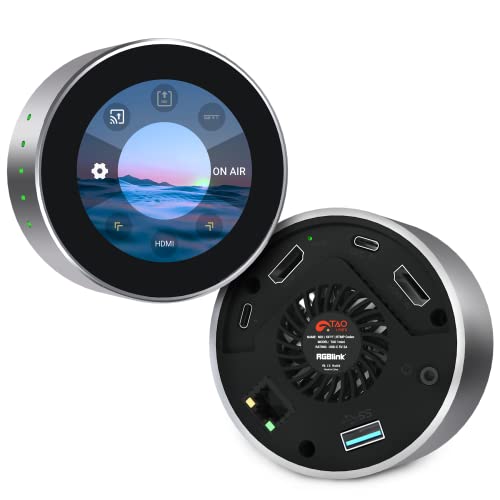
- Functions as both an NDI encoder and decoder
- Supports NDI, SRT, RTMP, RTMPS, and RTSP
- Accepts HDMI, UVC, network, and external audio inputs
Best For: NDI production and flexible network video workflows
Best Multicamera Touchscreen Studio
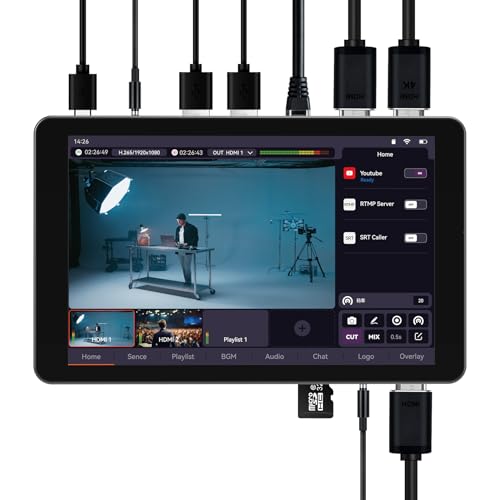
- Integrated 8-inch switcher, encoder, recorder, and monitor
- Accepts 4K input and up to eight signal sources
- Supports horizontal and vertical platform streaming
Best For: Laptop-free multicamera events and mobile productions
Best Compact Gaming Encoder

- 4K HDMI passthrough for PC-free game streaming
- Converts HDMI to NDI and decodes IP video
- Supports SRT, RTMP(S), RTSP, and H.264/H.265
Best For: Compact gaming and professional IP video workflows
Best All-in-One Studio

- 4K switcher, encoder, recorder, and touchscreen monitor
- Four HDMI inputs plus USB-C and USB-A sources
- Cellular bonding, NDI/SRT, and ISO recording
Best For: Multi-camera mobile productions and creators needing a complete live studio
Best Lightweight HDMI Encoder

- 47-gram design with 3.4W power consumption
- 4K30 HDMI input, loop-out, and H.264/H.265 streaming
- Wi-Fi 6, roaming, and broad protocol support
Best For: Single-source mobile HDMI streaming and low-power field setups
Best for Field Production

- Standalone switcher, encoder, recorder, and monitor
- HDMI, USB, IP, NDI HX, SRT, and mobile-source inputs
- AMOLED touchscreen and dual hot-swappable NP-F slots
Best For: Advanced mobile broadcasts with multiple sources and production graphics
Ultra-Portable Pick

- 32g design with 2.4W power draw
- H.265/H.264 and flexible streaming protocols
- USB power-bank support for mobile setups
Best For: Compact, mobile 1080p streaming
4K Workflow Pick

- Supports 1x 4K30 or 4x 1080p30 output
- OLED status display and HDMI loop-out
- Works with SRT, RTMP, RTSP, HTTP, UDP, and ONVIF
Best For: Multi-output 4K and 1080p production
Mobile 60fps Pick
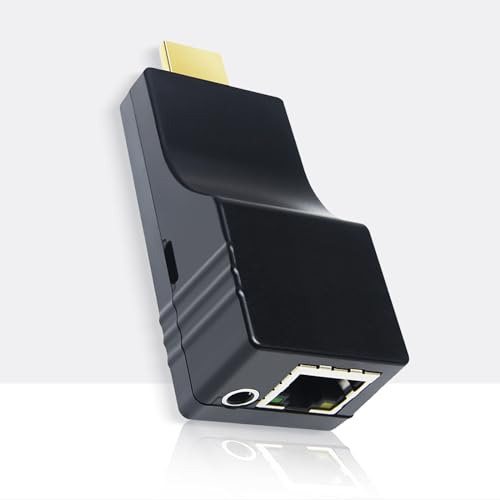
- 1080p60 encoding with up to 16Mbps bitrate
- 32g body and 2.4W USB-friendly power use
- Cloud control and real-time OSD customization
Best For: Portable 60fps livestreaming
Best All-in-One Pick – YoloBox Pro
The YoloLiv YoloBox Pro is a practical choice for creators who want portable streaming encoders with switching, monitoring, recording, and streaming built into one device. Its three HDMI inputs, 8-inch touchscreen, multiple connectivity options, and built-in battery support multicamera productions without requiring a laptop.
Best For: Mobile multicamera broadcasts, field production, events, and creators streaming to several platforms.
Pros:
- Combines an encoder, switcher, monitor, and recorder in one portable unit.
- Supports three HDMI inputs, USB, USB-C, SD cards, and one NDI signal input.
- Streams to up to three horizontal platforms without subscription fees.
- Includes useful built-in tools such as overlays, cropping, instant replay, and auto-switching.
Cons:
- Bonding features may involve additional charges.
- Its streaming output is aimed at 1080p workflows rather than 4K output.
The YoloBox Pro stands out when convenience matters most. The large touchscreen and broad input selection make it easier to manage a multicamera stream on location, while the 10,000mAh battery provides more than four hours of stated use.
Best Network-Format Flexibility – RGBlink TAO 1Mini
The RGBlink TAO 1Mini is a compact option among portable streaming encoders for users who need flexible network video conversion. It can encode or decode NDI, handle HDMI and USB-C UVC sources, record through USB storage, and support several professional streaming protocols.
Best For: NDI-based production, network video workflows, and users needing encoder and decoder functions in one compact device.
Pros:
- Works as both an NDI encoder and an NDI decoder.
- Supports NDI, SRT, RTMP, RTMPS, and RTSP workflows with H.264 and H.265 encoding.
- Accepts HDMI, USB-C UVC, network streams, and external audio inputs.
- Can synchronize streams to multiple portals, with support for up to 32 destinations as stated.
Cons:
- Its 2.1-inch circular touchscreen is relatively small for detailed control.
- Some smartphone audio configurations require a TRRS adapter cable, which is not included.
- External USB storage is needed for USB-based recording.
The TAO 1Mini is best suited to technically varied setups rather than simple plug-and-play streaming. Its encoder/decoder combination, multiple protocols, and low-latency network options give it strong value for small studios and distributed video systems.
Best Multicamera Touchscreen Studio – SPROLINK NeoLIVE MD8
The SPROLINK NeoLIVE MD8 is designed for creators seeking portable streaming encoders with an integrated live-production workflow. It combines switching, encoding, recording, monitoring, and platform apps in an 8-inch touchscreen device, while accepting 4K input and multiple local or network sources.
Best For: Churches, schools, sports teams, event producers, and creators running multicamera streams without a laptop.
Pros:
- Combines an encoder, switcher, recorder, and touchscreen monitor in one device.
- Accepts 4K HDMI input, 1080p sources, UVC cameras, USB drives, and up to four remote network streams.
- Supports horizontal and vertical streaming workflows for platforms including YouTube, TikTok, and Instagram.
- Offers wireless mobile integration, dual recording, Wi-Fi, Ethernet, and an 8,000mAh battery.
Cons:
- HDMI output is limited to 1080p even when using 4K input.
- The supplied details list both a three-year warranty claim and a one-year manufacturer warranty, so coverage should be verified.
The NeoLIVE MD8 is a strong fit when a portable unit needs to handle more than basic encoding. Its source capacity, built-in apps, overlays, portrait support, and battery make it particularly useful for organized live productions away from a computer.
Best Compact Gaming Encoder – ZowieBox
The ZowieBox is a compact choice among portable streaming encoders for gaming, webcams, PTZ cameras, and professional IP video. It provides 4K HDMI passthrough, HDMI-to-NDI conversion, network decoding, and support for several streaming protocols in a small aluminum enclosure.
Best For: PC-free game streaming, low-latency NDI workflows, and compact HDMI-to-IP installations.
Pros:
- Supports up to 4K capture with zero-lag HDMI passthrough.
- Converts HDMI signals to NDI|HX3, NDI|HX2, or NDI and can also decode IP video.
- Supports SRT, RTMP, RTMPS, RTSP, and H.264/H.265 encoding.
- Offers USB-C power, PoE, DC output, web-based control, and tripod mounting.
Cons:
- Encoder and decoder modes cannot run simultaneously.
- Full NDI signals are not supported.
- USB capture-card functionality is not currently supported.
The ZowieBox prioritizes compact installation and flexible IP connectivity over an all-in-one touchscreen studio experience. Its passthrough design is especially useful for gaming, while NDI, SRT, and RTMP support makes it adaptable to broader network production setups.
Best All-in-One Studio – YoloBox Ultra
For creators and production teams who want portable streaming encoders without a laptop, the YoloBox Ultra combines switching, encoding, recording, monitoring, and connectivity in one 4K-capable unit. Its built-in touchscreen and support for horizontal and vertical platforms make it adaptable for varied live broadcasts.
Best For: Multi-camera creators, churches, schools, sports teams, and mobile productions needing an all-in-one 4K workflow.
Pros:
- Combines a 4K encoder, switcher, recorder, and 8-inch touchscreen monitor.
- Supports four HDMI inputs plus USB-C and USB-A sources, with PiP, overlays, scoreboards, and instant replay.
- Can combine up to five network connections, including cellular, Wi-Fi, and Ethernet, for more resilient streaming.
- Offers ISO recording of individual video inputs for greater post-production control.
Cons:
- Its broad feature set and multi-source workflow may be more than simple single-camera streamers need.
- Cellular bonding may involve additional charges.
- The supplied notes describe a specific dual-charger recovery procedure if the battery becomes stuck on the flashing logo.
The YoloBox Ultra is a strong choice when portability means replacing several pieces of production hardware. It is especially compelling for teams that need multi-camera switching, vertical and horizontal output, and network redundancy in the field.
Best Lightweight HDMI Encoder – DDMALL HEC-20
The DDMALL HEC-20 is one of the most compact portable streaming encoders for HDMI-based setups. It accepts up to 4K at 30Hz, supports several streaming protocols, and can draw power through USB from a signal source or power bank for flexible field use.
Best For: Mobile HDMI streaming setups that prioritize low power consumption, 4K pass-through, and broad protocol support.
Pros:
- Weighs 47 grams and uses approximately 3.4 watts, making it easy to carry and power.
- Supports 4K at 30Hz input, loop-out, and streaming with H.264 or H.265 compression.
- Includes HDMI loop-out with zero-delay pass-through for monitoring or downstream equipment.
- Supports Wi-Fi 6, Wi-Fi roaming, simultaneous streaming to up to four platforms, and protocols including SRT, RTMP, RTMPS, HLS, and RTSP.
Cons:
- It has one HDMI port and one USB port, so it is intended for a simpler signal chain than multi-input production systems.
- Its listed 4K capability is limited to 30Hz.
- Power depends on a USB connection to the signal source or a mobile power bank rather than an included power adapter.
Choose the HEC-20 when you need a small, efficient bridge from one HDMI source to online platforms. Its protocol range and roaming support add flexibility, while the single-input design keeps the setup straightforward.
Best for Field Production – Magewell Director Mini
The Magewell Director Mini is designed for producers who need more control than a basic encoder provides. Among portable streaming encoders, it stands out as a compact standalone switcher, recorder, monitor, and streamer with HDMI, USB, IP, and mobile-source support.
Best For: Field producers and advanced creators building polished broadcasts with multiple cameras, graphics, remote sources, and recording.
Pros:
- Combines switching, encoding, recording, monitoring, and streaming without requiring an external PC.
- Supports two HDMI inputs, two USB-A inputs, and up to three simultaneous IP sources such as SRT, RTMP, RTSP, and NDI HX.
- Its 5.44-inch AMOLED touchscreen supports scene control, previewing, and monitoring.
- Offers scenes with graphics, media, webpages, chroma key, timers, scoreboards, and overlays, plus recording to SD cards or internal storage.
Cons:
- Hardware encoding is specified up to 1080p60 rather than 4K.
- NP-F batteries and USB cellular modems are not included.
- At 2.1 pounds, it is less lightweight than a basic HDMI encoder.
The Director Mini is a capable middle ground between a simple encoder and a larger production system. Its extensive input options, touchscreen workflow, and hot-swappable battery support make it particularly useful for demanding mobile broadcasts.
Ultra-Portable Pick – DDMALL HEV-2K HDMI Encoder
For portable streaming encoders where size, power draw, and protocol flexibility matter, the DDMALL HEV-2K is built for mobile setups. This 32g HDMI encoder supports up to 1080p60 input, encodes at up to 1080p30, and can run from an HDMI source or USB power bank.
Best For: Mobile livestreaming, compact installations, teaching, telemedicine, gaming, and drone video transmission.
Pros:
- Exceptionally compact 75 x 32 x 22mm design and 2.4W power consumption.
- Supports H.265 and H.264 encoding with RTMP, RTMPS, SRT, HLS, and RTSP.
- Supports cloud management, DDNS, remote control, and web-based input preview.
- Can broadcast to multiple platforms simultaneously.
Cons:
- Encoding output is limited to 1080p30 despite supporting 1080p60 input.
- Its broad feature set may require more setup than a basic plug-and-stream device.
The HEV-2K stands out when portability and low-power operation are more important than 4K support. It is a practical choice for creators and installers who need flexible network protocols in a very small package.
4K Workflow Pick – ORIVISION EH1401 HDMI Encoder
The ORIVISION EH1401 is a strong option among portable streaming encoders for users who want flexible output and local monitoring. It accepts up to 4K30 HDMI input and can provide either one 4K30 stream or four simultaneous 1080p30 streams, depending on the selected mode.
Best For: Live production, IPTV, digital signage, online education, broadcast meetings, and multi-output streaming workflows.
Pros:
- Offers selectable 1x 4K30 or 4x 1080p30 output modes.
- OLED display shows the IP address, resolution, and encoding status.
- HDMI loop-out supports local monitoring during streaming.
- Includes RTMP, RTMPS, SRT, RTSP, HTTP, UDP, and ONVIF compatibility.
Cons:
- 4K input must be enabled through the web interface because the factory EDID defaults to 1080p.
- Its 0.63kg weight and larger dimensions are less travel-friendly than ultra-mini encoders.
Choose the EH1401 when output flexibility and monitoring features outweigh the need for the smallest possible enclosure. Its OLED screen, loop-out, and multi-stream modes make it particularly useful in organized production or installation environments.
Mobile 60fps Pick – DDMALL CEV-2K Cloud Encoder
The DDMALL CEV-2K is designed for portable streaming encoders users who need 1080p60 output in a small, low-power package. Its 32g HDMI-over-IP design can draw power from compatible HDMI sources, USB, or a mobile power bank while supporting up to 16Mbps video bitrate.
Best For: Mobile Facebook, YouTube, Twitch, IPTV, and low-latency HDMI-over-IP streaming.
Pros:
- Supports up to 1080p60 input and 1080p60 encoding output.
- Ultra-compact 75 x 32 x 22mm body with 2.4W power consumption.
- Supports H.265, H.264, SRT, RTSP, RTMP, RTMPS, TCP, and UDP.
- Offers real-time OSD customization and remote cloud control.
Cons:
- It does not provide 4K encoding.
- Power draw from an HDMI port depends on the connected source being compatible.
The CEV-2K is the better fit of the two compact DDMALL options when smooth 60fps encoding is a priority. Its USB power-bank support, cloud controls, and low-latency protocol options make it well suited to moving or hard-to-reach streaming setups.
How We Picked These Portable Streaming Encoders
We selected these Portable Streaming Encoders based on their input and output options, supported video resolutions, streaming protocols, portability, control methods, and suitability for real-world broadcasts. The list includes dedicated HDMI encoders as well as integrated switchers that combine encoding, switching, recording, and platform access in one device.
We also considered workflow flexibility. NDI and SRT can be valuable for networked or long-distance production, while RTMP and RTMPS remain widely compatible with major streaming platforms. HDMI loop-through, wireless connectivity, touchscreen controls, and multi-camera support can further reduce the equipment needed on location.
Quick Comparison
- Best for all-in-one production: YoloLiv YoloBox Pro and YoloBox Ultra offer integrated switching and streaming controls.
- Best for compact HDMI-to-network conversion: RGBlink, ZowieBox, and the dedicated 4K encoders suit simpler signal paths.
- Best for multi-camera mobile studios: SPROLINK NeoLIVE MD8 and Magewell Director Mini provide broader production controls.
- Best for protocol flexibility: DDMALL models support combinations of RTMP, RTMPS, SRT, RTSP, HLS, UDP, or related network workflows.
Key Buying Factors for Portable Streaming Encoders
Inputs, Resolution, and Frame Rates
Start with the cameras and sources you already own. Confirm the encoder accepts the required HDMI format, resolution, and frame rate. A 4K input does not always mean 4K streaming, so check whether the device encodes at 4K or simply passes the signal through. If you use several cameras, verify the number and type of available inputs.
Protocols and Platform Compatibility
RTMP or RTMPS is typically sufficient for direct streaming to services such as YouTube, Facebook, and Twitch. SRT is useful when you need resilient contribution over unpredictable networks, while NDI can simplify video transport across a compatible local network. Check whether the required protocol is supported for both sending and receiving video.
Connectivity and Reliability
Consider wired Ethernet, Wi-Fi, cellular options, USB, and HDMI loop-out. Wired networking is generally preferable for critical broadcasts, while Wi-Fi and cellular connectivity improve mobility. Look for recording, stream backup, bonded connections, or dual-network support if losing a live feed would be costly.
Controls, Audio, and Portability
Touchscreens and built-in apps can make field production faster, but dedicated encoders may be smaller and easier to integrate with an existing switcher. Check audio inputs, monitoring, cooling, battery operation, mounting options, and the device’s power requirements before buying.
Who Should Buy Which Portable Streaming Encoders?
Choose an all-in-one touchscreen unit if you want to switch cameras, add graphics, record locally, and publish without a laptop. Choose a compact single-input encoder if your priority is converting one HDMI source into a dependable network stream. NDI-focused models are best for compatible studio or venue networks, while SRT-capable devices suit remote contribution and challenging internet connections.
For frequent mobile productions, prioritize simple controls, low setup time, power flexibility, and multiple network options. For permanent installations, protocol support, loop-through, remote management, and integration with existing cameras may matter more than a built-in screen. Before ordering, confirm the exact model’s maximum encoding resolution, platform requirements, firmware support, and included accessories.