The best loop stations under $1,000 can turn a simple instrument setup into a complete performance rig. Whether you need basic overdubbing, built-in rhythms, hands-free control, or a tabletop workstation, this roundup covers practical options for different playing styles.
We selected 10 loopers ranging from compact pedals to advanced multi-track and tabletop units. Use the buying guide below to compare recording time, controls, rhythm features, connectivity, and ease of use before choosing.
Best 10 Loop Stations Under 1000 Picks for 2026
Compact Pro Looping

- 32-bit processing for detailed loop audio
- 13 hours of stereo recording and 99 memories
- Rhythms, LCD display, USB, and MIDI connectivity
Best For: Compact professional looping with extensive control options
Feature-Packed Practice Looper

- 300 minutes of stereo recording in 100 slots
- 220 grooves across 11 built-in drum styles
- Color display, time stretch, USB, and headphone out
Best For: Solo practice, songwriting, and rhythm-backed performances
Dual-Track Performance Control

- Dual-track looping with onboard mixing
- 13 hours of recording and 99 phrase memories
- Rhythms, Loop FX, MIDI, and USB WAV management
Best For: Live performers needing deeper arrangement control
Simple Tuner-and-Looper Value
LEKATO Looper Pedal with Tuner

- 40 minutes total recording across nine loops
- 48 kHz/24-bit uncompressed audio with dry-through
- Built-in tuner and USB WAV transfer
Best For: Budget-conscious guitarists and bassists
Best Simple Starter

- 12 minutes of stereo recording
- Circular LED loop-status indicator
- Includes power adapter and cables
Best For: Beginners seeking straightforward stereo looping
Best Advanced Multitrack
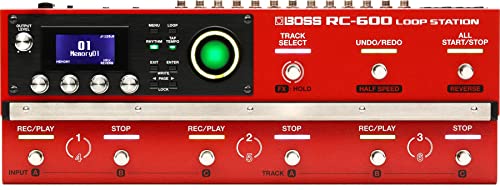
- Six stereo phrase tracks
- Two XLR inputs with phantom power
- 99 phrase memories and rhythm guide
Best For: Complex live performances with multiple audio sources
Best Tabletop Performance

- Two simultaneous stereo phrase tracks
- Eight input and track effects
- 64 phrase memories with MIDI support
Best For: Hands-on tabletop looping with creative effects
Best for Live Looping

- Five stereo tracks for layered performances
- Two XLR mic inputs with phantom power
- Rhythm generator and USB connectivity
Best For: Live performers needing extensive tabletop control
Best Rhythm-Focused Looper

- 280 preset rhythm styles across genres
- 16 drum kits and two-track operation
- Six hours of stereo recording time
Best For: Performers wanting compact, structured rhythm accompaniment
Best Simple Looper Pedal

- Straightforward record and overdub controls
- 12 minutes of stereo recording time
- Battery included with phrase memory retention
Best For: Players learning basic phrase layering
Compact Pro Looping – BOSS RC-5 Loop Station
For musicians comparing loop stations under 1000, the BOSS RC-5 is a compact choice with professional-grade audio processing, extensive phrase storage, rhythms, and flexible control options. Its single-track design keeps operation focused while still offering up to 13 hours of stereo recording.
Best For: Guitarists and performers who want a pedalboard-friendly looper with high-quality audio, built-in rhythms, and MIDI or USB integration.
Pros:
- 32-bit AD/DA conversion and 32-bit floating-point processing support detailed audio capture and playback.
- Stores up to 99 phrase memories and provides 13 hours of stereo recording.
- Includes 57 rhythms with A/B variations, seven drum kits, reverse playback, and a multicolor LCD.
- Offers USB, MIDI, and external footswitch or expression-pedal support.
Cons:
- Uses a single-track looping configuration rather than dual-track operation.
- Optional PSA adapter is needed for extended sessions if you do not want to use a 9V battery.
The RC-5 is a strong all-around option when compact size and polished sound matter more than multitrack flexibility. Its display, memory, rhythms, and connectivity make it suitable for both practice and performance setups.
Feature-Packed Practice Looper – FLAMMA FF20 Looper Pedal
The FLAMMA FF20 stands out among loop stations under 1000 for its combination of long recording capacity, a built-in drum machine, and practice-focused features. Its full-color screen and dual footswitches are designed to make loop control easier during playing.
Best For: Solo guitarists, bassists, home musicians, and performers who want drums, silent headphone practice, and generous loop storage in one pedal.
Pros:
- Provides 300 minutes of stereo recording across 100 loop memory slots.
- Includes 220 drum grooves covering 11 styles.
- Full-color 2-inch screen displays loop status, BPM, drum patterns, and settings.
- Offers time stretch, auto record, USB WAV transfer, and headphone output.
Cons:
- Its larger 5.22-by-4.34-inch footprint may require more pedalboard space.
- Operation depends on a 9V corded power source rather than battery power.
With its unusually large memory capacity and integrated rhythm section, the FF20 is especially versatile for practicing, songwriting, and solo performance. It is a practical pick if screen visibility and headphone monitoring are priorities.
Dual-Track Performance Control – BOSS RC-500 Loop Station
For shoppers evaluating loop stations under 1000, the BOSS RC-500 adds dual-track looping, onboard mixing, and deeper performance control to the BOSS workflow. It combines high-resolution processing with phrase storage, rhythms, loop effects, and USB file management.
Best For: Live performers and experienced loopers who need dual-track control, onboard effects, MIDI connectivity, and extensive rhythm options.
Pros:
- Dual-track design supports more flexible live arrangements and onboard mixing.
- Uses 32-bit AD/DA conversion and 32-bit floating-point processing.
- Includes 99 phrase memories, 13 hours of stereo recording, and USB WAV backup or loading.
- Provides 57 rhythms, 16 drum kits, reverse playback, and Loop FX such as repeat and scatter.
Cons:
- Its 3.4-pound weight and larger dimensions make it less compact than a single-switch pedal.
- Power is corded, and the BMIDI-5-35 adapter cable for expanded MIDI control is available separately.
The RC-500 is the more capable choice for performers who have outgrown basic single-track looping. Its dual-track layout and effects are useful for building layered arrangements, while the memory and USB tools support repeatable set preparation.
Simple Tuner-and-Looper Value – LEKATO Looper Pedal with Tuner
The LEKATO Looper is a straightforward option among loop stations under 1000, combining basic loop creation with a built-in tuner and USB file transfer. Its 40-minute total recording time and unlimited overdubbing cover essential practice and performance needs without a complex interface.
Best For: Guitarists and bassists who want an affordable, compact looper with tuning, simple foot control, and uncompressed audio.
Pros:
- Stores nine loops with up to 40 minutes of total recording and 10 minutes per loop.
- Supports 48 kHz/24-bit uncompressed audio and analog dry-through.
- Built-in tuner operates continuously without interrupting the phrase.
- USB enables WAV import and export, while one-button foot commands support unlimited overdubbing.
Cons:
- Offers less recording capacity and fewer integrated performance features than the other listed models.
- Its controls are intentionally simple, with a single knob primarily handling loop playback volume.
The LEKATO is a sensible entry-level choice when core looping, tuning, and USB transfer matter more than drum machines or advanced effects. Its compact form and simple controls make it approachable for practice and basic live use.
Best Simple Starter – Boss RC-1 Loop Station
If you want one of the most straightforward loop stations under 1000, the Boss RC-1 offers an easy-to-read interface and essential looping features. Its circular 24-segment LED shows whether you are recording, overdubbing, or playing, while stereo connectivity supports instruments, effects, and amplifiers.
Best For: Beginners and performers who want simple stereo looping with a practical accessory bundle.
Pros:
- Up to 12 minutes of stereo recording time.
- Circular LED indicator clearly displays loop status.
- Recorded phrases remain in memory after power-off.
- Bundle includes a power adapter, instrument cable, patch cable, and picks.
Cons:
- Runs on a 9-volt battery for approximately 4.5 hours, or requires an optional AC adapter outside the included bundle accessories.
- Its compact design provides fewer advanced features than larger loop stations.
The RC-1 is a sensible pick when ease of use matters more than extensive effects or multitrack control. Stereo I/O and external footswitch support add flexibility without complicating the basic workflow.
Best Advanced Multitrack – Boss RC-600 Loop Station
For performers needing a powerful centerpiece among loop stations under 1000, the Boss RC-600 combines six stereo phrase tracks with extensive connectivity. It accommodates microphones, instruments, and line-level sources, making it suited to complex live arrangements.
Best For: Advanced live performers who need multitrack looping, microphone inputs, and rhythm-assisted setups.
Pros:
- Provides six stereo phrase tracks for layered performances.
- Includes two XLR microphone inputs with phantom power.
- Offers two stereo instrument/line input pairs.
- Includes 99 phrase memory presets and a rhythm guide.
Cons:
- The larger 17.13-inch-wide chassis may be less convenient for compact pedalboards.
- Its broad feature set may be more than beginners need.
- Requires corded electric power.
The RC-600 is the most capable option here for building elaborate performances from multiple sources. Its six-track architecture and microphone support make it a strong choice when a basic single-loop pedal is too limiting.
Best Tabletop Performance – BOSS RC-202 Loop Station
The BOSS RC-202 is a compelling tabletop choice among loop stations under 1000, especially for hands-on performances with guitar, keyboards, or other instruments. It combines two simultaneous stereo phrase tracks with dedicated controls, effects, memory storage, and expanded external control options.
Best For: Musicians and creators who prefer tabletop control for layered, effects-focused looping.
Pros:
- Two simultaneous stereo phrase tracks have dedicated controls and status indicators.
- Provides four input effects and four track effects simultaneously.
- Stores 64 phrase memories across eight banks.
- Supports optional footswitches, expression pedals, and MIDI connectivity.
Cons:
- Its tabletop design is less pedalboard-oriented than a conventional foot-operated looper.
- Optional footswitches or an expression pedal are needed for expanded hands-free control.
- Two phrase tracks offer less simultaneous track capacity than the RC-600.
Choose the RC-202 when fingertip access and creative effects are central to your workflow. Real-time loop saving and customizable playback settings make it particularly useful for performance setups that evolve on the fly.
Best for Live Looping – Boss RC-505 Mk2
For performers comparing loop stations under 1000, the Boss RC-505 Mk2 is a feature-rich tabletop option built around five stereo tracks. Its two XLR microphone inputs with phantom power, stereo line inputs, rhythm generator, and hands-on controls make it suited to layered vocal and instrumental performances.
Best For: Live performers who want extensive tabletop looping control and multiple microphone or line-input options.
Pros:
- Five stereo tracks support layered loop performances.
- Two XLR microphone inputs include phantom power.
- Includes rhythm-generation features and USB connectivity.
- Physical buttons and knobs provide direct control.
Cons:
- Tabletop operation is less compact than a standard stompbox.
- Its broader feature set may be more than simple looping requires.
The RC-505 Mk2 stands out when hands-on control, multiple inputs, and several simultaneous stereo tracks matter more than pedalboard portability.
Best Rhythm-Focused Looper – BOSS RC-10R
The BOSS RC-10R is a strong choice among loop stations under 1000 for players who want looping combined with arranged rhythms. It offers song-based looping, two-track operation, 280 preset rhythm styles, 16 drum kits, and a compact footprint.
Best For: Guitarists and performers who want backing rhythms and structured song sections in a small pedal.
Pros:
- Includes more than 280 preset rhythm styles.
- Sixteen drum kits provide varied rhythm sounds.
- Two-track operation supports two independent song parts.
- Offers six hours of stereo recording time and USB connectivity.
Cons:
- Its rhythm-focused design may be unnecessary for basic overdubbing.
- Push-button controls and the compact interface may feel less expansive than a tabletop looper.
Choose the RC-10R if dynamic rhythms and song-based structure are central to your performances; it delivers substantial accompaniment features without taking much pedalboard space.
Best Simple Looper Pedal – BOSS RC-1
For shoppers seeking straightforward loop stations under 1000, the BOSS RC-1 keeps the core looping workflow simple. It records, plays back, overdubs, and undoes or redoes loops, while its stereo connections and 24-segment indicator make it practical for guitar, bass, and keyboard players.
Best For: Players who want an accessible stompbox for basic phrase layering and practice.
Pros:
- Simple controls cover recording, playback, overdubbing, and undo/redo.
- Provides 12 minutes of stereo recording time.
- Stereo inputs and outputs support compatible setups.
- Includes a 9-volt battery and retains recorded phrases after power-off.
Cons:
- AC adapter is optional and sold separately.
- Its feature set is more limited than rhythm-focused or multi-track loopers.
The RC-1 is the most approachable option here for learning loop fundamentals, especially if you prefer a compact pedal over advanced rhythm or multi-track controls.
How We Picked the Best Loop Stations Under 1000
We focused on features that make a looper useful in real practice and performance situations: recording capacity, overdub behavior, rhythm tools, control layout, connectivity, portability, and learning curve. The selection includes straightforward pedals for beginners, rhythm-focused units, and more advanced loop stations for performers who need multiple tracks or expanded control.
We also considered how each design fits a particular workflow. A compact pedal may be ideal for guitarists who want reliable phrase looping, while a tabletop model can better suit vocalists, beatmakers, and electronic performers who need direct access to several loops.
Quick Comparison
| Best For | Look For |
|---|---|
| Beginners | Simple controls, clear status indicators, and dependable undo/redo |
| Guitarists | Footswitch access, tuner functions, durable construction, and easy phrase replacement |
| Rhythm-based practice | Built-in drum patterns, fills, tempo control, and song-oriented arrangements |
| Live performers | Multiple tracks, memory locations, external control, and flexible outputs |
| Tabletop creators | Hands-on controls, several loop channels, effects, and microphone or line inputs |
Key Buying Factors for Loop Stations Under 1000
Loop Capacity and Overdubs
Check both total recording time and the number of available phrases or tracks. Unlimited overdubs can be convenient, but dedicated tracks and undo/redo controls are more important when you need to manage a structured performance.
Rhythms and Tempo Control
Built-in drums can make practice more musical and reduce the need for a separate backing track. If you perform complete songs, look for pattern variety, fills, count-ins, quantization, and support for changing sections.
Control and Connectivity
Footswitch spacing, screen visibility, and the ability to connect an external foot controller can significantly affect live usability. Stereo inputs and outputs, microphone support, MIDI, USB, and auxiliary connections are valuable if you plan to expand your setup.
Size, Power, and Learning Curve
Compact pedals save pedalboard space, while larger units provide more direct control. Confirm the power requirements and consider whether the interface lets you start quickly without extensive menu navigation.
Who Should Buy Which Loop Stations Under 1000?
Choose a simple compact looper if you are learning looping or mainly need basic guitar or bass overdubs. A rhythm-enabled pedal is a better fit for solo practice and song development. Performers who need independent phrases, deeper routing, or hands-free control should consider a larger multi-track unit. Tabletop loopers are best for vocalists, beatmakers, and electronic musicians who prefer several accessible controls rather than traditional footswitch operation.