Choosing the right compressor can make a live mix feel tighter, clearer, and more controlled without sounding overprocessed. For front-of-house, monitors, vocals, and instruments, the best units balance transparency, flexibility, and ease of setup.
This roundup focuses on audio compressors for live sound that are practical for real-world rigs, from compact touring setups to installed systems and studio-to-stage workflows.
Best 10 Audio Compressors for Live Sound Picks for 2026
Rack-Friendly Dynamics Control
dbx 266xs Compressor/Gate for Live Sound

- Compression plus gating in a 1U rack unit
- LED metering for quick threshold and gain-reduction setup
- Made for vocals, guitars, drums, and full program material
Best For: Portable, touring, and rackmount live sound setups
Value 2-Channel Dynamics
Behringer MDX2600 Compressor with De-Esser

- 2-channel compressor/limiter/gate design
- Built-in de-esser for high-frequency control
- Suited to production, mixing, and mastering
Best For: Users who want multiple dynamics tools in one affordable rack unit
Channel Strip Control
dbx 286SV Mic Preamp and Compressor

- Compression, de-esser, enhancer, and gate in one unit
- Mic preamp with XLR and 1/4-inch inputs
- Metering LEDs and loop-out support easier setup
Best For: Vocals and single-source live processing chains
Classic FET Character
Klark Teknik 76-KT FET-Style Compressor

- 1176LN-inspired FET-style compressor
- Discrete signal path with MIDAS transformers
- Attack/release control and all-button mode
Best For: Engineers wanting vintage-style compression character
Studio Rack Workhorse
ART SCL2 Dual/Stereo Compressor/Limiter
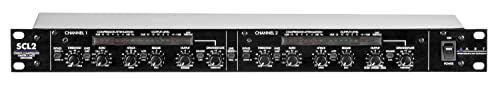
- Dual-channel or linked stereo operation
- Balanced XLR and 1/4-inch TRS inputs
- Selectable auto/manual attack and release
Best For: Live sound setups that need flexible stereo or dual-mono dynamics control
Live Dynamics Control
Behringer Composer Pro-XL MDX2600

- Independent or stereo-linked 2-channel processing
- Integrated de-esser with voice detection modes
- IGC peak limiter and side-chain I/O
Best For: Live sound rigs that need compression, de-essing, and peak protection in one unit
Pedalboard Tone Shaper
Universal Audio Max Preamp & Dual Compressor

- Emulates 1176, LA-2A, and Dyna Comp compressors
- Includes UA 610 tube preamp and EQ emulation
- Stereo operation with silent switching
Best For: Performers who want pedal-based compression and preamp tone for live use
Dual-Channel Precision Compressor
Professional Dual-Channel Black Dynamic Processor

- Dual-channel compressor with Overeasy and auto attack/release
- XLR/TRS I/O plus rackmount 1U design
- Built-in noise gate, LED metering, and sidechain insert
Best For: Live sound users who want dual-channel rackmount dynamics control
Live Vocal Control Compressor
Professional Dual-Channel Audio Processor

- Dual-channel compressor with Overeasy and auto settings
- XLR/TRS I/O for live and studio integration
- LED monitoring and built-in noise gate
Best For: Live performers and engineers needing a rackmount vocal compressor
Rackmount Stage Dynamics Compressor
Professional Dual-Channel Vocal Compressor/Limiter

- Dual-channel rackmount compressor/limiter
- Sidechain insert and adjustable attack/release
- XLR/TRS I/O with LED metering and noise gate
Best For: Engineers needing rackmount live dynamics control with sidechain support
Rack-Friendly Dynamics Control – dbx 266xs Compressor/Gate for Live Sound
If you need audio compressors for live sound that are simple to dial in and dependable on stage, the dbx 266xs is built for that job. It combines compression and gating in a 1U rack unit, with front-panel controls and clear LED metering to help speed up setup for vocals, drums, guitars, and full program material.
Best For: Portable rigs, touring setups, and rackmount live sound systems that need straightforward dynamics control.
Pros:
- Error-proof operation helps smooth uneven levels and tighten mixes.
- Program-adaptive expander/gate and new gate timing algorithms support smooth release characteristics.
- Separate LED displays for gain reduction, compression threshold, and gate threshold make setup quicker.
- Works for vocals, guitars, drums, and other program material.
Cons:
- Single-rack-space design means it is a dedicated outboard unit, not a portable pedal.
- Analog, front-panel workflow is practical but not highly advanced.
The 266xs is a solid pick when you want reliable compression and gating without a complicated learning curve. It is especially appealing if your priority is fast, visible setup in live sound applications rather than studio-style feature depth.
Value 2-Channel Dynamics – Behringer MDX2600 Compressor with De-Esser
Among audio compressors for live sound, the Behringer Composer Pro-XL MDX2600 stands out as a flexible 2-channel dynamics processor with compressor, limiter, gate, and de-esser functions. It is aimed at audio production, mixing, and mastering, but the multi-function design also makes it useful when you want one rack unit to handle more than basic level control.
Best For: Budget-conscious users who want a 2-channel compressor/limiter/gate with de-essing in one unit.
Pros:
- 2-channel compressor/limiter/gate layout adds versatility.
- Built-in de-esser can help manage harsh high frequencies.
- Compact, corded rack unit fits common outboard setups.
- Useful for audio production, mixing, and mastering workflows.
Cons:
- Product details do not emphasize live-sound-specific controls or metering.
- More of a general-purpose dynamics tool than a specialized stage processor.
If you want a single unit that covers several dynamics tasks, the MDX2600 offers a practical feature set for the price class. It makes sense for users who need flexibility more than ultra-simple, live-only operation.
Channel Strip Control – dbx 286SV Mic Preamp and Compressor
If you are shopping for audio compressors for live sound and need more than compression alone, the dbx 286SV functions as a full channel strip for microphones and instruments. Its classic dbx compression is paired with a de-esser, enhancer, and expander/gate, making it a strong all-in-one front-end for vocal clarity and input shaping.
Best For: Vocal chains, live mic processing, and rackmount front-end control for microphones or line sources.
Pros:
- Includes compression, de-esser, enhancer, and expander/gate in one unit.
- Mic preamp plus XLR and 1/4-inch inputs support microphones and instruments.
- Loop-out and insert options allow additional processors in the signal path.
- Metering LEDs help monitor audio levels and processor status quickly.
Cons:
- Single-channel design is focused on one source at a time.
- Best suited to users who want a full channel strip rather than a simple compressor.
The 286SV is a practical choice when you want compression integrated into a broader vocal or instrument processing chain. It is especially useful if you value clarity, routing flexibility, and rackmount convenience.
Classic FET Character – Klark Teknik 76-KT FET-Style Compressor
For buyers who want audio compressors for live sound with a more characterful approach, the Klark Teknik 76-KT brings a classic FET-style design modeled after the 1176LN revisions. It uses a completely discrete signal path, Class-A line-level output amplifier, and MIDAS input/output transformers, giving it a more premium, vintage-inspired outboard feel.
Best For: Engineers who want classic FET-style compression with vintage-inspired hardware quality.
Pros:
- Classic FET-style compressor modeled after iconic 1176LN revisions.
- Completely discrete signal path with Class-A line-level output amplifier.
- Custom-built MIDAS input and output transformers.
- Push-button ratio selection plus all-button mode and adjustable attack/release times.
Cons:
- More specialized and character-driven than a basic utility compressor.
- Likely a better fit for experienced users who want hands-on compression shaping.
The 76-KT is the most tone-oriented option in this group, so it makes sense when you want compression that can add personality as well as control. It is a strong choice for users who prefer a classic hardware-style workflow in live or pro-audio rigs.
Studio Rack Workhorse – ART SCL2 Dual/Stereo Compressor/Limiter
If you need audio compressors for live sound that can handle more than one task, the ART SCL2 is a practical rack option. It supports dual-channel or linked stereo operation, with balanced 1/4-inch TRS and XLR inputs, plus selectable auto/manual attack and release for more control over dynamics.
Best For: Live sound setups that need a flexible stereo or dual-mono compressor/limiter with gate functions.
Pros:
- Dual-channel or linked stereo operation for flexible routing
- Balanced TRS and XLR inputs for common live audio connections
- Selectable auto/manual attack and release for adjustable response
- Precise LED level meters for visual monitoring
Cons:
- Rack-style unit may be more than some simple setups need
- Analog knob-based control offers less convenience than digital presets
Overall, the SCL2 is aimed at users who want a straightforward dynamics tool with enough flexibility for stereo or dual-channel live duties. The added expander/gate style functionality and clear metering make it a sensible choice when you want control without overcomplicating the signal path.
Live Dynamics Control – Behringer Composer Pro-XL MDX2600
For buyers comparing audio compressors for live sound, the Behringer Composer Pro-XL MDX2600 offers a feature-heavy rack format with independent or stereo-linked processing. It adds an integrated de-esser, tube simulation circuitry, dynamic enhancer, and both automatic and manual attack/release controls, making it useful when you need more than basic compression.
Best For: Live sound rigs that need a multi-function dynamics processor with de-essing and peak limiting.
Pros:
- Independent or stereo-linked 2-channel processing
- Integrated de-esser with male and female voice detection modes
- Tube simulation, dynamic enhancer, and interactive knee control
- IGC peak limiter and side-chain I/O for advanced use
Cons:
- More controls mean a steeper setup than a basic compressor
- Analog knob interface may take time to dial in precisely
The MDX2600 is a good fit when you want a live sound processor that can manage compression, control peaks, and address vocal sibilance in one unit. Its feature set is broad, so it suits users who are comfortable tuning dynamics rather than just setting a simple threshold and ratio.
Pedalboard Tone Shaper – Universal Audio Max Preamp & Dual Compressor
If your version of audio compressors for live sound lives on a pedalboard, the Universal Audio Max Preamp & Dual Compressor is built for that kind of use. It combines emulations of classic UA 1176, Teletronix LA-2A, and Dyna Comp compressors with a full emulation of the UA 610 tube preamp and EQ, plus stereo operation and silent switching.
Best For: Players and performers who want pedal-based compression, preamp tone, and stereo flexibility.
Pros:
- Authentic emulations of 1176, LA-2A, and Dyna Comp compressors
- Includes UA 610 tube preamp and EQ emulation
- Supports stacking and layering compressor combinations
- Stereo operation with silent switching and buffered bypass
Cons:
- Requires an isolated 9VDC power supply sold separately
- Pedal format is less suitable for traditional rack-based live sound rigs
This is the most specialized option in the group, aimed at tone shaping rather than general rack processing. If you want compressor character, preamp color, and onboard control in a compact pedal format, it offers a lot of flexibility for live performance.
Dual-Channel Precision Compressor – Professional Dual-Channel Black Dynamic Processor
If you need audio compressors for live sound that can handle vocals, instruments, and front-of-house control, this dual-channel rack unit is built for flexible, natural-sounding dynamics management. Its Overeasy compression and auto attack/release settings aim for smooth control, while XLR/TRS connectivity makes it easy to slot into a live rig, studio, or streaming setup.
Best For: Live sound users who want a rackmount dual-channel compressor with a noise gate and sidechain insert.
Pros:
- Dual-channel design for controlling two sources at once.
- Overeasy compression and auto attack/release for smoother dynamics.
- XLR/TRS inputs and outputs for broad system compatibility.
- LED gain-reduction, compression, and gate indicators plus built-in noise gate.
Cons:
- Rackmount format is less convenient for portable, small-footprint setups.
- Best suited to users who want hands-on knob-based control.
Overall, this model focuses on practical live-use features rather than flashy extras. The sidechain insert and visual metering make it a solid option when you want dependable dynamic control and cleaner mixes on stage.
Live Vocal Control Compressor – Professional Dual-Channel Audio Processor
For buyers comparing audio compressors for live sound, this dual-channel rackmount processor is aimed at straightforward vocal and system dynamics control. It pairs Overeasy compression and auto attack/release settings with XLR/TRS connectivity, giving you a practical way to tighten up live vocals or other sources without complicated routing.
Best For: Live performers and engineers who want a rack mount vocal compressor/limiter with noise gate support.
Pros:
- Dual-channel compression with Overeasy behavior for smoother gain reduction.
- XLR and 1/4-inch TRS inputs and outputs for easy integration.
- Classic VCA circuit designed to enhance vocal warmth and detail.
- LED monitoring plus a built-in noise gate for cleaner output.
Cons:
- Product details emphasize functionality over advanced control features.
- No explicit sidechain insert is listed in the supplied notes.
This is a sensible choice if your priority is reliable live vocal compression with simple rack integration. The combination of VCA-style tone shaping, gate control, and visual feedback makes it a practical utility piece for performance setups.
Rackmount Stage Dynamics Compressor – Professional Dual-Channel Vocal Compressor/Limiter
This rackmount unit is a strong fit if you want audio compressors for live sound that can also pull duty in the studio. It offers dual-channel level control, Overeasy compression, adjustable attack and release, and XLR/TRS connectivity, so it can work across vocals, drums, guitars, and other sources in a live signal chain.
Best For: Engineers who want a dual-channel compressor/limiter with sidechain control for live and stage use.
Pros:
- Dual-channel dynamics control for multiple live sources.
- Classic VCA circuit aimed at clearer, warmer vocals.
- LED metering and noise gate help with setup and cleanup.
- Sidechain insert supports frequency-based ducking for low-end control.
Cons:
- Push-button control type may feel less immediate than knob-based layouts.
- Rackmount format is best for installed rigs rather than casual transport.
As a live and stage processor, this model covers the core tools most users need without overcomplicating the signal path. The sidechain insert and adjustable dynamics make it especially useful when tight low-end control matters in the mix.
How We Picked the Best Audio Compressors for Live Sound
We prioritized units that make sense for live reinforcement: dependable hardware, sensible control layouts, useful sidechain or gate features, and formats that fit common rack setups. We also favored compressors that can handle vocals, bass, drums, and mix-bus duties without demanding a steep learning curve.
Quick Comparison
In broad terms, these Audio Compressors for Live Sound fall into a few categories. Budget-friendly dual-channel rack units are best for general-purpose use, while channel-strip style processors suit single microphones or instruments that need compression plus additional shaping. Classic FET-style designs appeal to users who want a faster, more colored response, and higher-end channel processors are a good fit when sound quality and workflow matter more than cost.
Key Buying Factors for Audio Compressors for Live Sound
Channel Count and Routing
Choose a single-channel unit for one priority source, or a dual-channel compressor for vocals, stereo keys, drum overheads, and mix processing. Sidechain inserts and link functions are especially useful when you need tighter control over stereo sources or external detection.
Compression Behavior
Look for attack, release, threshold, and ratio controls that match your workflow. Faster compressors can help tame peaks on vocals or percussion, while smoother designs are often better for buses and program material. A built-in de-esser can be valuable for bright vocals.
Gate and Expander Tools
For noisy stages, gates and expanders can reduce bleed from drums, wedges, and open microphones. They are especially helpful in small clubs, worship spaces, and corporate AV where multiple mics are open at once.
Connectivity and Rack Fit
XLR and TRS I/O are the most practical choices for live environments. A standard 1U rackmount format is easier to deploy in portable rigs, while touring and installed systems may benefit from more robust chassis construction and clearer metering.
Who Should Buy Which Audio Compressors for Live Sound?
If you need a straightforward workhorse for general live duty, a dual-channel rack compressor is usually the best starting point. If your main concern is vocal control, choose a unit with a de-esser and easy threshold/ratio access. If you want more character and faster transient handling, consider a classic FET-style option. For more demanding signal chains, a higher-end channel strip or compressor/preamp combination can simplify setup and improve consistency across shows.
The best choice depends on your sources, your rack space, and how much hands-on control you want at the gig. For most buyers, the smartest live-sound compressor is the one that solves the specific problems on stage without slowing down setup or mixing.