When your set depends on precise timing, stable connections, and fast changes on stage, the right MIDI interface matters. The best options for live use keep your rig simple while reducing latency and setup headaches.
Below, we focus on live-friendly MIDI interfaces for musicians who need reliable control from footswitches, keyboards, mixers, tablets, and hardware sound modules.
Best 10 Midi Interfaces for Live Performances Picks for 2026
Compact Live MIDI Foot Controller
Blackstar Live Logic 6-Button Controller

- 6-button foot controller for stage commands
- MIDI over USB with Ableton Live support
- Two expression pedal inputs and LED display
Best For: Guitarists and live performers needing hands-free MIDI control
Hybrid Creator Audio Interface
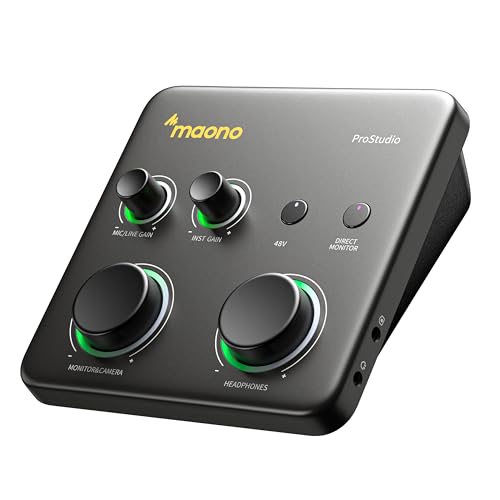
- Dual USB connectivity for computer and mobile devices
- Up to 70dB gain with direct monitoring
- Loopback and auto-gain for streaming workflows
Best For: Creators needing one compact interface for audio capture and streaming
Portable MIDI Sound Module
PianoBox Mini General MIDI Module

- Battery-powered General MIDI sound module
- Connects to USB MIDI keyboards without a computer
- Includes standard MIDI input and can power a keyboard
Best For: Keyboardists wanting portable playback and lower-latency sound
Standalone 3-in-3-Out MIDI Router
CME U6MIDI Pro 3-in-3-out Interface

- 3-in-3-out standalone MIDI interface
- USB-C plug-and-play across major OS
- Close-to-zero latency with routing and filtering
Best For: Live players needing flexible MIDI routing and reliable timing
Compact Hands-On Control
Akai MIDImix USB MIDI Mixer Controller

- 8 faders plus master fader
- 24 knobs and 16 buttons
- Compact and portable USB control
Best For: portable live mix control with Ableton Live
Stage-Ready Audio Routing
iConnectivity PlayAUDIO1U Audio/MIDI Interface

- 12 outputs for live performance use
- 24-bit/96kHz audio conversion
- Dual USB-C, Ethernet MIDI, OLED touchscreen
Best For: stage rigs needing audio plus MIDI routing
Hybrid Hardware Bridge
CME H2MIDI Pro Compact USB Host MIDI Interface

- Standalone USB host for class-compliant devices
- 5-pin DIN plus USB-C connectivity
- Routing, filtering, mapping, and presets
Best For: hybrid live setups with USB and legacy MIDI gear
Live MIDI Routing Hub
ESI M4U eX 8-Port USB 3.0 MIDI Interface

- 8 configurable MIDI ports for flexible setups
- Standalone routing and merging without a computer
- Built-in USB 3.0 hub with three extra connectors
Best For: Performers needing a multi-port MIDI hub for live rigs
All-In-One Audio MIDI Workhorse
Behringer U-PHORIA UMC404HD 4x4 USB Interface

- 4x4 audio interface with one MIDI I/O
- 24-bit/192 kHz conversion for clean sound
- Durable metal chassis with MIDAS mic preamps
Best For: Musicians needing audio plus basic MIDI in one rugged unit
Compact DSP Performer
Yamaha URX22C 2-in/2-out USB-C Audio/MIDI Interface

- USB-C interface with MIDI I/O and 2 analog inputs
- DSP monitoring includes reverb, channel strip, and amp effects
- Full-metal housing and cross-platform support
Best For: Solo performers wanting compact USB-C audio/MIDI with DSP
Compact Live MIDI Foot Controller – Blackstar Live Logic 6-Button Controller
If you need midi interfaces for live performances that let you trigger changes without taking your hands off the instrument, the Blackstar Live Logic is built for exactly that kind of control. It offers six footswitches, MIDI over USB, and two expression pedal inputs, so it suits compact stage setups and software-based rigs alike.
Best For: Guitarists and live performers who want hands-free MIDI control for software or hardware rigs.
Pros:
- 6-button foot controller for quick live command changes
- MIDI over USB for computer-connected performance setups
- Two expression pedal inputs for added control
- Compact metal build with LED display for stage use
Cons:
- Focused on foot control rather than desktop editing
- Only one USB port listed
For performers who want simple, durable MIDI control on stage, this unit keeps the setup compact while still covering common messages like program change, control change, note, clock, and customizable MIDI assignments.
Hybrid Creator Audio Interface – MAONO P1 USB Audio Interface
Although it is primarily an audio interface, the MAONO P1 can still fit a broader live-performance workflow when you want one compact device for instruments, voice, and streaming. Its dual USB connectivity, loopback, direct monitoring, and phone/tablet support make it useful for performers who need flexible routing around a live set or content stream.
Best For: Creators and performers who need a compact interface for recording, monitoring, and streaming across multiple devices.
Pros:
- Dual USB ports with simultaneous computer and phone/iPad connectivity
- Up to 70dB gain for demanding dynamic microphones
- Direct monitoring with independent headphone and monitor controls
- Loopback and software routing for mixed audio workflows
Cons:
- Not a dedicated MIDI interface
- Best suited to audio routing rather than hardware MIDI control
If your live setup blends audio capture, backing tracks, and streaming, this interface offers a lot of routing flexibility in a small desktop-friendly format. It is less about MIDI-specific control and more about simplifying the audio side of performance.
Portable MIDI Sound Module – PianoBox Mini General MIDI Module
For players looking at midi interfaces for live performances, the PianoBox Mini is a different kind of tool: it is a portable General MIDI sound module that can give a controller keyboard immediate sound without relying on a computer. With a built-in rechargeable battery, USB MIDI connection, and standard MIDI input, it is designed to reduce latency and keep a portable rig moving.
Best For: Keyboard players who want portable General MIDI playback and lower-latency performance without a computer.
Pros:
- Works directly with USB MIDI keyboards without needing a computer
- Built-in rechargeable battery for portable use
- Can power a USB MIDI keyboard
- Includes standard MIDI input and supports computer playback use
Cons:
- Designed as a sound module, not a full MIDI routing interface
- Focused on General MIDI playback rather than advanced control features
This is a practical choice if your priority is fast, portable sound generation for a keyboard-based live setup. It is especially appealing when you want to avoid computer latency or simply carry less gear.
Standalone 3-in-3-Out MIDI Router – CME U6MIDI Pro 3-in-3-out Interface
If you are shopping midi interfaces for live performances and need something that can handle both computer-connected and stand-alone rigs, the CME U6MIDI Pro is a strong fit. It offers 3-in-3-out MIDI over USB-C, plus standalone routing, filtering, merge, split, and thru functions for building flexible performance setups.
Best For: Players who need low-latency MIDI routing, filtering, and multi-device control on stage or in the studio.
Pros:
- 3-in-3-out standalone MIDI interface with router and filter
- Supports notes, controllers, clock, sysex, MIDI timecode, and MPE
- Plug-and-play USB-C connection across major operating systems
- Designed for close-to-zero latency and accurate transmission
Cons:
- MIDI-only device with no audio input
- Advanced setup tools may be unnecessary for very simple rigs
This interface is the most performance-focused option in the group when your setup needs dependable MIDI distribution and timing. It is a good match for multi-device rigs where routing flexibility matters as much as raw connectivity.
Compact Hands-On Control – Akai MIDImix USB MIDI Mixer Controller
If you want midi interfaces for live performances that keep mixing fast and tactile, the Akai Professional MIDImix is built around immediate hands-on control. Its compact USB design gives you 8 faders, a master fader, 24 assignable knobs, and 16 buttons for mute, solo, and record arm, with instant 1:1 Ableton Live mapping for quick setup on stage or in rehearsal.
Best For: Players and electronic performers who want a small, portable MIDI mixer for live control of tracks, effects, and Ableton Live sessions.
Pros:
- 8 individual faders plus a master fader for direct mix control
- 24 assignable knobs for EQ, bus sends, instruments, and effects
- 16 buttons for mute, solo, and record arm functions
- Lightweight, compact, and portable for travel-friendly setups
Cons:
- Designed as a MIDI mixer controller, not an audio interface
- Best fit is clearly centered on Ableton Live integration
- Limited to USB connectivity
Overall, the MIDImix makes sense when your live workflow depends on quick access to mix moves rather than deep onboard routing. It is a practical pick for compact rigs that need responsive control without adding much weight or space.
Stage-Ready Audio Routing – iConnectivity PlayAUDIO1U Audio/MIDI Interface
For midi interfaces for live performances where reliability and routing matter, the iConnectivity PlayAUDIO1U is aimed squarely at stage use. It combines audio and MIDI in a 12-output live performance interface with 24-bit/96kHz conversion, an OLED touchscreen, dual USB-C ports, and Ethernet MIDI, giving you a centralized way to manage a performance setup.
Best For: Performers who need a live audio/MIDI interface with multiple outputs and modern connectivity for stage rigs.
Pros:
- 12-output live performance audio/MIDI interface
- 24-bit/96kHz AD/DA conversion for high-resolution audio
- OLED touchscreen for on-device control
- Dual USB-C ports plus Ethernet MIDI for flexible connections
Cons:
- Heavier and more specialized than compact MIDI-only controllers
- Built for computer-based setups with supported Auracle software
- More interface than needed for simple control-only rigs
This is the kind of interface you choose when your live show needs more than basic MIDI passing. If your priority is organizing audio outputs and MIDI routing in one stage-focused unit, the PlayAUDIO1U is a strong match.
Hybrid Hardware Bridge – CME H2MIDI Pro Compact USB Host MIDI Interface
If you need midi interfaces for live performances that connect modern USB gear to legacy hardware, the CME H2MIDI Pro is designed for that bridge role. It works as a standalone USB host for class-compliant MIDI devices, adds 5-pin DIN MIDI I/O, supports computer connection over USB-C, and can handle routing, filtering, mapping, and splitting with preset recall during a performance.
Best For: Musicians who want a compact MIDI routing box for hybrid setups with both USB and 5-pin DIN equipment.
Pros:
- Standalone USB host operation with no computer required
- 5-pin DIN MIDI I/O plus USB-C client mode for hybrid systems
- Routing, filtering, mapping, and splitting with preset storage
- Very small, lightweight design for pedalboards and tight rigs
Cons:
- No audio interface functions
- USB hub expansion requires additional hardware
- Feature set is focused on MIDI routing rather than mixing
For live players balancing old and new MIDI gear, the H2MIDI Pro offers a compact way to keep everything talking to each other. Its preset-based control and flexible connectivity make it especially useful when your performance setup needs quick adaptation.
Live MIDI Routing Hub – ESI M4U eX 8-Port USB 3.0 MIDI Interface
If you need a MIDI interface for live performances, the ESI M4U eX is built for flexible routing and fast setup. Its 8 configurable MIDI ports, class-compliant USB 3.0 connection, and standalone operation make it a strong choice when you want to manage multiple devices without relying on a computer-only workflow.
Best For: Players and performers who need a compact multi-port MIDI hub with standalone routing and merging.
Pros:
- 8 adaptable MIDI ports can be configured as inputs or outputs.
- Standalone mode supports MIDI routing and merging without a computer.
- Built-in USB 3.0 hub adds three USB connectors for extra gear.
- Class-compliant design works with Windows and macOS without driver installation.
Cons:
- Focused on MIDI connectivity rather than audio recording.
- Windows users may want the optional driver for more complex multi-device setups.
The M4U eX stands out if your live rig needs more than a basic 1-in/1-out interface. Its combination of port flexibility, low-latency timing, and standalone functionality makes it especially useful when a performance setup has to stay organized and reliable.
All-In-One Audio MIDI Workhorse – Behringer U-PHORIA UMC404HD 4×4 USB Interface
For live performances that also involve microphones or instruments, the Behringer UMC404HD offers a practical blend of audio and MIDI connectivity. With 4 inputs, 4 outputs, one MIDI I/O, and low-latency USB operation, it suits performers who want a rugged interface that can handle both stage and recording tasks.
Best For: Musicians who need a durable audio/MIDI interface with multiple analog channels and basic MIDI connectivity.
Pros:
- 4×4 audio plus 1x MIDI I/O supports mixed performance setups.
- 24-bit/192 kHz resolution delivers high-quality audio conversion.
- Four MIDAS-designed mic preamps include +48V phantom power.
- Metal chassis is built for durability and travel.
Cons:
- Uses USB 2.0 rather than newer USB 3.0 or USB-C connectivity.
- Only one MIDI I/O, so it is less suited to larger MIDI rigs.
The UMC404HD is a solid pick when your live setup needs both audio capture and MIDI in a single box. It is not the most specialized MIDI interface, but its sturdy construction and flexible audio section make it useful for performers who want one interface to cover several jobs.
Compact DSP Performer – Yamaha URX22C 2-in/2-out USB-C Audio/MIDI Interface
The Yamaha URX22C is a compact option for live performances where you want audio, MIDI, and onboard monitoring tools in one interface. Its USB-C connection, 32-bit/192 kHz support, and DSP-powered effects make it useful for performers who want low-latency control and a streamlined setup.
Best For: Solo performers and small rigs that want compact USB-C audio/MIDI with onboard monitoring effects.
Pros:
- 2-in/2-out design includes MIDI I/O for small performance setups.
- DSP-powered monitoring adds REV-X reverb, Channel Strip, and Guitar Amp Classics.
- Rugged full-metal housing suits stage use.
- Cross-platform support works with Windows, macOS, and iOS.
Cons:
- Only two analog inputs, so it is not built for larger ensembles.
- More focused on compact monitoring than on high-port-count MIDI routing.
For performers who want a modern compact interface rather than a large MIDI patchbay, the URX22C is easy to justify. It combines useful onboard effects with straightforward connectivity, making it a practical stage companion for lean setups.
How We Picked These Midi Interfaces for Live Performances
We prioritized stage reliability, low-latency operation, straightforward routing, and the flexibility to work with common live setups. We also looked for interfaces that support real-world performance needs, such as compact footprints, class-compliant connectivity, standalone use, USB host support, and enough I/O to handle pedals, controllers, synths, and audio gear.
Because live rigs vary widely, the best choice is usually the one that fits your control surface, computer or tablet workflow, and how much hardware you need to connect at once.
Quick Comparison of the 10 Picks
Some models are better suited to simple foot control and tablet-based rigs, while others are built for larger stage setups with multiple MIDI ports or combined audio/MIDI routing. If you want a compact performance controller, look at streamlined foot and pad-based options. If you need deeper routing and more devices, multi-port interfaces are the better fit. For hybrid live rigs, audio/MIDI interfaces can reduce cable clutter and simplify setup.
Key Buying Factors for Midi Interfaces for Live Performances
Connection Type and Compatibility
Check whether you need USB-C, USB-A, USB host, or class-compliant operation for iPad, Mac, Windows, or hardware synths. For live work, broad compatibility can save time and reduce adapter dependency.
Port Count and Routing Flexibility
A 2-in/2-out interface may be enough for a minimal rig, but keyboard players, synth users, and complex pedalboard setups often benefit from extra ports. More outputs also help when you need to drive multiple devices or separate channels on stage.
Latency and Stability
Live performance demands responsive behavior. Look for solid driver support, dependable clocking, and a reputation for stable operation under pressure. If you use software instruments or backing tracks, low latency becomes even more important.
Standalone Features and Power Options
Standalone operation, bus power, or flexible power input can be a major advantage on stage. These features make setup faster and reduce dependence on a single computer connection.
Physical Design
Compact size, durable housing, and clear labeling matter more on stage than in the studio. Foot control, rackmount options, and easily reachable ports can make a big difference during changeovers.
Who Should Buy Which Midi Interfaces for Live Performances?
Keyboard players and synth-heavy performers should lean toward multi-port interfaces with strong routing. Guitarists, vocalists, and hybrid performers may prefer audio/MIDI interfaces that combine inputs and control in one unit. Foot-controlled live rigs benefit from compact controllers and footswitch-style MIDI gear, while tablet users should focus on class-compliant, low-friction connectivity. If you run several devices or want maximum expansion, choose the most flexible interface you can reasonably fit into your setup.
In short, the best Midi Interfaces for Live Performances are the ones that match your stage workflow, stay dependable under pressure, and make your rig faster to deploy every night.