Choosing the right MIDI interface can make setup faster, routing cleaner, and performance far more reliable. Whether you need simple computer-to-keyboard connectivity or advanced multi-port control, the right pick depends on how your gear is built and how you work.
This roundup focuses on practical options for recording, sequencing, and live integration, with an emphasis on dependable drivers, clear connectivity, and real-world flexibility.
Best 10 Midi Interfaces Picks for 2026
Standalone Routing Pick
CME U6MIDI Pro 3-in-3-out MIDI Interface

- 3-in-3-out standalone MIDI routing
- USB-C plug-and-play across major OSes
- Supports MPE, clock, sysex, and timecode
Best For: multi-device setups needing routing control
Budget Recording Alternative
2x2 USB-C Audio Interface for PC/Mac Recording

- Plug-and-play USB-C setup
- 24-bit/192kHz audio with phantom power
- 2-in/2-out with direct monitoring
Best For: beginner audio recording with a simple setup
MIDI Splitter Utility
CME MIDI Thru5 WC 1-in-5-out MIDI Thru

- 1-in-5-out MIDI distribution
- USB-C powered, data-free design
- Compact housing for studio or pedalboard use
Best For: simple MIDI splitting in live or studio rigs
Cable-Style MIDI Connect
LEKATO MIDI Cable, MIDI to USB C

- 1-in/1-out cable-style MIDI link
- Plug-and-play with built-in driver
- LED indicators help monitor signal
Best For: simple keyboard-to-computer MIDI connections
Compact USB Host Pick
CME H2MIDI Pro Compact USB Host MIDI Interface

- Standalone USB host mode for class-compliant USB MIDI gear
- USB-C connection adds 2-in/2-out virtual MIDI ports
- Routing, filtering, mapping, and presets via HxMIDI Tools
Best For: Hybrid setups that mix USB MIDI devices with legacy 5-pin DIN hardware
Budget Cable Interface
FORE MIDI to USB Interface Cable

- Simple 1-in/1-out DIN-to-USB connection
- Plug-and-play with built-in driver and LED indicators
- Bus-powered 6.5-foot cable for easy desktop use
Best For: Basic one-device MIDI recording and editing on computer or mobile
Advanced Routing Pick
CME H4MIDI WC Advanced USB Host MIDI Interface

- Standalone USB host mode with support for class-compliant devices
- USB-C client mode offers 4-in/4-out virtual MIDI ports
- HxMIDI Tools enables thru, split, merge, mapping, and filtering
Best For: Compact studio and pedalboard rigs that need advanced MIDI routing
Budget USB-to-MIDI Cable
Simple MIDI hookup for keyboards and PC recording

- 1-in/1-out USB-to-MIDI cable
- Works with many Windows and Mac systems
- Includes USB-C adapter for some mobile use
Best For: Affordable basic MIDI recording from a keyboard or piano
Compact Audio-MIDI Interface
MiniFuse 1 for voice, guitar, and synths
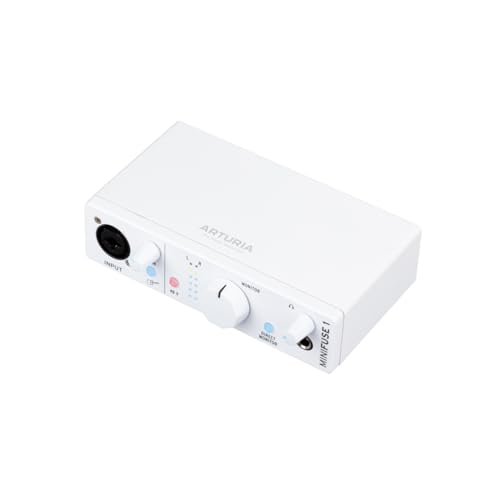
- USB audio interface with 5-pin MIDI in/out
- Includes Loopback and bundled software
- Backed by a 5-year warranty
Best For: Home studio users who want one compact interface for audio and MIDI gear
Advanced Smart MIDI Cable
Fast USB MIDI with filtering and routing

- Plug-and-play on many major operating systems
- Advanced filtering, mapping, merge, and split tools
- Low-latency 1-in/1-out USB MIDI cable
Best For: Musicians who want smart MIDI control across multiple devices
Standalone Routing Pick – CME U6MIDI Pro 3-in-3-out MIDI Interface
If you need one of the more flexible midi interfaces for both computer and standalone setups, the CME U6MIDI Pro is built to cover routing, splitting, merging, and filtering without much fuss. Its plug-and-play USB-C connection works across major operating systems, while the standalone 3-in-3-out design gives you real control over a hardware MIDI rig.
Best For: Players and producers who want a compact MIDI interface with advanced routing and broad device compatibility.
Pros:
- 3-in-3-out standalone operation with MIDI router and filter functions
- Plug-and-play USB-C support for macOS, iOS, Windows, Android, Linux, and Chrome OS
- Close to zero latency with support for notes, controllers, clock, sysex, MIDI timecode, and MPE
- High-precision transmission aimed at avoiding data errors, bleeding MIDI, and signal dropouts
Cons:
- Advanced routing and filtering may be more than casual users need
- Configuration relies on the free UxMIDI Tools software for Mac/Win
Overall, this is a strong pick if your setup mixes computers, keyboards, and synths and you want a MIDI interface that can do more than basic connectivity. It stands out for routing control and broad OS support rather than simple one-cable use.
Budget Recording Alternative – 2×2 USB-C Audio Interface for PC/Mac Recording
This 2×2 USB-C unit is primarily an audio interface, but it can still fit into shopping comparisons for midi interfaces when you want one box for a compact home studio workflow. It focuses on simple plug-and-play setup, dual input recording, and direct monitoring, making it a practical entry-level option for recording vocals, guitars, or podcast audio.
Best For: Beginners who want a simple USB-C recording interface with phantom power and direct monitoring.
Pros:
- Plug-and-play USB connection with no driver installation required
- 24-bit/192kHz converters for high-fidelity recording
- 2-in/2-out layout with XLR/TS inputs, direct monitoring, and headphone output
- Includes +48V phantom power for condenser microphones
Cons:
- Not a dedicated MIDI interface in the supplied specifications
- Best suited to audio recording rather than MIDI routing or multi-device sync
If your priority is recording audio first and MIDI second, this interface makes sense as a straightforward, beginner-friendly studio tool. It is less relevant for advanced MIDI connectivity, so buyers focused purely on MIDI should look elsewhere.
MIDI Splitter Utility – CME MIDI Thru5 WC 1-in-5-out MIDI Thru
For players building a clean hardware chain, this is one of the most practical midi interfaces if what you really need is reliable distribution rather than computer connectivity. The CME MIDI Thru5 WC takes one MIDI input and sends it to five outputs, with low-latency performance and a compact body that fits easily into a studio rack or pedalboard.
Best For: Keyboardists, synth players, and live rigs that need a dependable 1-in-5-out MIDI splitter.
Pros:
- 1-in-5-out MIDI Thru design for spreading one source to multiple devices
- Close to zero latency with support for all MIDI channels and messages
- Compact, lightweight, reinforced casing for tight spaces and portable rigs
- USB-C power from a standard 5V source with opto-couplers to help prevent ground loops
Cons:
- USB port is for power only, not data connectivity
- Not a routing or filtering interface like a full MIDI router
This is a focused utility device, not a full-featured controller hub. If you want clean MIDI distribution with minimal clutter, it delivers exactly that in a very small footprint.
Cable-Style MIDI Connect – LEKATO MIDI Cable, MIDI to USB C
If you want a straightforward option among midi interfaces, the LEKATO MIDI cable keeps things simple with a 1-in/1-out design and plug-and-play USB-C connectivity. It is aimed at connecting keyboards, synthesizers, and drum pads to a computer or iPad for editing and recording, with indicator lights that make basic troubleshooting easier.
Best For: Musicians who want an easy cable-style MIDI connection for home recording and editing.
Pros:
- 1-in/1-out MIDI interface with clear LED indicators for power and signal activity
- Plug-and-play operation with built-in driver support
- Compatible with Windows, macOS, and iPad use cases listed in the notes
- Low-latency transmission with EMI-resistant construction and copper conductors
Cons:
- Limited to standard MIDI setups and only one input plus one output
- Some older or proprietary synths may need special driver settings or compatibility checks
This is a sensible pick if you want a direct, no-frills cable solution instead of a larger interface box. It is best when your setup is simple and you value easy connection over advanced routing features.
Compact USB Host Pick – CME H2MIDI Pro Compact USB Host MIDI Interface
The CME H2MIDI Pro is a compact option in the midi interfaces category for players who need to bridge USB MIDI gear and 5-pin DIN hardware without bringing a computer into the chain. It works as a standalone USB host, supports up to 8 USB MIDI device ports through a hub, and also connects to a computer over USB-C when you want a hybrid setup.
Best For: Musicians and producers who want a tiny, flexible interface for combining modern USB MIDI devices with legacy DIN gear.
Pros:
- Standalone USB host mode for direct connection to class-compliant USB MIDI devices.
- USB-C client mode with 2-in/2-out virtual MIDI ports for computer-based workflows.
- HxMIDI Tools lets you handle routing, filtering, mapping, splitting, and preset saving.
- Supports major operating systems including macOS, Windows, iOS, Android, Linux, and ChromeOS.
Cons:
- Only 1-in/1-out over 5-pin DIN, so it is not a large multi-port DIN interface.
- Expanded USB hosting requires a separate USB hub.
Overall, the H2MIDI Pro makes sense if you want a modern, low-profile interface that can sit at the center of a mixed USB and DIN MIDI rig. Its value is strongest in compact setups where routing control and computer-free operation matter.
Budget Cable Interface – FORE MIDI to USB Interface Cable
If you just need a straightforward entry-level option in midi interfaces, the FORE MIDI to USB cable keeps things simple: one MIDI in, one MIDI out, and direct USB connection for recording or editing from a keyboard, synth, drum machine, or other 5-pin DIN device. It is bus-powered, plug-and-play, and designed for easy use with common music software and mobile devices.
Best For: Budget-minded users who want a simple cable interface for connecting one MIDI device to a computer or mobile setup.
Pros:
- Plug-and-play design with a built-in driver and LED status indicators.
- Supports 16 MIDI input and output channels.
- USB bus-powered with a 6.5-foot cable for flexible placement.
- Compatible with Windows, Mac OS, iOS, and Android according to the supplied notes.
Cons:
- Limited to a single 1-in/1-out MIDI connection.
- USB A-C adapter is not included if your device lacks USB-A.
This is the kind of interface that fits best when you want the least complicated path from DIN MIDI gear to your computer or tablet. It is not built for advanced routing, but it covers the basics reliably for simple recording and playback tasks.
Advanced Routing Pick – CME H4MIDI WC Advanced USB Host MIDI Interface
The CME H4MIDI WC is a more fully featured choice in midi interfaces for users who need deeper routing and more flexible connections. It offers standalone USB host operation, USB-C computer connectivity with 4-in/4-out virtual MIDI ports, and optional WIDI Bluetooth MIDI expansion, making it well suited to modern rigs that still rely on 5-pin DIN hardware.
Best For: Guitarists and producers who need a compact, highly configurable MIDI interface for studio or stage use.
Pros:
- Standalone USB host mode supports class-compliant devices without a computer.
- USB-C client mode provides 4-in/4-out virtual MIDI ports.
- HxMIDI Tools supports thru, split, merge, mapper, and filter setup.
- Dual power options via 5V USB or 9V DC make standalone use more flexible.
Cons:
- Optional WIDI Bluetooth MIDI expansion requires a separate WIDI Core module.
- Like the H2MIDI Pro, expanded USB hosting depends on a USB hub.
For users who want more routing depth than a basic cable interface can offer, the H4MIDI WC brings serious flexibility in a small footprint. Its preset management and power options make it especially appealing for performance setups and pedalboard-friendly rigs.
Budget USB-to-MIDI Cable – Simple MIDI hookup for keyboards and PC recording
If you need a straightforward entry point into midi interfaces, this USB-to-MIDI cable is built for connecting a compatible keyboard or piano to a computer for recording and editing. It keeps the setup simple with 1-in/1-out MIDI and broad Windows and Mac support, plus an included USB-to-Type-C adapter for some mobile or tablet connections.
Best For: Players who want an affordable, plug-in-and-play cable for basic MIDI recording from a keyboard or piano.
Pros:
- Supports 16 MIDI input and output channels for stable data transfer.
- Compatible with many Windows and Mac operating systems.
- Includes a USB Type-C adapter for certain phone or tablet setups.
- Flexible 4.5 to 6 ft total length for easy placement.
Cons:
- Only 1-in/1-out MIDI, so it is not a multi-port interface.
- Some older audio gear and RCA-only devices may need extra adapters.
- Mobile device use depends on the right adapter and compatibility.
For a simple MIDI link between an instrument and a computer, this cable covers the essentials without adding complexity. It is best viewed as a basic converter rather than a full studio interface.
Compact Audio-MIDI Interface – MiniFuse 1 for voice, guitar, and synths
Among midi interfaces, the Arturia MiniFuse 1 is the more complete studio-style option here because it combines USB audio recording with 5-pin MIDI in and out. It is designed for voice, guitar, synths, and other instruments, and adds beginner-friendly software plus a 5-year warranty for extra peace of mind.
Best For: Home studio users who want one compact interface for audio recording and MIDI gear.
Pros:
- Includes 5-pin MIDI input and output connections.
- Offers a mic/inst/line combo input, additional line inputs, and balanced outputs.
- Includes Loopback for capturing voiceovers alongside in-app or game audio.
- Comes with a long 5-year warranty and bundled creative software.
Cons:
- Only one main audio input channel, so it is not built for larger tracking sessions.
- More feature-rich than a simple MIDI cable, which may be more than some users need.
If you want a compact interface that handles both sound recording and MIDI connectivity, this is the most versatile choice in the group. It balances easy setup with useful extras for new producers and content creators.
Advanced Smart MIDI Cable – Fast USB MIDI with filtering and routing
This CME U2MIDI Pro stands out in the midi interfaces category for users who want more control than a basic cable can offer. It supports plug-and-play USB-to-MIDI connection across major operating systems, and its built-in filtering, mapping, and routing features make it a practical pick for more involved MIDI setups.
Best For: Musicians and producers who want a smart USB-to-MIDI cable with advanced MIDI management tools.
Pros:
- Plug-and-play on macOS, iOS, Windows, Android, Linux, and ChromeOS.
- Supports advanced MIDI filtering, mapping, routing, merge, and split functions.
- Handles all MIDI channels and messages, including clock, sysex, MTC, and MPE.
- Built for low latency and jitter with a high-speed 32-bit processor.
Cons:
- It is still a 1-in/1-out cable, not a multi-port interface.
- Advanced tools may be unnecessary for users who only need a simple MIDI link.
For players who need reliable MIDI transfer plus software-level control, this cable offers more flexibility than most basic adapters. It is especially appealing if you work across different devices and want one connector that can handle routing tasks too.
How We Picked the Best Midi Interfaces
We focused on compatibility, port configuration, connection type, build quality, and how well each option fits common use cases. The best Midi Interfaces should solve a specific routing problem without adding setup friction, and they should work cleanly with both modern computers and studio hardware.
Quick Comparison
Before buying, match the interface to your workflow: single-cable USB options are best for straightforward keyboard-to-DAW control, multi-port units suit larger hardware setups, USB host models are ideal for controller-to-controller or standalone gear integration, and combo audio/Midi Interfaces are best if you want recording and MIDI in one device.
Key Buying Factors for Midi Interfaces
Ports and Routing
Check whether you need 1-in/1-out, multi-port MIDI, THRU expansion, or host functionality. More ports are not always better, but they are useful if you regularly connect multiple synths, modules, or controllers.
Connection Type and Compatibility
USB-A, USB-C, and USB host support all matter. Make sure the interface matches your computer and the devices you want to connect, especially if you use tablets, laptops with limited ports, or older MIDI hardware.
Latency and Stability
For recording and live playing, stable timing matters as much as raw features. Look for interfaces known for low-latency communication, reliable drivers, and consistent performance across operating systems.
Power and Portability
Bus-powered units are convenient for mobile setups, while more advanced interfaces may offer broader routing at the expense of size. If you travel or play live, compact form factor and simple cabling can be major advantages.
Who Should Buy Which Midi Interfaces?
If you are a solo producer using one keyboard or controller, a compact USB MIDI interface is usually enough. If you own several synths or want to split one MIDI source to multiple devices, choose a multi-out or THRU-based model. If your setup includes modern hardware that needs direct USB hosting, look for a USB host interface. And if you want a cleaner all-in-one desk setup, a combo audio and MIDI interface may be the most practical choice.
For most buyers, the best choice is the one that matches your current rig with a little room to grow. That balance matters more than chasing the most features on the box.