Choosing the right patch bays for live sound can make a big difference in speed, reliability, and troubleshooting on show day. The best options simplify routing, reduce cable clutter, and help your crew make changes fast.
In this roundup, we focus on practical, tour-friendly picks for balanced connections, snake interfaces, and flexible stage or rack integration.
Best 10 Patch Bays for Live Sound Picks for 2026
Analog XLR Routing
Black Lion Audio PBR XLR Patchbay

- 16-point patchbay with 32 gold-plated XLR connectors
- Built for audio signal routing in live sound studios
- Aluminum housing with a 2-year warranty
Best For: XLR-based live sound rigs needing simple, durable routing
Rackmount Balanced Control
ART Pro Audio P48 48-Point Balanced Patch Bay

- 48 balanced patch points in a 19-inch rack format
- Fully shielded steel construction
- Works with live sound, PA, AV, and home theater setups
Best For: High-capacity rack systems with mixed audio hardware
Hybrid Digital Routing
Black Lion Audio PBR TRS-BT Patchbay

- 46-point TRS patchbay with 94 gold-plated connectors
- Bluetooth support for phones, laptops, and tablets
- Designed for professional audio production setups
Best For: Hybrid audio setups that need TRS routing and Bluetooth
Snake Interface Link
DB25 to XLR Female Snake Cable

- DB25 male to 8-channel XLR female breakout
- Balanced cable aimed at patch bays and mixers
- Available in multiple lengths up to 30 meters
Best For: DB25-compatible systems needing an 8-channel XLR breakout
Balanced 8-Point Patch Bay
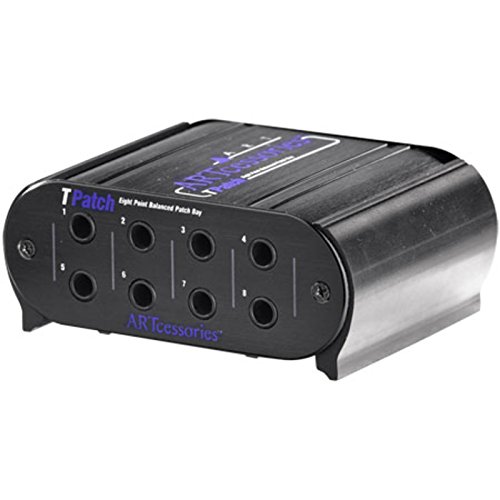
- 8 balanced routing points
- Half-normal and normal modes
- Rugged aluminum housing
Best For: Small live rigs and balanced routing with simple mode switching
4-Way XLR Splitter Box
1 Female to 4 Male XLR Splitter

- 1-to-4 parallel XLR output
- Passive aluminum alloy build
- Gold-plated contacts and connectors
Best For: Distributing one balanced XLR feed to multiple live sound devices
Modular 16-Channel XLR Patch Panel

- 16-channel balanced XLR patching
- Modular blocks with no PCB cutting
- Steel chassis with reversible rack ears
Best For: Larger live racks and modular XLR routing
TRS Snake
24-Channel 25-Foot TRS Live Snake

- 24 channels with 1/4" TRS on each end
- 25-foot run for live and studio routing
- Color-coded, numerically labeled, serviceable ends
Best For: Live sound and studio users needing a 24-channel TRS snake
DB25 Breakout
DB25 to 8 XLR Male Patch Bay Cable

- DB25 to 8 XLR male breakout
- 5-foot cable with 18-inch fantail
- Built for patch bays, recorders, and mixers
Best For: DB25-based patch bay and mixer connections
XLR Multicore

- 8-channel balanced multicore snake
- 10-foot length for compact routing
- Numbered labels with metal XLR connectors
Best For: Compact studio, patch bay, and live sound routing
Analog XLR Routing – Black Lion Audio PBR XLR Patchbay
If you need patch bays for live sound that keep XLR routing straightforward, the Black Lion Audio PBR XLR is built around 16 patch points and 32 gold-plated XLR connectors. It’s a practical way to organize signal paths for audio signal routing in recording or live sound studios while keeping connections neat and easy to access.
Best For: Live sound or studio setups that need a simple, high-quality XLR patch point.
Pros:
- 16-point patchbay with 32 gold-plated XLR connectors
- Designed for audio signal routing in recording or live sound studios
- Aluminum outer material for a sturdy rack-style build
- 2-year warranty included
Cons:
- XLR-only design limits use with TRS or DB25 workflows
- Indoor use only
For XLR-based live sound routing, this model focuses on durability and clean connectivity instead of extra features. If your rig is already centered on XLR gear, it offers a direct and organized patching solution.
Rackmount Balanced Control – ART Pro Audio P48 48-Point Balanced Patch Bay
For patch bays for live sound that need flexible routing and broad compatibility, the ART Pro Audio P48 gives you 48 balanced points in a 19-inch rackmount format. Its fully shielded steel construction is aimed at organizing cables, reducing connector wear, and fitting into professional audio setups that include live sound, PA, and AV use.
Best For: Rackmounted live sound systems that need a shielded, balanced patch bay for many different audio devices.
Pros:
- 48 balanced patch points in a 19-inch rack unit
- Fully shielded steel design helps organize cables
- Compatible with mixers, amplifiers, microphones, speakers, and more
- Useful for live sound, PA, AV, and home theater setups
Cons:
- Balanced XLR design may not suit every TRS-specific workflow
- Basic hardware-focused unit without added digital features
If you want a straightforward rack patching hub for multiple audio paths, this model stands out for capacity and shielding. It is a practical choice when reliability and connector organization matter more than extras.
Hybrid Digital Routing – Black Lion Audio PBR TRS-BT Patchbay
When patch bays for live sound need to handle both analog routing and portable source integration, the Black Lion Audio PBR TRS-BT adds Bluetooth to a 46-point TRS patchbay. With 94 gold-plated 1/4-inch TRS connectors, it is aimed at professional audio production and studio setups that also work with smartphones, laptops, and tablets.
Best For: Studio or live audio workflows that want TRS patching plus Bluetooth device integration.
Pros:
- 46-point patchbay with 94 gold-plated 1/4-inch TRS connectors
- Bluetooth connectivity for smartphones, laptops, and tablets
- Built for professional audio production and studio setup
- Aluminum outer material with a 2-year warranty
Cons:
- Bluetooth adds flexibility, but this is still centered on TRS routing
- Indoor use only
This model makes sense if your patching needs include modern portable devices alongside a TRS workflow. It is less of a traditional live-sound-only bay and more of a hybrid routing tool for flexible setups.
Snake Interface Link – DB25 to XLR Female Snake Cable
If your patch bays for live sound depend on DB25 interfacing, this DB25 to XLR female snake cable is a simple way to connect a single DB25 line to eight XLR channels. It is described as a balanced snake cable for patch bays, multi-track recorders, and mixers, with anti-interference materials intended to support clean signal transmission.
Best For: DB25-equipped live sound or studio systems that need an 8-channel XLR breakout.
Pros:
- DB25 male to 8-channel XLR 3-pin female balanced snake design
- Suitable for patch bays, multi-track recorders, and mixers
- Anti-interference materials for cleaner signal transmission
- Length options are available from 1 to 30 meters
Cons:
- It is a cable interface, not a standalone patch bay
- DB25-based setup is only useful if your gear supports that format
For modular live-sound wiring, this cable is best treated as a patch bay accessory rather than the bay itself. It is most useful when you already have DB25-compatible gear and want a clean, multichannel XLR breakout.
Balanced 8-Point Patch Bay – Art Pro Audio TPatch
If you want patch bays for live sound that keep balanced lines organized without adding complexity, the Art Pro Audio TPatch is built around eight points of balanced direct signal routing. It offers four linked input/output pairs with switchable half-normal and normal modes, so it can handle straightforward insert-style workflows or more direct through connections in a compact rack format.
Best For: Small live rigs, DAW-based setups, and balanced routing where simple patching and mode switching matter.
Pros:
- Eight balanced points for direct signal routing
- Four linked input/output pairs for organized patching
- Switchable half-normal and normal modes for flexible operation
- Rugged extruded aluminum case for rack use
Cons:
- Only 8 channels, so it may be too small for larger live systems
- Uses 1/4-inch TRS connectors, which may not fit every patch standard
- Designed around balanced direct signals rather than XLR patching
The TPatch is a practical choice if you need a sturdy, no-frills balanced patch bay for live sound or a Windows-based audio workstation. Its simplicity is the strength here: enough routing flexibility for common signal management, without extra complexity that can slow down setup.
4-Way XLR Splitter Box – 1 Female to 4 Male XLR Splitter
For patch bays for live sound situations where one balanced XLR feed needs to be distributed to several destinations, this 1-to-4 splitter box is a straightforward option. It is a passive aluminum-alloy unit with gold-plated contacts, built for parallel signal distribution in mixers, microphones, amplifiers, PA systems, and similar live or studio setups.
Best For: Live sound, broadcast-style distribution, and mixer setups that need one XLR input sent to four outputs.
Pros:
- 1 female to 4 male parallel XLR distribution
- Aluminum alloy casing with 24K gold-plated contacts
- Passive design requires no external power
- Built for broad use with mixers, mics, amps, and PA systems
Cons:
- Not a multi-channel rack patch bay
- Parallel splitting is more specialized than full routing flexibility
- Single-input design may be too limited for complex rigs
This is best viewed as a signal distribution tool rather than a traditional patch panel. If your live setup needs one source fanned out to multiple devices with minimal setup, it offers a compact and durable way to do that.
Modular 16-Channel XLR Patch Panel – AA AUDIO ACCESSORY AP16
If you need patch bays for live sound with more room to grow, the AA AUDIO ACCESSORY AP16 is a 16-channel XLR balanced patch panel built around modular blocks. It arrives as four independent 4-channel sections, so you can configure 4, 8, 12, or 16 channels without cutting PCBs, which makes setup and later maintenance much easier.
Best For: Larger live racks, studio-to-stage routing, and users who want modular XLR patching with flexible installation.
Pros:
- Factory-assembled modular blocks avoid PCB cutting
- Configurable for 4, 8, 12, or 16 channels
- 24K gold-plated XLR pins for stable signal transfer
- Full-steel chassis and reversible rack ears for flexible mounting
Cons:
- Bulkier and heavier than smaller patch solutions
- XLR-based design may not suit setups centered on TRS patching
- More capacity than needed for very small rigs
The AP16 makes sense when reliability and serviceability matter as much as channel count. Its modular design, steel chassis, and rack flexibility suit users who want a cleaner long-term patching solution for demanding live environments.
TRS Snake – 24-Channel 25-Foot TRS Live Snake
If you need a practical cable run for patch bays for live sound, this 24-channel TRS snake is built for moving multiple balanced lines between gear without creating a mess. At 25 feet, it fits stage-to-rack or console-to-outboard layouts, and the color-coded, numerically labeled channels make setup faster.
Best For: Live rigs, studios, and gigs that need a 24-channel 1/4″ TRS patch-style snake with serviceable ends.
Pros:
- 24 channels with 1/4″ TRS connectors on each end
- 25-foot length works well for live and studio routing
- Color-coded and numerically labeled for quicker patching
- Serviceable ends and gold-tipped ends
Cons:
- At 12.1 pounds, it is not a lightweight cable run
- TRS format may not suit setups built around XLR-only patching
For users who want a multi-channel TRS snake that supports organized routing, this model covers the basics well. It is especially appealing when you want a serviceable, labeled cable for repeat live or recording setups.
DB25 Breakout – DB25 to 8 XLR Male Patch Bay Cable
For patch bays for live sound or studio routing, this DB25-to-XLR snake is designed as an interface cable between compact multi-pin gear and XLR-based equipment. The 5-foot length and 18-inch fantail make it a tidy choice when you want to break out eight channels without a long cable run getting in the way.
Best For: Patch bay, multi-track recorder, and mixer connections that need a DB25-to-8-channel XLR male breakout.
Pros:
- DB25 on one end and 8 XLR male connectors on the other
- 5-foot length with an 18-inch fantail for compact setups
- Designed for patch bays, multi-track recorders, and mixers
- Brand new with a one-year warranty
Cons:
- Only useful if your gear uses DB25 and XLR male connections
- Short length may not fit more spread-out stage layouts
This cable is a strong fit when your priority is clean interfacing rather than a long run. If your patch bay or recorder is DB25-based, it offers a straightforward way to connect eight channels in one bundle.
XLR Multicore – 8-Channel 10-Foot XLR Snake
If you are shopping for patch bays for live sound, this 8-channel XLR snake is a compact option for moving balanced signals between a console, patch bay, or stage gear. The 10-foot length keeps runs manageable, while numbered labels and metal XLR connectors help make setup and teardown easier.
Best For: Recording studios, mixing consoles, patch bays, and live performances needing an 8-channel XLR snake.
Pros:
- 8-channel balanced multicore design
- 10-foot length suits compact live or studio routing
- Numbered labels help keep channels organized
- Metal XLR connectors and OFC conductors
Cons:
- Shorter length may not suit larger stage layouts
- XLR-only design may not fit TRS-based workflows
Overall, this is a good utility snake when you want a short, organized XLR bundle for common live-sound and studio connections. It is most useful in setups where clean channel labeling matters as much as cable length.
How We Picked These Patch Bays for Live Sound
We focused on products that solve real live-audio problems: clean signal handling, sturdy connectors, easy labeling, and sensible channel counts. We also looked for options that fit common workflows, from rack-mounted patching to DB25-to-XLR breakout use and basic splitter/snake applications.
Quick Comparison
For simple rack routing, balanced TRS or XLR patch bays are usually the easiest choice. If your rig uses console I/O, interfaces, or outboard gear with multipin connections, DB25-based solutions can be more efficient. For stage boxes and longer runs, snake cables and labeled multicore options often make more sense than a traditional patch panel.
Key Buying Factors for Patch Bays for Live Sound
Connector Type and Workflow
Match the bay to your gear. XLR is common for microphones and many live sources, TRS works well for balanced line-level routing, and DB25 is useful when you want high-density connections in a compact format.
Balanced Signal Support
For live sound, balanced connections are usually the safest choice because they help reduce noise over longer cable runs. Make sure the patch bay or cable system is designed for balanced audio if you are routing line-level or stage signals.
Channel Count and Scalability
Think about not just today’s setup, but where the system is headed. An 8-channel unit may be enough for a compact rack, while 16-channel or 24-channel options are better for growing rigs, monitor splits, or more complex stage workflows.
Build Quality and Serviceability
Live systems take abuse. Look for metal connectors, secure mounting, clearly printed channel numbers, and serviceable cable ends where possible. These details save time during setup and make repairs less painful on the road.
Labeling and Cable Management
Good labeling is underrated. Numbered channels, color cues, and tidy breakout layouts help crews patch faster and reduce mistakes under pressure.
Who Should Buy Which Patch Bays for Live Sound?
If you need a straightforward rack solution, a balanced XLR or TRS patch bay is the best place to start. If your setup uses dense studio-to-live crossover gear, a DB25 interface or snake cable can keep things compact and organized. For small bands, portable splitter boxes and smaller channel-count options may be enough, while larger production rigs usually benefit from higher-density patching and clearer channel management.
In short, the best Patch Bays for Live Sound are the ones that match your workflow, keep signal paths clean, and make last-minute changes easier instead of harder.