Great monitoring can make or break a live performance. If you need reliable stage monitors for music, the right choice will help you hear vocals, instruments, and click tracks clearly without fighting feedback or muddy sound.
This roundup covers 10 practical options for different stages, budgets, and monitoring styles, including floor wedges and wireless in-ear systems.
Best 10 Stage Monitors for Music Picks for 2026
Pair Budget Stage Wedges
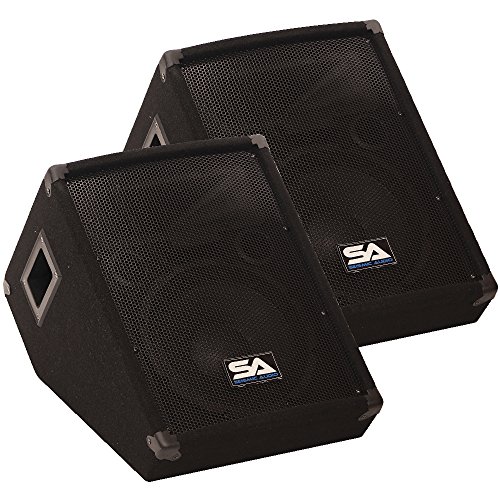
- Set of 2 floor monitors
- 10-inch woofer with titanium horn
- 150W RMS / 300W peak each
Best For: Bands and rehearsals needing a matched pair of wedge monitors
Powered Feedback-Control Wedge
Powered 12-Inch Feedback-Control Monitor

- Active 300W 2-way monitor
- Adjustable feedback filter and limiter
- 12-inch woofer with compression driver
Best For: Performers wanting an active wedge with built-in protection
Single Monitor Wedge
Single Titanium Horn Stage Wedge

- Single 10-inch wedge monitor
- Titanium horn driver
- 150W RMS / 300W peak
Best For: Solo performers and small stages needing one wired floor monitor
Wireless IEM Practice Set
Wireless In-Ear Practice Monitor

- 2.4GHz wireless in-ear monitor system
- Low latency under 5ms
- 8+ hour battery life
Best For: Guitar players and performers wanting personal wireless monitoring
Powered Pair
Seismic Audio 2-Way Powered 10-inch Monitor Pair

- Powered 2-way wedge monitors with titanium horns
- XLR combo, 1/4-inch, Speakon, and 3.5 mm inputs
- 3-band EQ, gain control, and pair format
Best For: Bands and rehearsal spaces needing a powered wedge pair
Wireless In-Ear System
Coda AirSync UHF Wireless IEM Stage Monitor

- Dedicated UHF band avoids common wireless interference
- Factory-paired system with transmitter and belt-pack receiver
- Up to 150-foot range and 6-hour battery life
Best For: Musicians wanting a simple wireless in-ear monitor setup
Passive Wedge
Yamaha BR12M 12-inch Passive Floor Monitor

- 12-inch woofer with 1-inch compression driver
- 300W program / 600W peak handling
- Passive floor monitor with pole socket
Best For: Live bands and PA users with external amplification
Lightweight wired monitor
Gemini 8" Powered PA Speaker, 300W

- 11-lb portable cabinet with 300W output
- Wired XLR, 1/4", RCA, and AUX inputs
- Onboard EQ and clip protection for easy use
Best For: Small gigs and rehearsal monitoring
Classic wedge monitor
Peavey PV 12M 12-Inch Floor Monitor
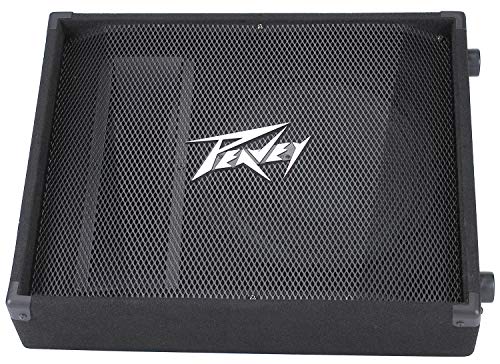
- 500W program power with a 12-inch woofer
- Titanium compression driver helps vocals cut through
- Angled 30/45-degree placement plus pole mount option
Best For: Live vocal monitoring and studio use
Powerful large-format wedge
Rockville RSM15P 15" Floor Monitor

- 1400W peak output with a 15-inch woofer
- Wide 70 x 50 horn coverage for stage spread
- Dual 1/4" and Speakon inputs/outputs
Best For: Larger live stages and DJ monitoring
Pair Budget Stage Wedges – Dual 10-Inch Stage Wedge Pair
Seismic Audio - SA-10MT - Pair of 10" Floor / Stage Monitors Wedge Style with Titanium Horn
Check Price On AmazonIf you want stage monitors for music that can cover a small band setup, this pair of Seismic Audio wedge monitors is built for live performances and stage monitoring. Each cabinet uses a 10-inch woofer, a titanium compression horn, and a 2-way design rated at 150 watts RMS / 300 watts peak, giving you a straightforward powered-by-amp monitor option with wired AUX/XLR connections.
Best For: Bands, rehearsals, and live stages that need a matched pair of floor wedges.
Pros:
- Pair of two 10-inch floor/stage monitors for left/right or shared monitor use
- 2-way design with titanium compression horn for vocal and instrument monitoring
- 150 watts RMS / 300 watts peak per monitor for stage-ready output
- Wired AUX and XLR connectivity for typical live sound setups
Cons:
- Not water resistant
- Requires corded electric power and external setup
- Basic feature set compared with powered DSP monitor options
For buyers seeking simple, matching stage wedges rather than extra processing features, this Seismic Audio pair keeps the focus on practical monitor coverage and conventional wired connectivity.
Powered Feedback-Control Wedge – Powered 12-Inch Feedback-Control Monitor
For stage monitors for music where you want a powered, feature-rich wedge, the Behringer EUROLIVE F1320D brings a 12-inch woofer, 1-inch compression driver, and built-in feedback control. It is designed for live and playback applications, with a class-D amplifier, integrated limiter, and sound processor to help keep the monitor under control in demanding setups.
Best For: Performers who want an active stage monitor with built-in protection and feedback control.
Pros:
- Active 300-watt 2-way design with a 12-inch woofer
- Adjustable feedback filter, integrated limiter, and sound processor
- Class-D amplifier keeps the cabinet relatively light at 33.1 pounds
- Wired connectivity plus Bluetooth support listed in the specs
Cons:
- Larger and heavier than compact monitor wedges
- Official speaker maximum output power is listed at 90 watts in the specs
- Not water resistant
This is a sensible pick if you want active stage monitoring with built-in control features instead of a bare-bones passive wedge. The extra processing tools make it easier to manage feedback on louder stages.
Single Monitor Wedge – Single Titanium Horn Stage Wedge
Seismic Audio - SA-10MTSingle - 10" Floor / Stage Monitor Wedge Style with Titanium Horn
Check Price On AmazonIf you only need one of the more practical stage monitors for music, this Seismic Audio SA-10MTSingle keeps the setup simple with a 10-inch wedge design and titanium horn driver. It is rated at 150 watts RMS / 300 watts peak and uses wired XLR plus 1/4-inch or Speakon connectivity, making it a straightforward monitor for rehearsals and live stage use.
Best For: Solo performers, small setups, and anyone needing a single wired floor monitor.
Pros:
- Single 10-inch floor/stage monitor for compact setups
- Titanium horn driver for a clearer high-end monitor response
- 150 watts RMS / 300 watts peak with 8 ohm impedance
- Wired XLR, 1/4-inch, and Speakon compatibility
Cons:
- Sold as one monitor, not a pair
- Not water resistant
- Passive design requires the rest of your sound system to be in place
This model is a solid fit when you only need one dependable wedge instead of a full stereo pair. It stays focused on stage-ready basics without adding unnecessary complexity.
Wireless IEM Practice Set – Wireless In-Ear Practice Monitor
For musicians comparing stage monitors for music, this JOYO wireless in-ear monitor system offers a different approach than a floor wedge. The JW-07 uses 2.4GHz wireless transmission, automatic pairing, low latency under 5ms, and an operating range of 40-60 feet in open space, making it aimed at personal monitoring for practice and live use.
Best For: Guitar players and performers who want a wireless in-ear monitoring setup.
Pros:
- 2.4GHz wireless IEM system with automatic pairing
- Low latency under 5ms for near real-time monitoring
- 40-60 ft operating range in open space
- Over 8 hours of battery life on a full charge
Cons:
- One transmitter is not supported to connect multiple receivers
- Designed around in-ear monitoring rather than a traditional floor wedge
- Compatibility is listed specifically for guitar in the supplied notes
If you prefer personal monitoring over a loud wedge on the floor, this JOYO system gives you wireless convenience and quick response. It is best viewed as a practice-and-performance IEM solution rather than a replacement for a full stage monitor speaker.
Powered Pair – Seismic Audio 2-Way Powered 10-inch Monitor Pair
If you need stage monitors for music that can fill a rehearsal space or a live setup, this powered pair gives you a straightforward active wedge option. Each 10-inch 2-way monitor includes XLR combo inputs, 1/4-inch and Speakon connections, plus a 3-band EQ and gain control for quick on-stage adjustments.
Best For: Bands, rehearsal rooms, and performers who want a powered wedge pair with flexible wired inputs.
Pros:
- Powered 2-way design with 10-inch woofers and titanium horns
- Multiple input options: XLR combo, 3.5 mm, 1/4-inch, and Speakon
- Built-in 3-band EQ plus gain/volume controls for easy tuning
- Pair format works well for stereo or dual-monitor setups
Cons:
- At 70 pounds for the pair, they are not the lightest option
- Requires corded power, so placement depends on available outlets
- Large cabinet size may be less convenient for smaller stages
Overall, this is a practical powered stage monitor set for users who want simple wired connectivity and onboard control without building a system from separate components. The pair format makes it especially useful when you need two monitors ready to go for music performance or studio use.
Wireless In-Ear System – Coda AirSync UHF Wireless IEM Stage Monitor
For stage monitors for music where you want less floor clutter and more mobility, this wireless in-ear system is built for live performance monitoring. It uses a dedicated UHF band, comes factory-paired, and includes a transmitter, belt-pack receiver, and hardshell case so you can get set up quickly.
Best For: Performing musicians and bands that want a plug-and-play wireless in-ear monitor setup.
Pros:
- Dedicated UHF band helps avoid WiFi and Bluetooth interference
- Factory-paired setup makes it quick to deploy on stage
- Up to 150-foot range and up to 6-hour battery life
- Includes transmitter, receiver, USB-C cable, adapter, and case
Cons:
- Works with in-ear monitoring, not a traditional floor wedge
- Battery life is limited to 6 hours per charge
- Requires compatible earphones to use the system
This is a strong option if your goal is clean, reliable monitoring rather than a bulky stage speaker. The low-latency wireless design and simple plug-and-play workflow make it a practical choice for live gigs, especially when multiple monitor mixes are needed.
Passive Wedge – Yamaha BR12M 12-inch Passive Floor Monitor
If you want stage monitors for music with a more traditional passive wedge feel, the Yamaha BR12M is built for sound reinforcement and live performance. Its 12-inch woofer, 1-inch compression driver, and floor-mount design make it a straightforward monitor for musicians who already have amplification in place.
Best For: Live bands, PA setups, and users who need a passive 12-inch floor monitor.
Pros:
- 12-inch woofer and 1-inch compression driver for full-range monitor output
- 300W program / 600W peak power handling
- Built-in pole socket adds flexibility for stand mounting
- 97 dB sensitivity supports efficient sound reinforcement
Cons:
- Passive design requires an external amplifier or powered signal chain
- Single monitor only, so multi-wedge setups need additional units
- Heavier than compact monitor alternatives at 15.6 kg
The BR12M is a solid choice when you want a proven wedge monitor shape and don’t need onboard amplification. It fits well into existing PA systems and works best for users who value straightforward, wired stage monitoring with Yamaha’s established build approach.
Lightweight wired monitor – Gemini 8" Powered PA Speaker, 300W
If you need stage monitors for music that are simple, portable, and fully wired, this Gemini powered speaker is built for quick setup. Its 8-inch woofer, piezo HF driver, and onboard EQ make it a practical pick for vocals, rehearsal spaces, small venues, and DJ monitoring when you want clear sound without extra gear.
Best For: Small gigs, rehearsal rooms, church services, and lightweight vocal monitoring.
Pros:
- 300 watts of power in an 11-lb cabinet for easy transport
- Wired inputs include XLR, 1/4", RCA, and AUX for flexible hookup options
- Onboard EQ and dual-channel gain make quick tone adjustments easy
- Clip LED protection and ABS housing add practical road use features
Cons:
- 8-inch design is better for compact monitoring than larger-stage punch
- No Bluetooth support, so it is strictly wired
- Best suited to smaller applications rather than full-size stage coverage
This is a good choice if you want an all-in-one monitor that stays lightweight and straightforward. For stage monitors for music in smaller setups, it focuses on dependable wired performance over extra features.
Classic wedge monitor – Peavey PV 12M 12-Inch Floor Monitor
The Peavey PV 12M is a traditional floor wedge for stage monitors for music when you want strong vocal projection and rugged construction. With a 12-inch Sheffield Pro woofer, titanium-diaphragm compression driver, and angled positioning options, it is aimed at live performance and studio monitoring where cut and clarity matter.
Best For: Vocalists, bands, and players who want a durable 12-inch wedge monitor for live stages.
Pros:
- 500W program handling with a 12-inch woofer for solid output
- Titanium compression driver helps vocals cut through the mix
- Can be angled at 30 or 45 degrees or used on a pole
- Heavy-duty grille, carpet covering, and steel handle support road use
Cons:
- At 41 pounds, it is not the lightest monitor to move
- Wired-only design means no wireless convenience
- Best for users who want a classic passive monitor with an amp setup
If you want a proven wedge-style monitor with more output and a sturdier build than compact powered units, this Peavey is a strong fit. It is especially practical for performers who need reliable vocal monitoring night after night.
Powerful large-format wedge – Rockville RSM15P 15" Floor Monitor
The Rockville RSM15P is a large passive option for stage monitors for music when you want bigger low-end and wide coverage. Its 15-inch woofer, titanium compression driver, and 70 degree by 50 degree horn pattern are designed for live music, DJs, and stage monitoring where strong projection and even spread are useful.
Best For: DJs, bands, and stage setups that need a powerful passive wedge with wide coverage.
Pros:
- 1400 watts peak power for high-output applications
- 15-inch woofer and 1.75-inch titanium compression driver
- 70 degree x 50 degree coverage helps spread sound across the stage
- Dual 1/4-inch and Speakon connectors support flexible wired setup
Cons:
- 54.9-pound cabinet is heavy compared with compact monitors
- Passive design requires external amplification
- Large 15-inch format may be more than small rooms need
This monitor makes sense when output and coverage matter more than portability. For larger stage monitors for music, it offers a robust wedge layout that can serve as both a monitor and a main speaker in the right setup.
How We Picked the Best Stage Monitors for Music
We focused on Stage Monitors for Music that offer a useful mix of clarity, volume, durability, and value. Priority went to models with proven live-performance features such as feedback control, angled wedge designs, appropriate driver sizes, and, where relevant, wireless monitoring convenience.
We also considered whether each option fits a realistic use case: small clubs, rehearsal spaces, churches, mobile DJs, and bands that need either traditional floor wedges or personal in-ear monitoring.
Quick Comparison
Before choosing, decide whether you want a floor wedge or an in-ear system. Floor monitors are better if you want shared onstage sound and easy setup. In-ear systems can reduce stage volume, improve isolation, and give each performer a more personalized mix.
Smaller powered wedges are often easiest for portable rigs, while larger passive monitors may suit players who already own an amp or powered mixer. If you need louder low end for vocals and full-band monitoring, larger cabinets can help, but they may take up more space.
Key Buying Factors for Stage Monitors for Music
Powered Vs. Passive
Powered monitors are simpler to deploy because the amplification is built in. Passive monitors can be more flexible if you already have suitable external amplification, but they add setup complexity.
Driver Size and Coverage
Eight-inch models can be compact and clear for vocals, while 10-inch and 12-inch options usually provide a fuller sound and more stage presence. Fifteen-inch models can deliver more bass, but they may be overkill for smaller stages.
Feedback Control and Clarity
For live music, intelligibility matters more than raw bass. Look for features that help reduce feedback, plus a design that keeps vocals and lead instruments focused toward the performer.
Wired Wedges Vs. Wireless In-Ear Monitoring
Wired floor wedges are straightforward and familiar. Wireless in-ear systems work best when you want cleaner stages, less bleed, and more individual control, especially in louder bands or worship teams.
Who Should Buy Which Stage Monitors for Music?
If you want the simplest all-around solution, a powered wedge is usually the best starting point. If you already have PA power and want to expand on a budget, passive wedges can be a smart value. If your stage is crowded or your band performs at higher volumes, in-ear monitoring may be the better long-term upgrade.
For Stage Monitors for Music, the best choice is the one that matches your venue size, your mix preferences, and how much setup time you can afford before each show.