Jolgoo 2×2 USB Audio Interface review is for buyers who want a simple recording front end with basic studio features, not a cluttered desktop box.
Its appeal is clear: 24-bit/192kHz conversion, +48V phantom power, and direct monitoring in a compact USB-powered unit.
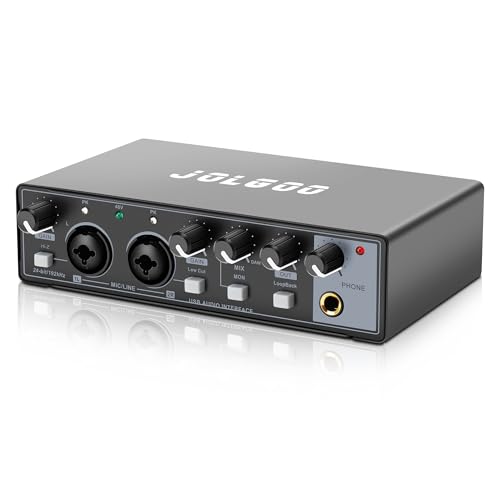
Jolgoo 2×2 USB Audio Interface Review Summary
Jolgoo 2×2 USB Audio Interface makes sense if you need a straightforward interface for vocals, podcasts, guitar, or a small home studio and you value plug-and-play convenience over deep routing options.
Based on the listing, it focuses on the essentials that matter most to a first-time or budget-conscious buyer: dual combo inputs, phantom power for condenser mics, low-latency direct monitoring, and simple USB connectivity across common devices.
The strongest case for buying it is that it avoids unnecessary complexity.
If your workflow is recording one or two sources at a time and you want a compact unit that can sit beside a laptop, this looks like a practical fit.
If you need advanced studio expansion, lots of I/O, or a more established pro audio ecosystem, it is easier to skip it.
Review Scorecard
| Category | Score | Buyer-focused rationale |
|---|---|---|
| Recording flexibility | 8/10 | Dual XLR/line combo inputs support common vocal and instrument setups. |
| Mic compatibility | 8/10 | +48V phantom power suits condenser microphones and podcast mics. |
| Monitoring | 8/10 | Direct monitoring is useful for tracking without distracting delay. |
| Resolution and fidelity | 7/10 | 24-bit/192kHz is a strong spec for the class, though real-world performance depends on the full signal chain. |
| Simplicity | 9/10 | USB-powered, driver-free positioning keeps setup approachable. |
| Desktop practicality | 8/10 | Compact metal housing and bundled cables suggest a small-footprint setup. |
| Upgrade headroom | 5/10 | The feature set appears oriented toward essential recording, not expansion-heavy studios. |
Key Features and Specifications of Jolgoo 2×2 USB Audio Interface
The listing positions this interface as a compact 2×2 USB recording card with a focus on core home-studio tasks.
The headline spec is 24-bit/192kHz audio conversion, which is the kind of figure buyers often look for when comparing entry-level interfaces, even though the rest of the recording chain still matters just as much.
Other listed features point toward a simple, practical workflow:
- Dual XLR/line combo inputs
- Independent gain control
- LED peak indicators
- +48V phantom power
- Direct monitor switch for zero-latency monitoring
- USB-powered operation
- Compatibility with Windows, macOS, iOS, and Android
- Support listed for common DAWs such as Audacity, Ableton, and Pro Tools
- Metal housing for a sturdier desktop build
- Headphone monitoring and stereo line outputs
- USB-C and USB-A cables included
That combination makes the device look aimed at creators who want to record directly into a laptop or mobile setup without adding a separate mixer or complicated interface layer.
The listing also emphasizes portability, which matters if your recording space changes often or you plan to move between a desk and a small travel rig.
For buyers comparing specs, the important point is not just the sample rate.
The real value is the mix of features that keep a simple setup usable: phantom power for condenser mics, direct monitoring for performance confidence, and gain controls that help prevent clipping.
Those details are the difference between a spec sheet that sounds good and a device that is easier to live with every day.
Pros and Cons of Jolgoo 2×2 USB Audio Interface
Pros
- Simple for beginners: the listing suggests a driver-free, plug-and-play setup that should shorten the path from unpacking to recording.
- Useful core input options: dual combo inputs make it more flexible than a single-purpose mic adapter.
- Condenser mic support: +48V phantom power broadens compatibility with common studio microphones.
- Low-latency monitoring: the direct monitor switch is a real benefit for singers, podcasters, and instrumentalists.
- Portable design: USB power and a compact metal body fit small desks and mobile recording setups.
Cons
- Not an expansion-focused interface: nothing in the listing suggests a large channel count or advanced routing.
- Feature set is basic by design: if you want pro-level connectivity, this looks intentionally simple rather than comprehensive.
- Listing-led evaluation: without hands-on measurement, the strongest claims are still the manufacturer’s own feature statements.
The balance here is important.
The pros are practical, not flashy.
The cons are not flaws so much as boundaries: this is a compact two-input interface, so buyers expecting a bigger studio hub should set their expectations accordingly.
Who Should Buy Jolgoo 2×2 USB Audio Interface?
This is a good fit for new home-studio users, podcasters, solo musicians, and content creators who want a compact interface with a minimal learning curve.
It should also appeal to anyone building a secondary recording setup for a laptop, because the USB-powered design and included cables reduce the amount of extra gear you need to think about.
It is especially sensible if your sessions usually revolve around one vocal mic, one instrument, or a straightforward two-source recording setup.
The direct monitoring switch and gain controls are the kinds of practical details that matter more than a long list of niche features when you are trying to capture clean takes quickly.
You should probably skip it if you need a larger studio interface for drum kits, multi-mic recording, or a session workflow that depends on many simultaneous inputs.
It is also not the first pick if you want a premium brand ecosystem or a unit built around advanced routing and expandability.
In short, buy it for simplicity and core recording utility, not for scale.
That makes it easier to evaluate honestly and prevents overbuying for a setup that does not need more than two inputs.
Recording Workflow and Everyday Use
Setup and Connectivity
The most appealing part of the Jolgoo 2×2 USB Audio Interface is how little setup friction it appears to create.
USB power, common operating system compatibility, and driver-free positioning all suggest a device meant to get out of the way and let you record.
Monitoring and Gain Control
Direct monitoring and independent gain controls are more important than they sound on paper.
For beginners, they reduce guesswork while tracking.
For experienced users, they make quick sessions easier because you can focus on performance rather than troubleshooting delay or clipping.
Microphones and Instruments
The dual combo inputs and phantom power make this more versatile than a mic-only accessory.
That matters if you alternate between condenser vocals, dynamic podcast mics, and line-level instruments.
It is not a full studio router, but it does cover the most common small-project use cases.
Portability and Desk Fit
The compact metal housing is a strong practical signal for buyers with limited space.
A small interface that can live on a desktop, move into a bag, and still offer the basics of monitoring and phantom power is often a better fit than a larger unit that looks more impressive but is harder to use.
Alternatives to Jolgoo 2×2 USB Audio Interface
If you want a more established ecosystem or a widely known entry-level option, look at the Focusrite Scarlett 2i2.
It is a common comparison point for two-input home recording setups.
If you prefer a budget-friendly brand with broad beginner appeal, the PreSonus AudioBox USB 96 is another typical alternative for simple vocal and instrument recording.
If you want something often considered in the same compact-interface tier, the M-Audio M-Track Duo is worth comparing for basic two-channel recording needs.
For buyers who want a little more of a creator-first setup, the Behringer U-Phoria UMC202HD is another familiar search if you are comparing feature sets and brand recognition.
Is Jolgoo 2×2 USB Audio Interface Worth It?
Jolgoo 2×2 USB Audio Interface is worth it if you want a compact, easy-to-understand recording interface with the essentials covered: dual inputs, phantom power, direct monitoring, and USB-powered convenience.
It looks best suited to beginners and practical home-studio buyers who want a dependable starter or secondary interface without paying for features they will not use.
If your priority is straightforward recording for vocals, podcasts, or a single instrument setup, this is a reasonable buy to consider.
If you need more channels, more advanced routing, or a more established premium ecosystem, the safer move is to compare the alternatives above first.